
Loading, please wait...


LOT 1578
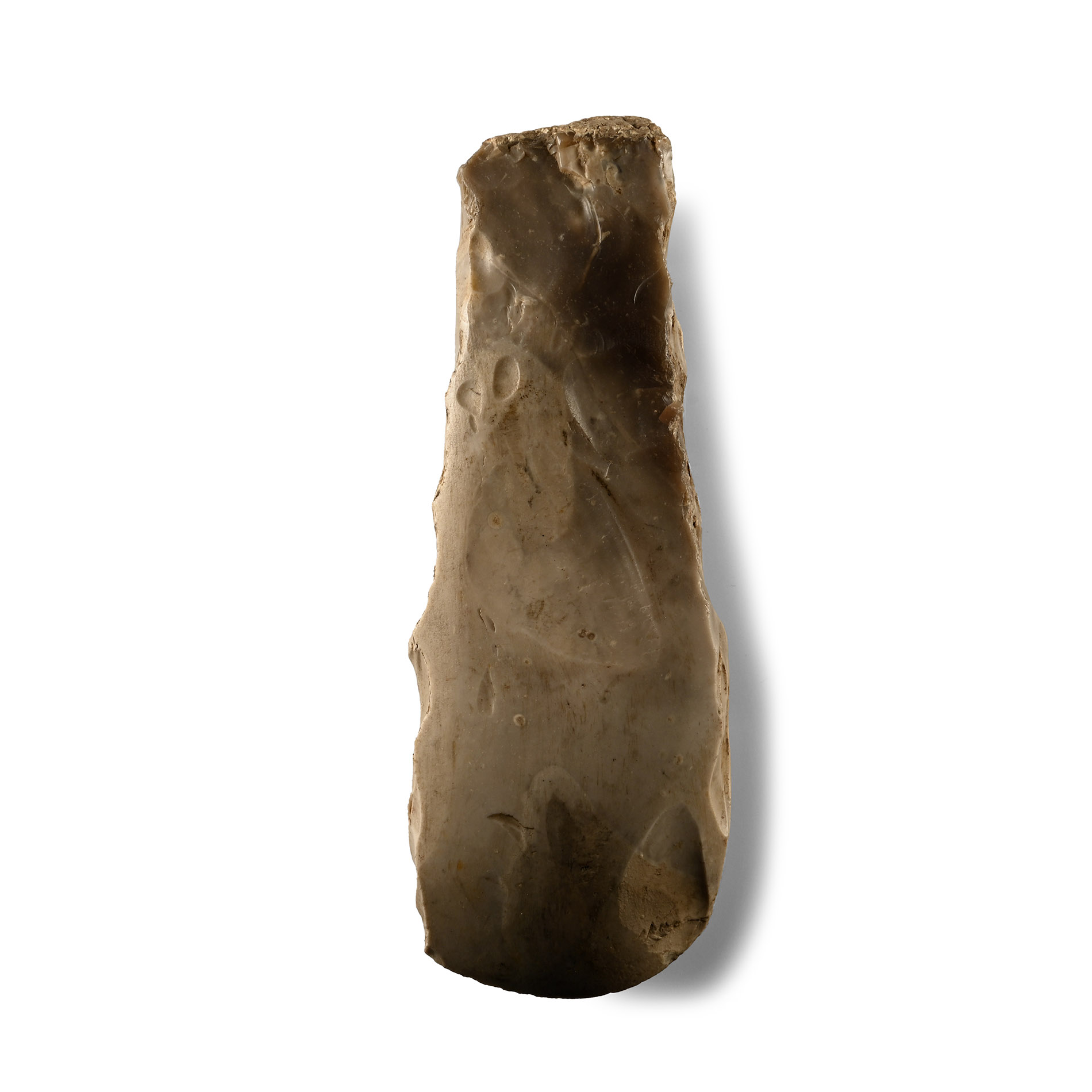
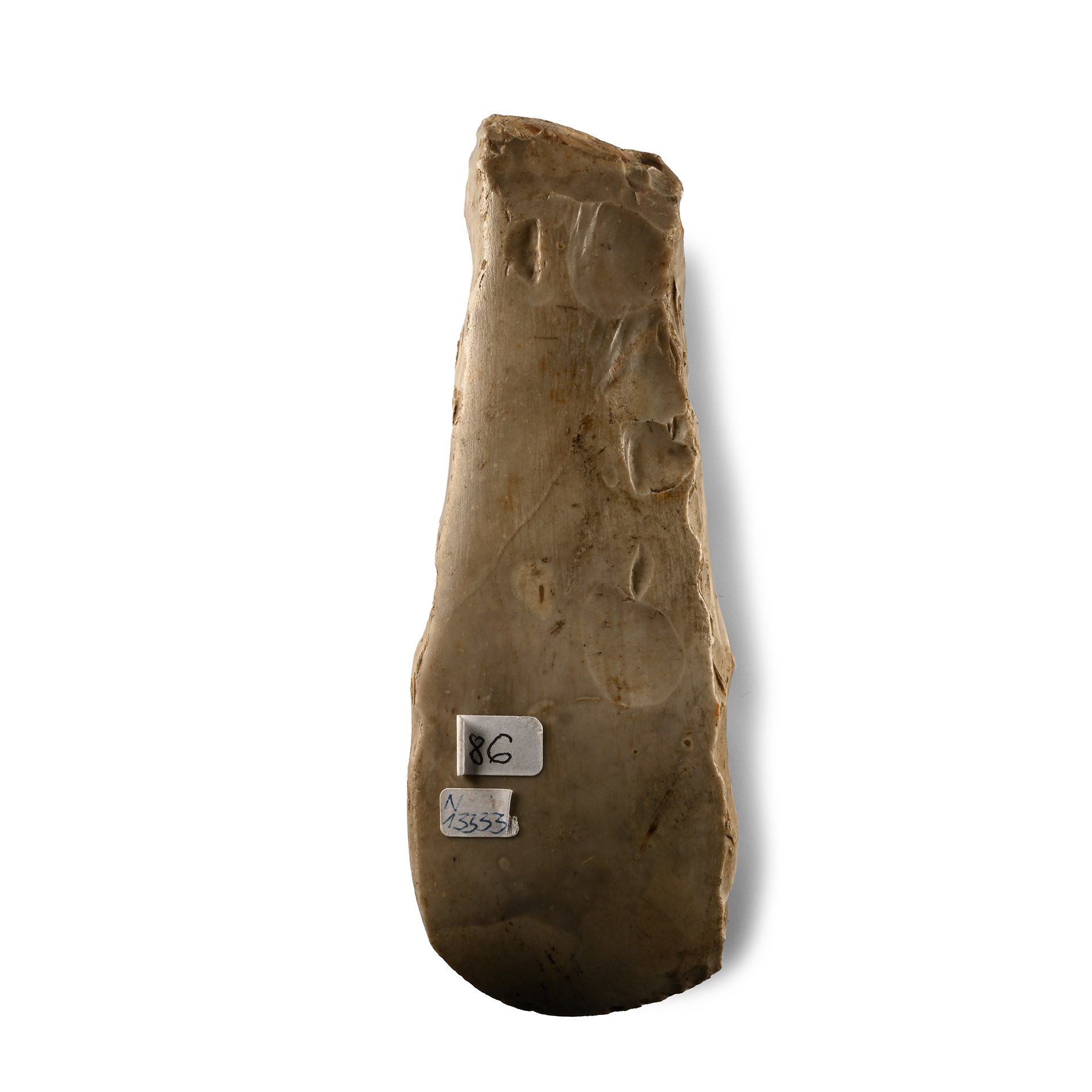
Stone Age Thick-Butted Polished Axe Head
NEOLITHIC PERIOD, CIRCA 5500-2200 B.P.
6 in. (411 grams, 15.2 cm).
Worked on all sides to a slightly asymmetrical profile with rectangular cross-section; irregular butt and rounded cutting edge, sides knapped but not polished; butt roughly retouched on surface and edges for attachment of the haft; edge chipped; light grey flint with darker and lighter hues and white spots and patches.
ProvenanceHervé Bouraly, Paris, between 1965-1974.
Accompanied by a copy of an Art Loss Register certificate no.S00134589.
Cf. MacGregor, A. (ed.), Antiquities from Europe and the Near East in the Collection of Lord McAlpine of West Green, Oxford, 1987, items pp.157ss., for several similar items.
CONDITIONTimeLine Auctions follows a vetting process to ensure the authenticity and legality of all items, reinforcing our commitment to integrity and responsible trading. Each antiquity, antique, and coin lot undergoes thorough examination by a vetting committee of at least ten external specialists, professional trade association members, scientists, and archaeologists: Our Vetting Process
AUCTIONS:
TimeLine is a leading auction house specialising in antiquities, ancient art, collectables, natural history, coins, medals, and books. Our auctions offer museums, collectors, historians, and enthusiasts the opportunity to acquire unique and historically significant pieces.
-
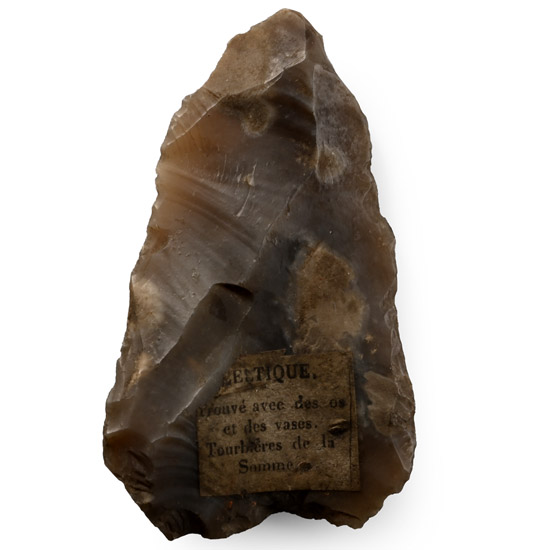
French Stone Age Neanderthal Levallois Knapped Point - Ex Boucher-de-Perthes
Middle Palaeolithic Period, 150,000-60,000 B.P.Sold for (Inc. bp): £546
Triangular flint point labelled 'Celtique Trouve avec des os et de vases. Toubiere de la Somme’ (Celtic, Found with bones and vases, peat beds of the Somme). 18.5 grams, 63 mm
Found by Boucher-des-Perthes in the 1800s. Ex Jacques Boucher de Crèvecœur de Perthes (1788-1868), sometimes referred to as Boucher de Perthes. Ex Sir Arthur John Evans (1851–1941), British archaeologist and son of Sir John Evans (1823-1908). Ex Henry Dewey (1876–1965), a prominent British geologist and archaeologist who made seminal contributions to the study of the Palaeolithic period. Ex R Richard Widdowson, a well-known UK-based antiquities specialist who owned the gallery 'Ancient Times' in Scarborough in Southern England. Ex J Weston Smith. Accompanied by an illustrated envelope and two collector's information cards. -
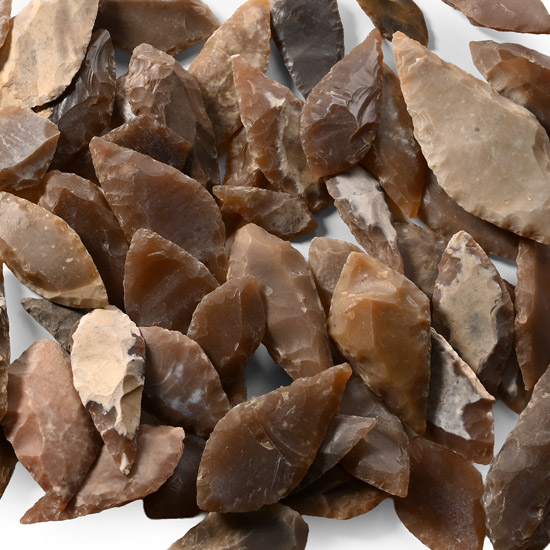
Stone Age Lozenge-Shaped Arrowhead Collection
Neolithic Period, 8th-6th millennium B.P.Sold for (Inc. bp): £65
Comprising mostly bifacial and unifacial lozenge-shaped and piriform flint and chert arrowheads; probably from the Sahara region of North Africa. 95 grams total, 19-46 mm
UK gallery, early 2000s.
Similar specimens of arrowheads have been found in the Eastern Sahara Region of Abu Tartur Plateau. Most of the arrowheads came from the El Jarar Neolithic, c. 7700-7300 B.P. (c.6500-6100 B.C.). Other parallels occur in the region of Kharga Oasis. -
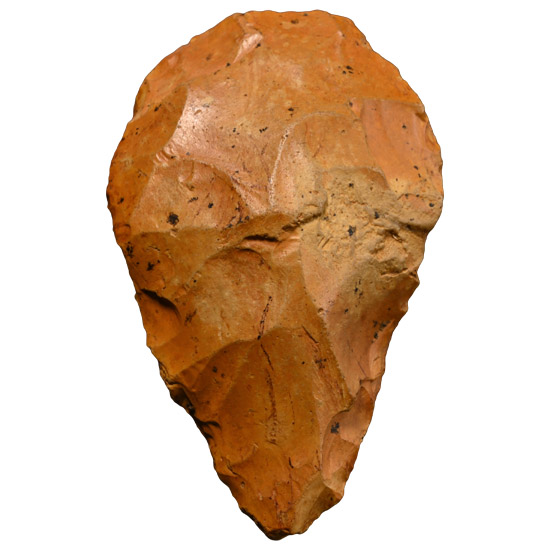
British Stone Age Knapped Flint Axe
Middle Palaeolithic Period, circa 150,000-60,000 B.P.Sold for (Inc. bp): £195
Piriform body in orangey flint, an old handwritten collector's label to one side. 195 grams, 10.7 cm
Found Test Road, Huzbourough Copse, Hampshire, UK, June 1965. From the collection of Martin Doyle, Leverstock, UK, 1980s-2000s.
