
Loading, please wait...


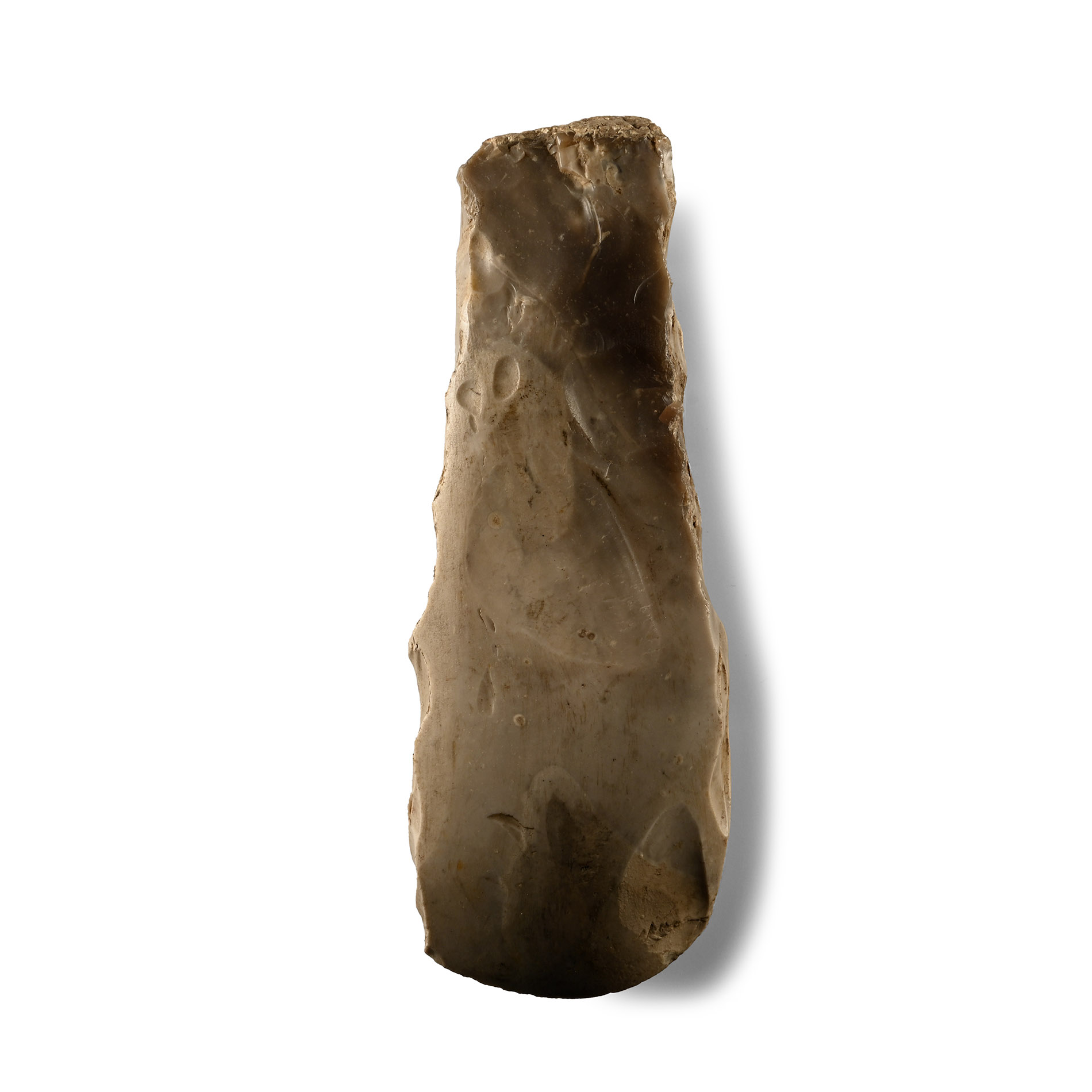
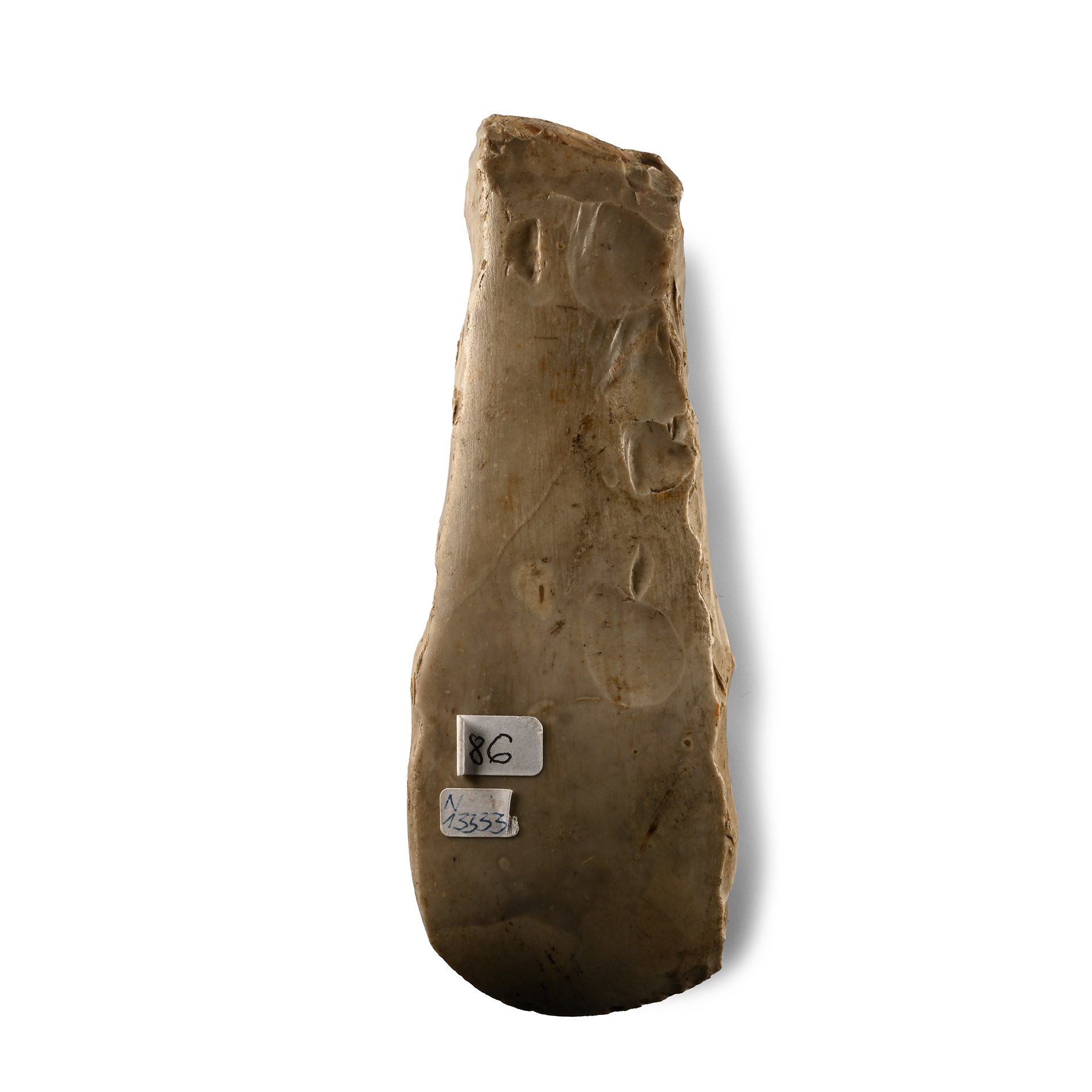
LOT 1665
Stone Age Thick-Butted Polished Axe Head
NEOLITHIC PERIOD, CIRCA 5500-2200 B.P.
6 in. (411 grams, 15.2 cm).
Worked on all sides to a slightly asymmetrical profile with rectangular cross-section; irregular butt and rounded cutting edge, sides knapped but not polished; butt roughly retouched on surface and edges for attachment of the haft; edge chipped; light grey flint with darker and lighter hues and white spots and patches.
ProvenanceHervé Bouraly, Paris, between 1965-1974.
Accompanied by a copy of an Art Loss Register certificate no.S00134589.
This lot is accompanied by an illustrated lot declaration signed by the Head of the Antiquities Department, Dr Raffaele D’Amato.
This lot is accompanied by an illustrated lot declaration signed by the Head of the Antiquities Department, Dr Raffaele D'Amato.
Cf. MacGregor, A. (ed.), Antiquities from Europe and the Near East in the Collection of Lord McAlpine of West Green, Oxford, 1987, item 4.125, for type.
CONDITIONTimeLine Auctions follows a vetting process to ensure the authenticity and legality of all items, reinforcing our commitment to integrity and responsible trading. Each antiquity, antique, and coin lot undergoes thorough examination by a vetting committee of at least ten external specialists, professional trade association members, scientists, and archaeologists: Our Vetting Process
AUCTIONS:
TimeLine is a leading auction house specialising in antiquities, ancient art, collectables, natural history, coins, medals, and books. Our auctions offer museums, collectors, historians, and enthusiasts the opportunity to acquire unique and historically significant pieces.
LOT 1665
Stone Age Thick-Butted Polished Axe Head
Estimate £400 - 600€460 - 700 (for guidance only)$540 - 810 (for guidance only)
-
Stone Age Fine Knapped Point
Upper Palaeolithic Period, circa 40,000-22,000 years B.P.Estimate: £200 - 300 (+bp*)
Opening Bid: £100
A knapped lozenge-shaped bifacial tool in light grey flint. 38 grams, 94 mm
Found Yonne, Bourgogne, Franche-Compte Region, France. From a large French collection formed in the early 1900s. Acquired on the UK art market. From the private collection of an East Anglian, UK, specialist collector. This lot is accompanied by an illustrated lot declaration signed by the Head of the Antiquities Department, Dr Raffaele D'Amato. -
Stone Age Obsidian Knife Core
Asia Minor, circa 5th millennium B.C.Sold for (Inc. bp): £169
Long and tapering in section with slanted tip, facetting to the flanks where blades have been struck. 17.6 grams, 69 mm
Ex Alain Eleb, Louvre des Antiquaries, Paris, France. Acquired from the above in 1991. From the collection of G.M.R.H., London, UK. This lot is accompanied by an illustrated lot declaration signed by the Head of the Antiquities Department, Dr Raffaele D'Amato. -
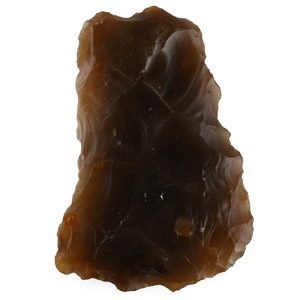
Stone Age Flint Knife
Neolithic Period, circa 6000 B.P.Sold for (Inc. bp): £13
Finely knapped on all four edge in light brown flint, with inked old collector's inscription to verso: 'ST ACRES / 136'. 26.7 grams, 57 mm
Found near Fakenham, Norfolk, UK. Ex collection of P James, South England. Acquired on the UK art market. From the private collection of an East Anglian, UK, specialist collector. This lot is accompanied by an illustrated lot declaration signed by the Head of the Antiquities Department, Dr Raffaele D'Amato.
