
Loading, please wait...


LOT 1592
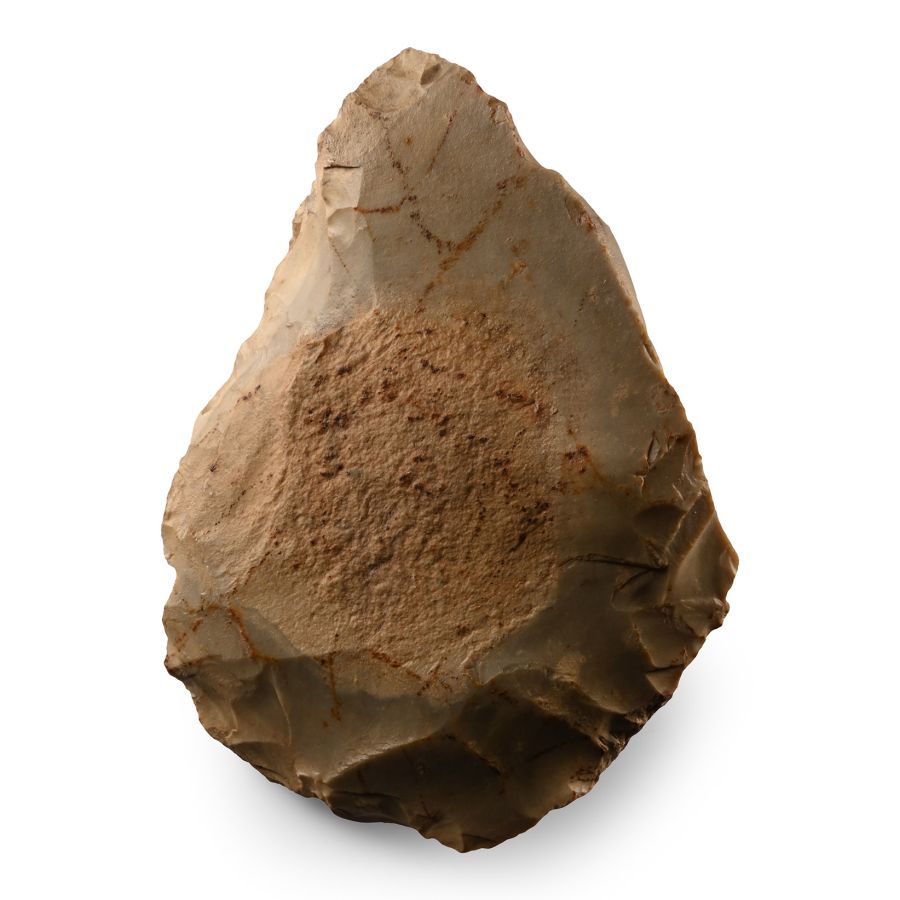
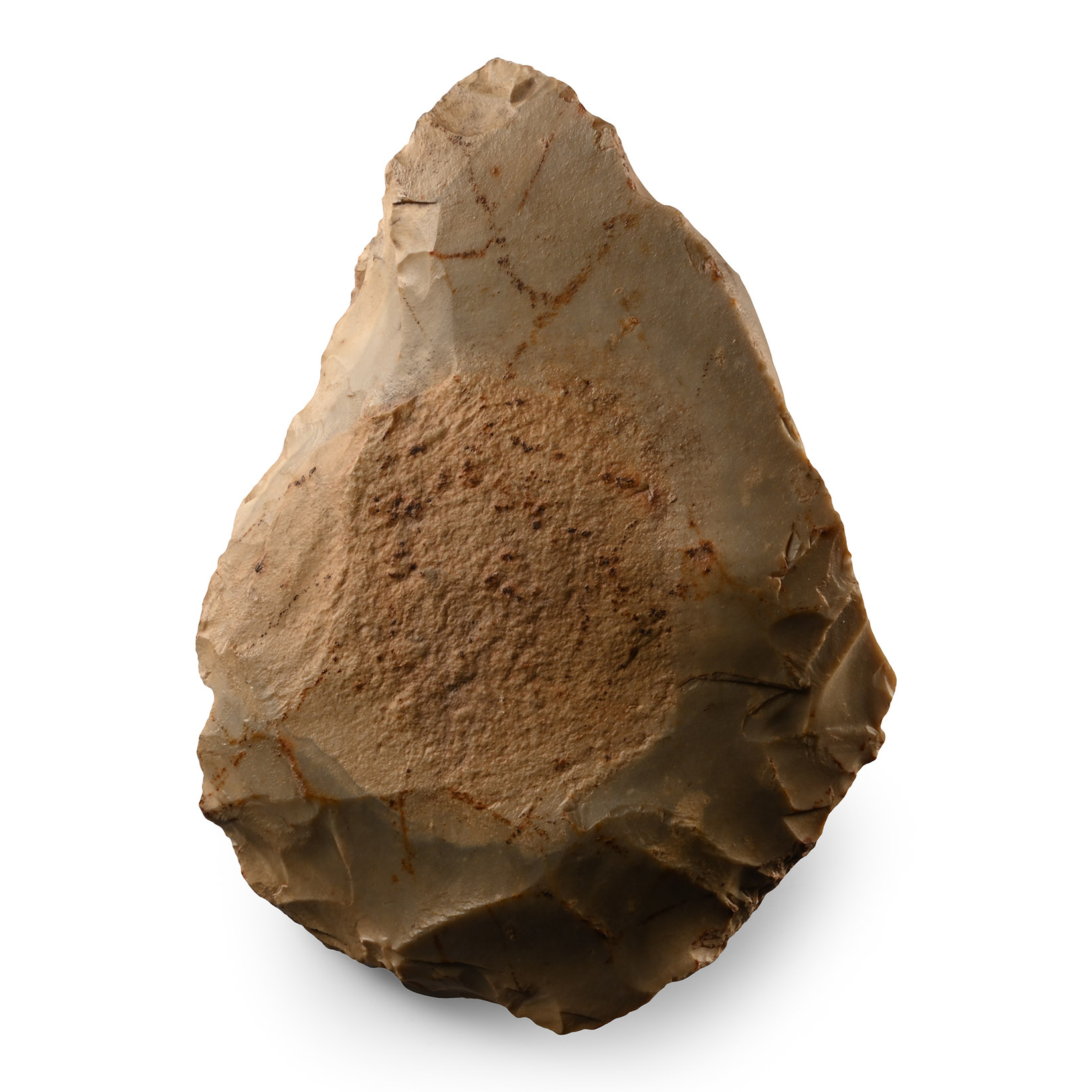
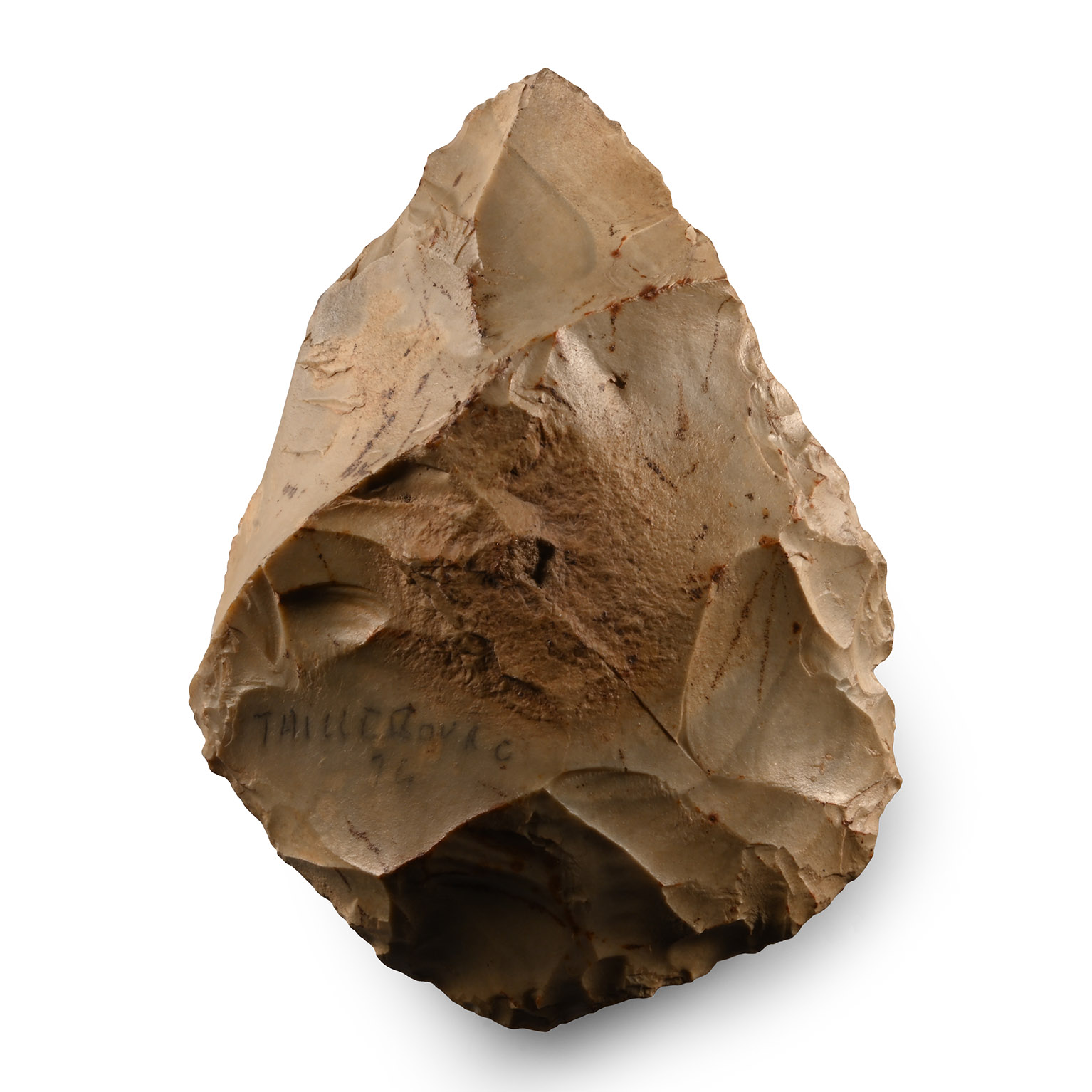
Stone Age Taillebourg Cordate Flint Handaxe
MIDDLE PALAEOLITHIC PERIOD, 250,000-60,000 B.C.
5 3/4 in. (515 grams, 14.6 cm).
With curved cutting edge, some cortex to the obverse. [No Reserve]
ProvenanceFound Taillenbourg, Charente, France.
Ex Victor Brox collection, UK, formed during the 1980s-1990s.
From the collection of a South West London, UK, specialist Stone Age collector.
TimeLine Auctions follows a vetting process to ensure the authenticity and legality of all items, reinforcing our commitment to integrity and responsible trading. Each antiquity, antique, and coin lot undergoes thorough examination by a vetting committee of at least ten external specialists, professional trade association members, scientists, and archaeologists: Our Vetting Process
AUCTIONS:
TimeLine is a leading auction house specialising in antiquities, ancient art, collectables, natural history, coins, medals, and books. Our auctions offer museums, collectors, historians, and enthusiasts the opportunity to acquire unique and historically significant pieces.
-
Large Stone Age Knapped Ovate Grey Stone Handaxe
Neolithic Period, circa 6th-4th millennium B.C.Sold for (Inc. bp): £650
Biconvex in profile and almost perfectly circular in plan. 135 grams, 11.1 cm
From a collection acquired on the UK art market from various auction houses and collections mostly before 2000. From an important Cambridgeshire estate; thence by descent. -
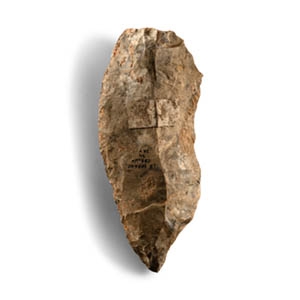
Stone Age Long Gravettian Flint Point
Upper Palaeolithic Period, circa 40,000-20,000 B.P.Sold for (Inc. bp): £260
With fine retouching; a very well made example of this rare type; with inked findspot legend 'La Vergne / Carlux / 24 / JAV' and old collector's label '[...] Carlux / Dordogne'. 78 grams, 10.3 cm
Found La Vergne, Carlux, France. Acquired in the 1970s-1990s. From the collection of famous UK musician and amateur archaeologist, Victor Brox (1941-2023). -
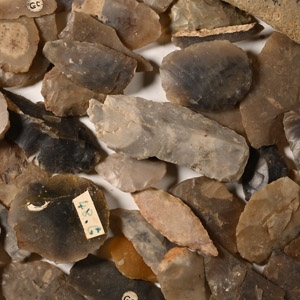
Stone Age Arrowhead and Other Artefact Group
Mainly 4th-2nd millennium B.C.Sold for (Inc. bp): £59
Knapped flint blades and other items, some with old collector's labels or inked findspot legend. 167 grams total, 18-60 mm
From a collection acquired on the UK art market from various auction houses and collections mostly before 2000. From an important Cambridgeshire estate; thence by descent.
