
Loading, please wait...


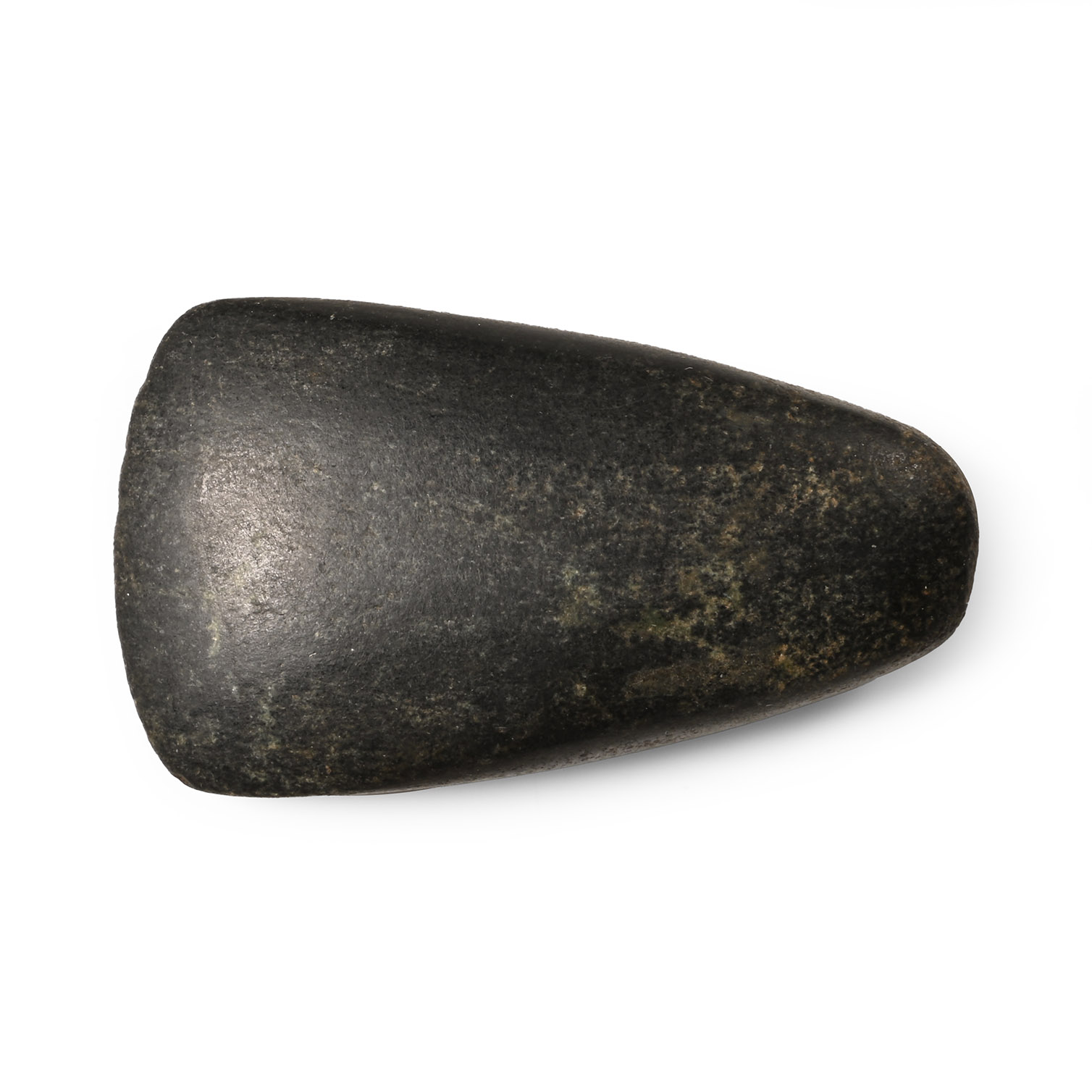
LOT 1559
Stone Age Pont-l'Abbé Polished Axehead
NEOLITHIC PERIOD, CIRCA 4TH-3RD MILLENNIUM B.C.
2 5/8 in. (79 grams, 66 mm).
Small triangular axehead with bifacial blade, narrow square butt. [No Reserve]
ProvenanceFound Pont-l'Abbé Finistère, Brittany, France.
From the private collection of Kenneth Machin (1936-2020), Buckinghamshire, UK; with collection no.N205; his collection of antiquities and natural history was formed since 1948; thence by descent.
TimeLine Auctions follows a vetting process to ensure the authenticity and legality of all items, reinforcing our commitment to integrity and responsible trading. Each antiquity, antique, and coin lot undergoes thorough examination by a vetting committee of at least ten external specialists, professional trade association members, scientists, and archaeologists: Our Vetting Process
AUCTIONS:
TimeLine is a leading auction house specialising in antiquities, ancient art, collectables, natural history, coins, medals, and books. Our auctions offer museums, collectors, historians, and enthusiasts the opportunity to acquire unique and historically significant pieces.
-
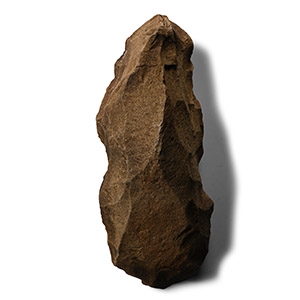
Stone Age British Knapped Augite-Granophyre Axehead
Neolithic Period, circa 2800 B.C.Sold for (Inc. bp): £39
Triangular in section with thick butt; unfinished. 456 grams, 15 cm
Found Craigllwyd axe factory site, Caernarvonshire, Wales. Acquired from Stephen Murray, in 1978. From the private collection of Kenneth Machin (1936-2020), Buckinghamshire, UK; with collection no.N8; his collection of antiquities and natural history was formed since 1948; thence by descent. -
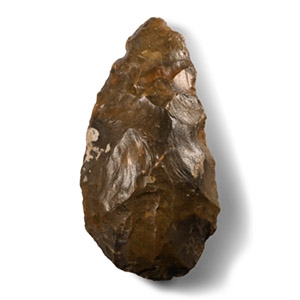
Large Stone Age Bifacial Flint 'Lancelot' Hand Axe
Lower Palaeolithic Period, circa 450,000-300,000 B.P.Sold for (Inc. bp): £468
A large and substantial handaxe with glossy mottled patina. 708 grams, 18 cm
Found in the Somme region of Northern France. From the collection of amateur archaeologist Mr M. Allais, formed in the mid-1900s. Acquired on the European art market. From the private collection of an East Anglian, UK, collector.
The 'Lancelot' form is well regarded as a typology of handaxes from the Lower Palaeolithic. -
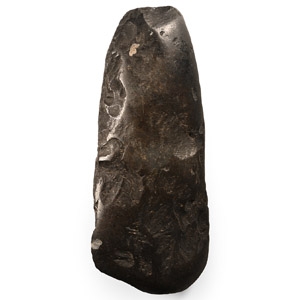
Stone Age Polished Axehead
Neolithic Period, circa 4th-3rd millennium B.C.Sold for (Inc. bp): £20
Of biconvex section with narrow butt and broad gently curved edge. 384 grams, 14 cm
From a collection acquired on the UK art market from various auction houses and collections mostly before 2000. From an important Cambridgeshire estate; thence by descent.
