
Loading, please wait...



LOT 1481
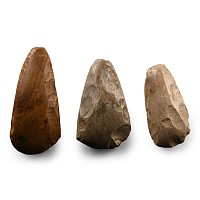
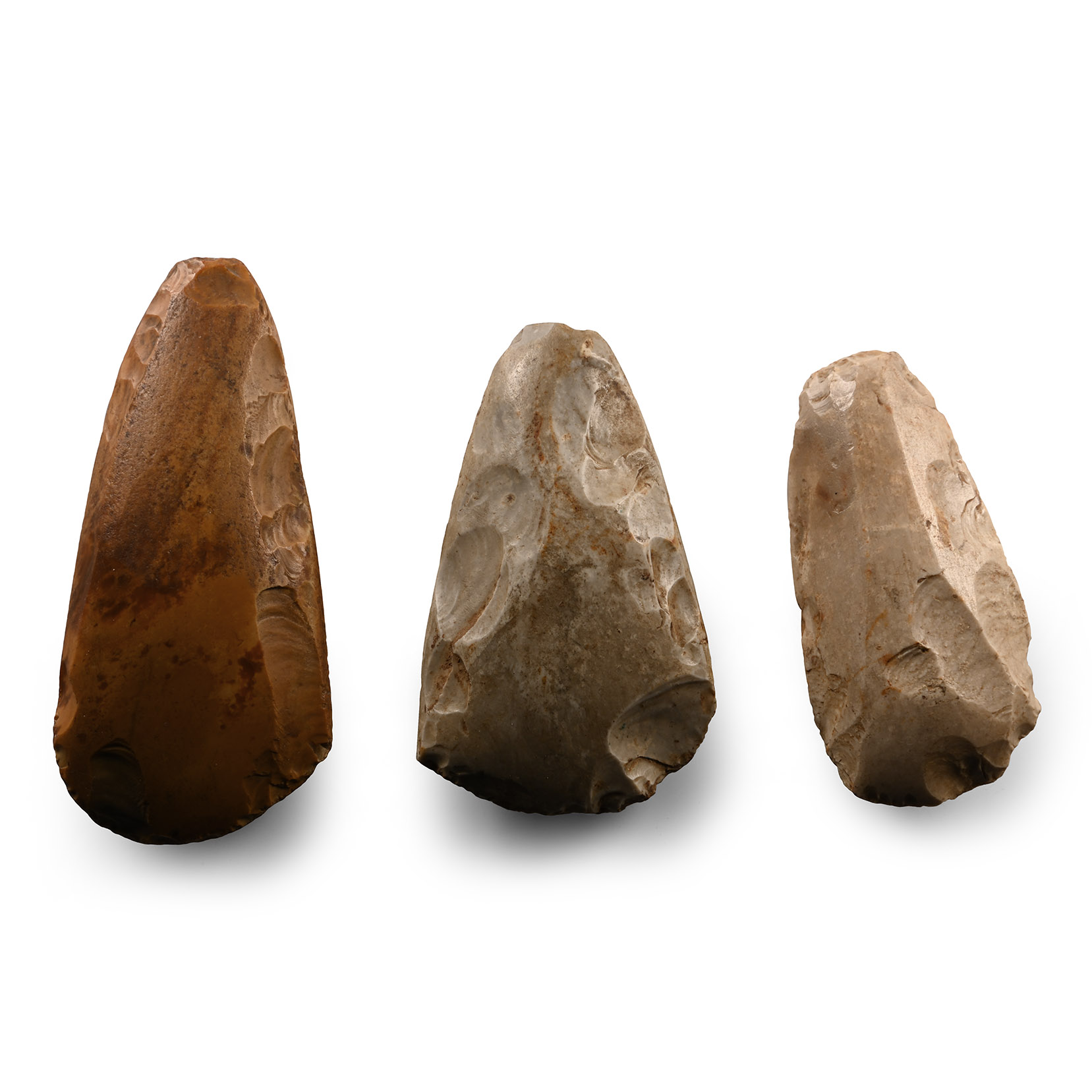
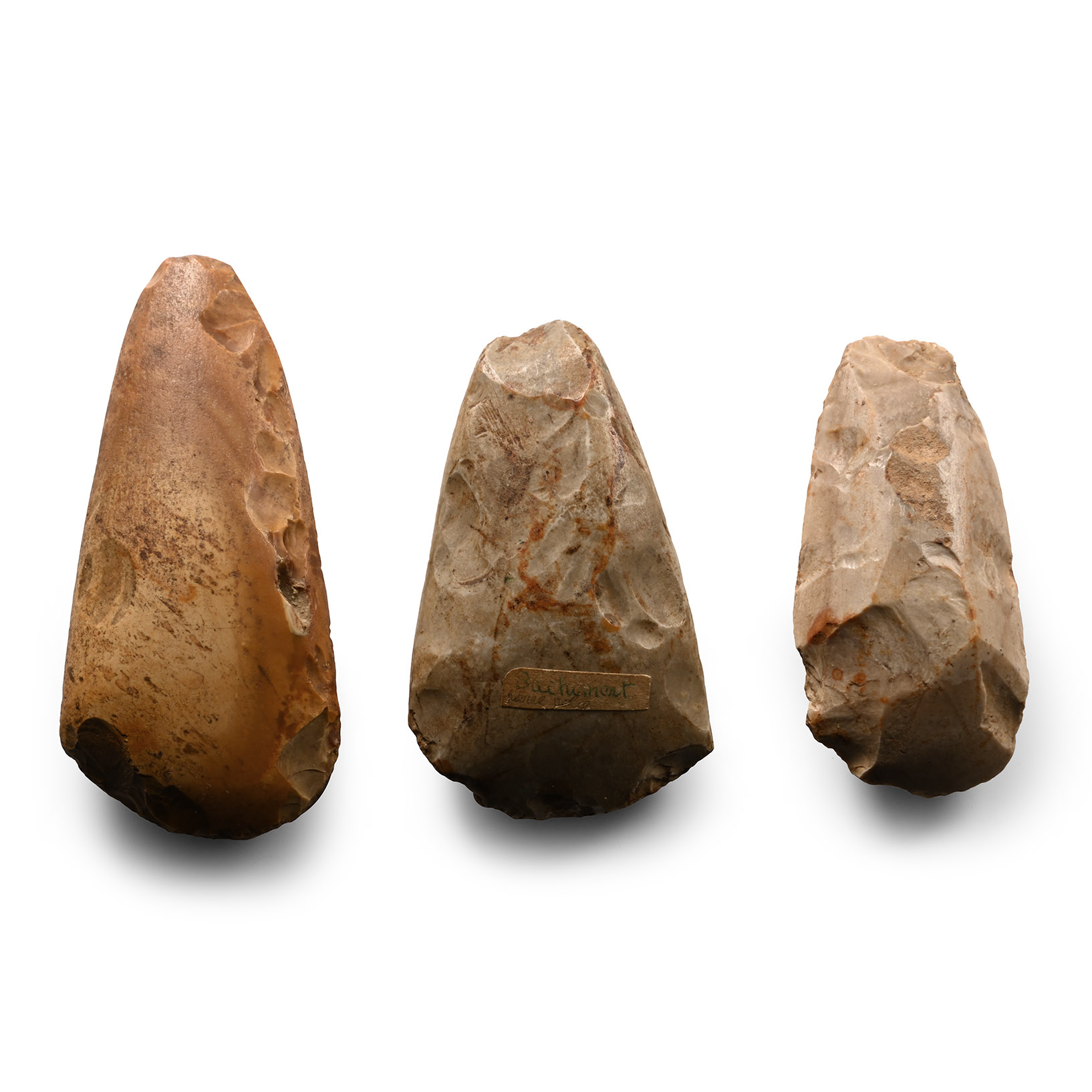
Stone Age Polished Handaxe Group
LOWER PALAEOLITHIC PERIOD, 450,000-200,000 B.C.
3 3/8 - 4 3/8 in. (386 grams total, 8.5-11 cm).
Each lentoid in profile, one with old find spot label 'Baichinet/pierre [...]'. [3, No Reserve]
ProvenanceOld French collection.
Private collection, London.
TimeLine Auctions follows a vetting process to ensure the authenticity and legality of all items, reinforcing our commitment to integrity and responsible trading. Each antiquity, antique, and coin lot undergoes thorough examination by a vetting committee of at least ten external specialists, professional trade association members, scientists, and archaeologists: Our Vetting Process
AUCTIONS:
TimeLine is a leading auction house specialising in antiquities, ancient art, collectables, natural history, coins, medals, and books. Our auctions offer museums, collectors, historians, and enthusiasts the opportunity to acquire unique and historically significant pieces.
-
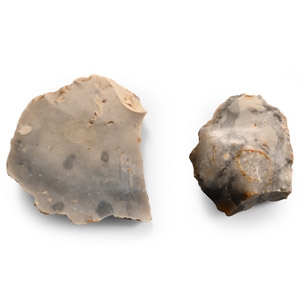
Stone Age Buigny Flint Tool Group
Neolithic Period, 4th-2nd millennium B.C.Sold for (Inc. bp): £1
Large plano-convex tool with cortex to upper face and smaller tool with rounded edge; each with inked find spot 'Buigny'. 148 grams total, 54-79 mm
Found Buigny, France. Ex Norfolk, UK, private collection of French artefacts acquired prior to 2000. From the collection of a South West London, UK, specialist Stone Age collector. -
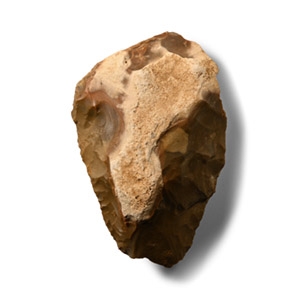
Stone Age Colourful Flint Bifacial Handaxe
Lower Palaeolithic Period, circa 450,000-250,000 B.P.Sold for (Inc. bp): £85
Substantial flint handaxe with a cleaver tip; crystallised mineral deposits still heavily present on the back of the handaxe from the deposit environment; with inked find spot, type and dating legend 'St. Meme / Charente / B. Hachereau / Achuleen Moyen'. 533 grams, 14.5 cm
From the well regarded long closed quarry site of St Meme, Charente, France. From an old large French collection. Acquired on the European art market. From the private collection of an East Anglian, UK, collector. -
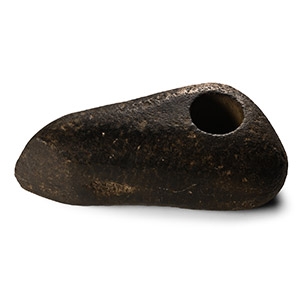
Stone Age British Polished Boat-Shaped Axehead
Neolithic Period, circa 4th-3rd millennium B.C.Sold for (Inc. bp): £78
With gently curved cutting edge, triangular in plan with eccentrically placed socket. 476 grams, 12.5 cm
Found UK. From the private collection of Kenneth Machin (1936-2020), Buckinghamshire, UK; with collection no.N182; his collection of antiquities and natural history was formed since 1948; thence by descent.
The socket features an internal step where the grinding faces did not perfectly match.
