
Loading, please wait...
LOT 1119
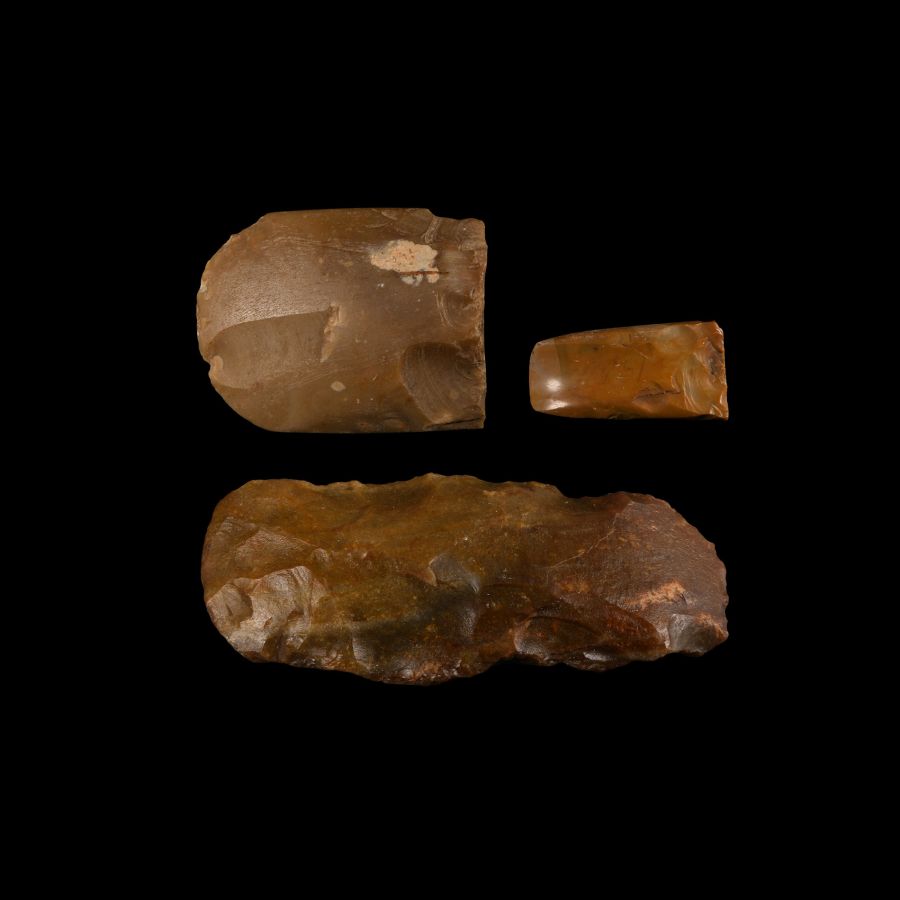
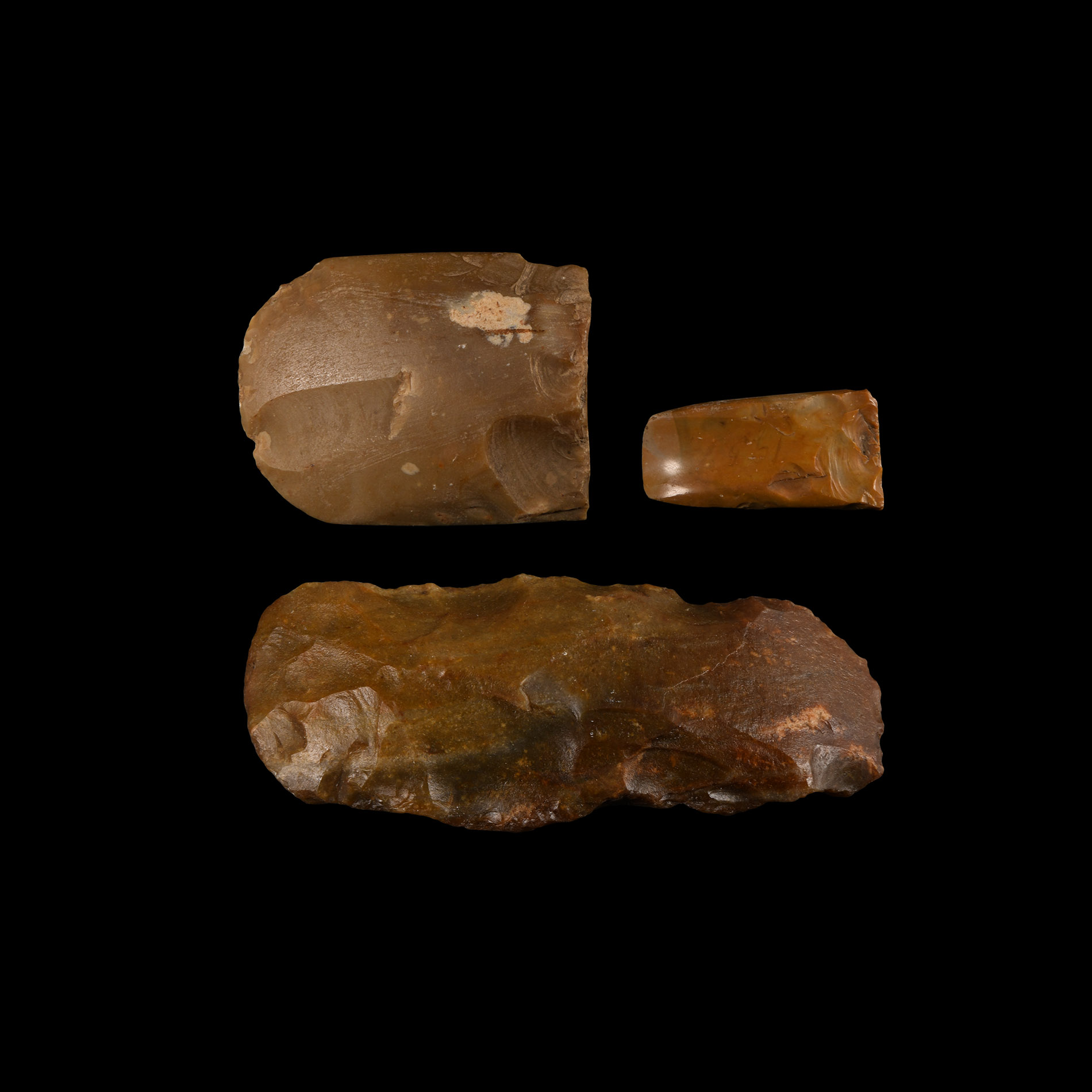
Stone Age Neolithic Axe and Chisel Group
CIRCA 3RD MILLENNIUM B.C.
2 - 5 7/8 in. (560 grams total, 5-15 cm).
Group comprising: a knapped bifacial axe, the cutting edge portion of a finely polished axe and the cutting tip of a finely polished concave edge chisel; all in flint. [3, No Reserve]
ProvenanceAcquired in the 1990s.
UK private collection.
Property of a Sussex, UK, teacher.
TimeLine Auctions follows a vetting process to ensure the authenticity and legality of all items, reinforcing our commitment to integrity and responsible trading. Each antiquity, antique, and coin lot undergoes thorough examination by a vetting committee of at least ten external specialists, professional trade association members, scientists, and archaeologists: Our Vetting Process
AUCTIONS:
TimeLine is a leading auction house specialising in antiquities, ancient art, collectables, natural history, coins, medals, and books. Our auctions offer museums, collectors, historians, and enthusiasts the opportunity to acquire unique and historically significant pieces.
-
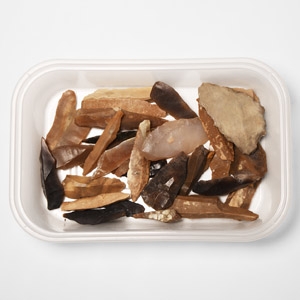
Stone Age Projectile Point Group
Neolithic Period, circa 6th millennium B.C.Sold for (Inc. bp): £33
A group of 32 flint projectile points. 172 grams total, 37-62 mm
Ex Arthur Halcrow Versage collection, Reigate, Surrey, UK. -
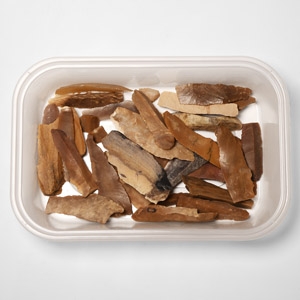
Stone Age Knife Group
Neolithic Period, circa 6th millennium B.C.Sold for (Inc. bp): £33
A group of 30 flint knife blades. 167 grams total, 35-62 mm
Ex Arthur Halcrow Versage collection, Reigate, Surrey, UK. -

Stone Age Projectile Point Group
Neolithic Period, circa 6th millennium B.C.Sold for (Inc. bp): £39
A group of 32 flint projectile points. 170 grams total, 35-73 mm
Ex Arthur Halcrow Versage collection, Reigate, Surrey, UK.
