
Loading, please wait...
LOT 1612
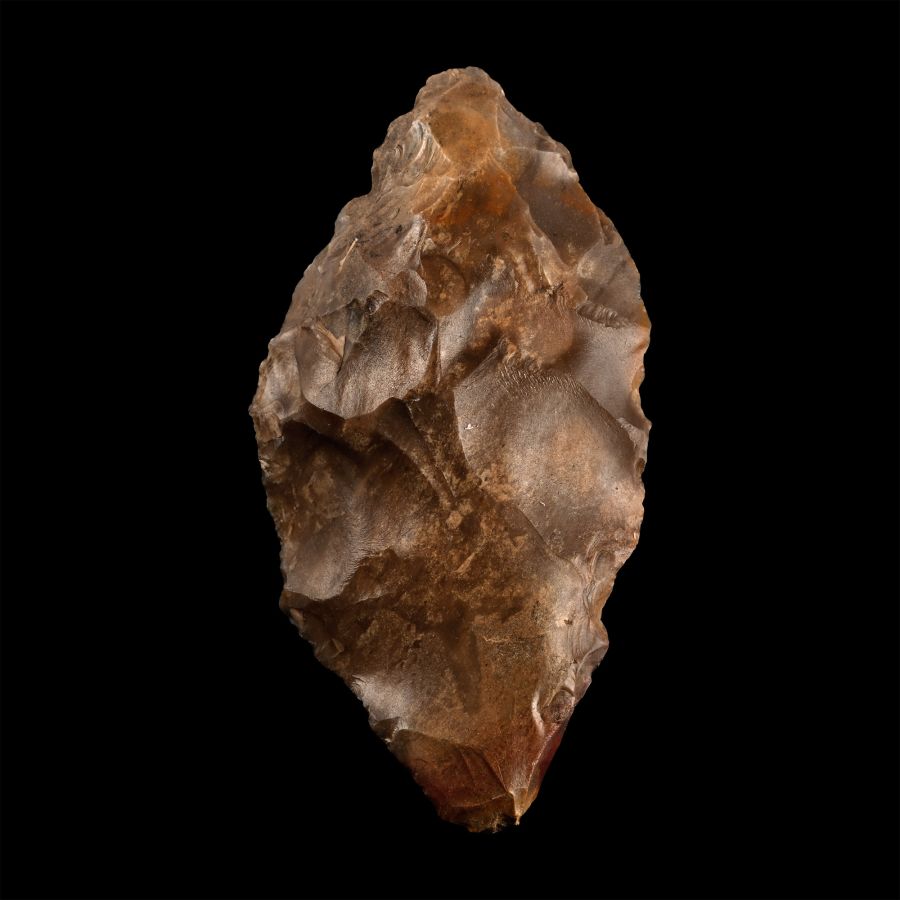
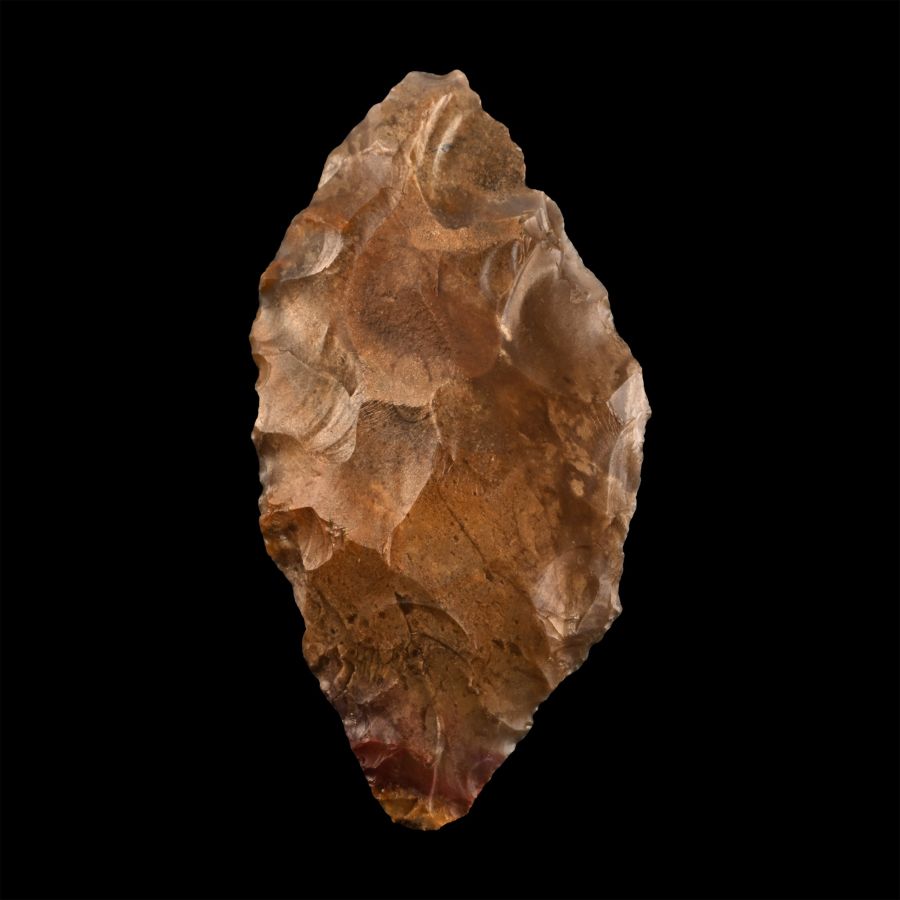
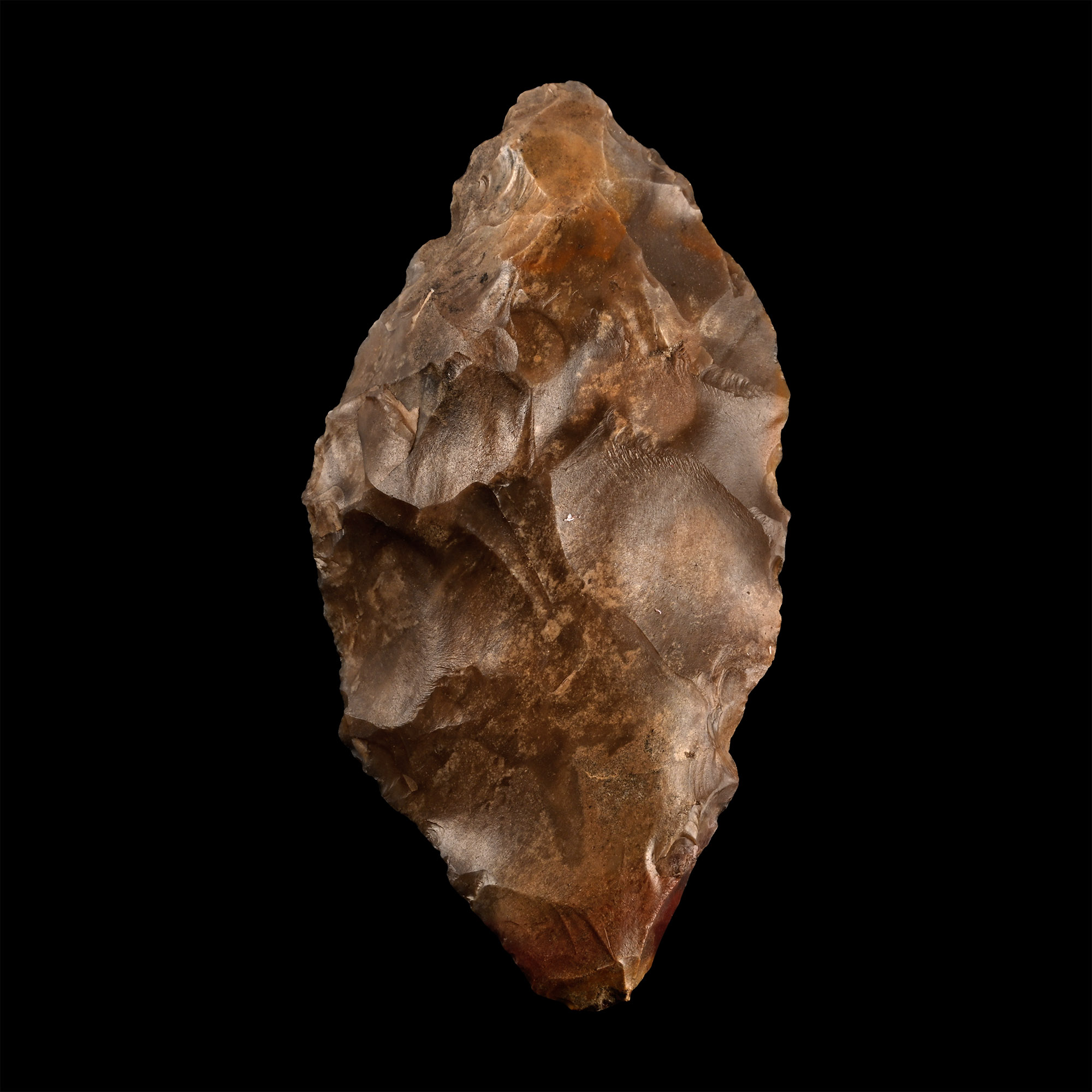
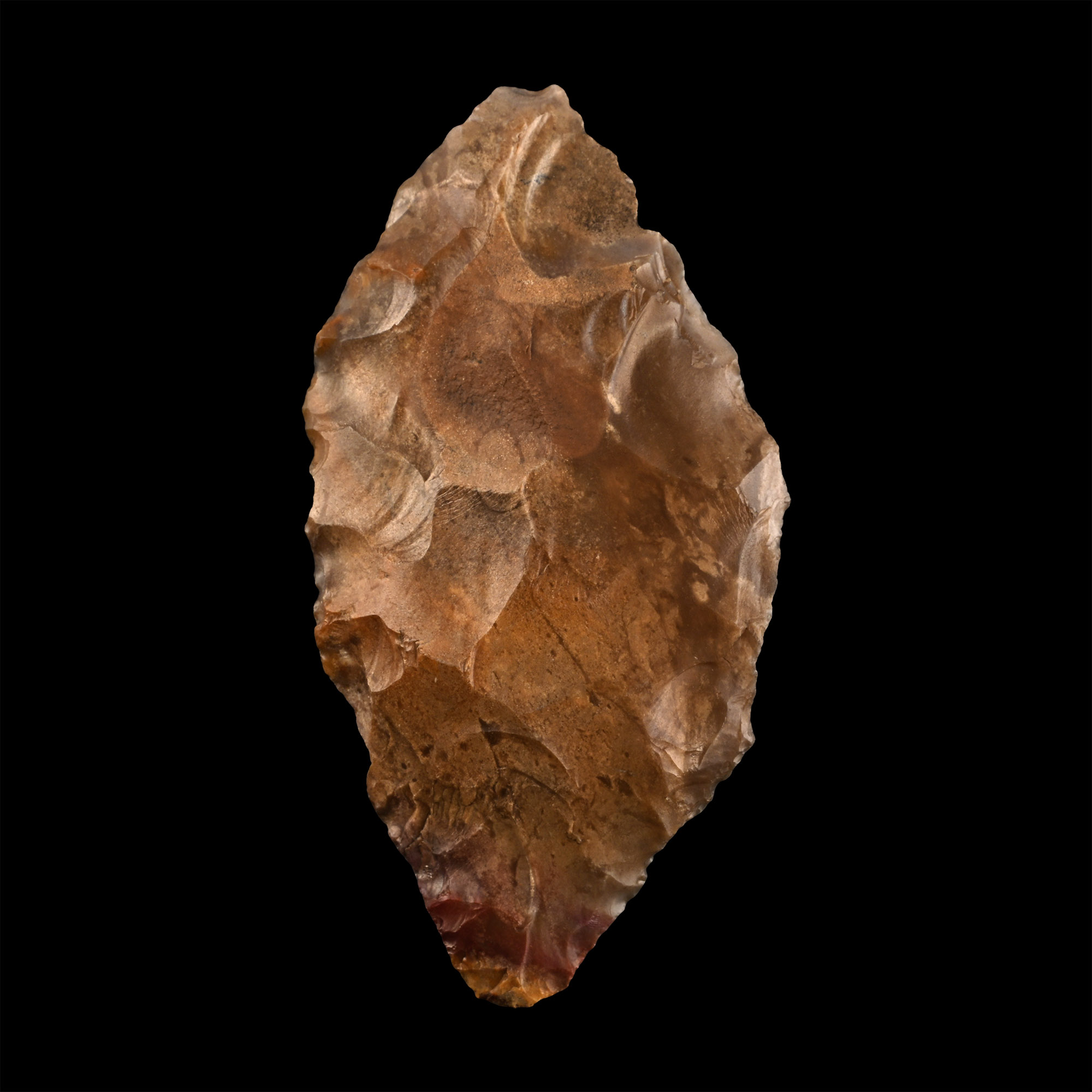
Stone Age Leaf-Shaped Flint Knife
MIDDLE PALAEOLITHIC PERIOD, CIRCA 150,000-60,000 B.P.
4 3/8 in. (118 grams, 11.2 cm).
Scaphoid in plane and lentoid in section with thickening towards the butt, made from flint with a deep colourful patina. [No Reserve]
ProvenanceFrom a collection purchased on the UK art market.
From the private collection of an East Anglian, UK, specialist collector.
TimeLine Auctions follows a vetting process to ensure the authenticity and legality of all items, reinforcing our commitment to integrity and responsible trading. Each antiquity, antique, and coin lot undergoes thorough examination by a vetting committee of at least ten external specialists, professional trade association members, scientists, and archaeologists: Our Vetting Process
AUCTIONS:
TimeLine is a leading auction house specialising in antiquities, ancient art, collectables, natural history, coins, medals, and books. Our auctions offer museums, collectors, historians, and enthusiasts the opportunity to acquire unique and historically significant pieces.
-
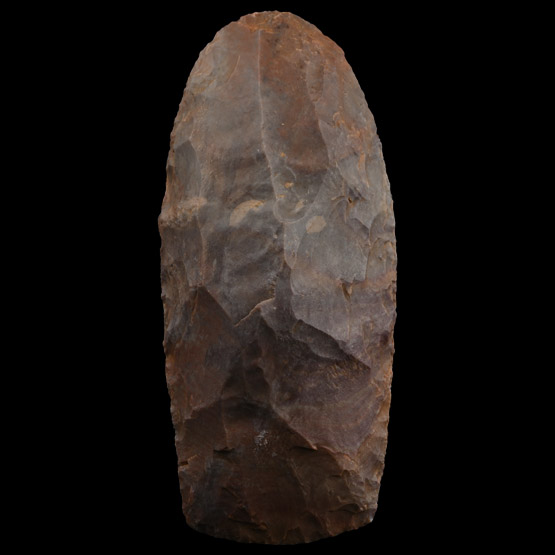
Stone Age Tenerian Axe Head
Neolithic Period, circa 6,000 B.P.Sold for (Inc. bp): £312
Lentoid in section and tongue-shaped with squared-off cutting edge. 243 grams, 13.2 cm
Found Sahara, North Africa. Acquired from a US-based collector. From the private collection of an East Anglian, UK, specialist collector. -
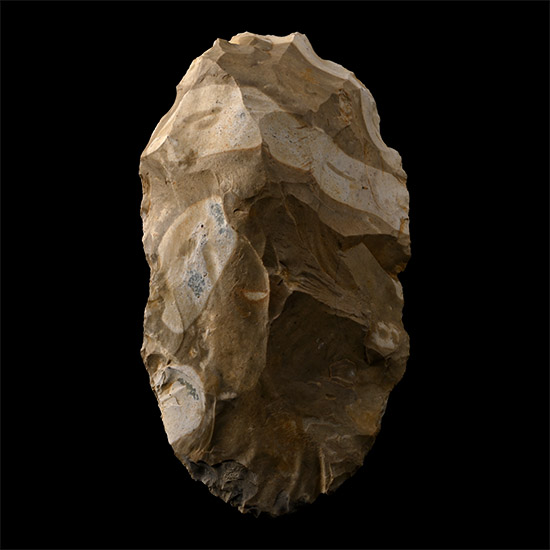
Large Stone Age Acheulean Ovate Flint Handaxe
Lower Palaeolithic Period, circa 600,000-350,000 B.P.Estimate: £600 - 800 (+bp*)
Opening Bid: £300
Substantial and well-made handaxe with thick butt and rounded cutting edge; marked 'St Même FR'; likely made by Homo Heidelbergensis; mounted on a custom-made display stand. 719 grams, 17.5 cm without stand
From the well regarded long closed quarry site of St Meme, Charente, France. From an old large French collection. Acquired on the European art market. From a UK private collection. -
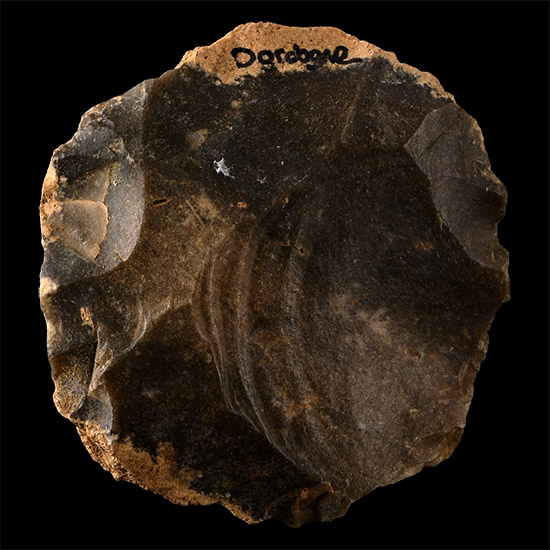
Stone Age Levallois Flint Core
Middle Palaeolithic, Mousterian, circa 150,000-60,000 B.P.Sold for (Inc. bp): £52
Plano-convex in form with cortex to the upper face; underside marked 'Dor[..]one'. 76 grams, 61 mm
Found Dordogne, France. Acquired in the 1970s-1990s. From the collection of the famous UK musician and amateur archaeologist, Victor Brox (1941-2023). Acquired on the UK art market at auction after being sold by Mr Brox’s family. From the private collection of an East Anglian, UK, Specialist Collector.
