
Loading, please wait...
LOT 1740
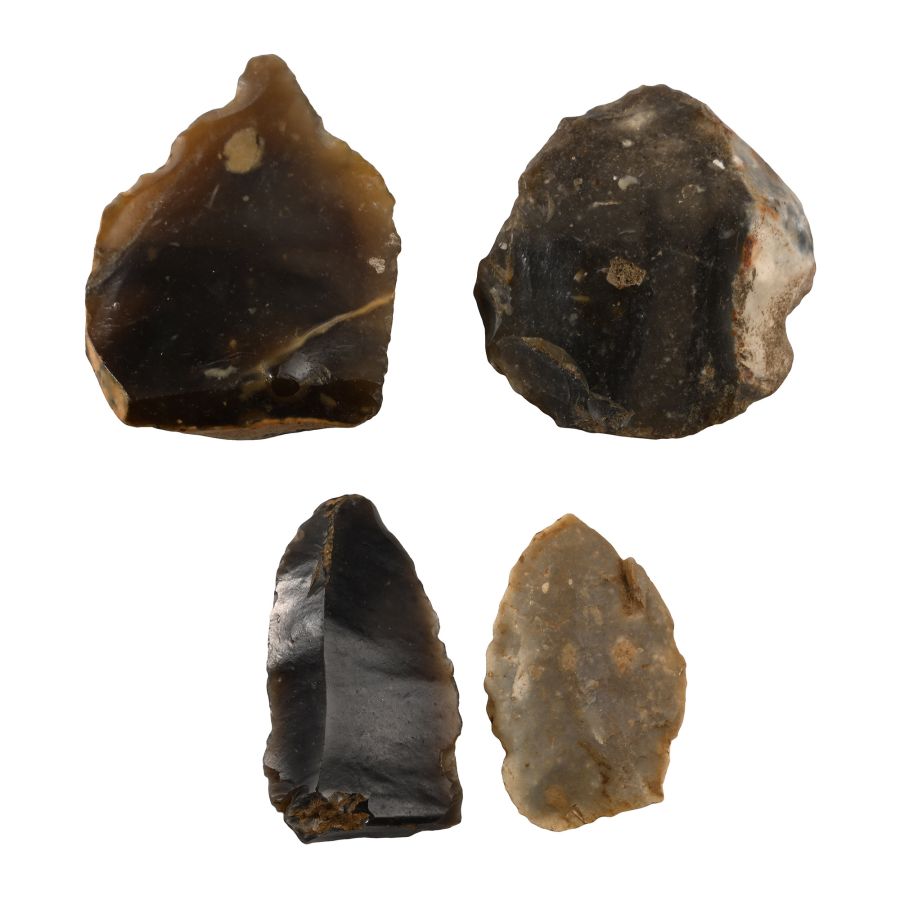
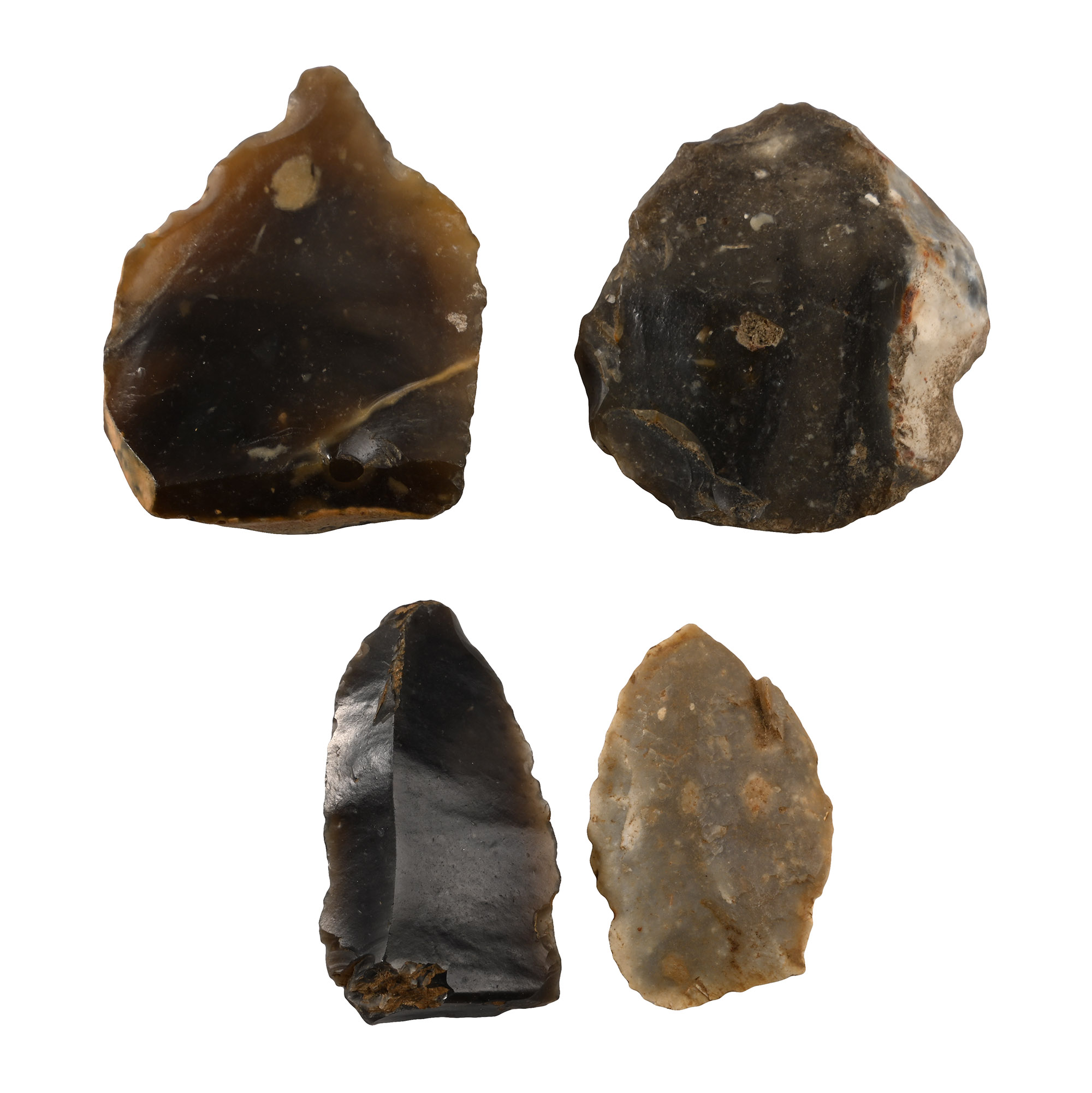
Stone Age Knapped Flint Drill, Arrowhead and Scraper Collection
NEOLITHIC PERIOD, CIRCA 6TH MILLENNIUM B.P.
1 3/8 - 1 7/8 in. (56.5 grams total, 36-48 mm).
Comprising four knapped implements. [4, No Reserve]
ProvenanceFrom the private collection of the late Mr M., a collector from Waterlooville, Hampshire, UK; late 1980s-early 1990s.
CONDITIONTimeLine Auctions follows a vetting process to ensure the authenticity and legality of all items, reinforcing our commitment to integrity and responsible trading. Each antiquity, antique, and coin lot undergoes thorough examination by a vetting committee of at least ten external specialists, professional trade association members, scientists, and archaeologists: Our Vetting Process
AUCTIONS:
TimeLine is a leading auction house specialising in antiquities, ancient art, collectables, natural history, coins, medals, and books. Our auctions offer museums, collectors, historians, and enthusiasts the opportunity to acquire unique and historically significant pieces.
LOT 1740
Stone Age Knapped Flint Drill, Arrowhead and Scraper Collection
Sold for (Inc. bp): £20
-
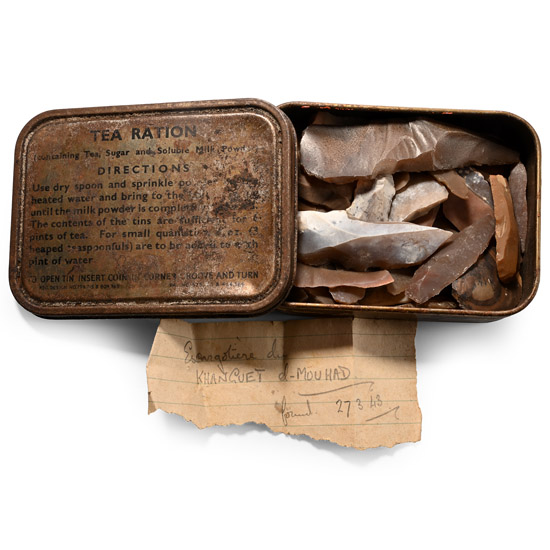
African Stone Age Flint and Other Knapped Blade Collection
Neolithic Period, circa 6000 B.P.Sold for (Inc. bp): £59
Mixed group of various blades, flakes and implements, an old handwritten note 'Escargotiere du Khanguet el-mouhad, found 27 3 43'. 250 grams total, 18-90 mm, box: 11.2 x 8.3 mm
From Khanget el-Mouhad, Algeria, 27 March 1943. From a private collection. In an old 'Tea Ration' tin accompanied by an old slip of paper with handwritten provenance. -
.jpg)
Framed English Stone Age Knapped Arrowhead and Tool Collection
Neolithic-Bronze Age Period, circa 6,000-4,000 B.P.Sold for (Inc. bp): £562
Mixed group of various types, including barbed, tanged, leaf-shaped, and others; set in a glazed box frame. 1.2 kg total, 35.5 x 35.5 cm includimg frame
Found various sites in the UK. From the collection of Martin Doyle, Leverstock, UK, 1980s-2000s. -
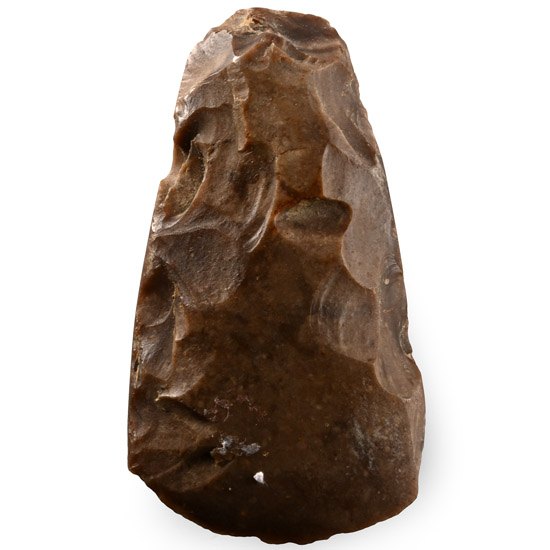
French Stone Age Part Polished Knapped Axehead
Neolithic Period, circa 6000 B.P.Sold for (Inc. bp): £91
Trapezoidal in plan, and lentoid in section with curved edge polished, butt left natural; applied label 'Montigny L'Allier'. 85 grams, 81 mm
Found Montigny, France. Acquired on the UK art market in the 2020s. From a private collection.
