
Loading, please wait...
LOT 0339
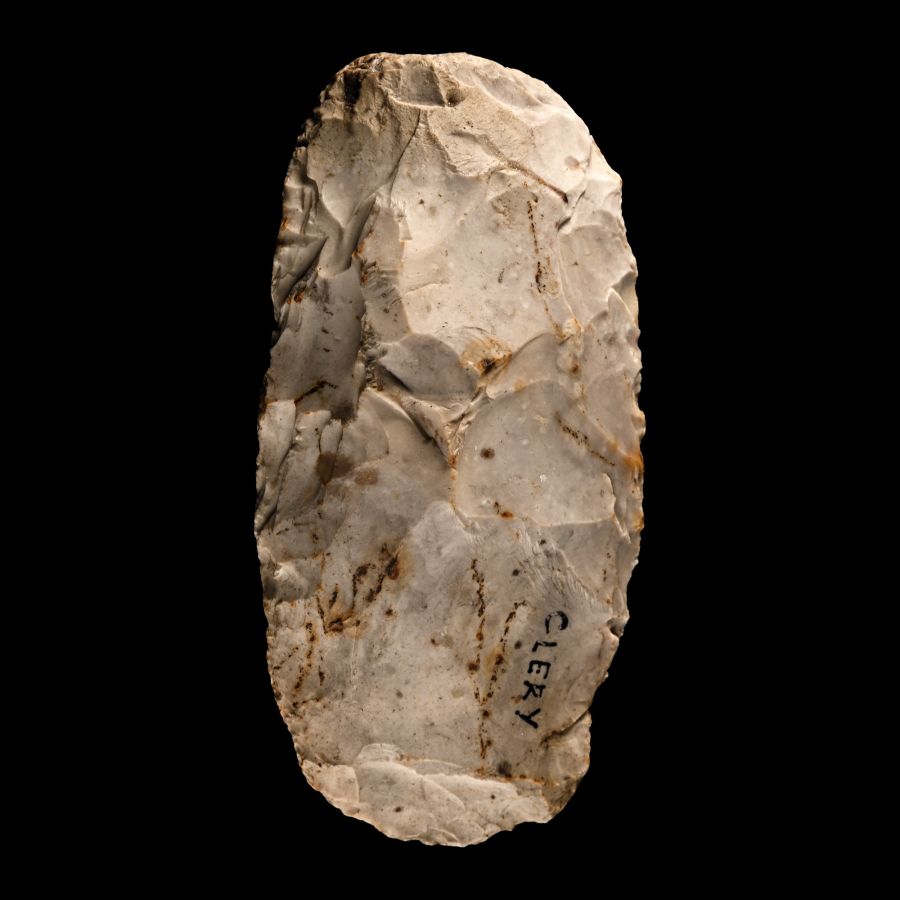
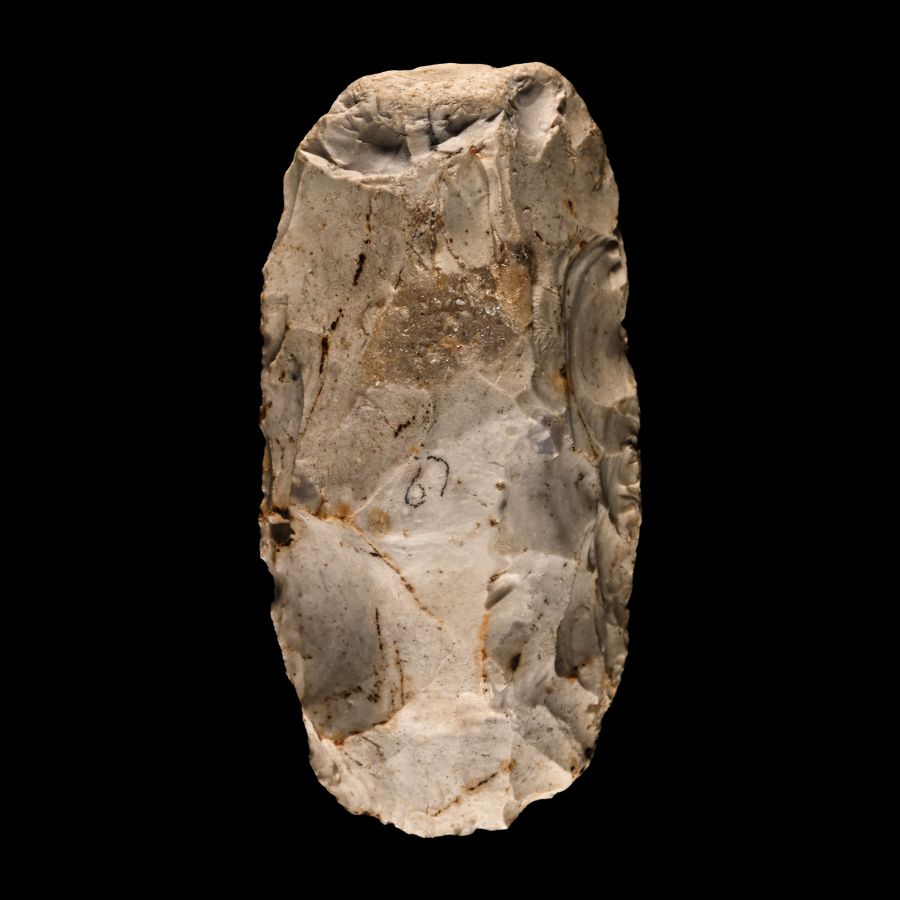
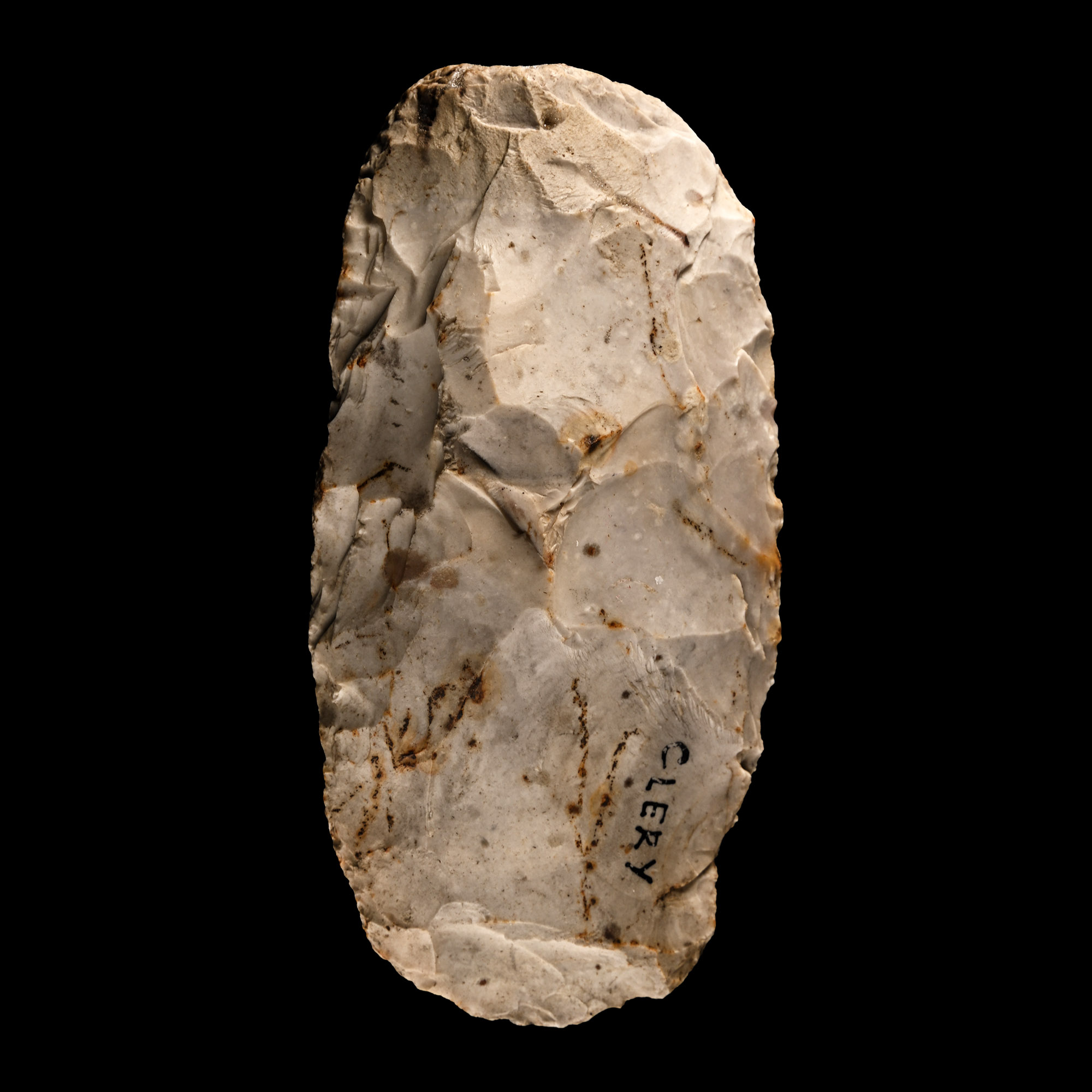
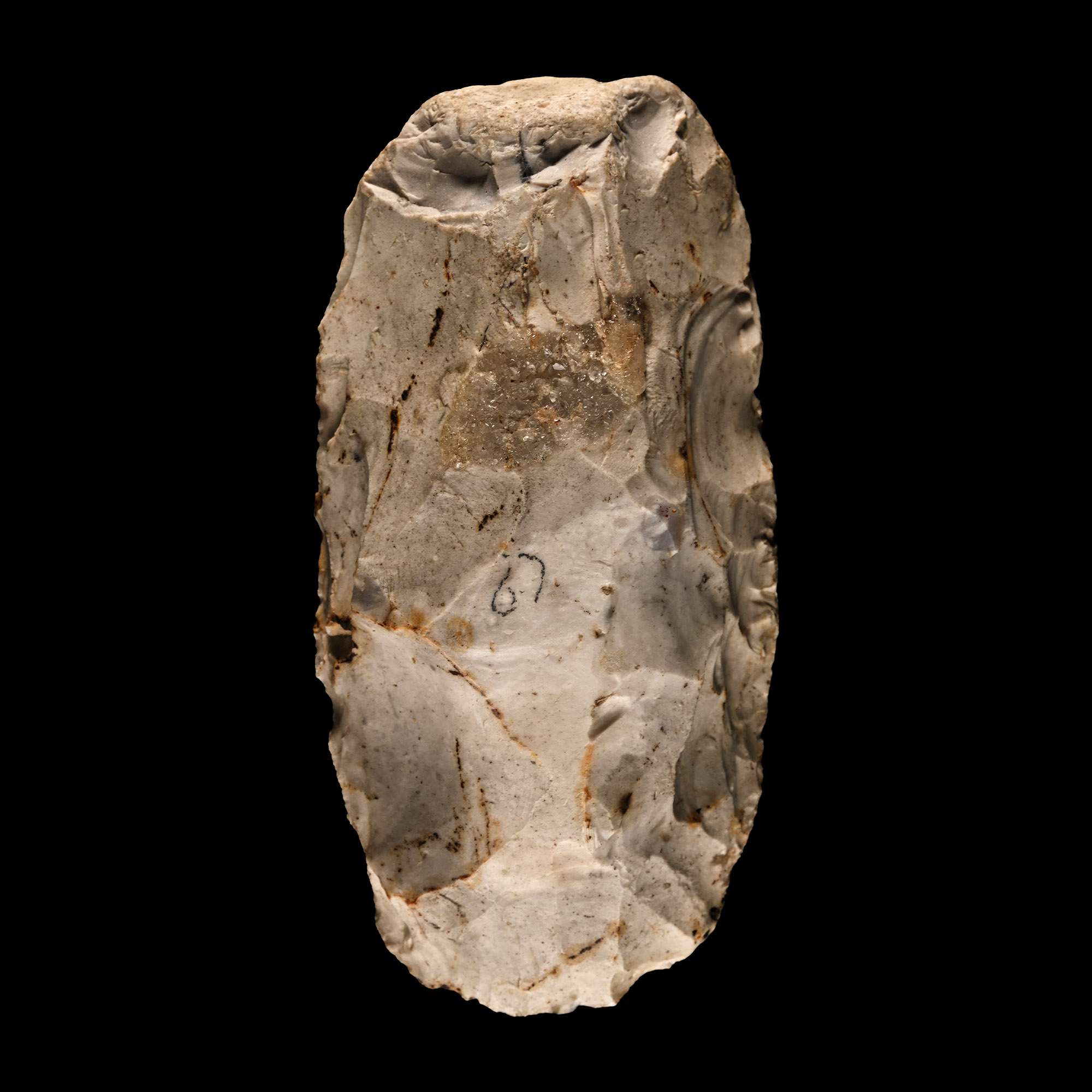
Stone Age Knapped Flint Axehead
NEOLITHIC PERIOD, CIRCA 6000 B.P.
5 1/4 in. (389 grams, 13.5 cm).
Regularly formed with parallel long sides and rounded corners; inked findspot 'Clery' and number '67' to reverse.
ProvenanceAcquired in the 1970s-1990s.
From the collection of the famous UK musician and amateur archaeologist, Victor Brox (1941-2023).
Acquired on the UK art market at auction after being sold by Mr Brox’s family.
From the private collection of an East Anglian, UK, specialist collector.
TimeLine Auctions follows a vetting process to ensure the authenticity and legality of all items, reinforcing our commitment to integrity and responsible trading. Each antiquity, antique, and coin lot undergoes thorough examination by a vetting committee of at least ten external specialists, professional trade association members, scientists, and archaeologists: Our Vetting Process
AUCTIONS:
TimeLine is a leading auction house specialising in antiquities, ancient art, collectables, natural history, coins, medals, and books. Our auctions offer museums, collectors, historians, and enthusiasts the opportunity to acquire unique and historically significant pieces.
LOT 0339
Stone Age Knapped Flint Axehead
Estimate £800 - 1,000€930 - 1,160 (for guidance only)$1,080 - 1,350 (for guidance only)
-
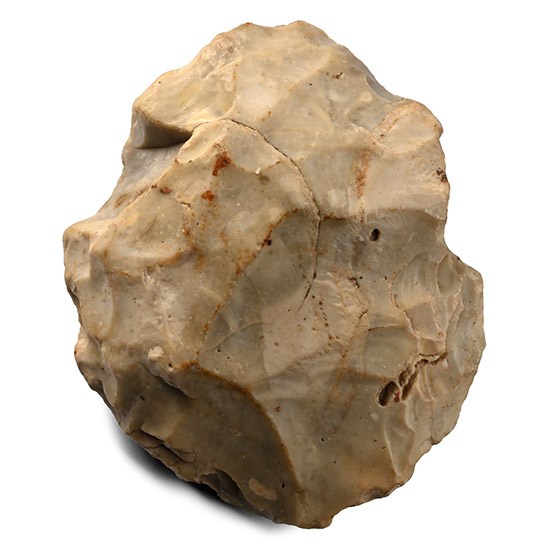
British Stone Age Mousterian Knapped Flint Bifacial Handaxe from Farnham Made by Neanderthal Man
Middle Palaeolithic Period, circa 150,000 to 60,000 B.P.Sold for (Inc. bp): £546
Ovate in form with thick butt. 66 grams, 64.4 mm
Found in 1901. From the collection of Captain Streatfield, who helped to fund the archaeology excavations at Farnham, Kent. After Captain Streatfield passed away in the 1940s, his collection was sold at auction to a gentleman in Kent. The collection was then sold again in the 2020’s via a UK auction house.
Artefacts from this period in Great Britain are not common. -
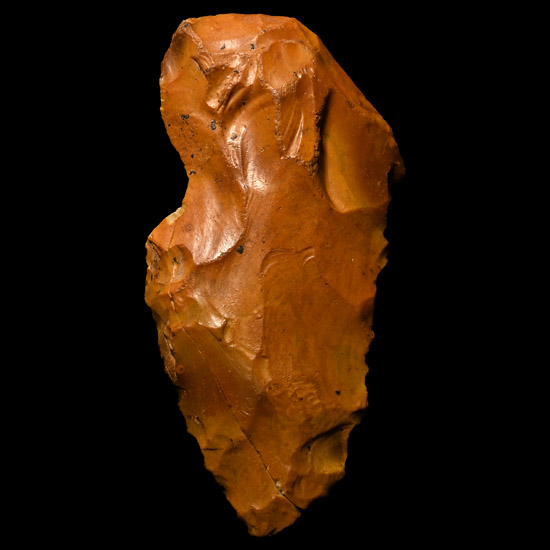
British Stone Age Knapped Flint Handaxe from Farnham, Greenhill
Middle Palaeolithic Period, circa 150,000-60,000 B.P.Sold for (Inc. bp): £1,300
Lanceolate in profile with broad point; inked findspot 'Farnham 1901'; repaired. 301 grams, 15.6 cm
Found in 1901. From the collection of Captain Streatfield who helped to fund the archaeology excavations at Farnham, Kent. After Captain Streatfield passed away in the 1940s, his collection was sold at auction to a gentleman in Kent. The collection was then sold again in the 2020’s via a UK auction house.
This handaxe is one of a group of 23 handaxes originally collected by Captain Gerald Streatfield and marked with ‘’Farnham 1901’’. The discovery of these 23 handaxes is noted by Bury (1935, 68–69) as being on “the west side of the Tilford Road (Greenhill)” where Streatfield found them. Roe (1968, 286) includes them in his gazetteer under Farnham, Greenhill with general reference SU 850 457, citing Bury’s report. Greenhill is shown on the 1873 and 1898 OS maps as a wooded area, just north of the River Bourne, at c.110 m OD, centred on SU 850 456. This location lies on the south-eastern edge of Terrace A of the River Wey sequence. References for context: Bury, H. (1935). The Farnham Terraces and their sequence. Proceedings of the Prehistoric Society, 1, 60– 69. Roe, D. (1968). A Gazetteer of British Lower & Middle Palaeolithic Sites. CBA Research Report 8. Taylor, C. (2017). Five Palaeolithic handaxes from Farnham, with a comment on the Huband flint collection. Surrey Archaeological Collections, 100, 213–221. -
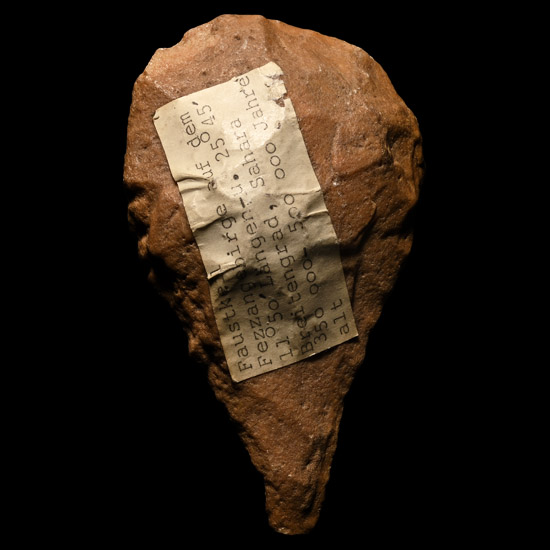
African Stone Age Homo Erectus Knapped Stone Handaxe
Palaeolithic Period, circa 1,000,000-500,000 B.P.Sold for (Inc. bp): £234
Piriform in plan with thick rear bulb; old collector's label 'Faustkeil. Fezzangebirge auf dem 11°50' Längen-u. 25°45' Breitengrad, Sahara. 350000-500000 Jahre alt.' 137 grams, 10.3 cm
Purchased on the European art market. Property of a Norfolk, UK, collector.
