
Loading, please wait...
LOT 1114
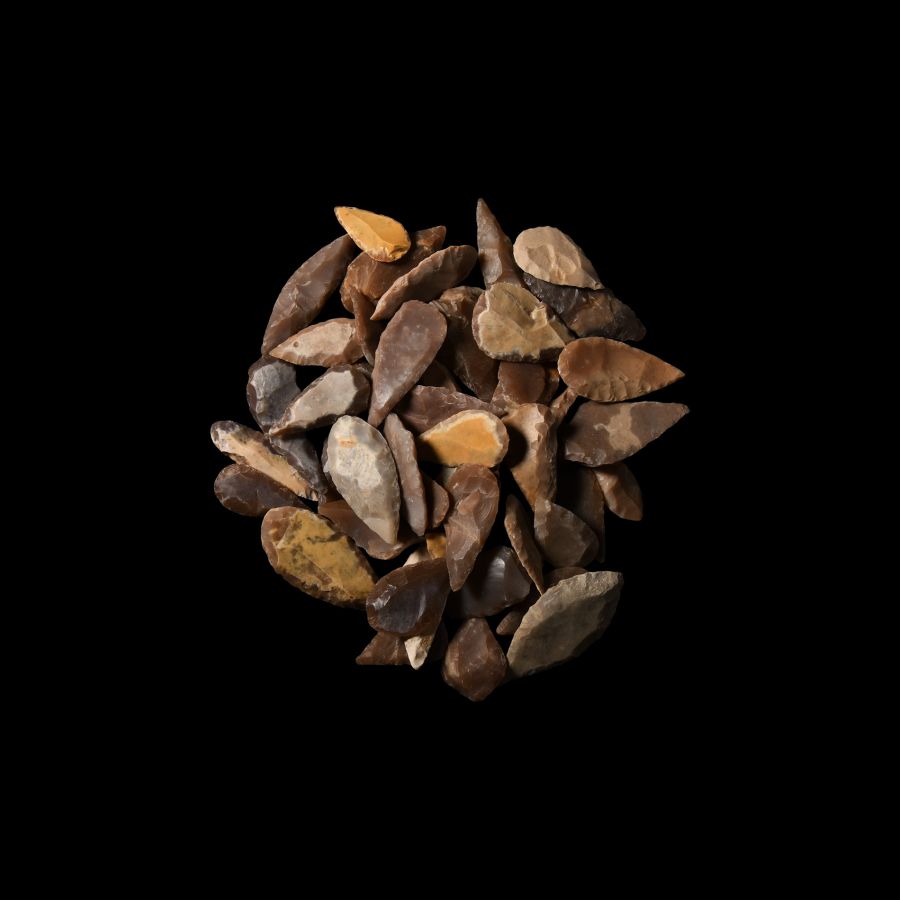
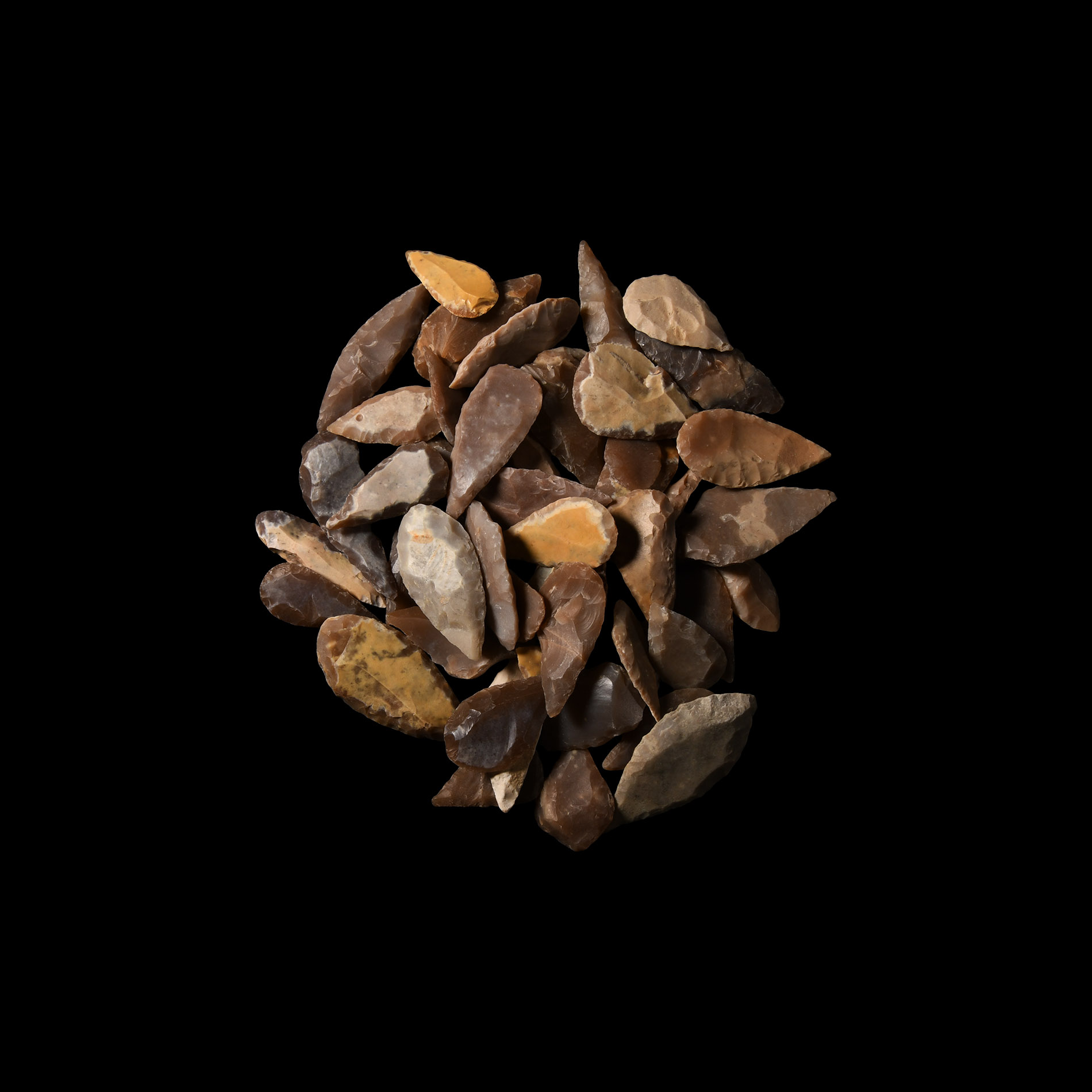
Stone Age Knapped Flint Arrowhead Collection
NEOLITHIC PERIOD, 8TH-5TH MILLENNIUM B.P.
7/8 - 1 3/4 in. (126 grams total, 23-43 mm).
A group of fifty knapped flint arrowheads. [50, No Reserve]
ProvenanceUK gallery, acquired in the 2000s.
Property of an English gentleman.
TimeLine Auctions follows a vetting process to ensure the authenticity and legality of all items, reinforcing our commitment to integrity and responsible trading. Each antiquity, antique, and coin lot undergoes thorough examination by a vetting committee of at least ten external specialists, professional trade association members, scientists, and archaeologists: Our Vetting Process
AUCTIONS:
TimeLine is a leading auction house specialising in antiquities, ancient art, collectables, natural history, coins, medals, and books. Our auctions offer museums, collectors, historians, and enthusiasts the opportunity to acquire unique and historically significant pieces.
-

Stone Age Upnor Clactonian Flint Cleaver
Lower Palaeolithic Period, circa 400,000 B.P.Sold for (Inc. bp): £117
An Upnor Clactonian flint cleaver, bearing collector's handwritten inventory information to one face 'Upnor 2B'. 402 grams, 93 mm
Found Upnor, Kent, UK. Richard Jones collection, Welling, Kent, UK, 1912-1915. Ex Rochester Museum, Kent collections. Specialist collection of J Edwin Jarvis. Ex Martin Schoyen collection, London, UK. -
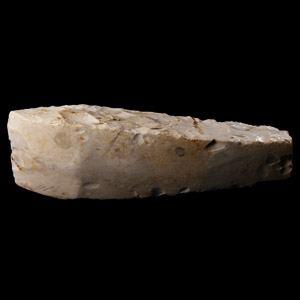
Danish Neolithic Flint Axehead
4th millennium B.C.Estimate: £300 - 400 (‡+bp*)
Opening Bid: £150
A thin-butted wedge-shaped white flint axe head. 440 grams, 15.9 cm
Acquired early 1990s. Ex private American collection; thence by descent. Private Swiss collection since 1998. -
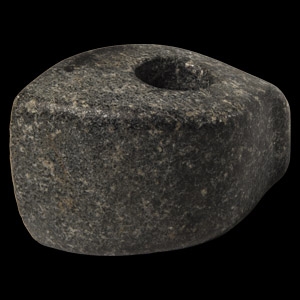
Stone Age Boat-Shaped Axehead
Neolithic Period, circa 3rd millennium B.C.Sold for (Inc. bp): £156
A diorite axe-hammer, with rounded butt chamfered at the edge and with convex sides, sub-rectangular in section, dark green fine-grained stone. 635 grams, 10 cm
Acquired 1971-1972. From the collection of the vendor's father. Property of a London, UK, collector.
During Neolithic period, while objects for everyday use, such as knife blades, arrows and lance tips were often only knapped - albeit with very fine retouching - and people soon learnt how to polish selected tools and equipment with sand for a smooth surface. Rotating tubular bone and sand made it possible to fit axes and hammers with a pierced 'eye' for the handle. This eye socket is the preliminary stage of the Bronze Age socket.
