
Loading, please wait...
LOT 1620
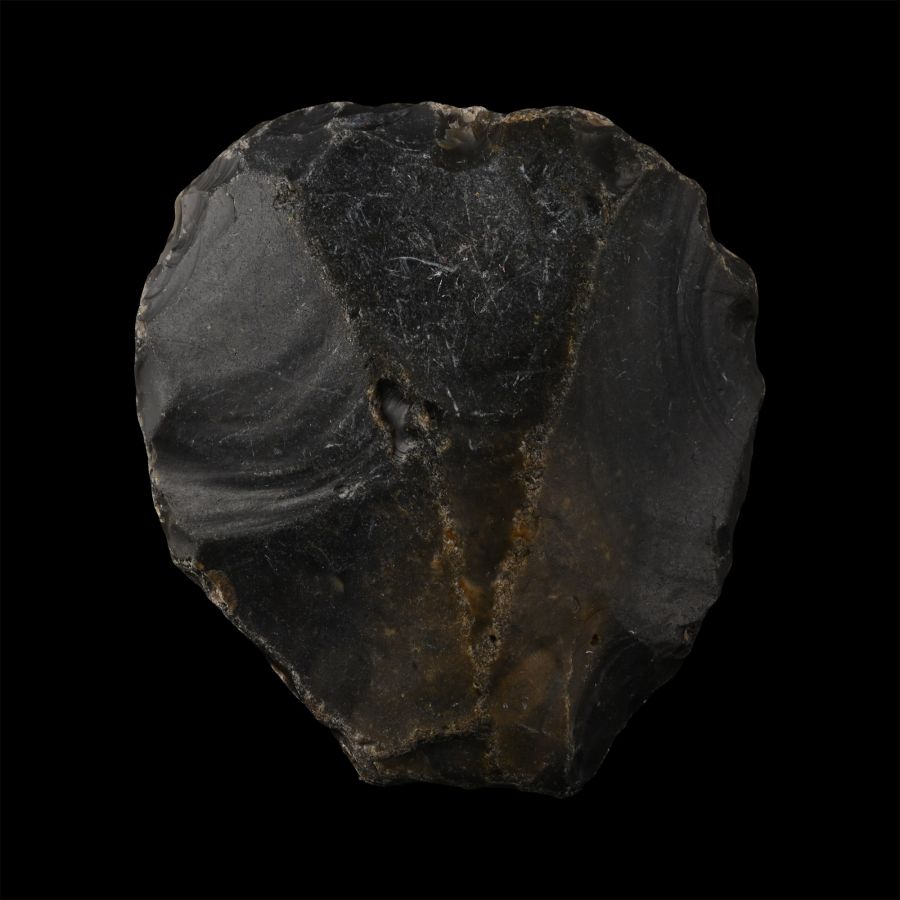
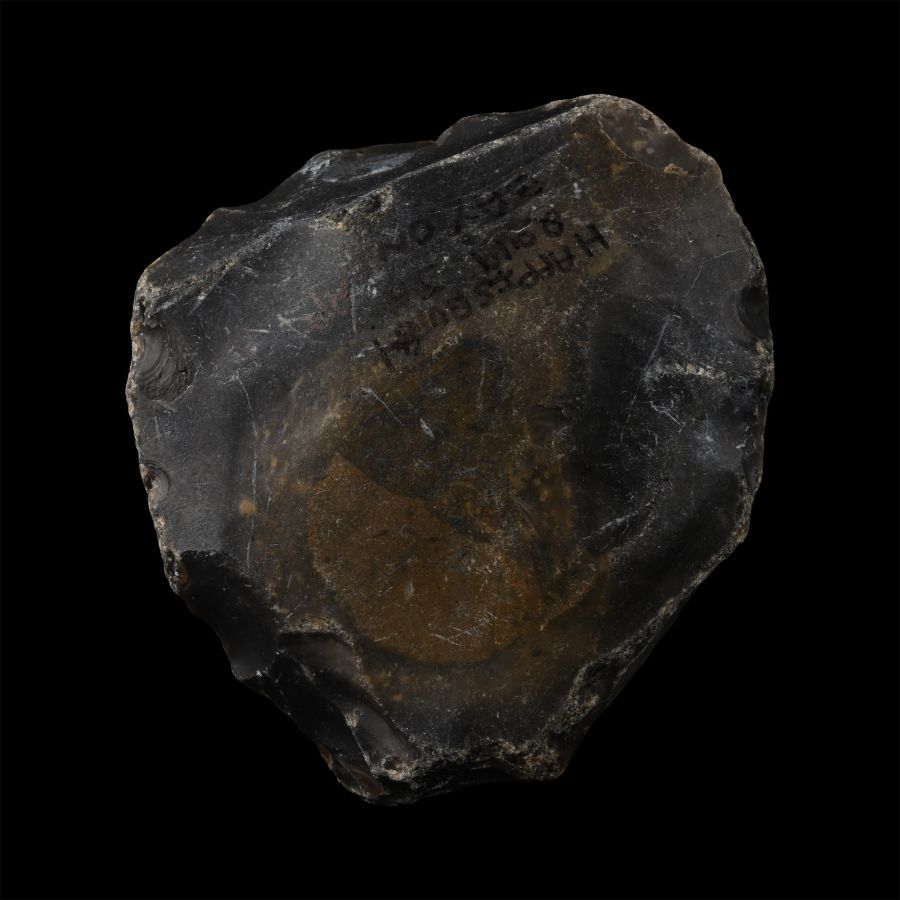
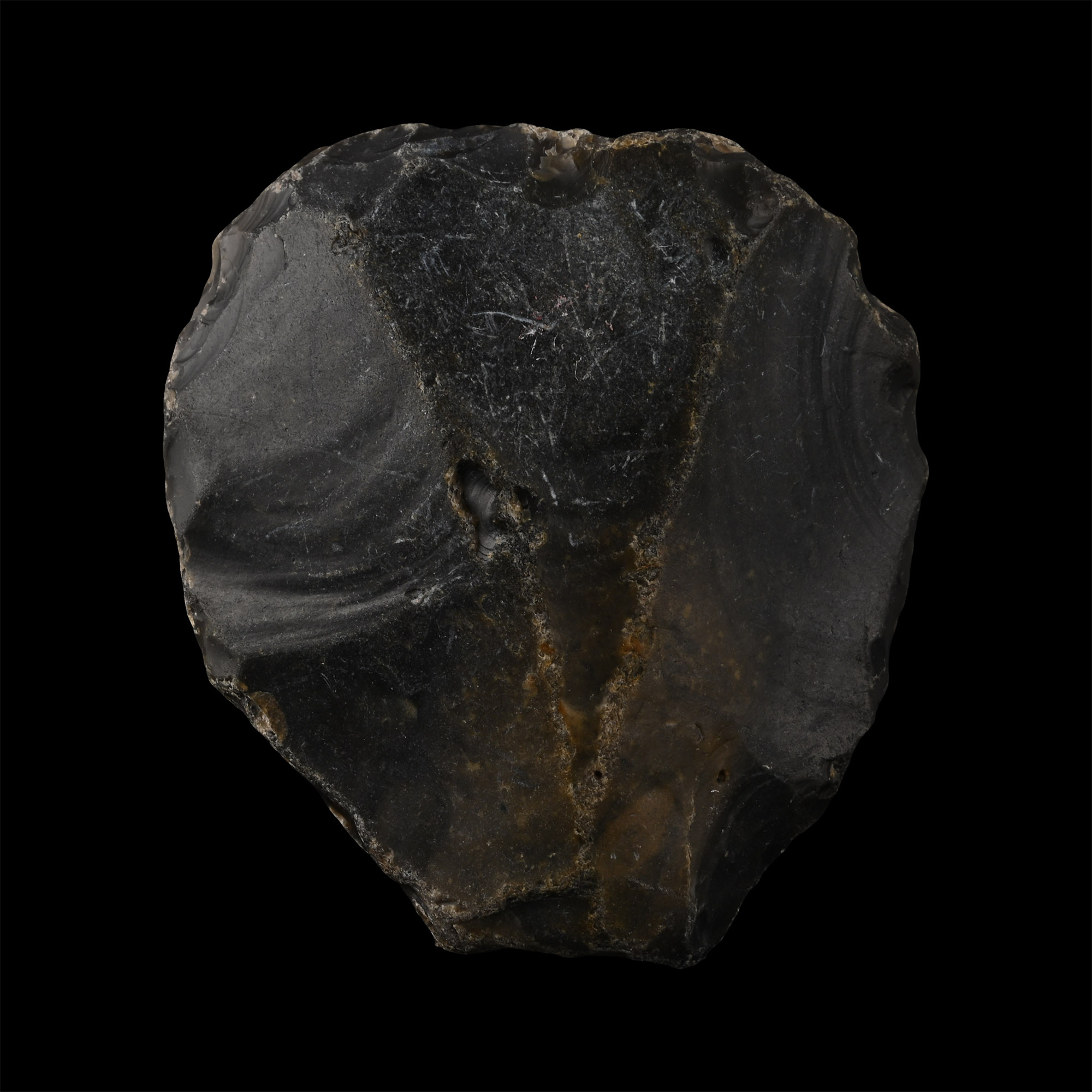
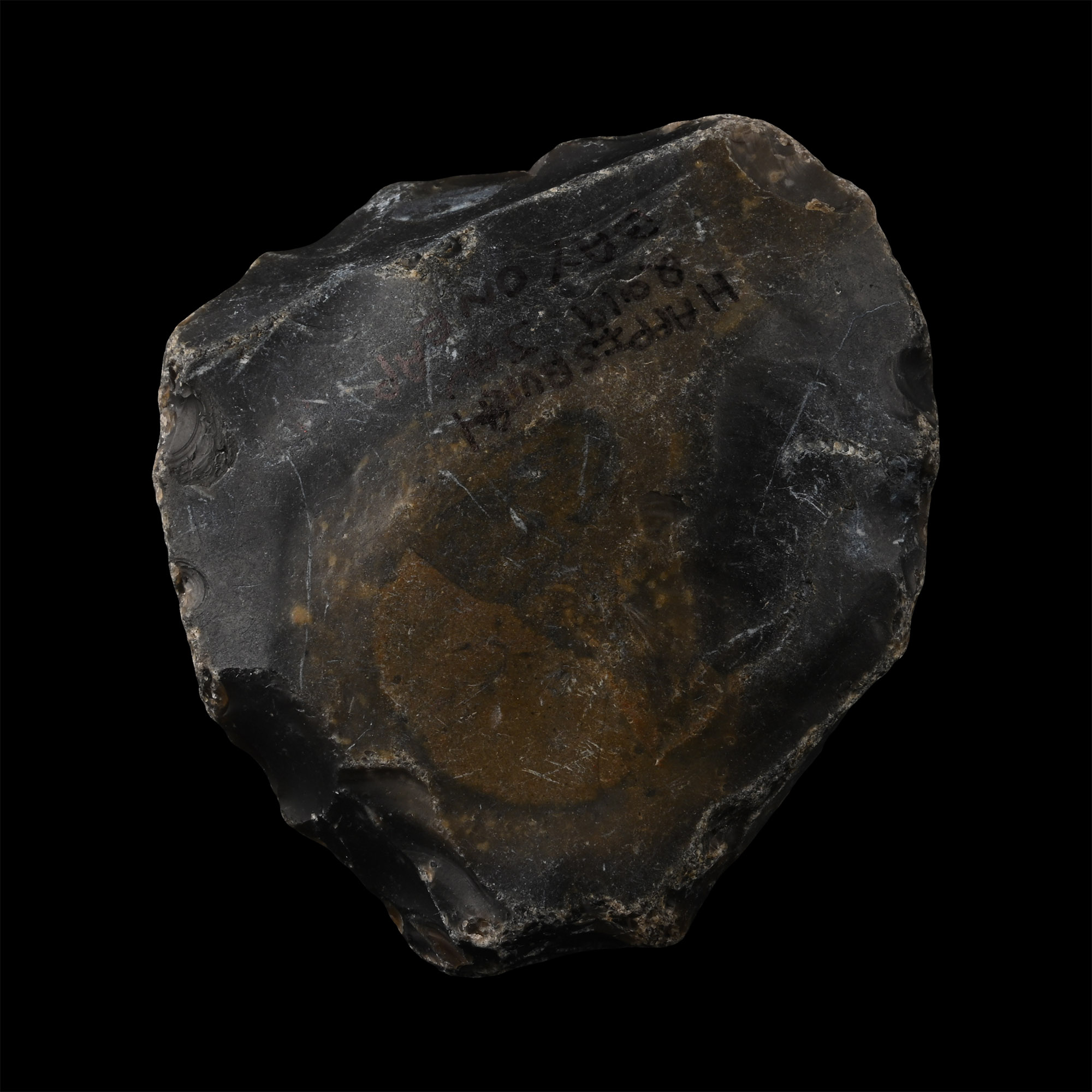
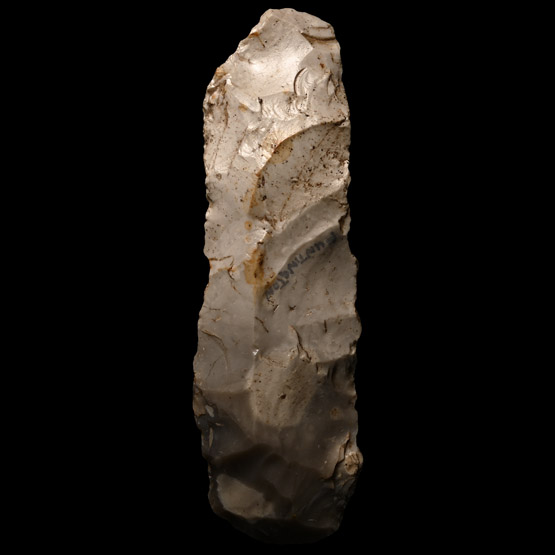
Stone Age Homo Heidelbergensis Flint Flake Tool from Happisburgh
LOWER PALAEOLITHIC PERIOD, CIRCA 600,000-250,000 B.P.
2 7/8 in. (180 grams, 74 mm).
Cordiform with lateral chamfers to the upper face, made from a large thick flint flake; marked to the butt 'Happisburgh 2019 JA Bay One AP'. [No Reserve]
ProvenanceFound by Mr Anthony Pryke in Happisburgh, Norfolk, UK, January 2019 near site 1.
FootnotesDiscovery by Mr A Pryke after the 'Beast from the East Storm' which stripped the beach of the sand and helped to erode the Palaeolithic artefacts from the ancient Thames river bed. During the time the artefacts were dropped, the Thames ran through North Norfolk and what is now Happisburgh before it was pushed down to its current position in London via the Ice age glacial melts. The site of Happisburgh in Norfolk has helped to push the history of inhabitation of the British Isles back by 200,000 making it a site of special importance.
CONDITIONTimeLine Auctions follows a vetting process to ensure the authenticity and legality of all items, reinforcing our commitment to integrity and responsible trading. Each antiquity, antique, and coin lot undergoes thorough examination by a vetting committee of at least ten external specialists, professional trade association members, scientists, and archaeologists: Our Vetting Process
AUCTIONS:
TimeLine is a leading auction house specialising in antiquities, ancient art, collectables, natural history, coins, medals, and books. Our auctions offer museums, collectors, historians, and enthusiasts the opportunity to acquire unique and historically significant pieces.
LOT 1620
Stone Age Homo Heidelbergensis Flint Flake Tool from Happisburgh
Sold for (Inc. bp): £91
-
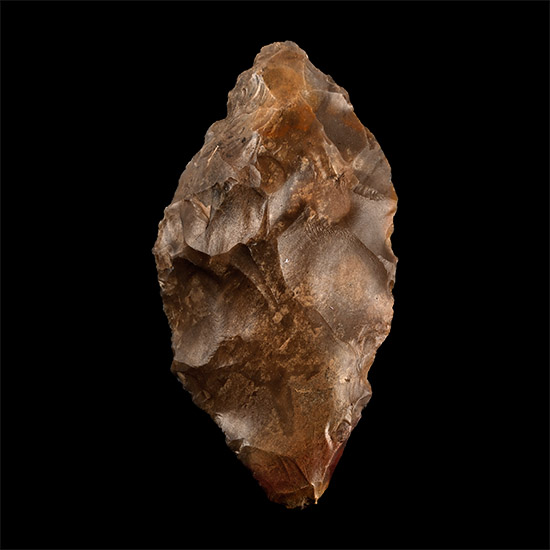
Stone Age Leaf-Shaped Flint Knife
Middle Palaeolithic Period, circa 150,000-60,000 B.P.Sold for (Inc. bp): £91
Scaphoid in plane and lentoid in section with thickening towards the butt, made from flint with a deep colourful patina. 118 grams, 11.2 cm
From a collection purchased on the UK art market. From the private collection of an East Anglian, UK, specialist collector. -
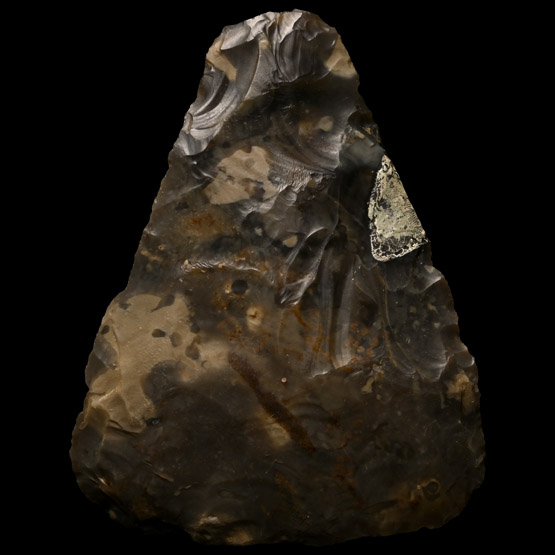
Stone Age Acheulean Triangular Knapped Flint Hand Axe
Lower Palaeolithic Period, circa 150,000 B.P.Sold for (Inc. bp): £546
Triangular in plan with rounded angles, lentoid in section with long butting edges; supplied with handwritten authentication card by Philippe Chauchoy "Certificat d'authenticité. Biface acheuléen en silèx grise datant d' environ 150 000 ans, certifié authentique - forme triangulaire (biface dit subtriangulaire) trouvé a 8m de profondeure dans la Somme". 310 grams, 13.2 cm
Recovered from the River Somme. Ex Philippe Chauchoy, Amiens, Northern France. From the private collection of a West Midlands lady collector. Accompanied by an original handwritten and signed certificate of authenticity card from Philippe Chauchoy. -
British Stone Age Flint Axehead
Mesolithic Period, circa 12th-8th millennium B.P.Sold for (Inc. bp): £91
Biconvex in section with rounded butt and long cutting edges. 155 grams, 12.8 cm
Found Funtington, West Sussex, UK. From a Derbyshire auction house, UK. From the private collection of a West Midlands lady collector.
