
Loading, please wait...
LOT 1631
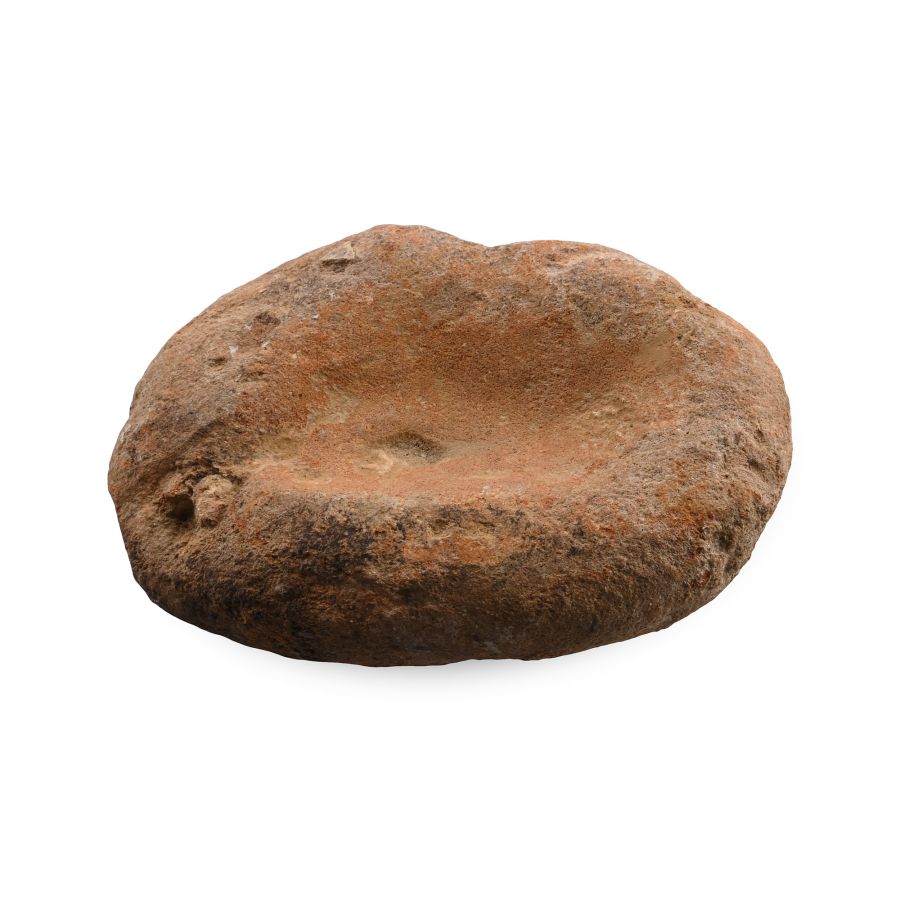
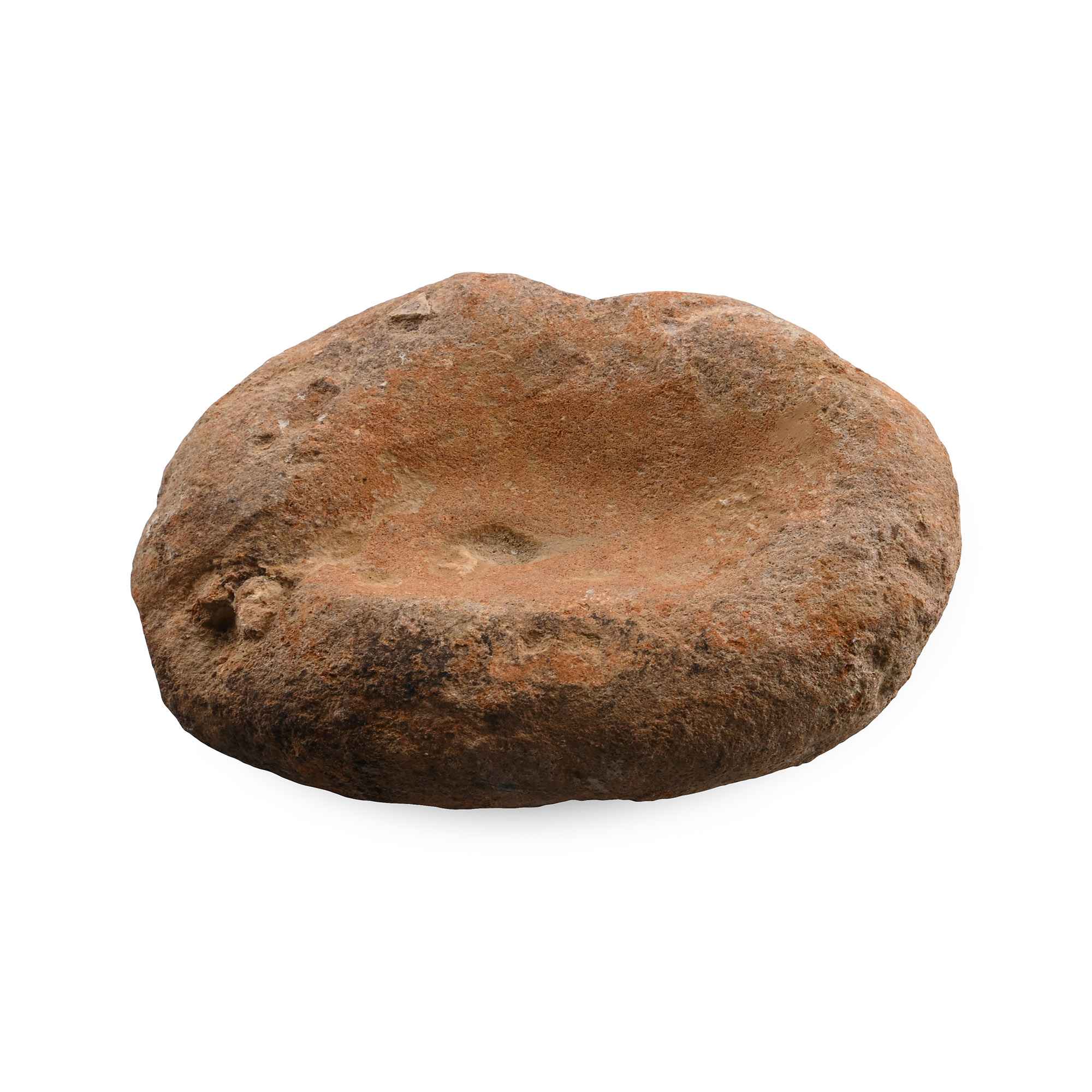
Stone Age Grease Lamp
UPPER PALAEOLITHIC PERIOD, CIRCA 40,000-15,000 B.P.
3 3/4 in. (225 grams, 97 mm).
Formed from a natural river cobble, modified by accentuating a large recess in one broad face and extending it to the edge, thus forming a nozzle or ledge on which to rest a wick. [No Reserve]
ProvenanceFound Dordogne, France.
Acquired in the 1970s-1990s.
From the collection of the famous UK musician and amateur archaeologist, Victor Brox (1941-2023).
Acquired on the UK art market at auction after being sold by Mr Brox’s family.
From the private collection of an East Anglian, UK, specialist collector.
TimeLine Auctions follows a vetting process to ensure the authenticity and legality of all items, reinforcing our commitment to integrity and responsible trading. Each antiquity, antique, and coin lot undergoes thorough examination by a vetting committee of at least ten external specialists, professional trade association members, scientists, and archaeologists: Our Vetting Process
AUCTIONS:
TimeLine is a leading auction house specialising in antiquities, ancient art, collectables, natural history, coins, medals, and books. Our auctions offer museums, collectors, historians, and enthusiasts the opportunity to acquire unique and historically significant pieces.
-
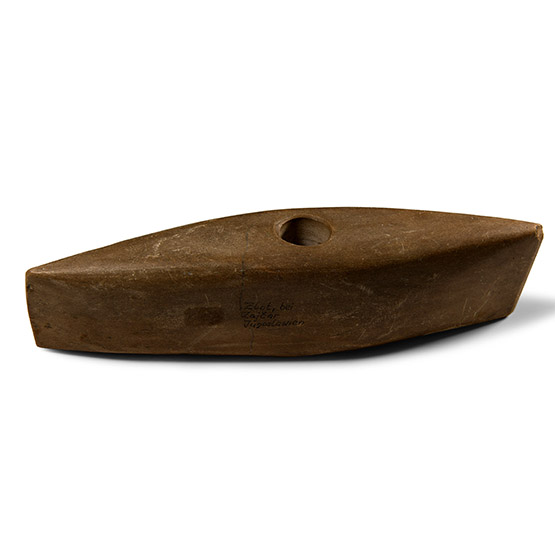
Stone Age Double-Sided Axehead
Neolithic Period, 3rd millennium B.C.Sold for (Inc. bp): £780
Boat-shaped in plan with central drilling; small chip to on edge; mounted on a custom-made stand. 738 grams total including stand, axehead: 18.2 cm
Private collection, Raguse, Switzerland. with Kölner Munzkabinett, Germany, before 2016. Private European collection. Accompanied by a copy of the 2016 invoice. -
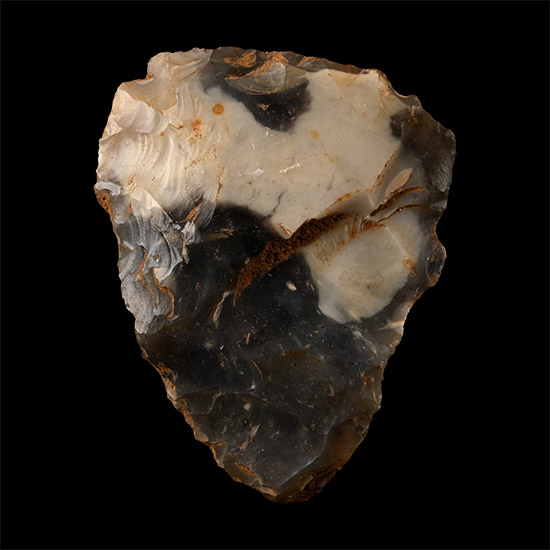
British Stone Age Flint Knife from Farnham
Neolithic Period, circa 6,000 B.P.Sold for (Inc. bp): £195
Triangular in plan and bifacially worked. 13 grams, 42 mm
Found Farnham, Surrey, UK, in 1901. From the collection of Captain Streatfield who helped to fund the archaeology excavations at Farnham, Kent.
After Captain Streatfield passed away in the 1940s, his collection was sold at auction to a gentleman in Kent. The collection was then sold again in the 2020’s via a UK auction house. -
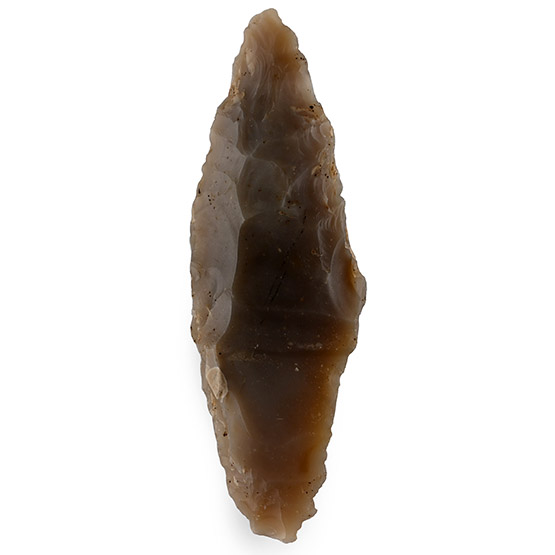
Stone Age Fine Knapped Point
Upper Palaeolithic Period, circa 40,000-22,000 years B.P.Estimate: £150 - 200 (+bp*)
Opening Bid: £75
A knapped lozenge-shaped bifacial tool in light grey flint. 38 grams, 94 mm
Found Yonne, Bourgogne-Franche-Comté Region, France. From a large French collection formed in the early 1900s. Acquired on the UK art market. From the private collection of an East Anglian, UK, specialist collector.
