
Loading, please wait...
LOT 1265
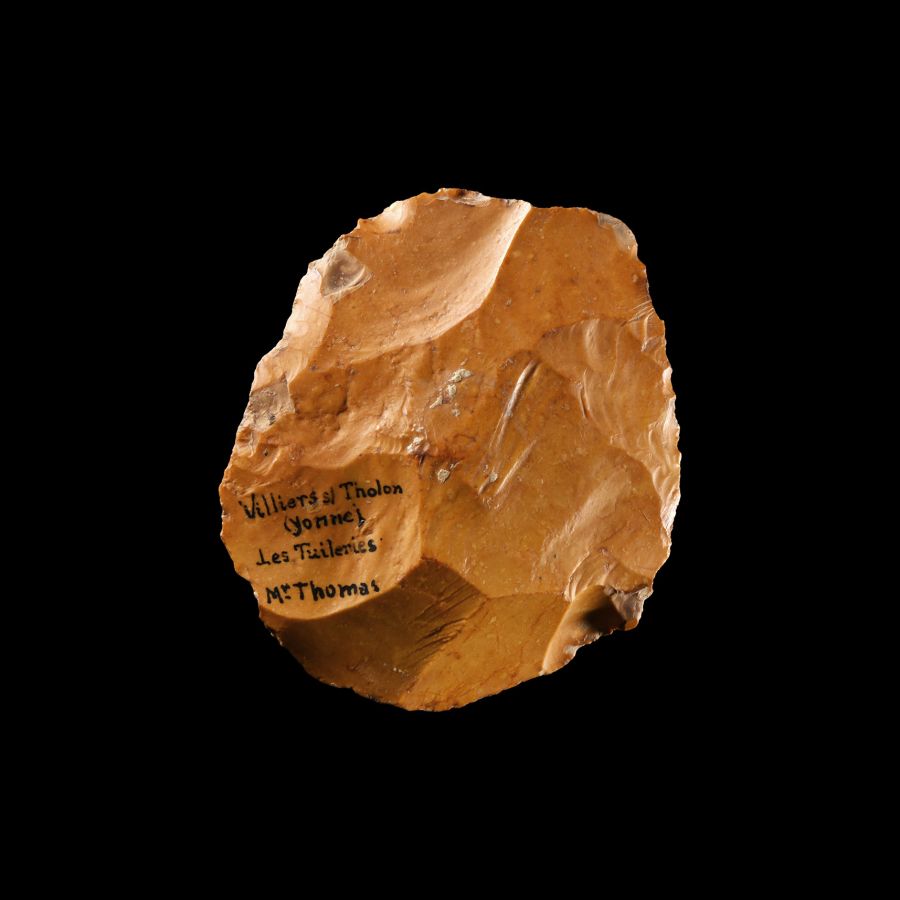
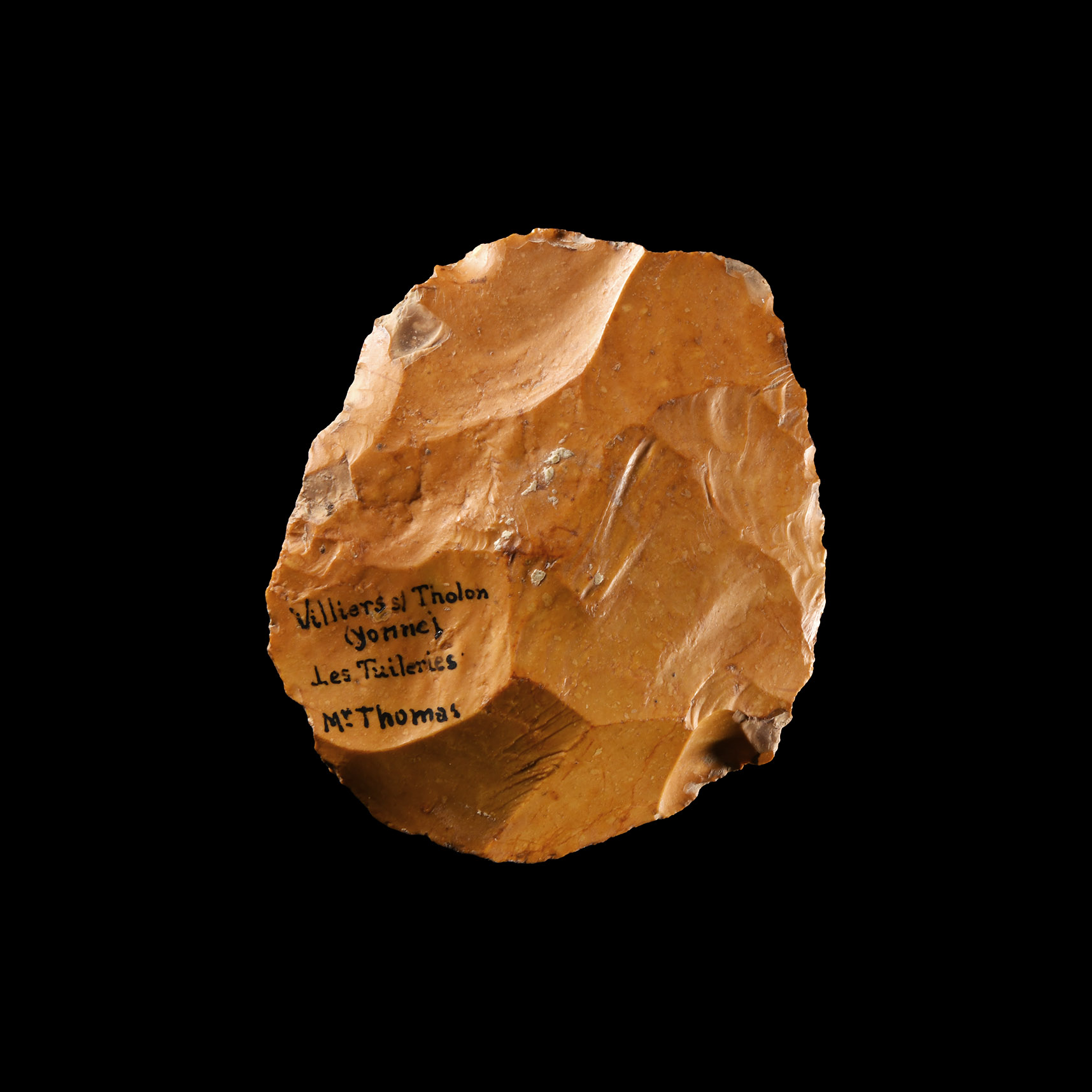
Stone Age French Ovate Flint Hand Axe
LOWER PALAEOLITHIC PERIOD, CIRCA 400,000-200,000 B.P.
3 5/8 in. (233 grams, 95 mm).
Bifacially knapped with slightly asymmetric point and rounded butt; with inked 'Villiers sl Tholon / (Yonne) / Les Tuileries / Mr Thomas' find spot note. [No Reserve]
ProvenanceFound Villiers sl Tholon, Les Tuileries, France
French private collection.
Accompanied by a copy of the French cultural passport no.226712.
TimeLine Auctions follows a vetting process to ensure the authenticity and legality of all items, reinforcing our commitment to integrity and responsible trading. Each antiquity, antique, and coin lot undergoes thorough examination by a vetting committee of at least ten external specialists, professional trade association members, scientists, and archaeologists: Our Vetting Process
AUCTIONS:
TimeLine is a leading auction house specialising in antiquities, ancient art, collectables, natural history, coins, medals, and books. Our auctions offer museums, collectors, historians, and enthusiasts the opportunity to acquire unique and historically significant pieces.
-
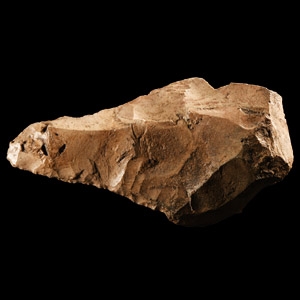
Stone Age French Ficron Handaxe in Pink Quartzite
Palaeolithic Period, circa 300,000 B.P.Sold for (Inc. bp): £52
Knapped, with a bulbous head and slender tapering butt. 307 grams, 13.6 cm
From an old French collection. Ex Norfolk, UK, private collection. From the collection of a South West London, UK, collector. -
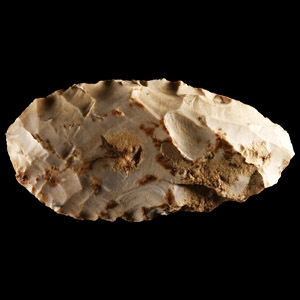
Stone Age French Variegated Grey Flint Limande Handaxe
Palaeolithic Period, circa 300,000 B.P.Sold for (Inc. bp): £416
Knapped with a rounded butt and convex cutting edge. 408 grams, 15.3 cm
Private collection established since the 1950s. From the collection of a South West London, UK, collector. -
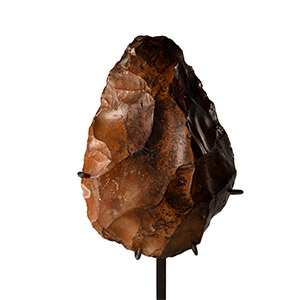
Stone Age Knapped Flint Hand Axe
Lower Palaeolithic Period, circa 400,000-200,000 B.P.Sold for (Inc. bp): £715
Of triangular form with slightly flattened tip and rounded butt; with printed and inked 'MADIJEN / EI:190M / THEBES / 1905' find spot label; with custom-made display stand. 290 grams total, 16 cm including stand.
Found Thebes, 1905. British private collection.
