
Loading, please wait...
LOT 0499
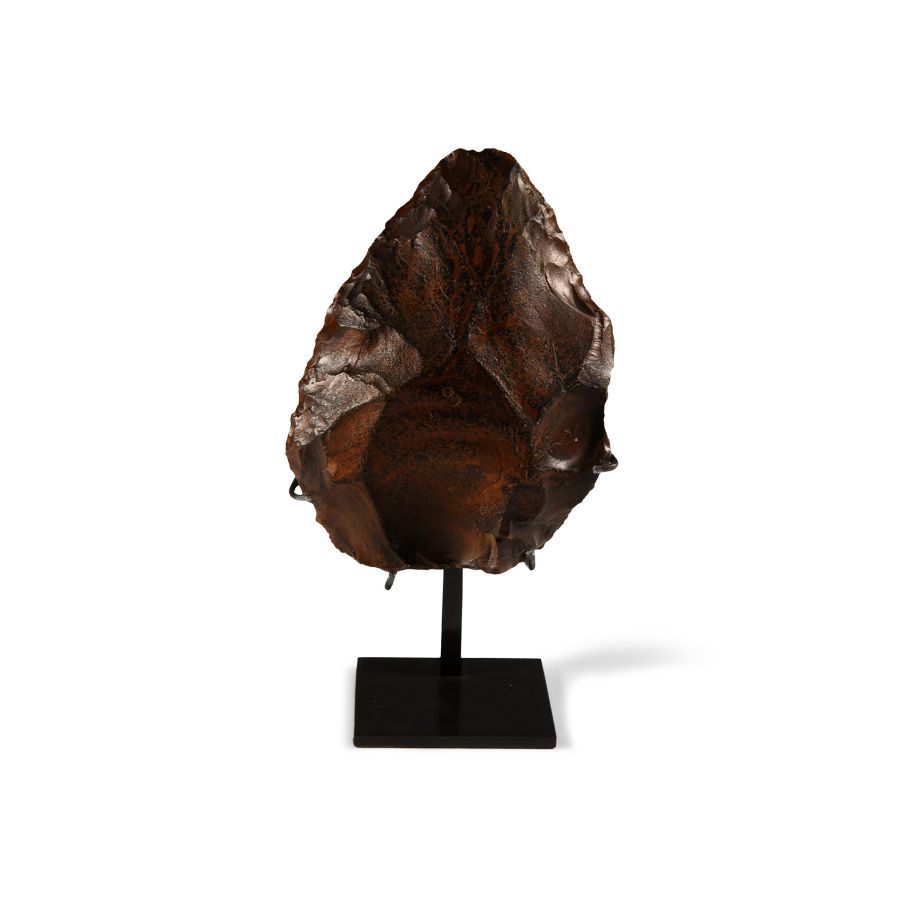
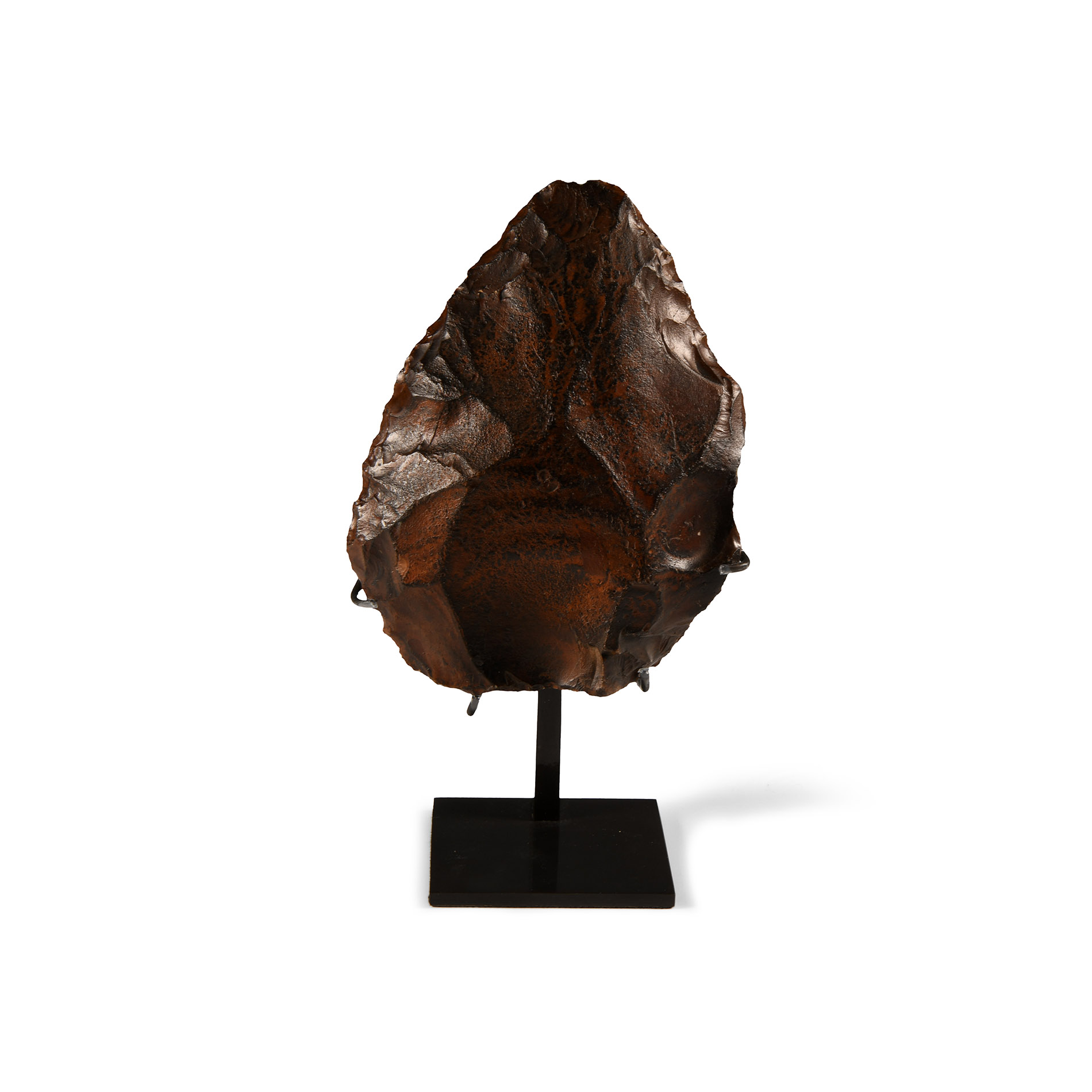
Stone Age Flint Hand Axe
LOWER PALAEOLITHIC PERIOD, CIRCA 400,000-200,000 B.P.
6 1/2 in. (480 grams total, 16.5 cm).
Finely knapped bifacial hand axe of triangular form with rounded butt; with printed and inked 'MADIJEN / EI:190M / THEBES / 1905' findspot label; with custom-made display stand. [No Reserve]
ProvenanceFound Madijen, Thebes, 1905.
Old German collection, before 1920.
TimeLine Auctions follows a vetting process to ensure the authenticity and legality of all items, reinforcing our commitment to integrity and responsible trading. Each antiquity, antique, and coin lot undergoes thorough examination by a vetting committee of at least ten external specialists, professional trade association members, scientists, and archaeologists: Our Vetting Process
AUCTIONS:
TimeLine is a leading auction house specialising in antiquities, ancient art, collectables, natural history, coins, medals, and books. Our auctions offer museums, collectors, historians, and enthusiasts the opportunity to acquire unique and historically significant pieces.
-
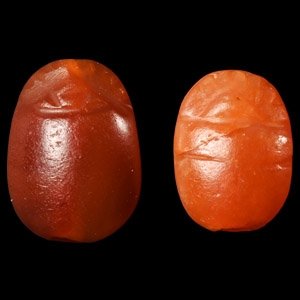
Egyptian Carnelian Scarab Group
Late Period, 664-332 B.C.Sold for (Inc. bp): £221
One with segmented carapace and leg detailing; one with head elements only. 1.61 grams total, 10-12 mm
Acquired 1970s-1996. Property of a North American collector. London collection, 2016. -
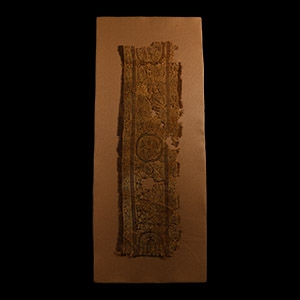
Egyptian Mounted Coptic Textile with Running Hounds
Circa 6th-7th century A.D.Sold for (Inc. bp): £104
Comprising a large fragment with a vertical band (clavus) from a garment, woven in linen and green, blue, yellow and red wool, embroidered with circular patterns filled with vegetal figures and arabesques, alternating with two parallel rows of running animals (hounds?), edged by a red border, a further band of foliage decoration. 163 grams, 59 x 24.5 cm
Acquired 1970s-1996. Property of a North American collector. London collection, 2016.
Tapestry technique on natural linen. It is highly probable that this tapestry was part of a long decorated tunic, a clavus running vertically on the breast and on the back of it, and having a parallel clavus on the other side. Tunic decoration conformed to a specific layout with the back mirroring the front. Matching bands called clavi ran on either side of the neck. They could be full length, like our specimen, or stop above the waistline. -
.jpg)
Large Egyptian Heart Scarab with Hieroglyphic Inscription
Late Period, 664-332 B.C.Estimate: £8,000 - 10,000 (‡+bp*)
Opening Bid: £4,000
With naturalistic detailing to the upper body and legs; base engraved with seven rows of hieroglyphic text, a version of Chapter 30b of the Book of the Dead; faience or glazed steatite. 68.5 grams, 54 mm
Ex collection Charles Bouché, (1928 - 2010). Accompanied by an academic report by Egyptologist Paul Whelan. Accompanied by a copy of a French cultural passport no.139368. Accompanied by old sketches of the artefact together with a provisional translation of the hieroglyphic inscription in French; mentioning the god Osiris. This lot has been checked against the Interpol Database of stolen works of art and is accompanied by search certificate no.11845-206822
