
Loading, please wait...
LOT 1224
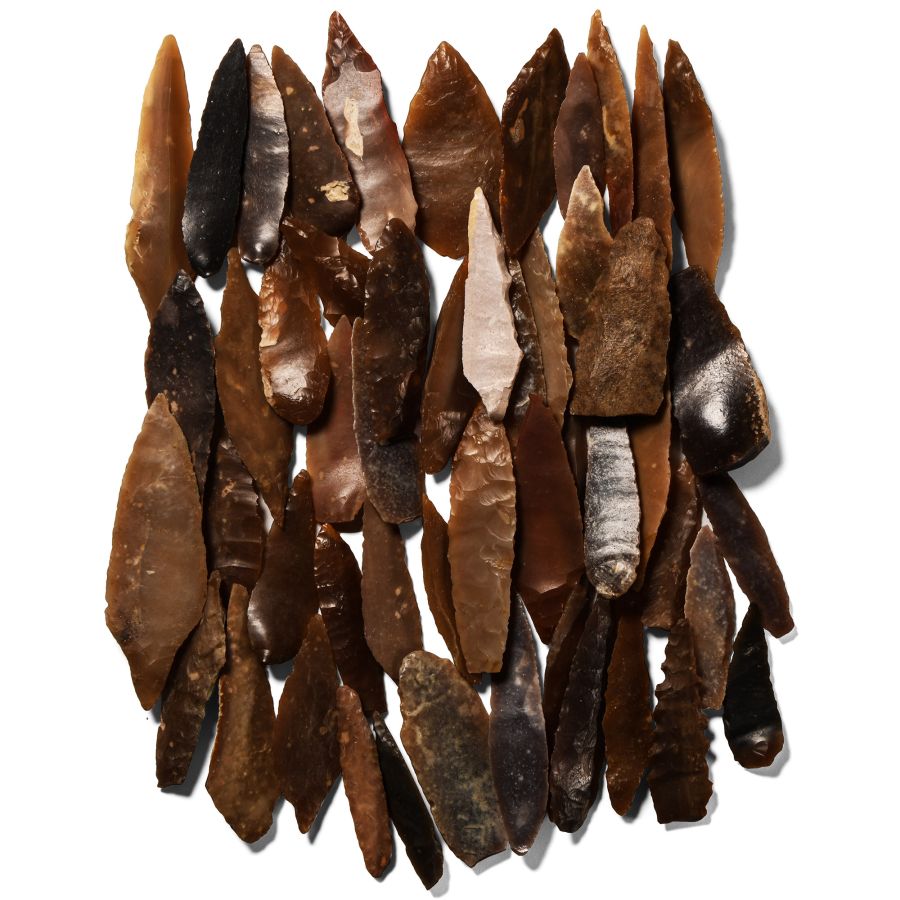
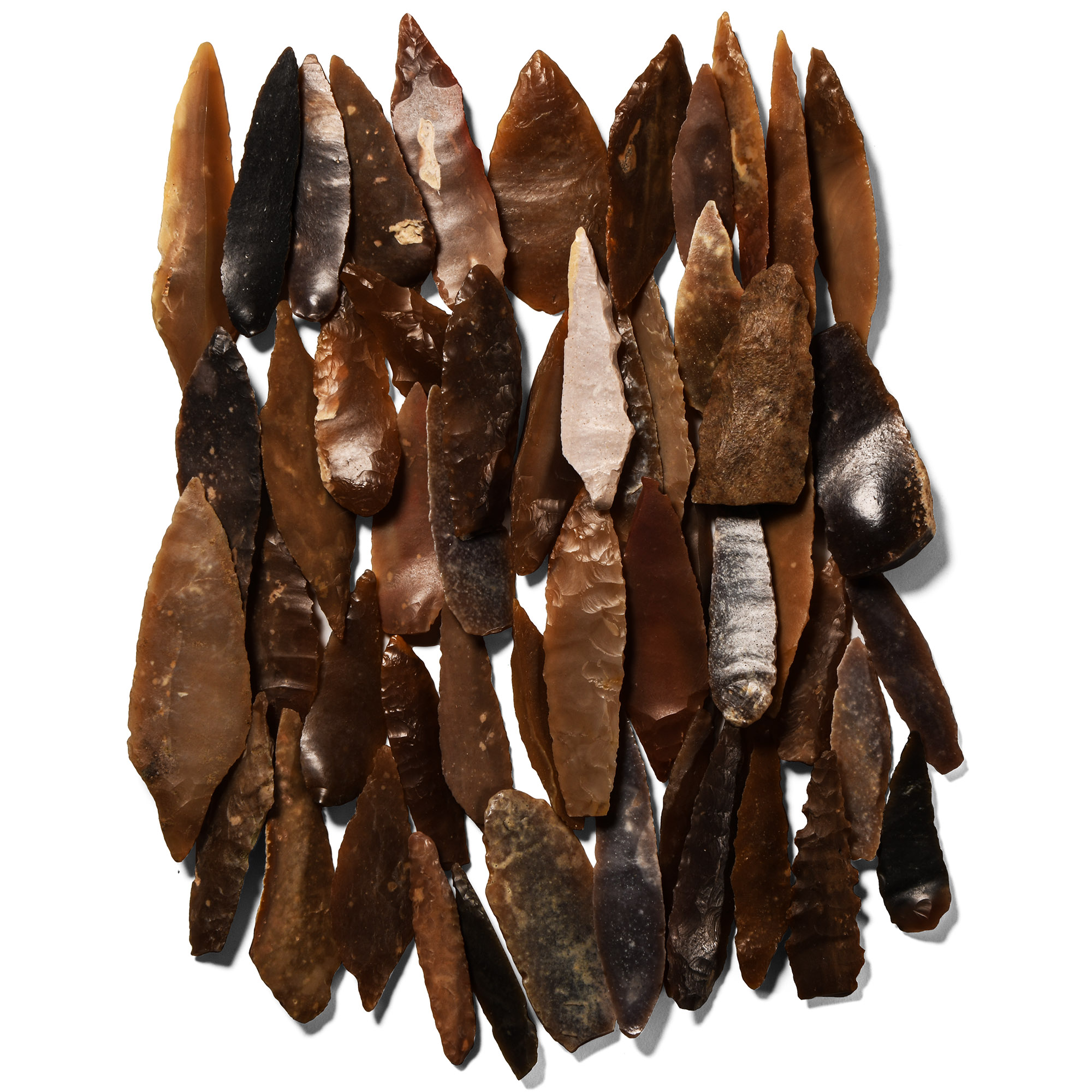
Stone Age Flint Arrowhead Collection
NEOLITHIC PERIOD, 8TH-5TH MILLENNIUM B.C.
1 1/4 - 2 3/8 in. (134 grams total, 31-61 mm).
Comprising mostly uniface lentoid flint and chert arrowheads, a few tanged; probably from the Sahara region of North Africa. [50, No Reserve]
ProvenanceUK gallery, early 2000s.
LiteratureSee Greenwell, David, Fling Artefacts of North Africa, privately published, 2005, for much information.
CONDITIONTimeLine Auctions follows a vetting process to ensure the authenticity and legality of all items, reinforcing our commitment to integrity and responsible trading. Each antiquity, antique, and coin lot undergoes thorough examination by a vetting committee of at least ten external specialists, professional trade association members, scientists, and archaeologists: Our Vetting Process
AUCTIONS:
TimeLine is a leading auction house specialising in antiquities, ancient art, collectables, natural history, coins, medals, and books. Our auctions offer museums, collectors, historians, and enthusiasts the opportunity to acquire unique and historically significant pieces.
-
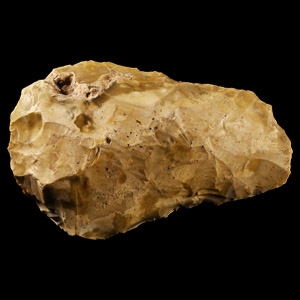
Stone Age English Acheulean Bifacial Handaxe
Lower Palaeolithic Period, circa 300,000 B.P.Sold for (Inc. bp): £416
Knapped and broadly plano-convex in section. 393 grams, 13.1 cm
Found field walking in Sailsbury, Wiltshire, UK. From an English private collection. From the collection of a South West London, UK, collector. -
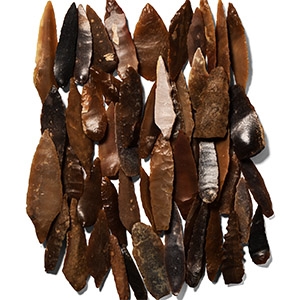
Stone Age Flint Arrowhead Collection
Neolithic Period, 8th-5th millennium B.C.Sold for (Inc. bp): £98
Comprising mostly uniface lentoid flint and chert arrowheads, a few tanged; probably from the Sahara region of North Africa. 134 grams total, 31-61 mm
UK gallery, early 2000s. -
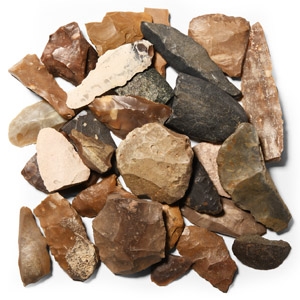
Stone Age Flint Implement Collection
Neolithic Period, 8th-5th millennium B.C.Sold for (Inc. bp): £26
Comprising a group of mixed stone implements, mostly in flint or chert and knapped, including blades, scrapers and points; some broken and probably from the Sahara region of North Africa. 634 grams total, 24-94 mm
UK gallery, early 2000s.
