
Loading, please wait...


LOT 1484
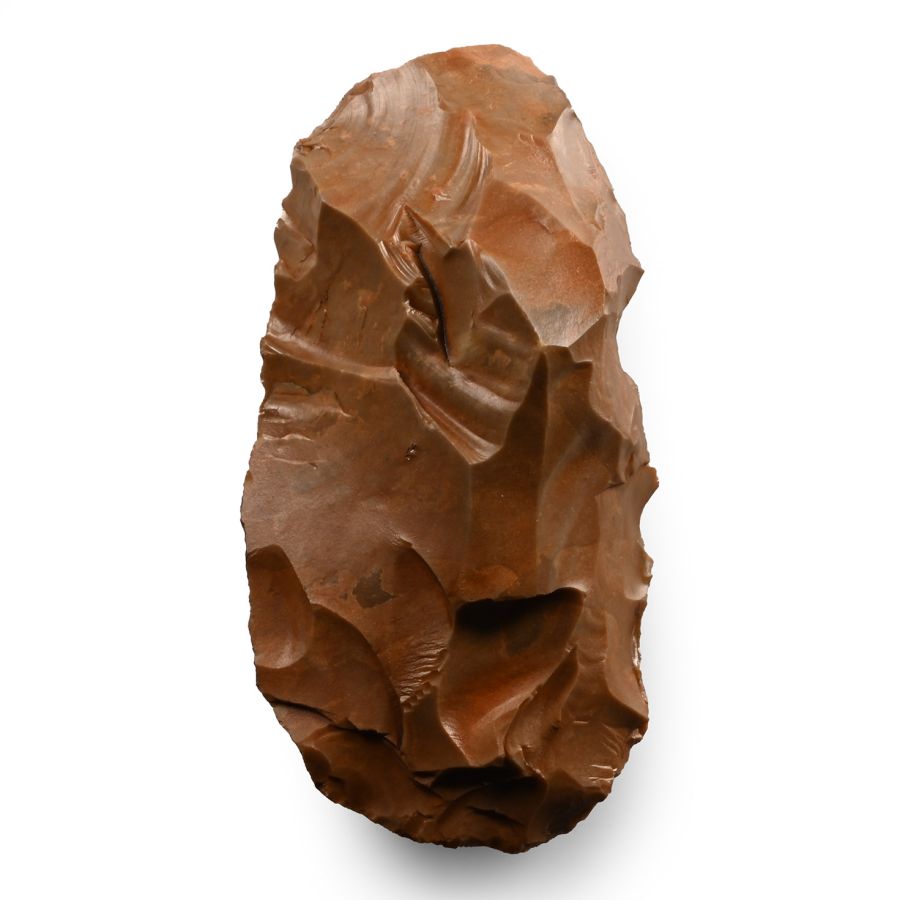
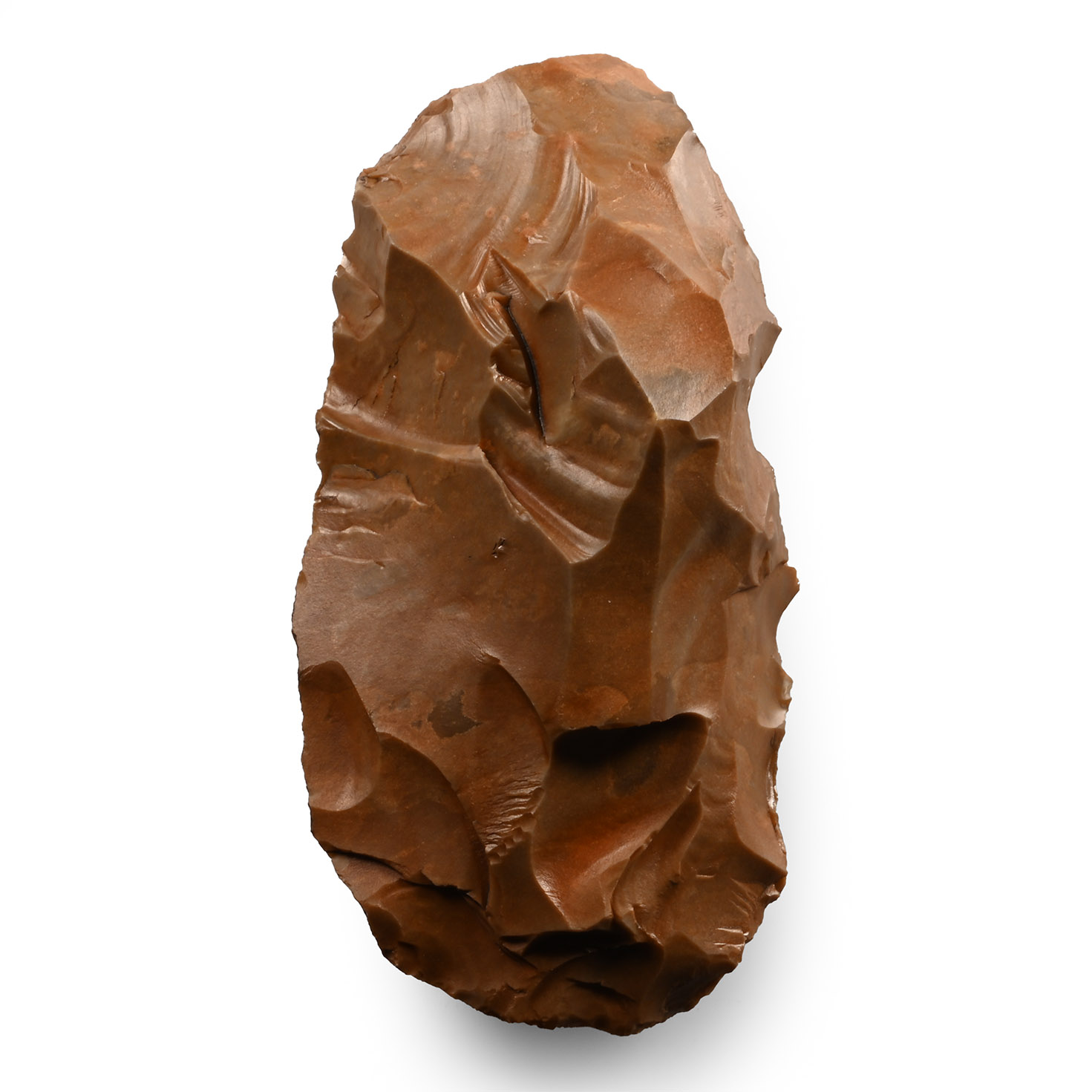
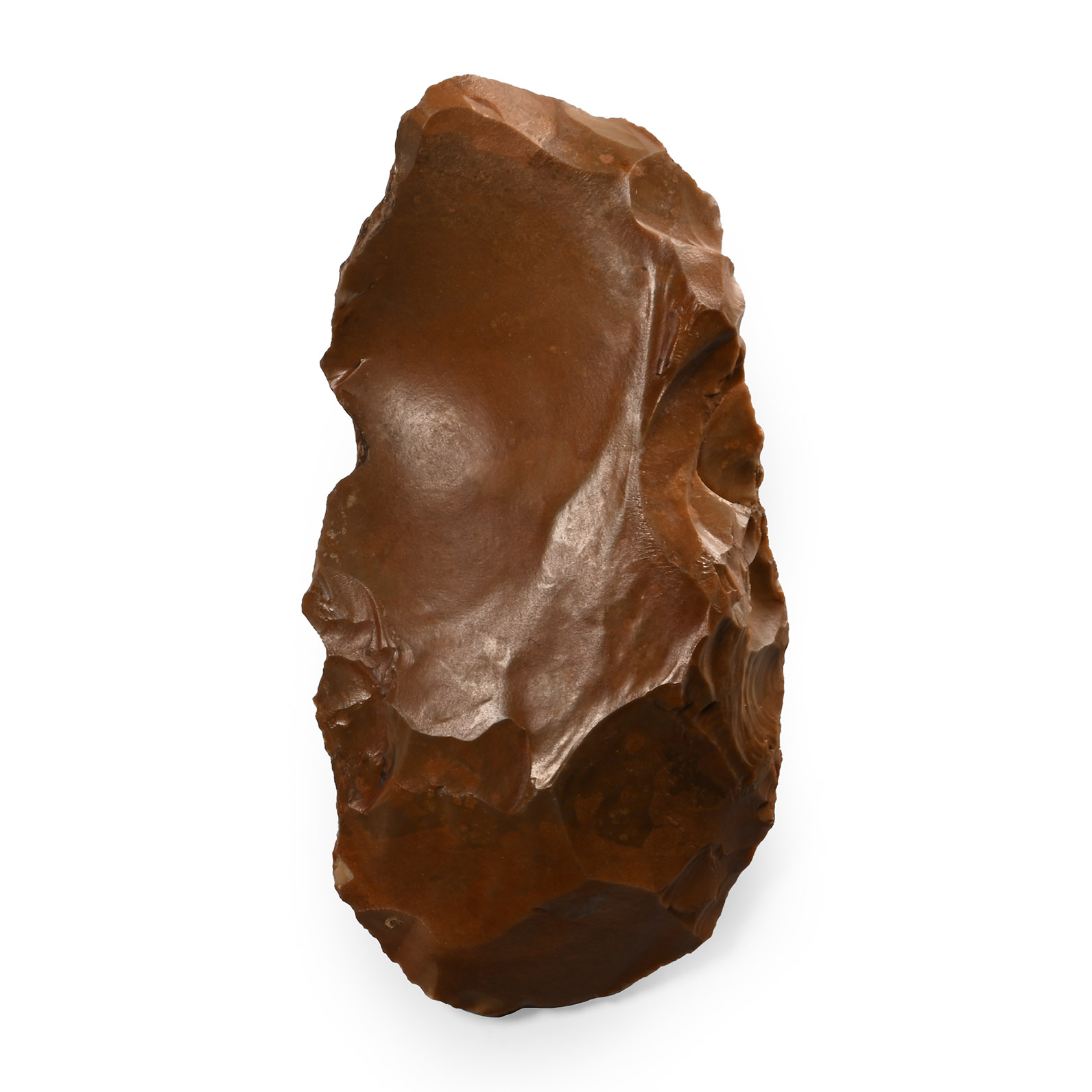
Stone Age Egyptian Flint Adze
LOWER PALAEOLITHIC PERIOD, 450,000-280,000 B.C.
4 1/2 in. (206 grams, 11.3 cm).
Ellipsoid in plan with rounded cutting edge. [No Reserve]
ProvenanceFound Egypt.
From a collection formed during the 1970s-1980s and acquired on the British art market.
By descent to the current owner in 1988.
From the collection of a South West London, UK, specialist Stone Age collector.
TimeLine Auctions follows a vetting process to ensure the authenticity and legality of all items, reinforcing our commitment to integrity and responsible trading. Each antiquity, antique, and coin lot undergoes thorough examination by a vetting committee of at least ten external specialists, professional trade association members, scientists, and archaeologists: Our Vetting Process
AUCTIONS:
TimeLine is a leading auction house specialising in antiquities, ancient art, collectables, natural history, coins, medals, and books. Our auctions offer museums, collectors, historians, and enthusiasts the opportunity to acquire unique and historically significant pieces.
-
Stone Age Knapped Axehead Reworked into a Blade Nucleus
Neolithic-Bronze Age, 6th-4th millennium B.P.Sold for (Inc. bp): £33
Knapped flint axehead broken at the edge, with lateral flakes removed for the production of knife blades. 194 grams, 94 mm
Ex Alan Cherry, Bournemouth, UK. From the private collection of Kenneth Machin (1936-2020), Buckinghamshire, UK; with collection no.BA1A; his collection of antiquities and natural history was formed since 1948; thence by descent. Accompanied by an old Alan Cherry dealer's ticket. -
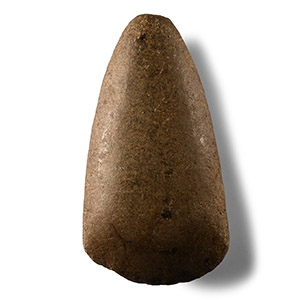
Stone Age Polished Green Stone Axe Head
Neolithic Period, circa 6000 B.P.Sold for (Inc. bp): £85
Fully polished; with old collector's label 'Collection Boisgonlier' and inked accession number to reverse '[..]1014[..]'. 118 grams, 83 mm
Found France. From the Boisgontier collection, Germany. Acquired on the UK art market. From the private collection of an East Anglian, UK, collector. -
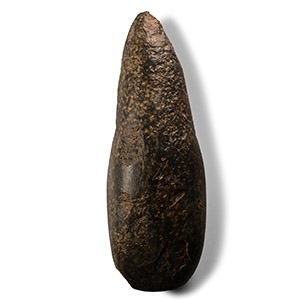
Stone Age Indian Polished Axe Hammer
Neolithic Period, circa 4th-3rd millennium B.C. or laterSold for (Inc. bp): £13
With narrow edge, ellipsoid-section body, pointed butt. 310 grams, 13.5 cm
Found Sheravoys Hills, Madras, India, circa 1922. Acquired Hemel Hempstead, UK, 31st April 2004. From the private collection of Kenneth Machin (1936-2020), Buckinghamshire, UK; with collection no.N153; his collection of antiquities and natural history was formed since 1948; thence by descent.
