
Loading, please wait...
_900x900.jpg "Stone Age Double-Sided Axehead")
_200x200.jpg "Stone Age Double-Sided Axehead")
_900x900.jpg "Stone Age Double-Sided Axehead")
_200x200.jpg "Stone Age Double-Sided Axehead")
.jpg "Stone Age Double-Sided Axehead")
.jpg "Stone Age Double-Sided Axehead")
LOT 1646
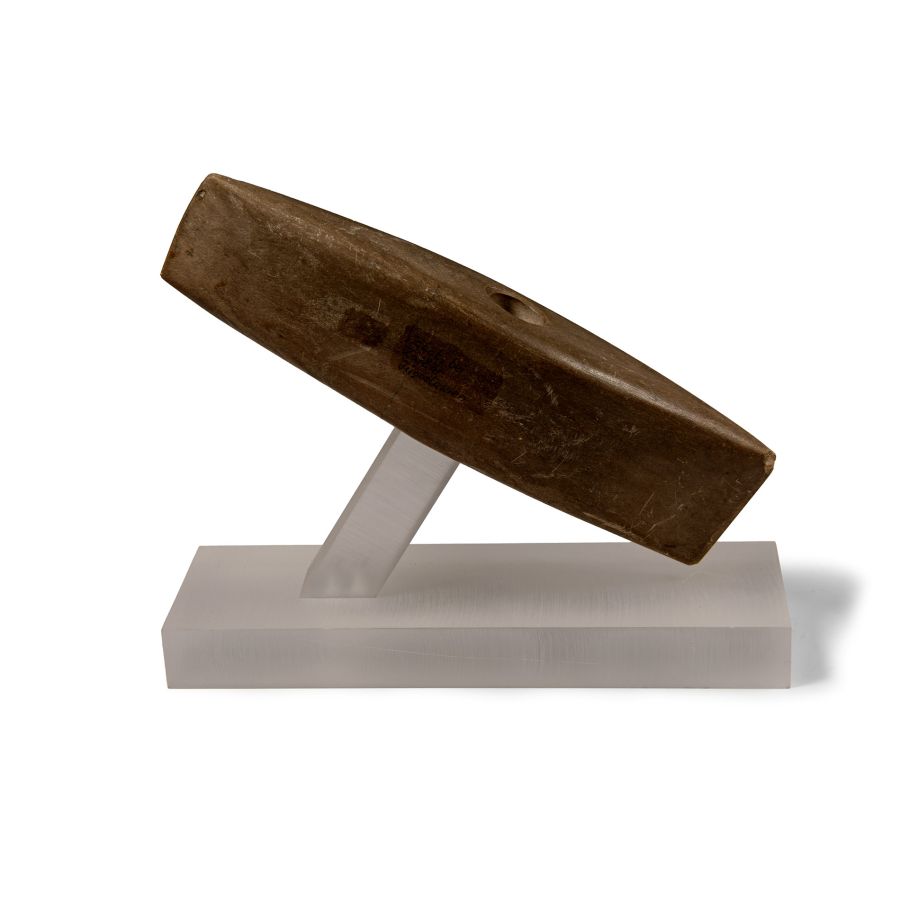
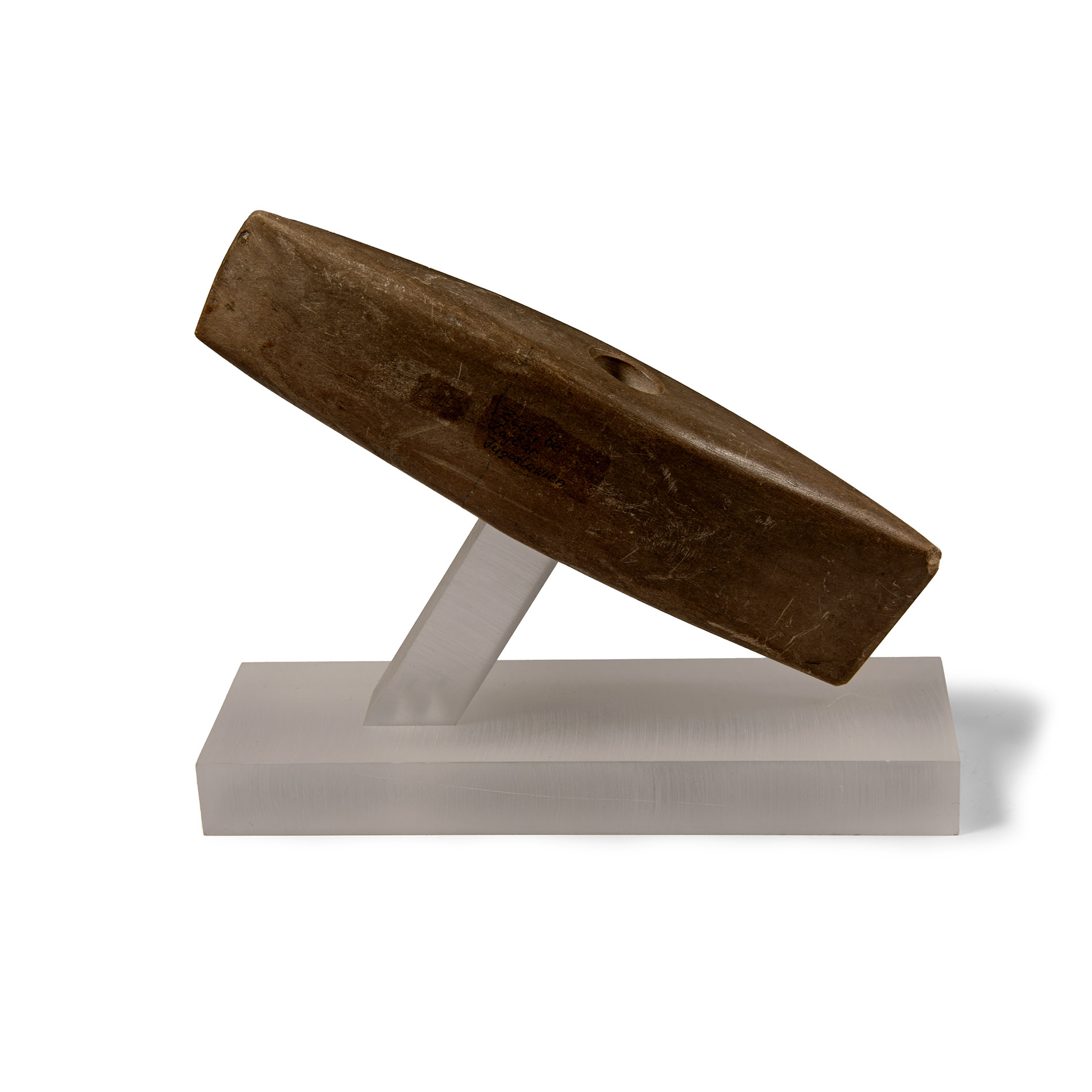
Stone Age Double-Sided Axehead
NEOLITHIC PERIOD, 3RD MILLENNIUM B.C.
7 1/8 in. (738 grams total including stand, axehead: 18.2 cm).
Boat-shaped in plan with central drilling; small chip to on edge; mounted on a custom-made stand.
ProvenancePrivate collection, Raguse, Switzerland.
with Kölner Munzkabinett, Germany, before 2016.
Private European collection.
Accompanied by a copy of the 2016 invoice.
TimeLine Auctions follows a vetting process to ensure the authenticity and legality of all items, reinforcing our commitment to integrity and responsible trading. Each antiquity, antique, and coin lot undergoes thorough examination by a vetting committee of at least ten external specialists, professional trade association members, scientists, and archaeologists: Our Vetting Process
AUCTIONS:
TimeLine is a leading auction house specialising in antiquities, ancient art, collectables, natural history, coins, medals, and books. Our auctions offer museums, collectors, historians, and enthusiasts the opportunity to acquire unique and historically significant pieces.
-
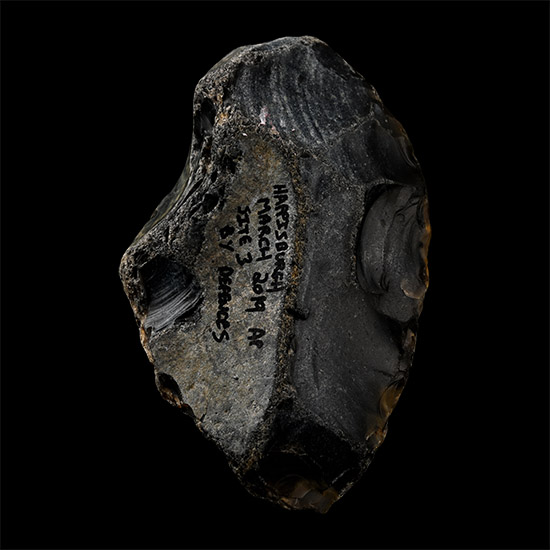
Stone Age Homo Heidelbergensis Uniface Flint Handaxe from Happisburgh
Lower Palaeolithic Period, circa 600,000-250,000 B.P.Sold for (Inc. bp): £351
Formed from a cobble and marked 'Happisburgh March 2019 AP Site 3 by Defences'; mounted on a custom-made stand. 237 grams, 10.3 cm without stand
Found by Mr Anthony Pryke in Happisburgh, Norfolk, UK, March 2019, near site 3.
Discovery by Mr A Pryke after the 'Beast from the East Storm', which stripped the beach of the sand and helped to erode the Palaeolithic artefacts from the ancient Thames river bed. During the time the artefacts were dropped, the Thames ran through North Norfolk and what is now Happisburgh before it was pushed down to its current position in London via the Ice Age glacial melts. The site of Happisburgh in Norfolk has helped to push the history of inhabitation of the British Isles back by 200,000 making it a site of special importance. -
.jpg)
Large Stone Age Leaf-Shaped Arrowhead Collection
Neolithic Period, 6th-4th millennium B.C.Sold for (Inc. bp): £130
Comprising mostly bifacial and uniface leaf-shaped and piriform flint and chert arrowheads; probably from the Sahara region of North Africa. 384 grams total, 38-62 mm
UK gallery, early 2000s.
Similar specimens of arrowheads have been found in the Eastern Sahara Region of Abu Tartur Plateau. Most of the arrowheads came from the El Jarar Neolithic, c. 7700-7300 B.P. (c.6500-6100 B.C.). Other parallels occur in the region of Kharga Oasis. -
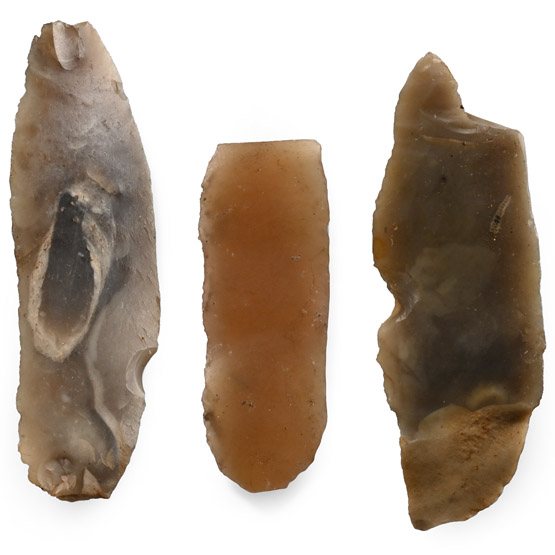
British Stone Age Flint Blades from Farnham
Mesolithic Period, circa 12,000-8,000 B.P.Sold for (Inc. bp): £104
Group of three microliths, linguiform in plan. 5.16 grams total, 27-36 mm
Found Farnham, Surrey, UK, in 1901. From the collection of Captain Streatfield who helped to fund the archaeology excavations at Farnham, Kent.
After Captain Streatfield passed away in the 1940s, his collection was sold at auction to a gentleman in Kent. The collection was then sold again in the 2020’s via a UK auction house.
