
Loading, please wait...
LOT 1221
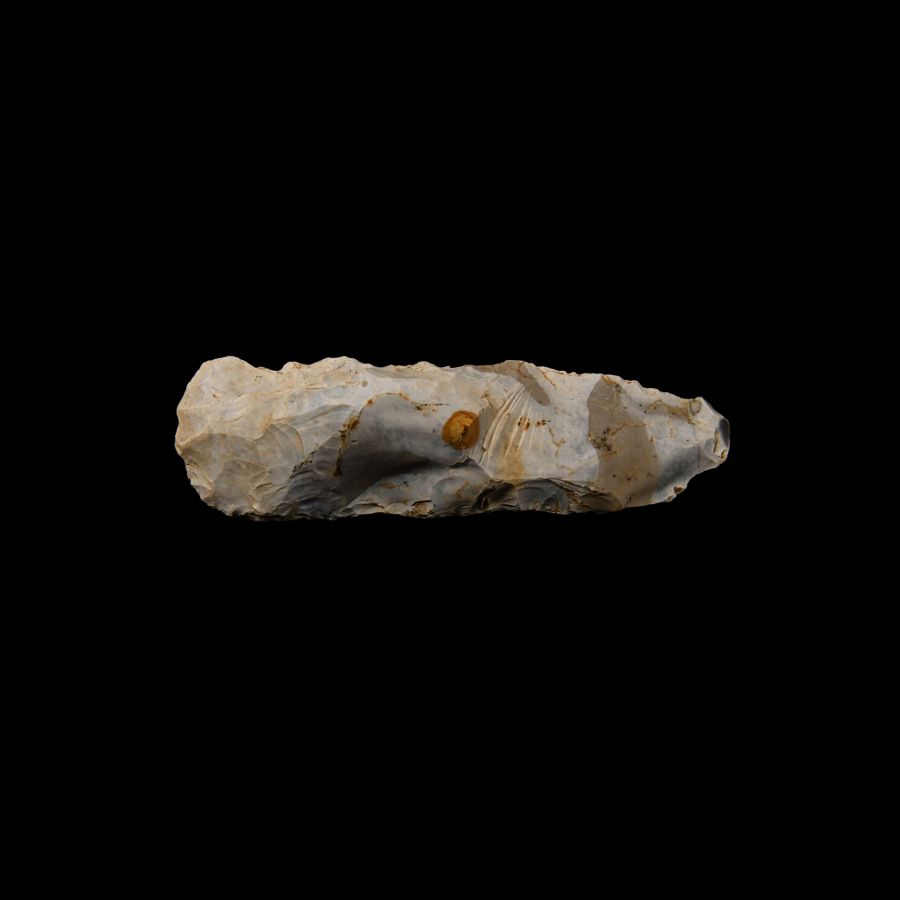
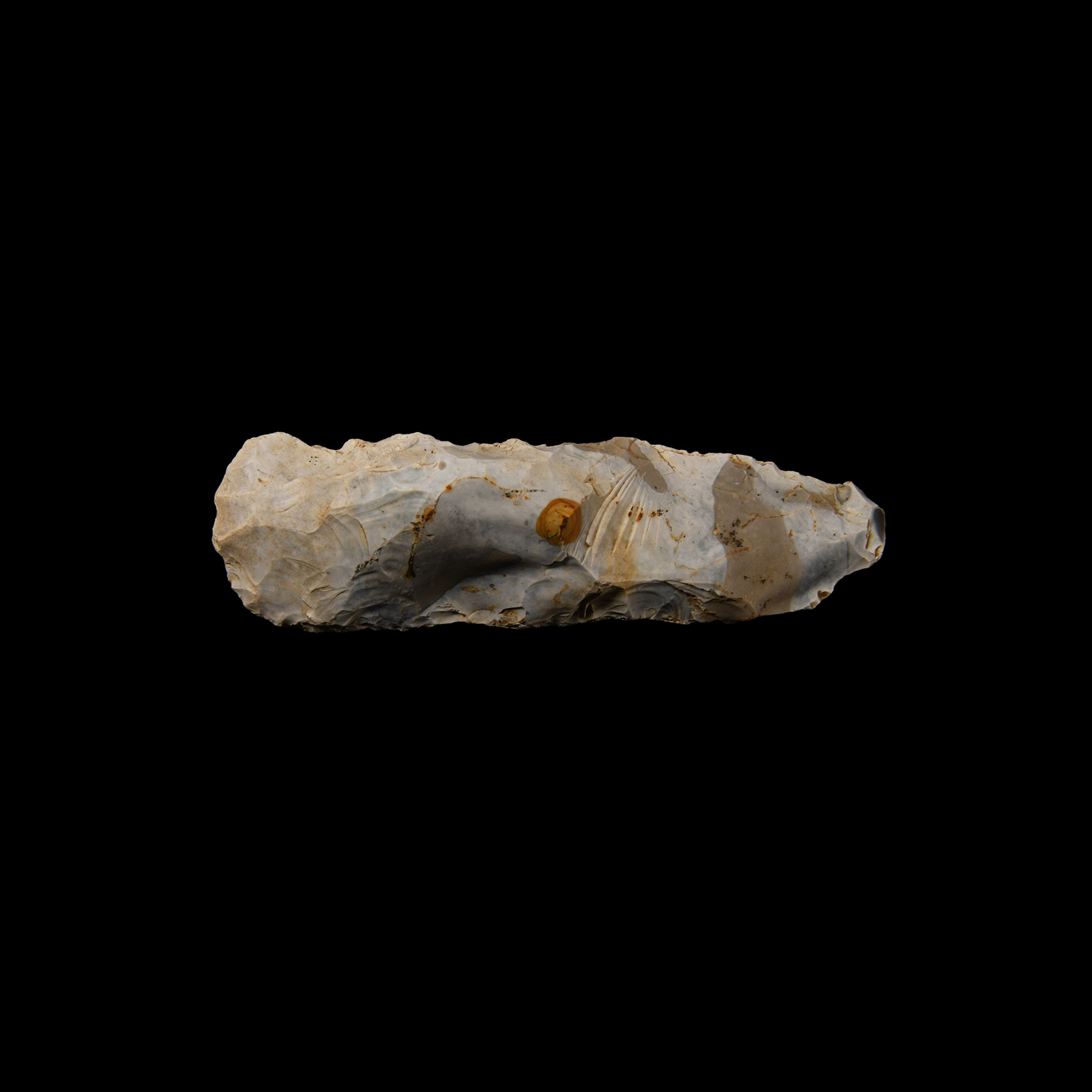
Stone Age British Knapped Flint Axehead
MESOLITHIC PERIOD, 15TH-10TH MILLENNIUM B.C.
5 3/8 in. (129 grams, 13.5 cm).
Being a slender knapped flint axe of generally triangular cross-section with convex cutting edge tapering slightly to a rounded butt; in a white patinated grey-brown flint as typically seen with chalk downland finds in southern England. [No Reserve]
ProvenanceUK gallery, early 2000s.
LiteratureSee Palmer, Susan, Mesolithic Cultures of Britain, Dolphin, 1977, pp.92-93, for similar examples.
CONDITIONTimeLine Auctions follows a vetting process to ensure the authenticity and legality of all items, reinforcing our commitment to integrity and responsible trading. Each antiquity, antique, and coin lot undergoes thorough examination by a vetting committee of at least ten external specialists, professional trade association members, scientists, and archaeologists: Our Vetting Process
AUCTIONS:
TimeLine is a leading auction house specialising in antiquities, ancient art, collectables, natural history, coins, medals, and books. Our auctions offer museums, collectors, historians, and enthusiasts the opportunity to acquire unique and historically significant pieces.
-
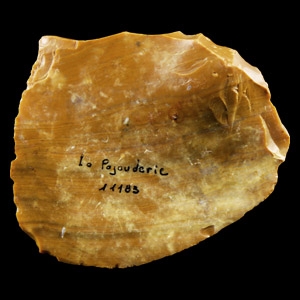
Stone Age French Flint Flake Scraper Implement
Upper Palaeolithic Period, circa 100,000-40,000 B.P.Sold for (Inc. bp): £72
Showing well defined bulb of percussion, with edges retouched to form a smoothly curved scraper; with inked 'La Pojouderic / 11183' find spot note. 44 grams, 70 mm
Found La Pojouderic, France. French private collection. Accompanied by a copy of the French cultural passport no.226793. -
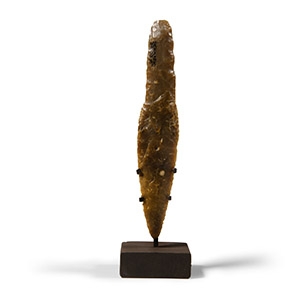
Stone Age Danish Type 1a Brown Flint Dagger
Neolithic Period, circa 2150 B.C.Sold for (Inc. bp): £468
To the obverse an inked inscription in black: 'DENMARK / DD. 37. HF' and to verso a label: 'DENMARK / DEN.125' and another with collection number: '65-19'; accompanied by a custom-made display stand. 80 grams total, 18.3 cm high including stand
Ex F.S. Clarke collection. Acquired from a UK gallery. From the collection of a South West London, UK, collector. -
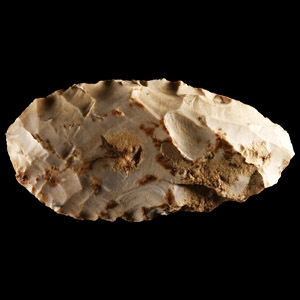
Stone Age French Variegated Grey Flint Limande Handaxe
Palaeolithic Period, circa 300,000 B.P.Sold for (Inc. bp): £416
Knapped with a rounded butt and convex cutting edge. 408 grams, 15.3 cm
Private collection established since the 1950s. From the collection of a South West London, UK, collector.
