
Loading, please wait...
LOT 1492
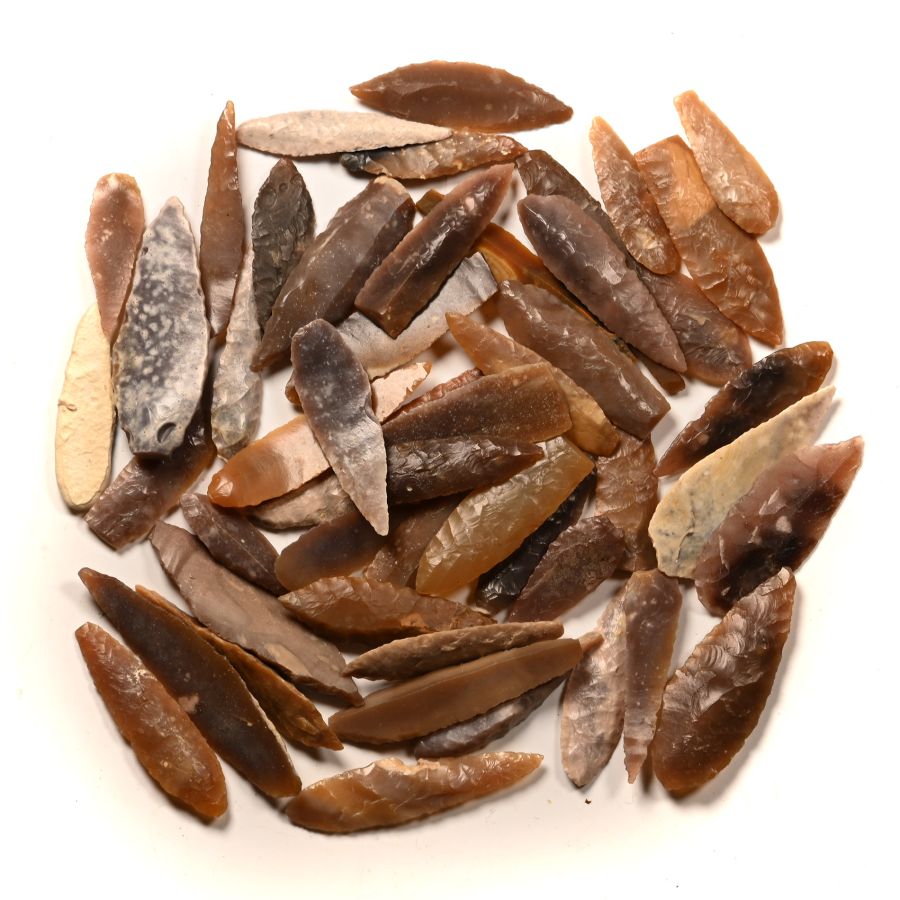
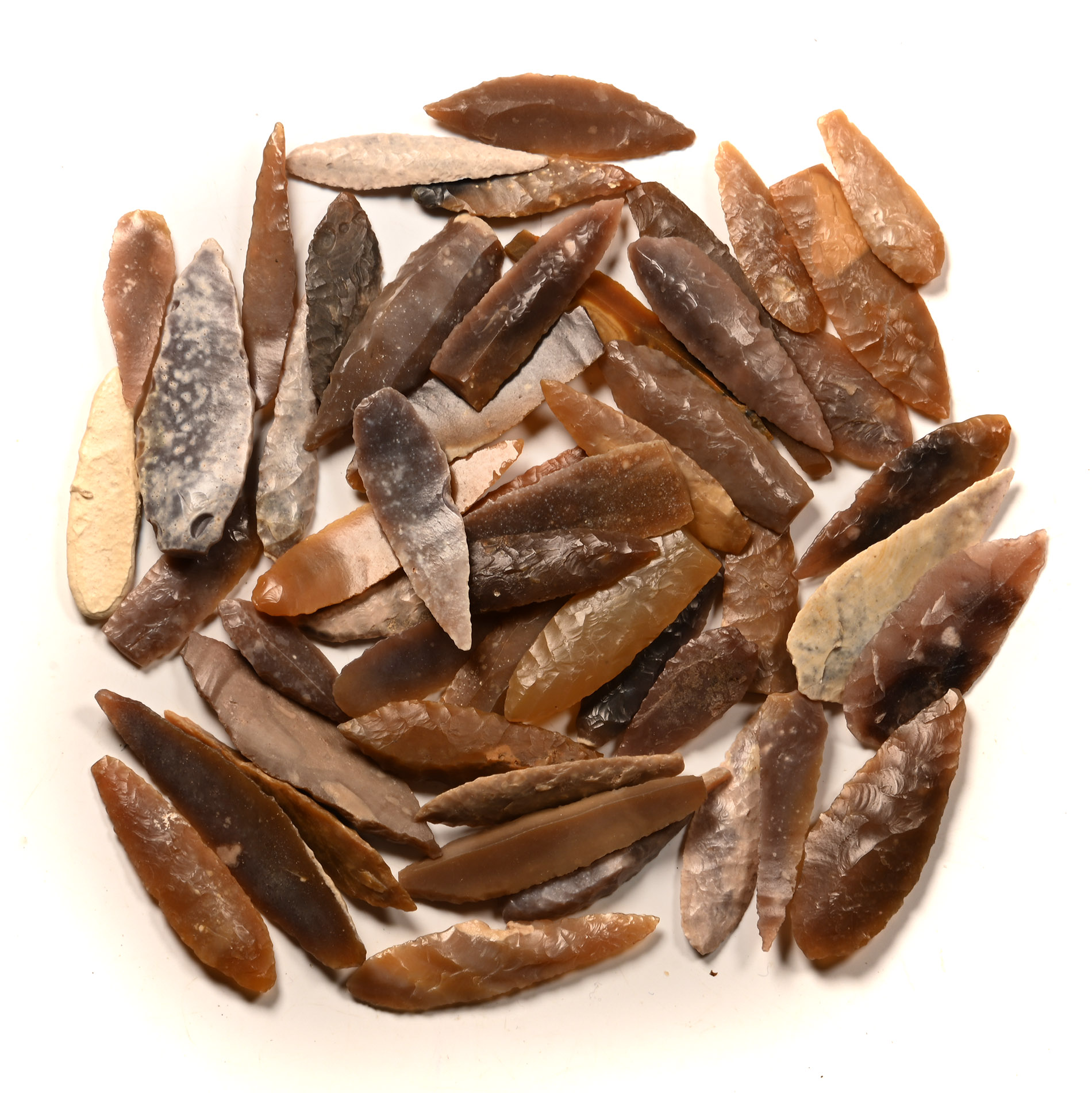
Stone Age Angular and Other Arrowhead Collection
NEOLITHIC PERIOD, CIRCA 6TH-4TH MILLENNIUM B.C.
1 - 2 in. (51 grams total, 26-49 mm).
Comprising mostly bifacial and uniface scaphoid flint and chert arrowheads; probably from the Sahara region of North Africa. [50, No Reserve]
ProvenanceUK gallery, early 2000s.
LiteratureSee Greenwell, David, F., Artefacts of North Africa, privately published, 2005, for much information.
CONDITIONTimeLine Auctions follows a vetting process to ensure the authenticity and legality of all items, reinforcing our commitment to integrity and responsible trading. Each antiquity, antique, and coin lot undergoes thorough examination by a vetting committee of at least ten external specialists, professional trade association members, scientists, and archaeologists: Our Vetting Process
AUCTIONS:
TimeLine is a leading auction house specialising in antiquities, ancient art, collectables, natural history, coins, medals, and books. Our auctions offer museums, collectors, historians, and enthusiasts the opportunity to acquire unique and historically significant pieces.
-
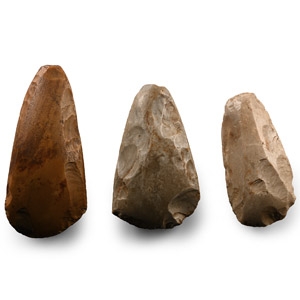
Stone Age Polished Handaxe Group
Lower Palaeolithic Period, 450,000-200,000 B.C.Sold for (Inc. bp): £65
Each lentoid in profile, one with old find spot label 'Baichinet/pierre [...]'. 386 grams total, 8.5-11 cm
Old French collection. Private collection, London. -
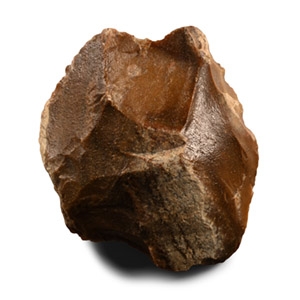
Stone Age Colombiers Mousterian Neanderthal Flint Cleaver
Palaeolithic Period, circa 130,000-40,000 B.P.Sold for (Inc. bp): £72
Plano-convex in section and roughly discoid in plan with some cortex remaining. 569 grams, 13.7 cm
Found Colombiers, Occitanie region, France. From the private collection of Kenneth Machin (1936-2020), Buckinghamshire, UK; with collection no.P65; his collection of antiquities and natural history was formed since 1948; thence by descent. -
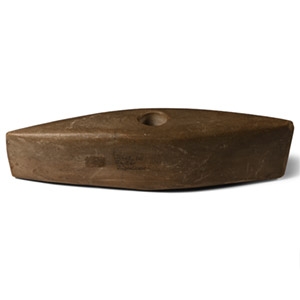
Stone Age Double-Sided Axehead
Neolithic Period, 3rd millennium B.C.Estimate: £800 - 1,000 (‡+bp*)
Opening Bid: £400
Boat-shaped in plan with central drilling; small chip to on edge; mounted on a custom-made stand. 738 grams total including stand, axehead: 18.2 cm
Private collection, Raguse, Switzerland. with Kölner Munzkabinett, Germany, before 2016. Private European collection. Accompanied by a copy of the 2016 invoice.
