
Loading, please wait...
LOT 0270
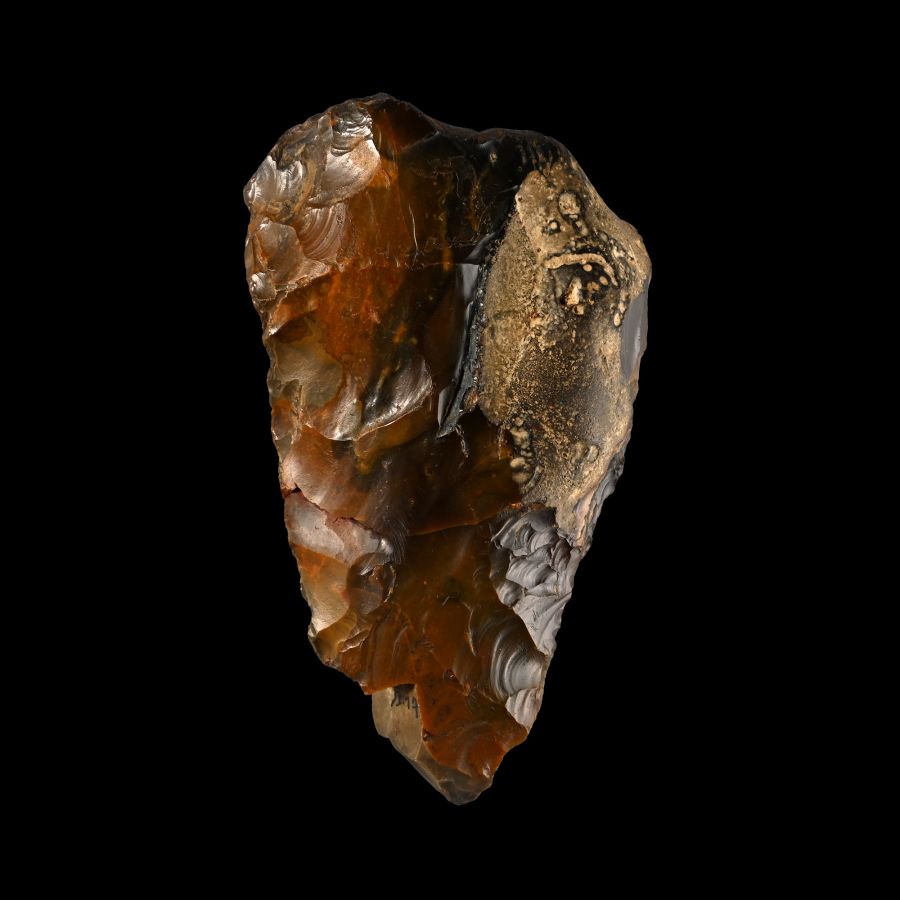
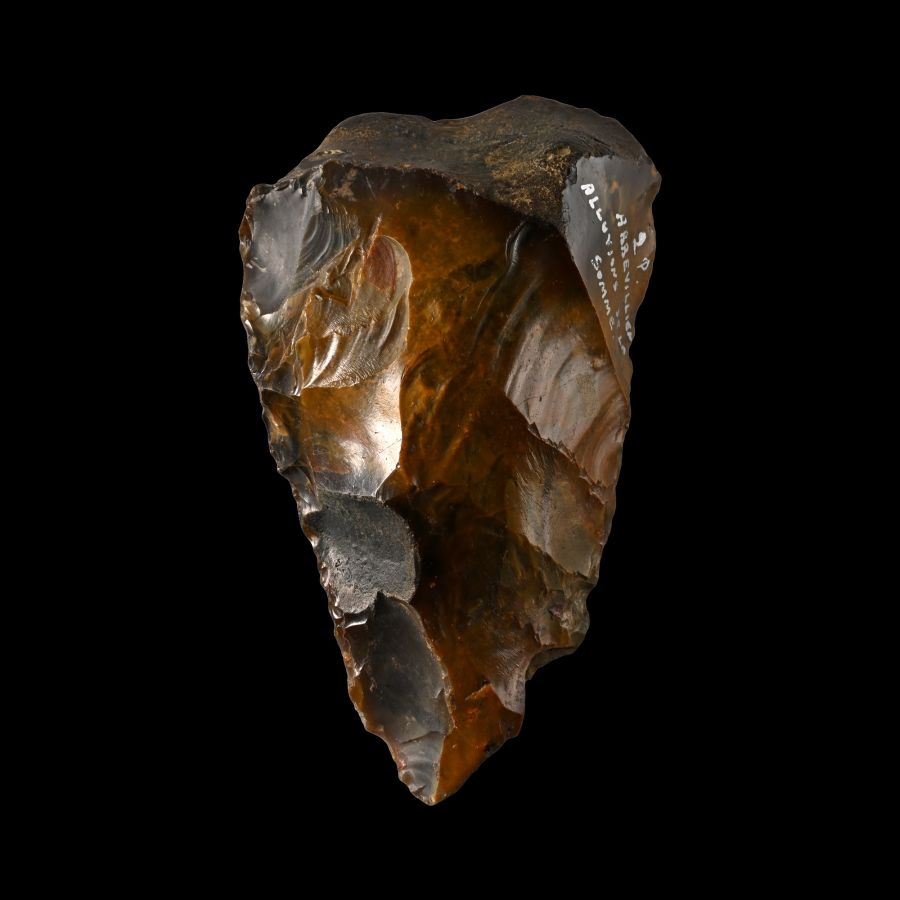
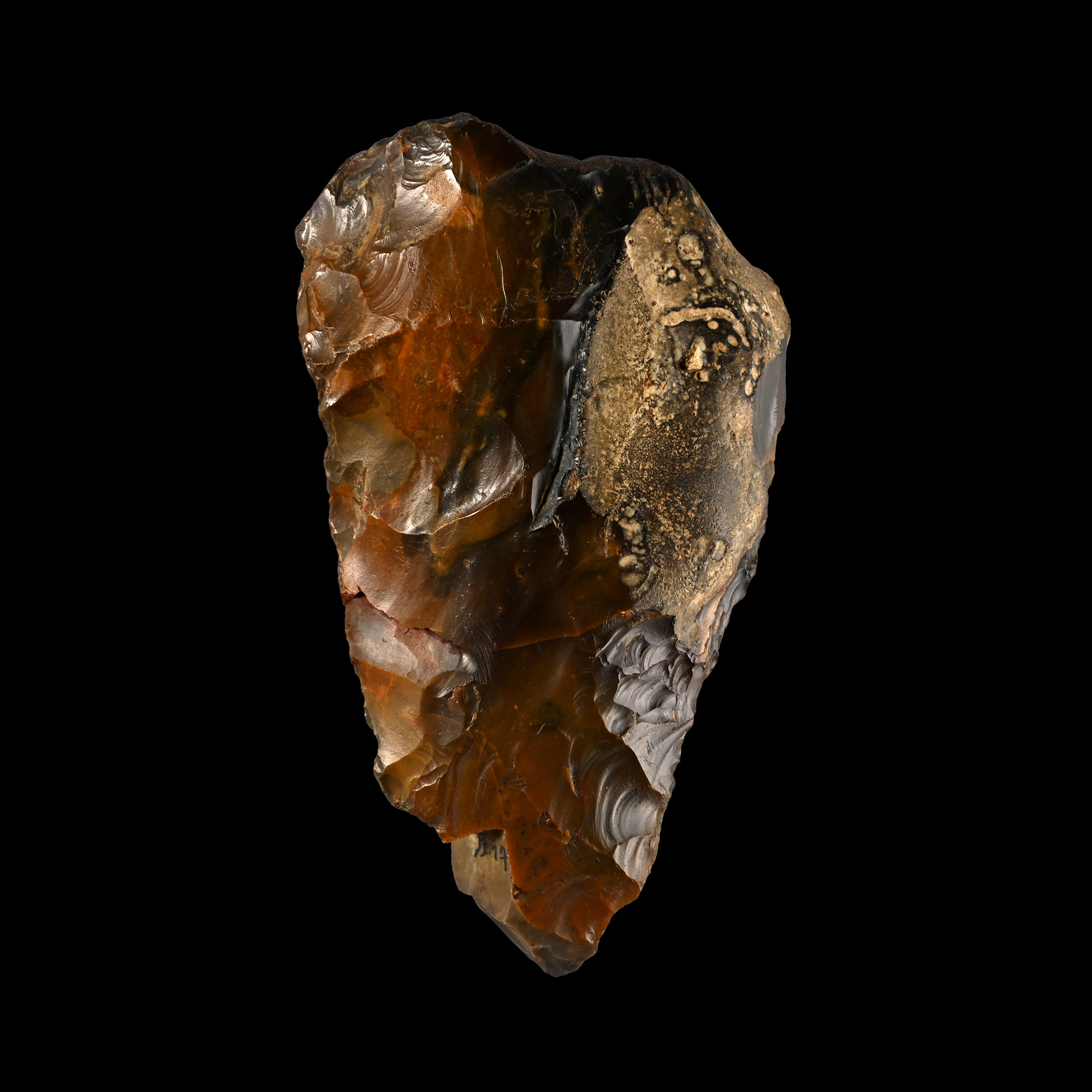
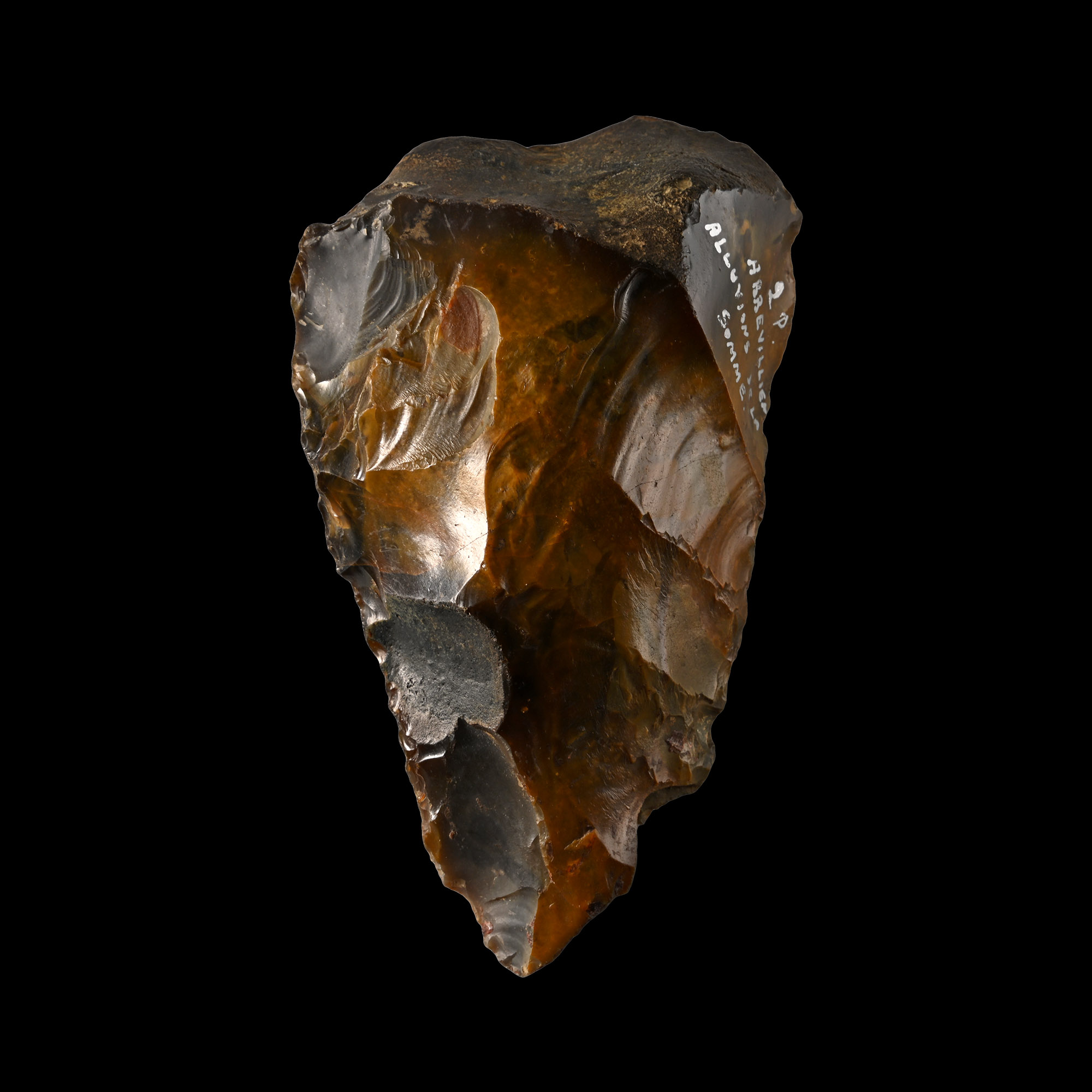
Stone Age Acheulean Handaxe
LOWER PALAEOLITHIC, CIRCA 700,000-300,000 B.P.
6 in. (617 grams, 15.3 cm).
Ovate axe in dark brown stone with some cortex visible, old collector's note ' 2 P. Abbevillier alluvions de la Somme.' [No Reserve]
ProvenanceFrom Abbeville, France (according to inscription).
Collection of Michel C. Vaes (1934-2024), Belgium, formed 1960s-90s.
Accompanied by a copy of the EU Licence no.2026 DMF 0436.
TimeLine Auctions follows a vetting process to ensure the authenticity and legality of all items, reinforcing our commitment to integrity and responsible trading. Each antiquity, antique, and coin lot undergoes thorough examination by a vetting committee of at least ten external specialists, professional trade association members, scientists, and archaeologists: Our Vetting Process
AUCTIONS:
TimeLine is a leading auction house specialising in antiquities, ancient art, collectables, natural history, coins, medals, and books. Our auctions offer museums, collectors, historians, and enthusiasts the opportunity to acquire unique and historically significant pieces.
-
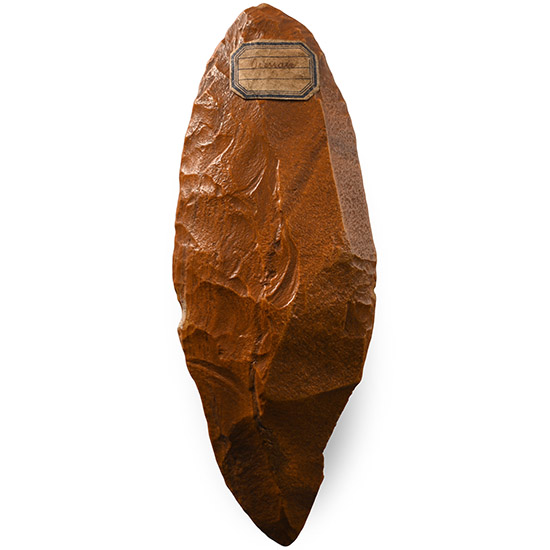
Large Stone Age Orange Jasper Knife Blade
Oranian Period, circa 15,000-9,000 B.P.Sold for (Inc. bp): £208
Scaphoid in plan with facets to the upper face; old paper label 'Oranian' to obverse and inked legend to reverse 'Oranian 15k to 9k BC'. 156 grams, 17.2 cm
Found North East Africa. Acquired from a London gentleman in the 2020s. -
.jpg)
French Stone Age Mousterian Knapped Flint Bifacial Handaxe
Middle Palaeolithic Period, circa 300,000-150,000 B.P.Sold for (Inc. bp): £234
Cordate in profile and biconvex in section with broad rounded edge; from the sought-after banded flint of the Bergerac area; made by Neanderthal. 167 grams, 89 mm
From the Bergerac area of the Dordogne, France. Acquired on the UK art market in the 2020s. From a private collection. -
.jpg)
French Stone Age Solutrean Knapped Flint Leaf Point - Ex Sir Arthur Evans
Upper Palaeolithic Period, 22,000-17,000 B.P.Sold for (Inc. bp): £169
Triangular, flat point of grey-brown flint, one blade is slightly excurvate, and the other excurvated at the terminal end, the base broken straight across. 15.5 grams, 56 mm
Found in Les Eyries Cave, Dordogne, France. Received in a Museum exchange in 1900. Ex Sir Arthur John Evans (1851–1941), British archaeologist and son of Sir John Evans (1823-1908). Ex Henry Dewey (1876–1965), a prominent British geologist and archaeologist who made seminal contributions to the study of the Palaeolithic period. Ex R Richard Widdowson, a well-known UK-based antiquities specialist who owned the gallery 'Ancient Times' in Scarborough in Southern England. Ex J Weston Smith. Accompanied by an illustrated envelope and two collector's information cards.
