
Loading, please wait...
LOT 1396
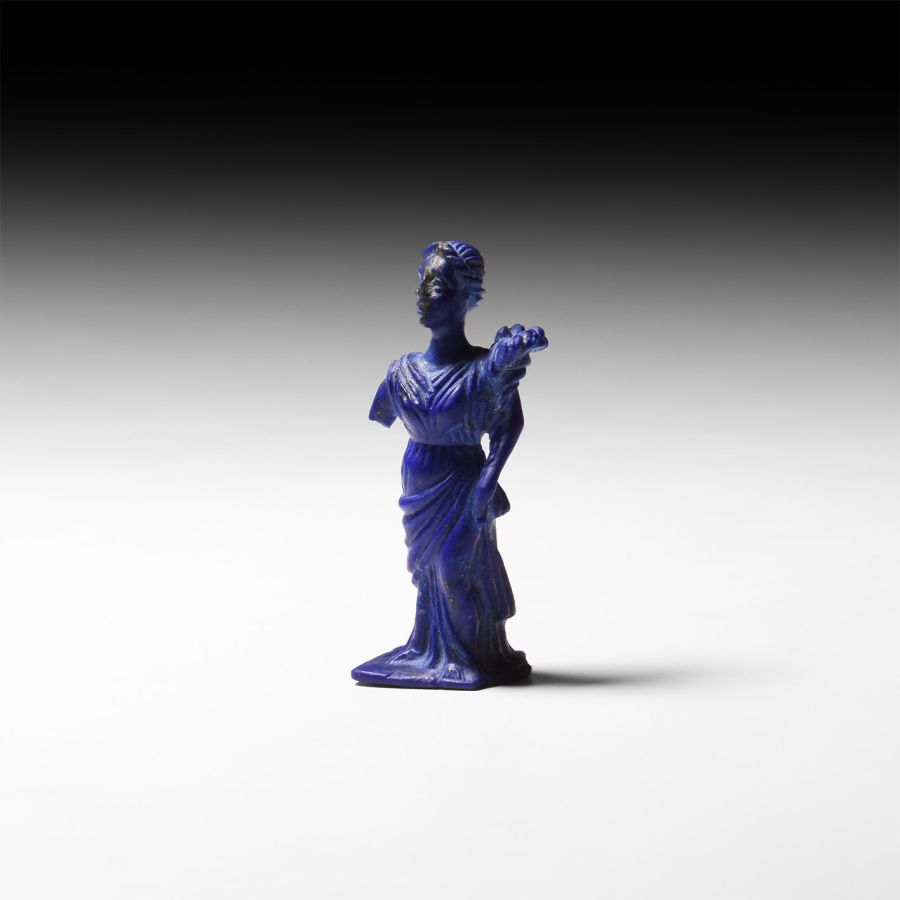
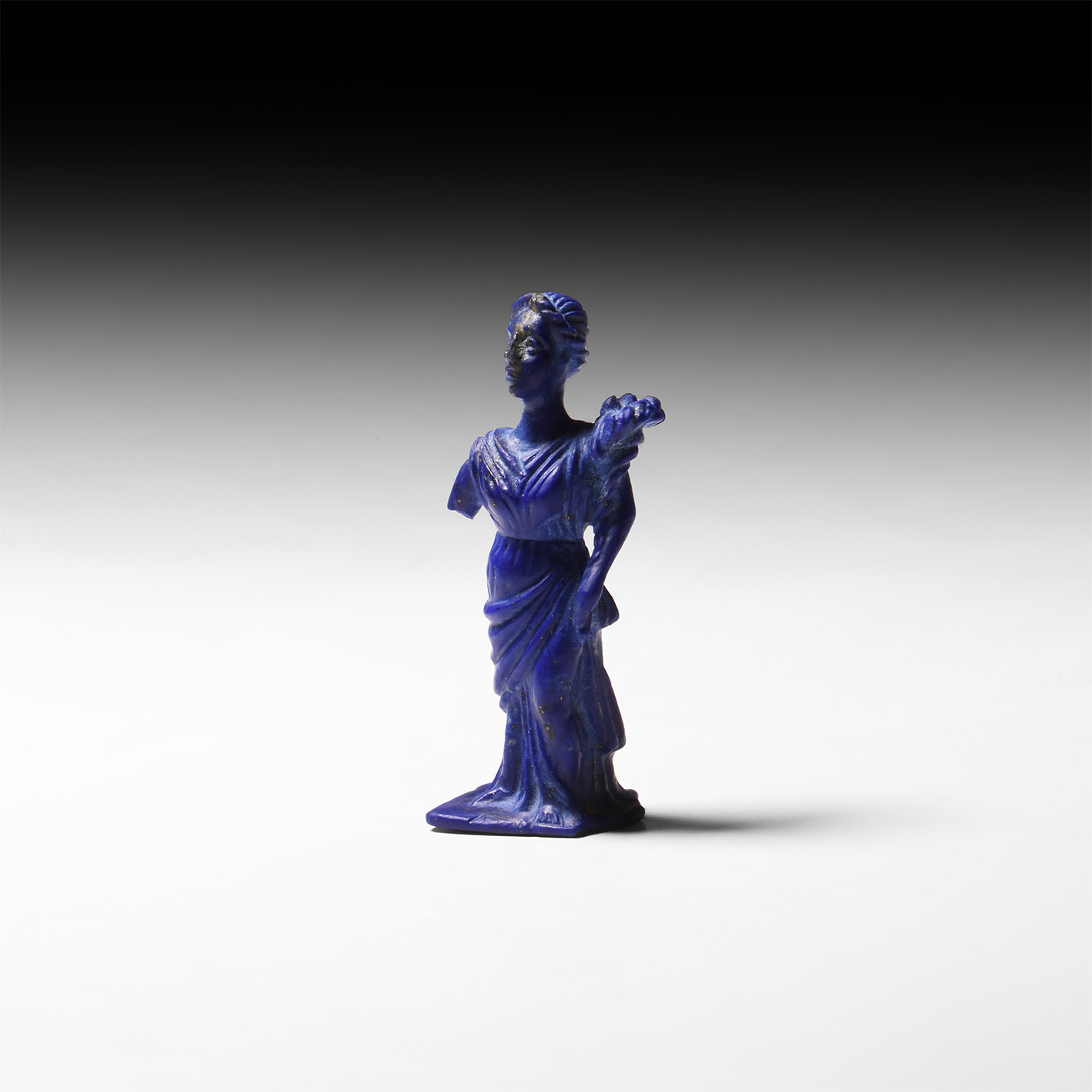
Statuette of Demeter in Lapis Lazuli
18TH-19TH CENTURY A.D.
2 1/8 in. (14.4 grams, 55 mm).
A free-standing Grand Tour statuette of the goddess Demeter, carved from brilliant blue lapis lazuli; modelled in the round standing on an integral polygonal base, wearing a floor-length peplos and mantle, holding a cornucopia.
ProvenancePrivate UK collection.
Property of a Cambridgeshire gentleman.
TimeLine Auctions follows a vetting process to ensure the authenticity and legality of all items, reinforcing our commitment to integrity and responsible trading. Each antiquity, antique, and coin lot undergoes thorough examination by a vetting committee of at least ten external specialists, professional trade association members, scientists, and archaeologists: Our Vetting Process
AUCTIONS:
TimeLine is a leading auction house specialising in antiquities, ancient art, collectables, natural history, coins, medals, and books. Our auctions offer museums, collectors, historians, and enthusiasts the opportunity to acquire unique and historically significant pieces.
-
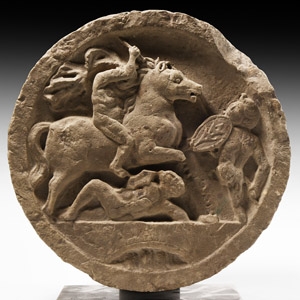
Post Medieval Stone Roundel with Battle Scene
17th-18th century A.D. or earlierEstimate: £3,000 - 4,000 (+bp*)
Opening Bid: £1,500
A substantial stone tondo or roundel displaying a battle scene between the Greeks and Gauls composed of a nude warrior mounted on horseback charging right across a bridge, trampling a figure below and battling a warrior holding shield and brandishing a spear; mounted on a custom-made display stand. 14.3 kg total, 26.5 cm high cm including stand
Acquired in the 1990s. with Hotel Des Ventes De Monte, Monaco, 14 December 2021, lot 10. English private collection. This lot has been checked against the Interpol Database of stolen works of art and is accompanied by search certificate number no.11695-199818. -
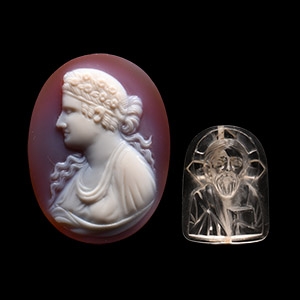
Gemstone Group
19th-20th century A.D.Estimate: £100 - 140 (+bp*)
Opening Bid: £50
A group of two carved gemstones: an ellipsoid plaque with reserved profile bust of a young female with elaborately dressed hair; a miniature rock crystal stele with bust of Christ holding a book to the obverse, and to the reverse a high-relief cross aiguisée visible behind the bust. 12.8 grams total, 24-39 mm
English private collection. -
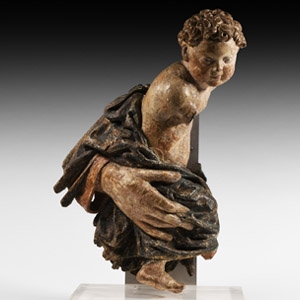
Renaissance Painted Child
16th-17th century A.D.Estimate: £2,000 - 3,000 (+bp*)
Opening Bid: £1,000
A child carved naturalistically in relief in wood, enveloped in the folds of a woman's garment and cradled in her right arm and hand; remains of gesso, gilding and polychrome pigmentation; mounted on a custom-made display stand. 3.2 kg total, 42 cm high including stand
English private collection. This lot has been checked against the Interpol Database of stolen works of art and is accompanied by searcher certificate number no.11674-199841.
