
Loading, please wait...
LOT 1431
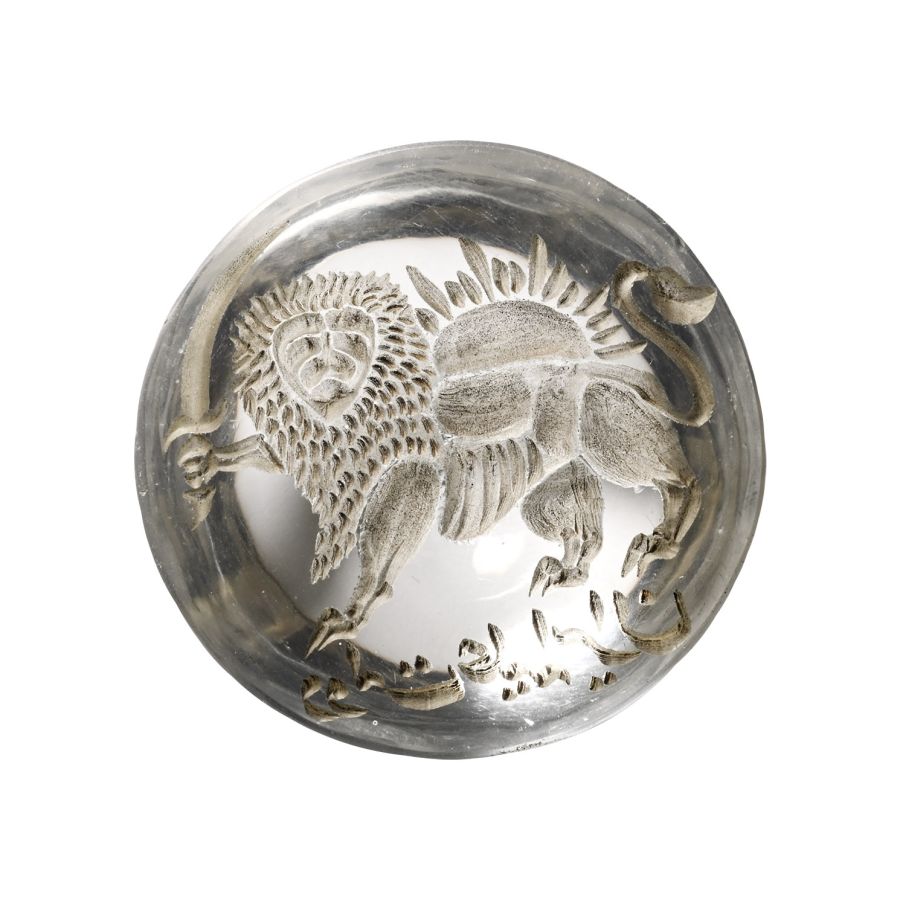
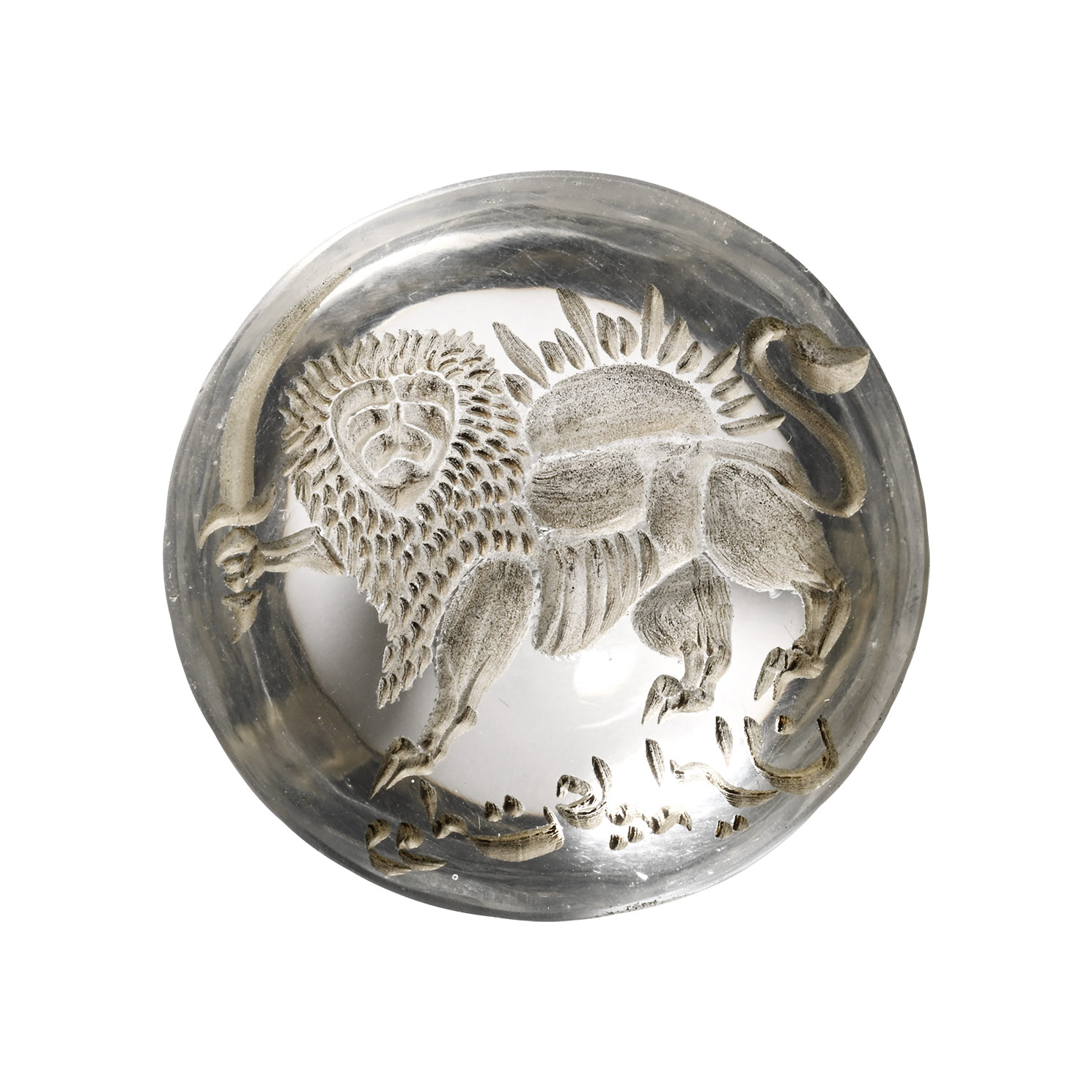
Stamp Seal with Sun and Lion
LATE 19TH- EARLY 20TH CENTURY A.D.
1 3/8 in. (41.8 grams, 36 mm).
Plano-convex glass stamp with intaglio advancing lion brandishing a sabre, sun rising above its back, Perso-Arabic script beneath. [No Reserve]
ProvenanceLondon, UK gallery, 1971-early 2000s.
FootnotesThe Šir o Xoršid 'Sun and Lion' is the symbol of Persia.
CONDITIONTimeLine Auctions follows a vetting process to ensure the authenticity and legality of all items, reinforcing our commitment to integrity and responsible trading. Each antiquity, antique, and coin lot undergoes thorough examination by a vetting committee of at least ten external specialists, professional trade association members, scientists, and archaeologists: Our Vetting Process
AUCTIONS:
TimeLine is a leading auction house specialising in antiquities, ancient art, collectables, natural history, coins, medals, and books. Our auctions offer museums, collectors, historians, and enthusiasts the opportunity to acquire unique and historically significant pieces.
-

Georgian Pewter Gill Measure and Horse Brass
Circa 19th century A.D.Sold for (Inc. bp): £7
Group comprising a Gill measure inscribed for 'H. Haws' and a horse brass. 212 grams total, 61-97 mm
Property of an Essex collector. -

Large Egyptian Revival Painted Stone Statue
20th century A.D.Sold for (Inc. bp): £624
A substantial decorative designer figurine of Horus in falcon-form perched on a rectangular base, wearing the deshret crown; after the antique, repaired. 18.1 kg, 51 cm
From a French collection, Paris. Ex Parisian gallery, France; latterly with a London, UK, gallery. -

Elizabethan Period Ceramic Fire Brick Group
Circa 16th century A.D.Estimate: £120 - 170 (+bp*)
Opening Bid: £60
Comprising four bricks with raised designs: scrolling vegetation; two monograms, one a merchant's mark, in roundels divided by an object with tiered base and billeted border; male and female facing busts within dot-dash border; worn crowned shield issuing flowering vegetation. 6.4 kg total, 13-14 cm
Acquired 1990s-early 2000s. East Anglian private collection.
These glazed stove or floor tiles are similar to the ones of the great hall and the Tudor kitchens at Hampton Court Palace, made of ceramic, with a glaze to make it hard-wearing and washable. Not just the furnishings, but the palaces themselves were multi-coloured, with brick walls painted red, and exposed timbers in yellow, red, green and white
