
Loading, please wait...
_900x900.jpg "Spinosaurus Fossil Dinosaur Tooth Group")
_200x200.jpg "Spinosaurus Fossil Dinosaur Tooth Group")
.jpg "Spinosaurus Fossil Dinosaur Tooth Group")
LOT 2615
Spinosaurus Fossil Dinosaur Tooth Group
CRETACEOUS PERIOD, CIRCA 125-113 MILLION YEARS B.P.
2 1/4 - 2 3/8 in. (52 grams total, 58-61 mm).
Comprising three Spinosaurs maroccanus teeth; repaired. [3, No Reserve]
ProvenanceFrom Atlas Mountains, Morocco, North Africa.
From a Lincolnshire, UK, collection.
The Spinosaurus was both a beachcomber type scavenger and an active hunter taking small stranded Plesiosaurs, Pterosaurs, turtles and large fish.
CONDITIONTimeLine Auctions follows a vetting process to ensure the authenticity and legality of all items, reinforcing our commitment to integrity and responsible trading. Each antiquity, antique, and coin lot undergoes thorough examination by a vetting committee of at least ten external specialists, professional trade association members, scientists, and archaeologists: Our Vetting Process
AUCTIONS:
TimeLine is a leading auction house specialising in antiquities, ancient art, collectables, natural history, coins, medals, and books. Our auctions offer museums, collectors, historians, and enthusiasts the opportunity to acquire unique and historically significant pieces.
-
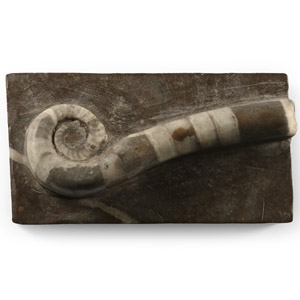
Fossil Lituites on Matrix
Ordovician Period, circa 450 million years B.P.Sold for (Inc. bp): £98
Displaying planospirally coiled juvenile portion at the apex and a part of the long, expanding orthoconic adult section with a subdorsal siphuncle connecting the chambers. 204 grams, 99 mm
From China. Acquired at the Kidlington Mineral and Fossil Show, Oxfordshire, UK, in 2016. From the private collection of Kenneth Machin (1936-2020), Buckinghamshire, UK; his collection of antiquities and natural history was formed since 1948; thence by descent. -
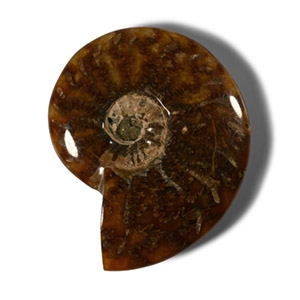
Polished Cleoniceras Fossil Ammonite
Cretaceous Period, circa 145-66 million years B.P.Sold for (Inc. bp): £20
Polished to reveal the internal structure. 179 grams, 93 mm
From a Lincolnshire, UK, collection. -
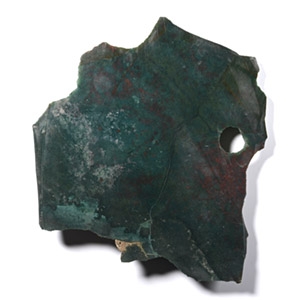
Cut and Polished Green Jasper Specimen
Sold for (Inc. bp): £7
An irregular slice of dark green jasper with red veins, one polished face. 544 grams, 20.2 cm
Ex Mineral Imports, London, UK. Gregory, Bottley & Lloyd (Gregory's), Harwich, UK.
