
Loading, please wait...
LOT 0310
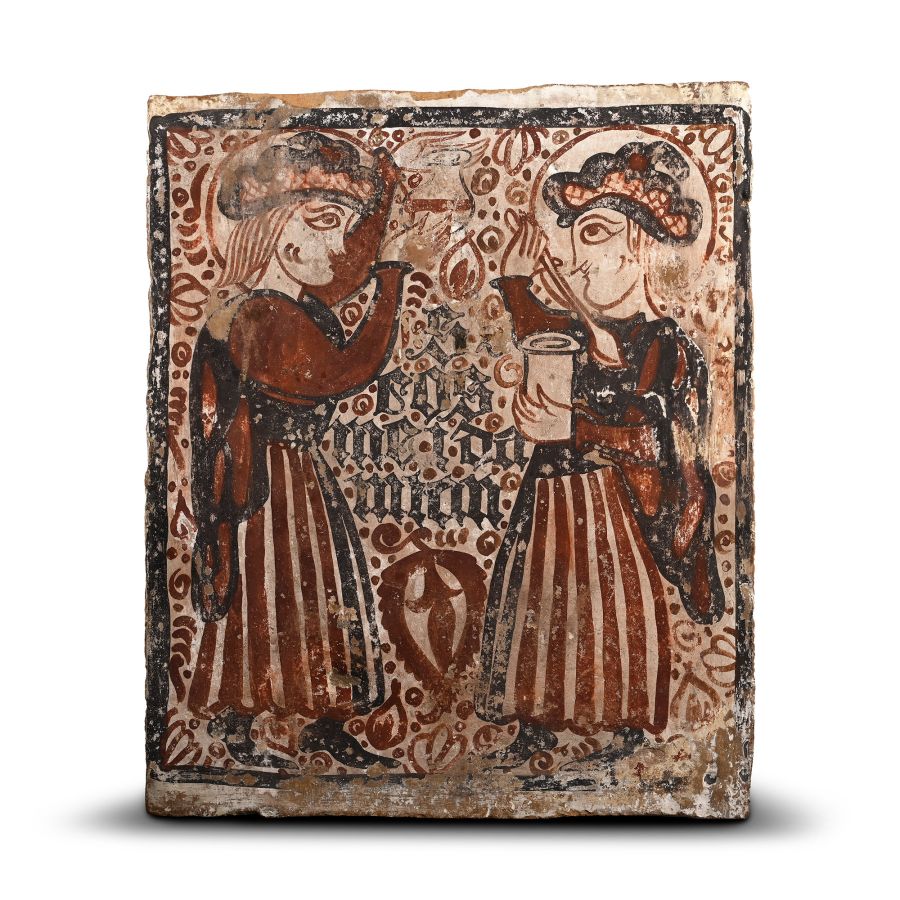
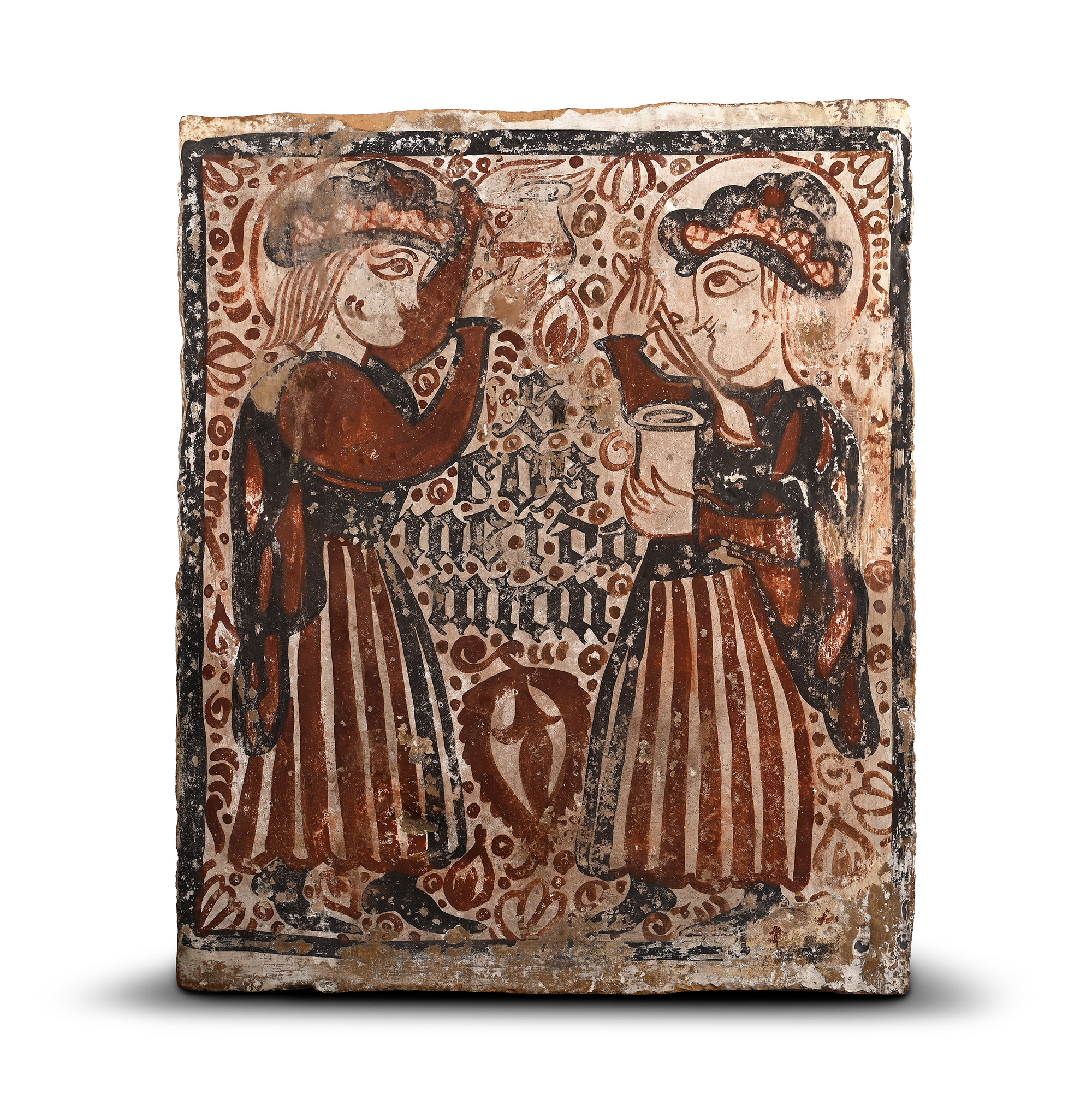
Spanish Medieval Socarrat Wall Tile Showing Saints Cosmas and Damian
LATE 15TH CENTURY A.D. OR LATER
16 7/8 in. (8.25 kg, 43 cm).
Showing two opposing surgeon saints, Cosmas and Damian, holding their medical attributes and shown nimbate, dressed in contemporary garments, with an inscription naming them at the centre, the background with densely arranged decorative motifs.
ProvenancePrivate collection, Spain.
Private collection, London, UK.
Cosmas and Damian were two Arab physicians who were martyred in Syria during the persecutions under Emperor Diocletian.
CONDITIONTimeLine Auctions follows a vetting process to ensure the authenticity and legality of all items, reinforcing our commitment to integrity and responsible trading. Each antiquity, antique, and coin lot undergoes thorough examination by a vetting committee of at least ten external specialists, professional trade association members, scientists, and archaeologists: Our Vetting Process
AUCTIONS:
TimeLine is a leading auction house specialising in antiquities, ancient art, collectables, natural history, coins, medals, and books. Our auctions offer museums, collectors, historians, and enthusiasts the opportunity to acquire unique and historically significant pieces.
LOT 0310
Spanish Medieval Socarrat Wall Tile Showing Saints Cosmas and Damian
Sold for (Inc. bp): £4,420
-
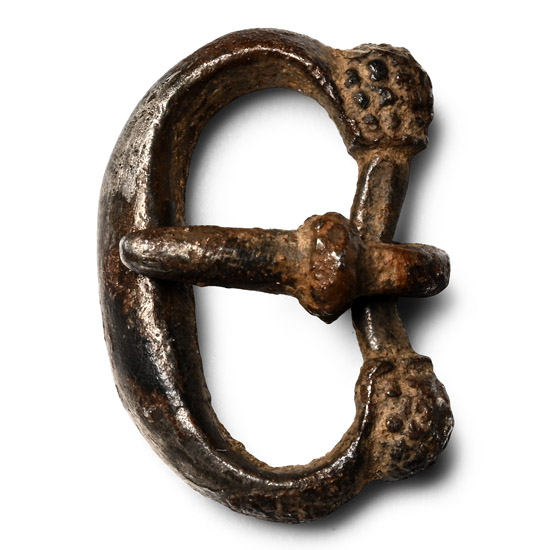
Medieval Silver Decorated Buckle
1250-1500 A.D.Sold for (Inc. bp): £26
With a D-shaped buckle frame with a narrowed and offset bar, moulded knops decorated with a series of covering raised pellets at each end of the bar; a D-section pin fitted around the bar by an open loop, with a raised circumferential collar present at the junction of the loop and shaft of the pin. 1.93 grams, 14 mm
Found by Jason Ashley whilst searching with a metal detector near Overton, Hambleton, North Yorkshire, UK, in 2025. Accompanied by a copy of the Report for H M Coroner on find of Potential Treasure with Treasure reference no.2025T1065. Accompanied by a copy of a letter from the British Museum disclaiming the Crown's interest in the find. Accompanied by a copy of the British Museum's Portable Antiquities Scheme (PAS) report no.YORYM-EF238A. -
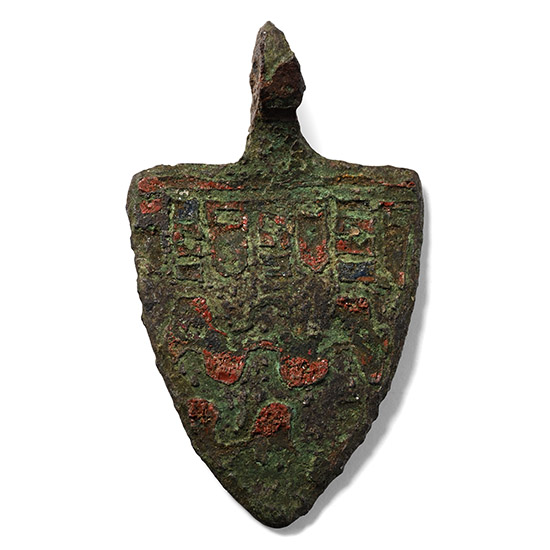
Medieval Knight's Enamelled Bronze Heraldic Horse Harness Pendant
Circa 13th-14th century A.D.Sold for (Inc. bp): £78
Heater-shaped with pierced suspension lug above; enamelled field in undy (wavy) lines with label in chief. 8.69 grams, 42 mm
From a UK collection formed in the 1980s. Property of an Essex, UK, gentleman.
The label was applied over the family arms to denote the first son during his father's lifetime. -
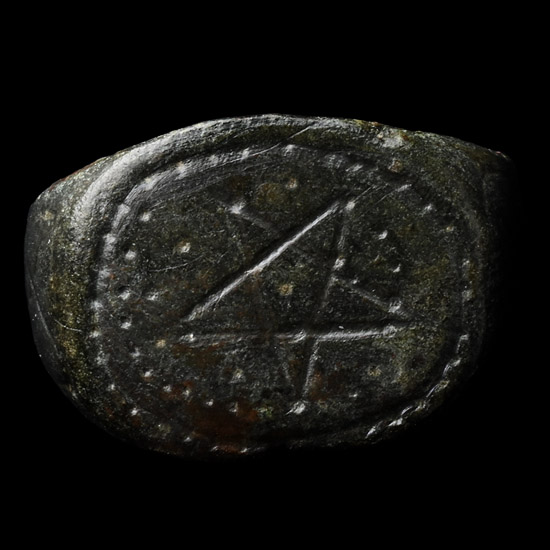
Medieval Ring with Pentagram
12th-14th century A.D.Sold for (Inc. bp): £208
With a wide hoop and an X-motif on each shoulder, oval bezel with a pentagram within pelletted border. 6.26 grams, 21.40 mm overall, 18.99 x 19.16 mm internal diameter (approximate size British S, USA 9, Europe 20, Japan 19)
Ex German art market, 2000s. Acquired from an EU collector living in London. From the collection of a Surrey, UK, gentleman.
