
Loading, please wait...
LOT 0567
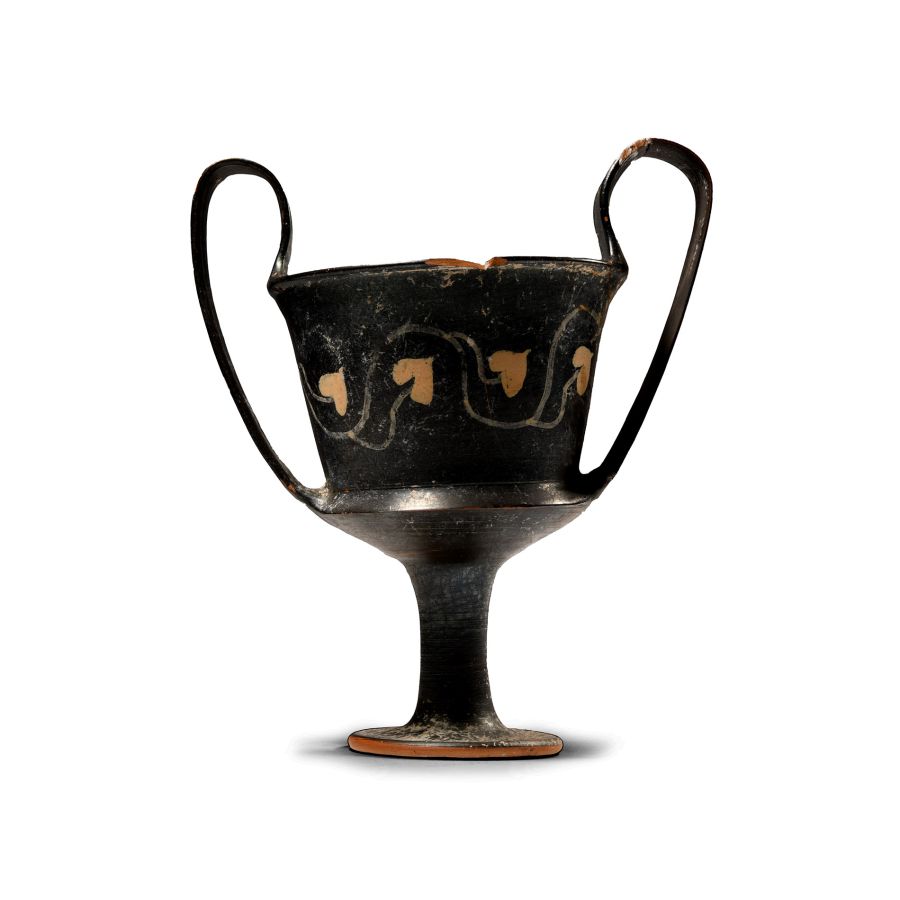
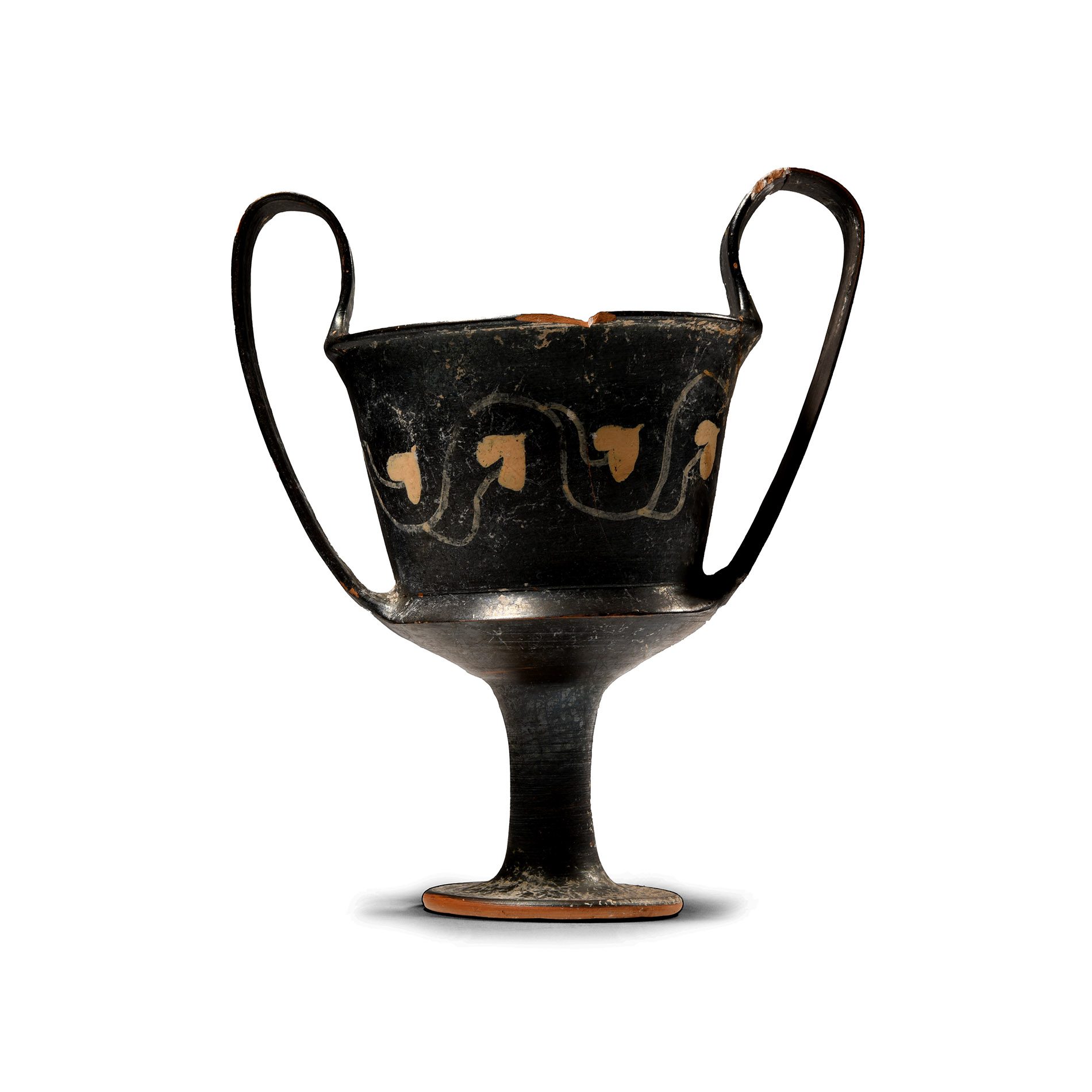
South Italian Blackware Wine Kantharos with Vine
5TH-4TH CENTURY B.C.
9 1/8 in. (472 grams, 23.3 cm high).
The high-handled drinking cup with carinated lower body, discoid feet and vines painted to the equator.
ProvenanceAcquired in Europe before 1994.
This lot is accompanied by an illustrated lot declaration signed by the Head of the Antiquities Department, Dr Raffaele D’Amato.
Cf. The Metropolitan Museum, New York, accession number 1993.197, for a similar 5th century Boeotian example.
CONDITIONTimeLine Auctions follows a vetting process to ensure the authenticity and legality of all items, reinforcing our commitment to integrity and responsible trading. Each antiquity, antique, and coin lot undergoes thorough examination by a vetting committee of at least ten external specialists, professional trade association members, scientists, and archaeologists: Our Vetting Process
AUCTIONS:
TimeLine is a leading auction house specialising in antiquities, ancient art, collectables, natural history, coins, medals, and books. Our auctions offer museums, collectors, historians, and enthusiasts the opportunity to acquire unique and historically significant pieces.
LOT 0567
South Italian Blackware Wine Kantharos with Vine
Estimate £1,200 - 1,700€1,390 - 1,970 (for guidance only)$1,620 - 2,300 (for guidance only)
-
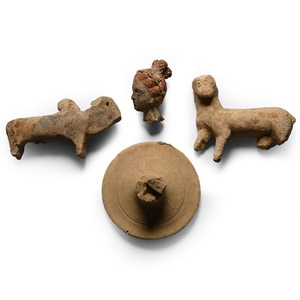
Greek Terracotta Fragment Group
4th century B.C. and laterSold for (Inc. bp): £65
Including a trumpet-shaped pot lid, D-section model animal and other items. 120 grams total, 39-73 mm
Acquired 1979-1999. London collection of the late Mr S.M., thence by descent. This lot is accompanied by an illustrated lot declaration signed by the Head of the Antiquities Department, Dr Raffaele D’Amato. -
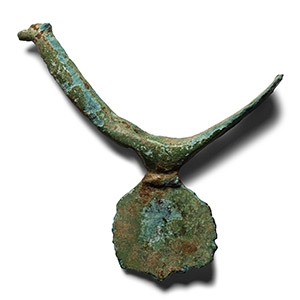
Greek Geometric Votive Gift in the Form of a Bird
8th century B.C.Estimate: £200 - 300 (‡+bp*)
Opening Bid: £90
Comprising a columnar neck with pinched detailing to the head and spatulate tail, discoid plate below. 8.47 grams, 46 mm
with Christie's, London, 25 January 2001, no.263 [Part]. Accompanied by a copy of an Art Loss Register certificate no.S00034403. This lot is accompanied by an illustrated lot declaration signed by the Head of the Antiquities Department, Dr Raffaele D’Amato. -
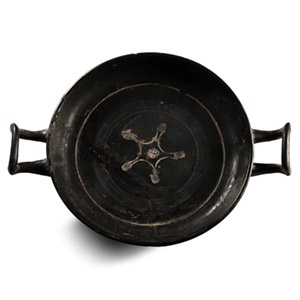
Greek Terracotta Black-Glazed Stemless Cup
4th century B.C.Estimate: £800 - 1,000 (‡+bp*)
Opening Bid: £360
With two lateral handles on a low, profiled ring foot; incised and stamped decoration to the interior comprising a central blossom surrounded by palmettes connected by curved lines, the whole framed by a concentric circle made up of dashes; restored. 227 grams, 20.5 cm
with S.C., Basel, prior 2003. Accompanied by a copy of an Art Loss Register certificate no.S00075178. This lot is accompanied by an illustrated lot declaration signed by the Head of the Antiquities Department, Dr Raffaele D’Amato.
