
Loading, please wait...
LOT 0523
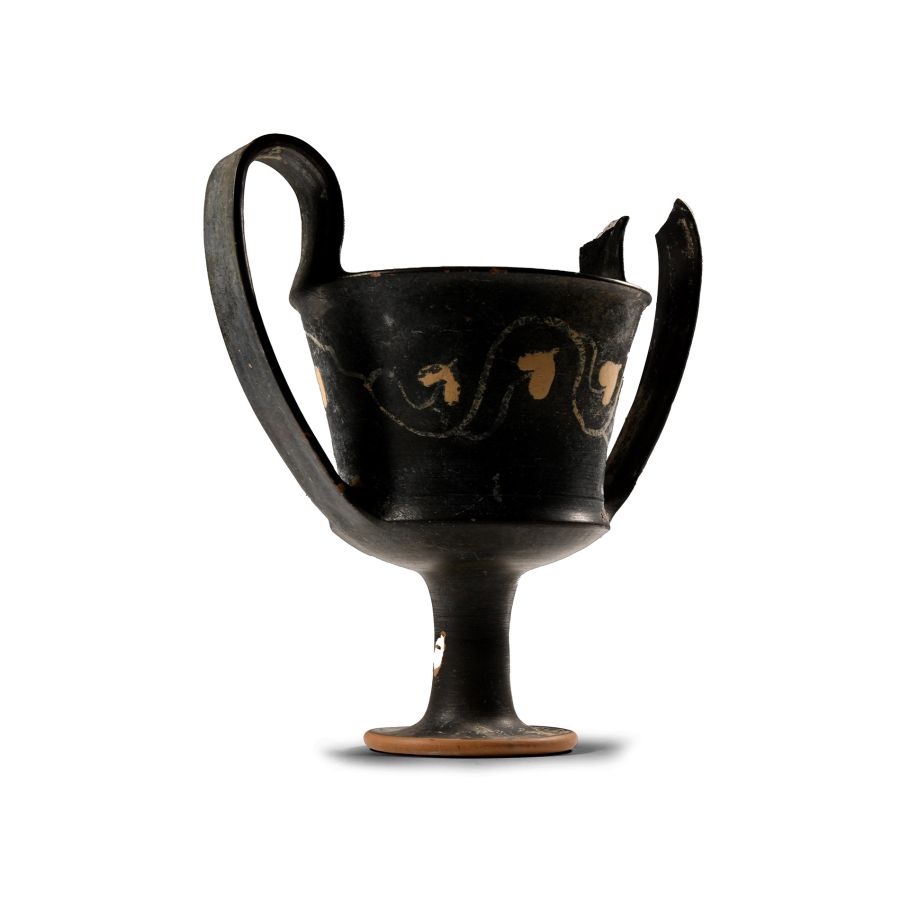
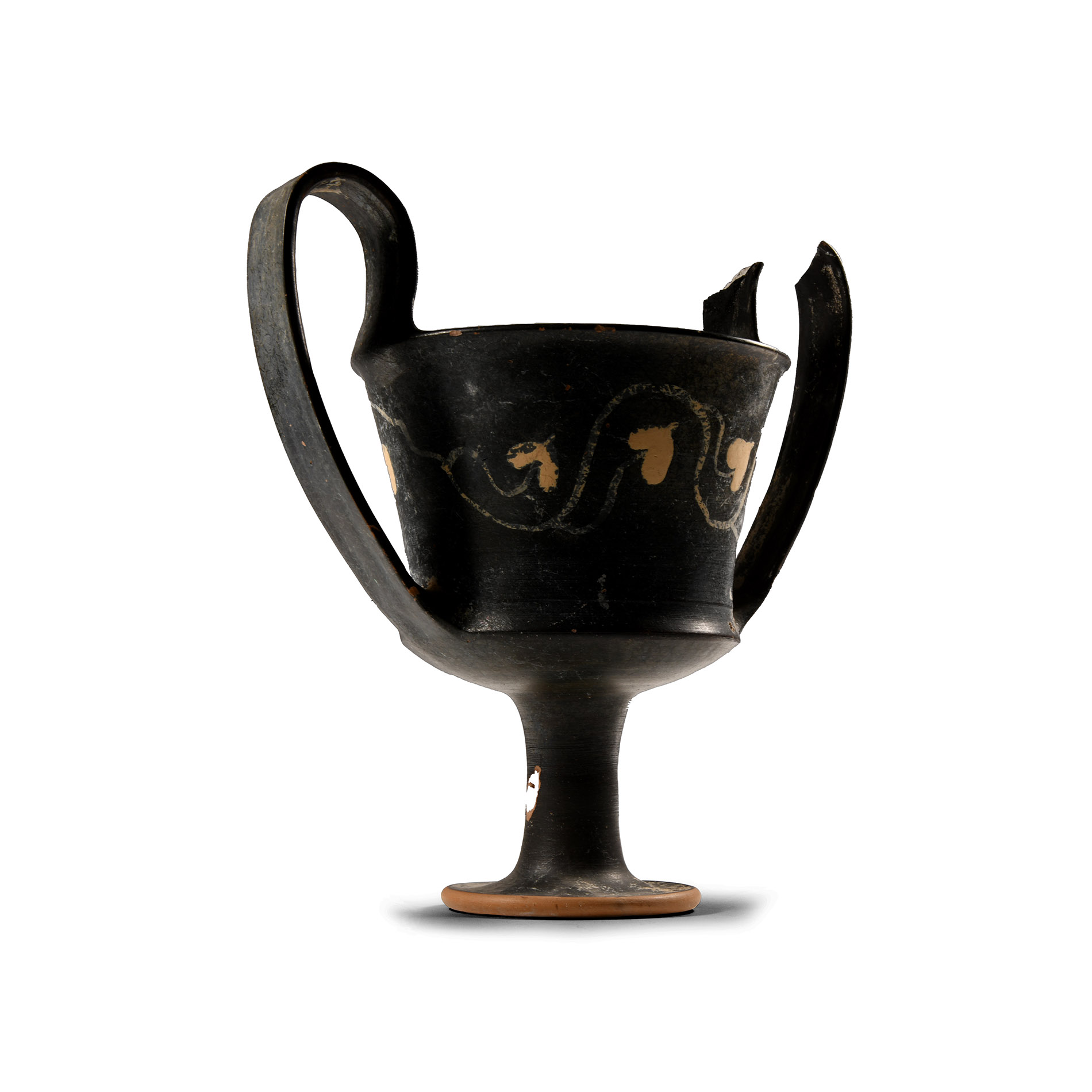
South Italian Blackware Kantharos with Ivy Branch
5TH-4TH CENTURY B.C.
8 3/4 in. (525 grams, 22.2 cm).
The high-handled drinking cup with carinated lower body, discoid feet and vines painted to the equator.
ProvenanceAcquired in the late-1980.
Ex S.A. collection.
Cf. The Metropolitan Museum, New York, accession number 1993.197, for a similar 5th century Boeotian example.
CONDITIONTimeLine Auctions follows a vetting process to ensure the authenticity and legality of all items, reinforcing our commitment to integrity and responsible trading. Each antiquity, antique, and coin lot undergoes thorough examination by a vetting committee of at least ten external specialists, professional trade association members, scientists, and archaeologists: Our Vetting Process
AUCTIONS:
TimeLine is a leading auction house specialising in antiquities, ancient art, collectables, natural history, coins, medals, and books. Our auctions offer museums, collectors, historians, and enthusiasts the opportunity to acquire unique and historically significant pieces.
LOT 0523
South Italian Blackware Kantharos with Ivy Branch
Estimate £1,500 - 2,000€1,740 - 2,320 (for guidance only)$2,030 - 2,700 (for guidance only)
-
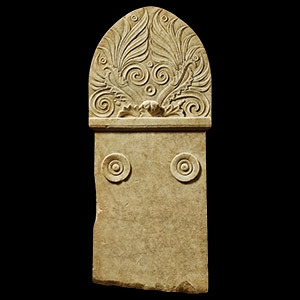
Greek Marble Funerary Anthemion Stele
4th century B.C.Sold for (Inc. bp): £17,550
Comprising a tall, plain body with two rosettes; crowned by an elaborate palmette and volute design with shallow acanthus stalks and small rosettes; mounted on a custom-made display stand. 55.6 kg total, 105.5 cm high including stand (95.2 cm without stand)
Private Swiss collection, acquired in the 1980s. with Ward & Co., New York, 2014. Private American collection, K.M., circa 2015-present. Accompanied by a copy of an Art Loss Register certificate number S00114167, dated 2 June 2016. Accompanied by an academic report by Dr Raffaele D’Amato. This lot has been checked against the Interpol Database of stolen works of art and is accompanied by a search certificate number no.11776-204598.
These memorials, originally painted (see gravestone from Paramythion, cf. Brinkmann-Wünsche, 2004, pp.148ff.), were venerated by families, anointed with oil, decorated with ribbons, and graced with offerings of food. They rivalled each other in the increasingly ostentatious display of family status and wealth, so much so that by the end of the 4th century B.C., a sumptuary law was passed, abruptly ceasing their production. In their heyday, these stelae provided sculptors an opportunity to demonstrate their technical virtuosity with both ornamental and figural subjects. It was not unusual for the anthemion to be of higher quality than the figures sculpted and painted below it. -
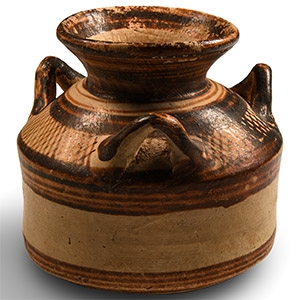
Mycenaean Painted Pottery Alabastron
13th-11th century B.C.Estimate: £2,000 - 3,000 (‡+bp*)
Opening Bid: £1,000
Drum-shaped with a sloping shoulder, short neck, trumpet-style neck and mouth and a gently rounded base; three loop handles at regular intervals around the shoulder; reddish-brown painted geometric bands and cross-hatching against a cream slip. 190 grams, 93 mm wide
Ex private collection, Holland. Acquired from Royal Athena Gallery, 2003. This lot has been checked against the Interpol Database of stolen works of art and is accompanied by search certificate number no.11852-206835. -
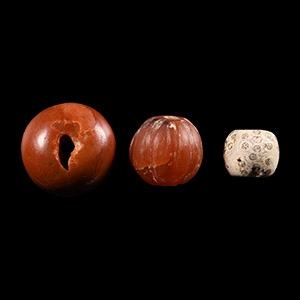
Eastern Mediterranean Stone and Glass Bead Collection
1st millennium B.C.Sold for (Inc. bp): £39
Comprising: one red jasper sphere; one glass sphere with worn eye motifs; one carnelian melon bead. 35.5 grams total, 15 - 26 mm
Acquired 1970s-1996. Property of a North American collector. London collection, 2016.
