
Loading, please wait...
LOT 2428
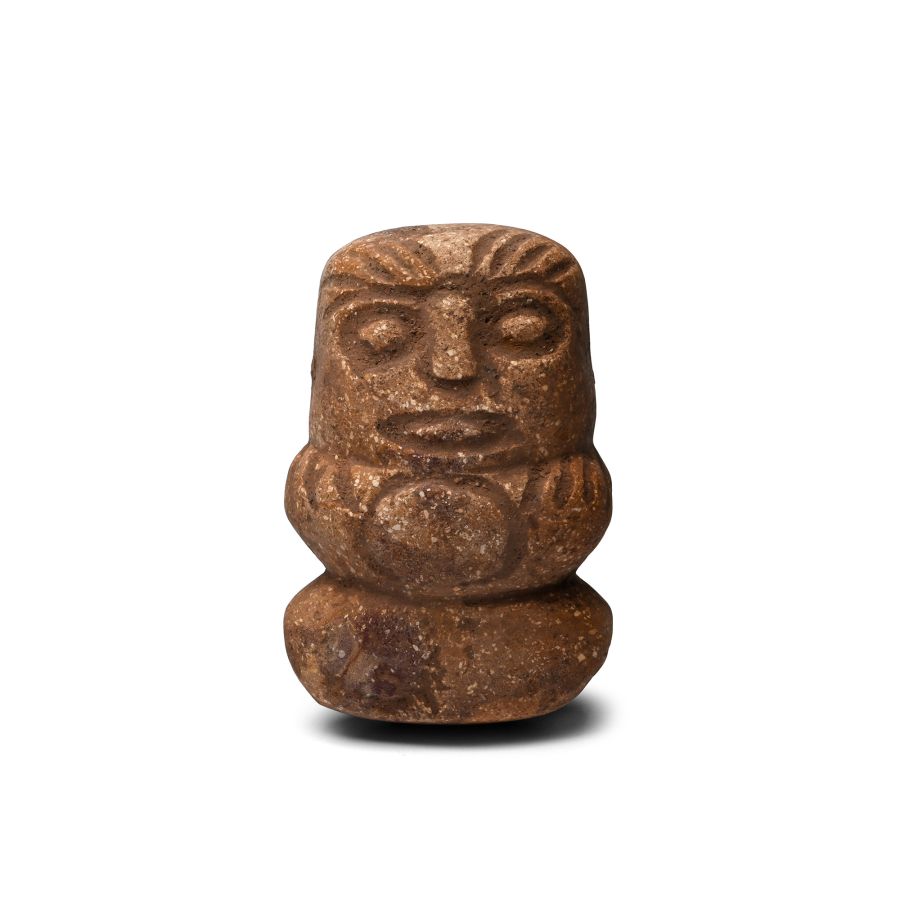
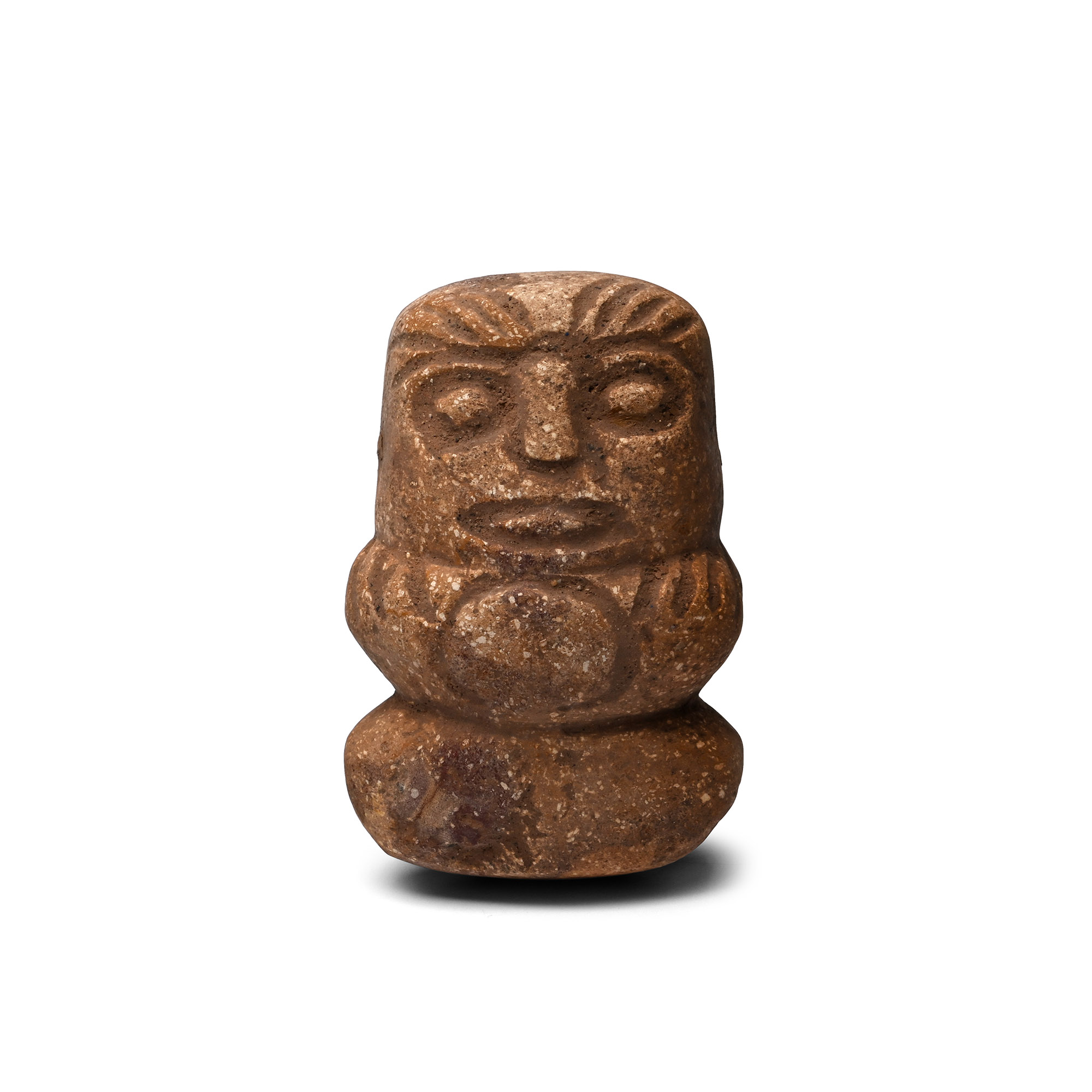
South East Asian Stone Funerary Idol
CIRCA 4TH CENTURY B.C.
4 1/2 in. (670 grams, 11.5 cm).
A rhyolite funerary idol with bulbous head and body, low-relief facial features, arms forming a horizontal band; traces of red pigment. [No Reserve]
ProvenanceEx property of a South East Asia collector; formerly acquired on the Asian art market before 2000.
From the private collection of John Meredith, acquired since the 1990s; thence by descent.
This lot is accompanied by an illustrated lot declaration signed by the Head of the Antiquities Department, Dr Raffaele D'Amato.
See the Gloman Meritt private collection of ancient artefacts from the Philippines for similar.
CONDITIONTimeLine Auctions follows a vetting process to ensure the authenticity and legality of all items, reinforcing our commitment to integrity and responsible trading. Each antiquity, antique, and coin lot undergoes thorough examination by a vetting committee of at least ten external specialists, professional trade association members, scientists, and archaeologists: Our Vetting Process
AUCTIONS:
TimeLine is a leading auction house specialising in antiquities, ancient art, collectables, natural history, coins, medals, and books. Our auctions offer museums, collectors, historians, and enthusiasts the opportunity to acquire unique and historically significant pieces.
-
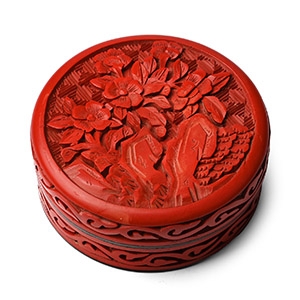
Chinese Cinnabar Lacquer Bronze Trinket Box with Floral Lid
20th century A.D.Sold for (Inc. bp): £20
Discoid in plan with running tendril to the side, lid carved with foliage and flowers on a hatched field. 148 grams, 74 mm
From the private collection of a Canadian gentleman living in Essex, UK, formed since the 1920s-circa 1990. Property of an Essex lady until the late 1990s; thence by descent. From the private collection of an Essex gentleman since the late 1990s. This lot is accompanied by an illustrated lot declaration signed by the Head of the Antiquities Department, Dr Raffaele D'Amato. -
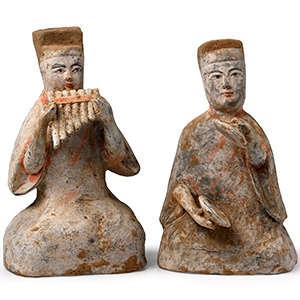
Chinese Tang Style Terracotta Musician Pair
20th century A.D.Estimate: £400 - 600 (+bp*)
Opening Bid: £200
Each a hollow-formed conical figure in seated pose with robe extending to the base, wearing a small cap over the hair; one holding cymbals to clash together, the other raising a set of pipes to the lips. 1.42 kg total, 18.2-19.5 cm
Previously from a Hong Kong collection. Ex property of a London, UK, gentleman. This lot is accompanied by an illustrated lot declaration signed by the Head of the Antiquities Department, Dr Raffaele D'Amato. -
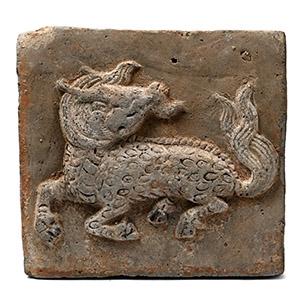
Chinese Song Terracotta Tile with Dragon
Song Dynasty, 960-1279 A.D. or laterSold for (Inc. bp): £124
Rectangular tile with high-relief dragon in a dynamic pose with its head turned back; some pigment remaining. 2.28 kg, 23 cm wide
From a West Country, UK, collection, 1990s. This lot is accompanied by an illustrated lot declaration signed by the Head of the Antiquities Department, Dr Raffaele D'Amato.
