
Loading, please wait...
LOT 1548
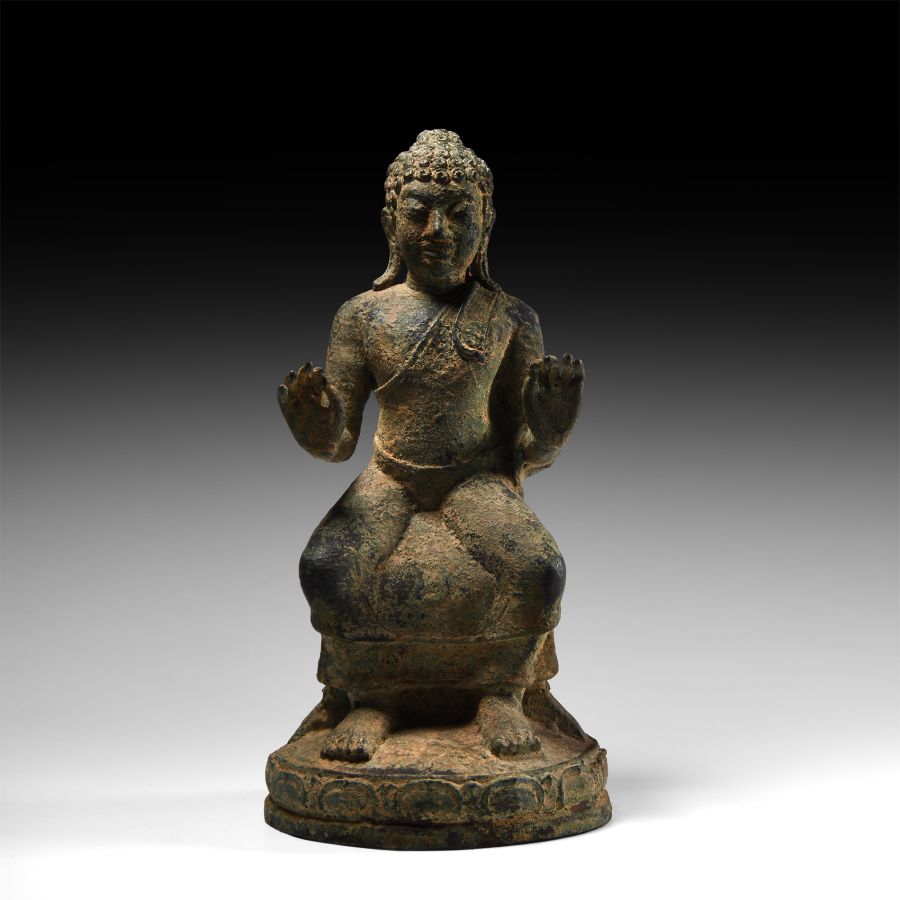
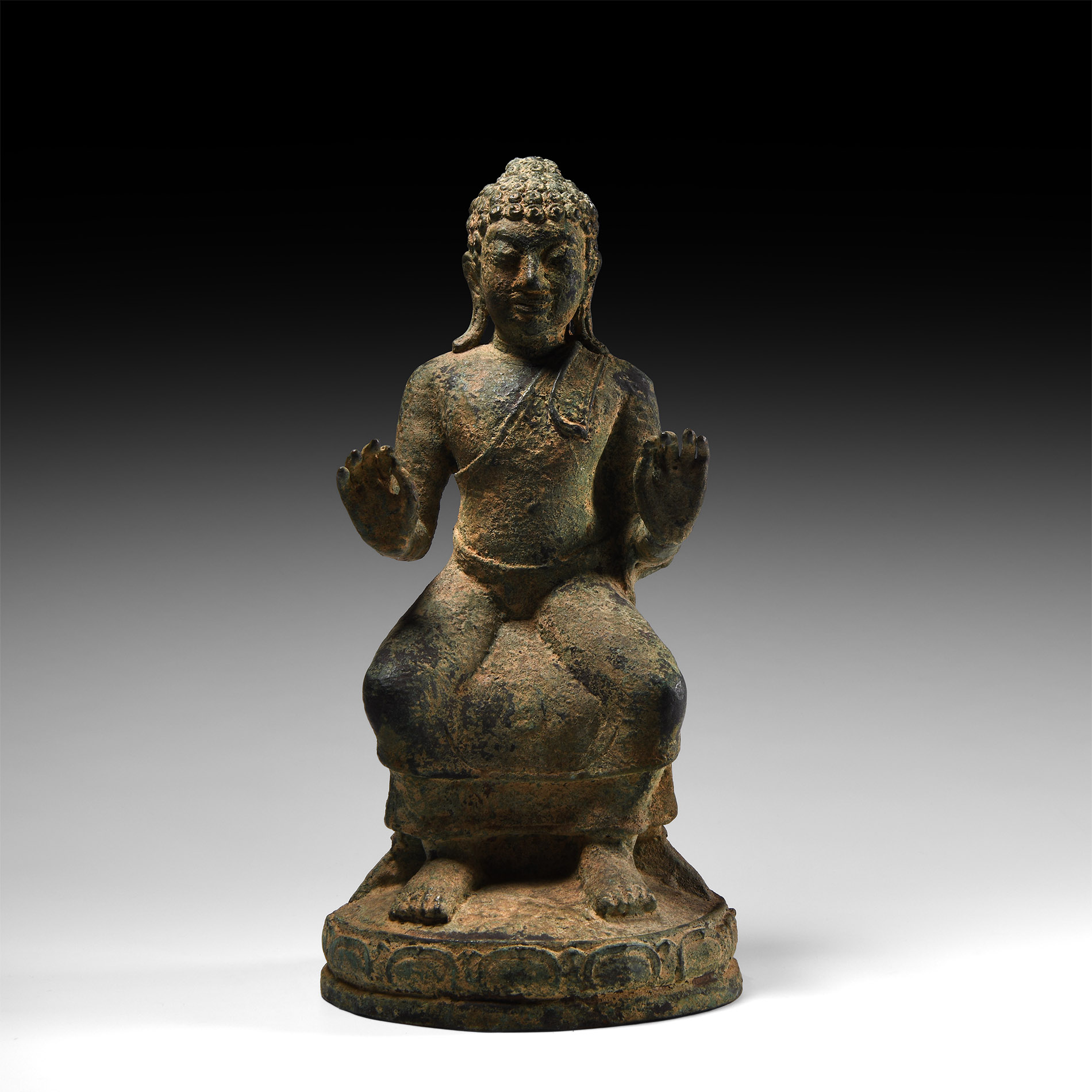
South East Asian Seated Statue of Buddha
12TH-13TH CENTURY A.D.
9 1/2 in. (2.14 kg, 24 cm high).
A bronze figure of Buddha in an earlier style, on a lotus-flower disc base with lotus-petal rim; Buddha is seated on a low block, his legs spread, and his hands raised, wearing a tight-fitting ankle-length paridhana.
ProvenanceAcquired 1960s to early 1970s.
Ex ‘Buckingham Collection’, the late Nik Douglas (1944-2012), renowned author, curator and Asian art expert.
TimeLine Auctions follows a vetting process to ensure the authenticity and legality of all items, reinforcing our commitment to integrity and responsible trading. Each antiquity, antique, and coin lot undergoes thorough examination by a vetting committee of at least ten external specialists, professional trade association members, scientists, and archaeologists: Our Vetting Process
AUCTIONS:
TimeLine is a leading auction house specialising in antiquities, ancient art, collectables, natural history, coins, medals, and books. Our auctions offer museums, collectors, historians, and enthusiasts the opportunity to acquire unique and historically significant pieces.
-
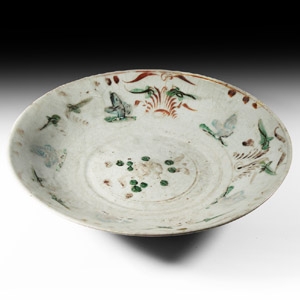
Chinese Ming Dynasty Charger
Ming Dynasty, 1368-1644 A.D.Estimate: £100 - 140 (+bp*)
Opening Bid: £50
A broad glazed ceramic charger with hand-painted detailing including foliage, tendrils and fish(?). 1.5 kg, 33.5 cm wide
Acquired early 2000s. Property of a Suffolk, UK, gentleman. Property of an Essex, UK, gentleman. -
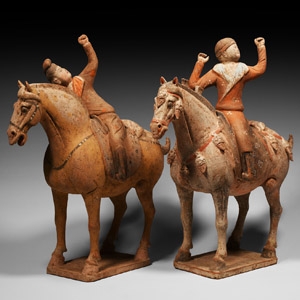
Chinese Tang Hunter Pair
Tang Dynasty, 618-907 A.D.Estimate: £4,000 - 6,000 (+bp*)
Opening Bid: £2,222
A pair of ceramic mounted hunter figures, each modelled in the round on an integral rectangular base; horses standing facing with pricked ears, cropped manes and dressed tails, wearing bridles, harnesses and cruppers with studs and pendants; seated riders turned left in their saddles, directing their attention skywards, arms and hands positioned as though drawing bows (now absent); one saddle cloth possibly designed to mimic animal skin, the other with a floral design; successful kills slung over each horse's rump; extensive remains of polychrome pigmentation. 7.8 kg total, 40.5-41.5 cm high
Fine condition.
Acquired 1970-1990s. From a private West Country collection. Accompanied by two original thermoluminescence analysis report nos.C122g64 and C122g68 from Oxford Authentication. This lot has been checked against the Interpol Database of stolen works of art and is accompanied by search certificate no.11517-195275. -
.jpg)
Chinese Han Style Bronze Bear Finial
19th-20th century A.D.Estimate: £250 - 300 (+bp*)
Opening Bid: £125
A bronze finial formed as a bear in a seated position, one leg drawn up beside its body with left paw resting upon it, the other pushed out to the side of its body, the right paw resting upon it, large head with gaping mouth exposing teeth and tongue, pricked ears and bulging eyes, sagging breasts resting atop the creature's pot-belly, incised fur detailing and a short tail to the reverse; hollow-formed. 135 grams, 58 mm
Fine condition.
Acquired 1980-1990s. From a West Country collection.
