
Loading, please wait...
LOT 2162
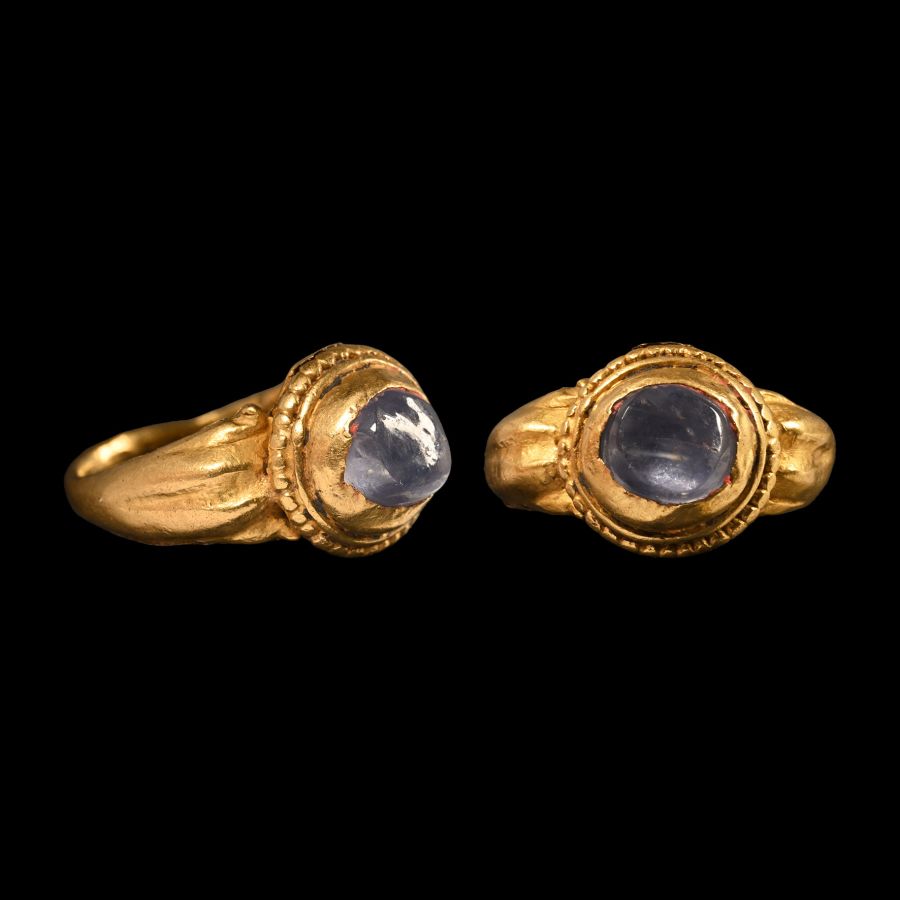
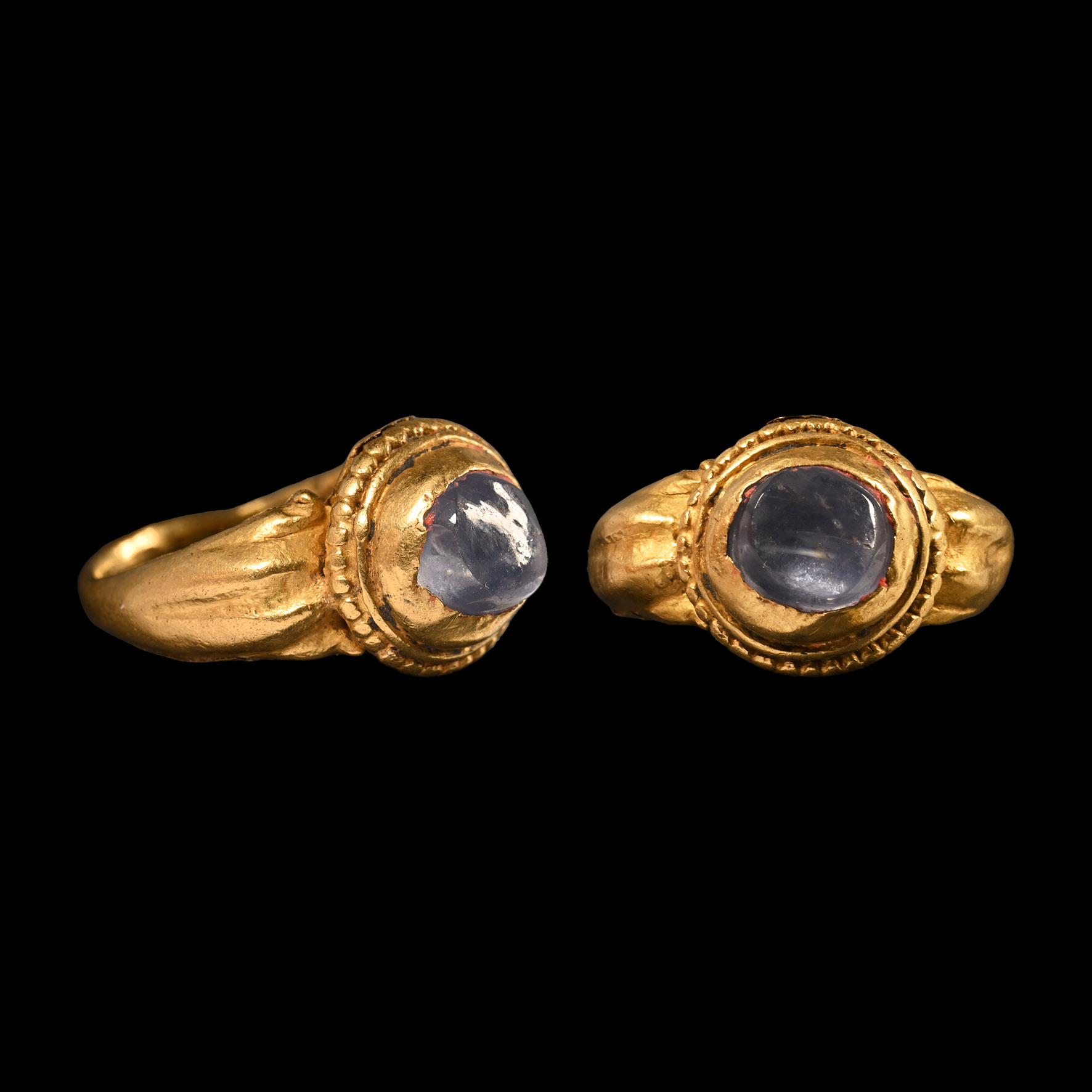
South East Asian Gold and Topaz Ring
17TH CENTURY A.D.
1 in. (5.22 grams, 23.59 mm overall, 15.44 mm internal diameter (approximate size British J, USA 4 3/4, Europe 8.69, Japan 8)).
With expanding ribbed shoulders, domed bezel with beaded wire collar, inset irregular pale blue topaz cabochon.
ProvenanceFrom a late Japanese specialist collector, 1970-2000s.
CONDITIONTimeLine Auctions follows a vetting process to ensure the authenticity and legality of all items, reinforcing our commitment to integrity and responsible trading. Each antiquity, antique, and coin lot undergoes thorough examination by a vetting committee of at least ten external specialists, professional trade association members, scientists, and archaeologists: Our Vetting Process
AUCTIONS:
TimeLine is a leading auction house specialising in antiquities, ancient art, collectables, natural history, coins, medals, and books. Our auctions offer museums, collectors, historians, and enthusiasts the opportunity to acquire unique and historically significant pieces.
-
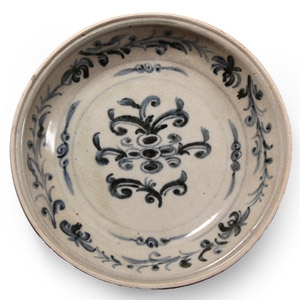
Vietnamese 'Hoi An' Shipwreck Bowl
14th-15th century A.D.Sold for (Inc. bp): £286
With tin-glazed surface and basal ring, applied blue-black pattern of fronds and tendrils to the inner face, gadroons to the outer. 850 grams, 24 cm wide
Ex Butterfield Auctions, San Francisco, USA. -
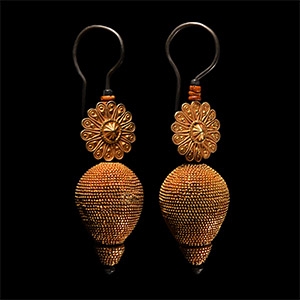
South East Asian Large Gold Repousse Fruit-Shaped Earrings
Circa 17th-18th century A.D.Estimate: £700 - 900 (+bp*)
Opening Bid: £350
Each with a substantial hook, gold rosette appliqué with filigree detailing, granulated piriform bulb. 35 grams total, 93-95 mm
From the private collection of the late Mr S.M., London, UK, 1969-1999; thence by descent. -
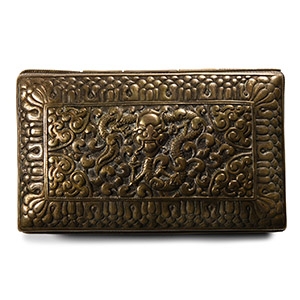
Bhutanese Part Gilded Repousse Betel Nut Box
Mid 19th century A.D.Sold for (Inc. bp): £130
Rectangular form in silver-coloured metal with a hinged closure, repoussé dragonesque beast amidst swirling clouds to the top face, geometric ornament to the edge faces, base decorated with a central gammadion within a rectangular panel, enclosed by stylised petals. 250 grams, 13.3 cm
Acquired by private treaty from old Belgian collection. Property of RWM Collection.
