
Loading, please wait...
LOT 1566
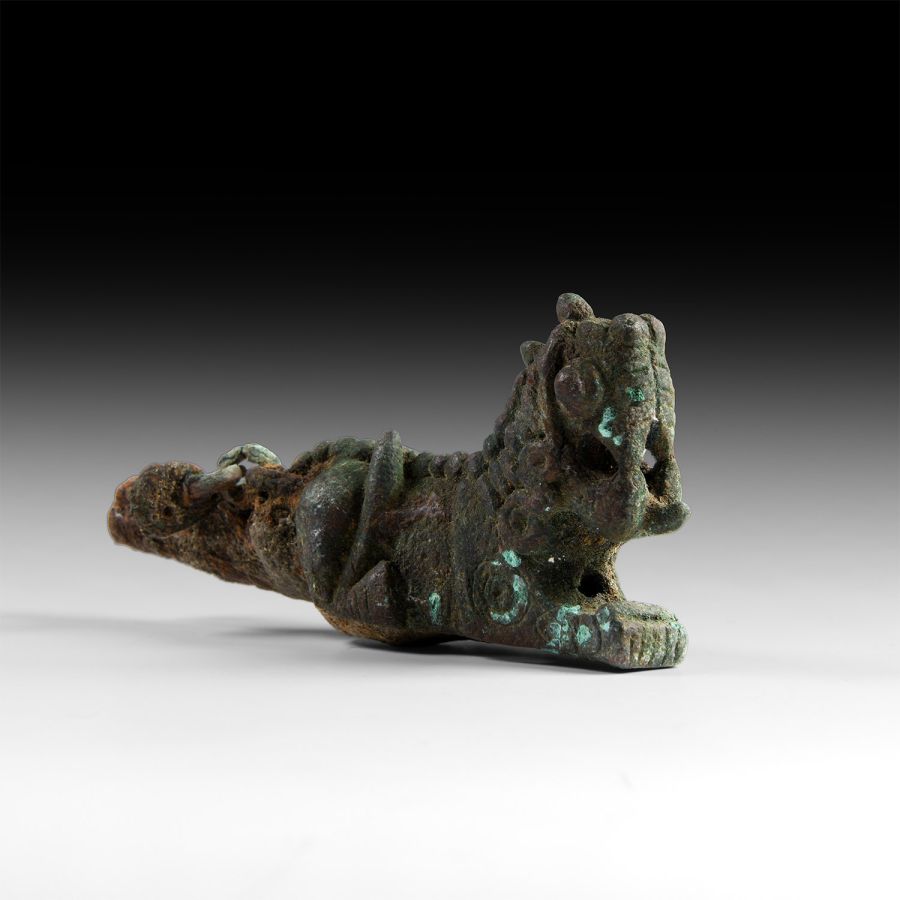
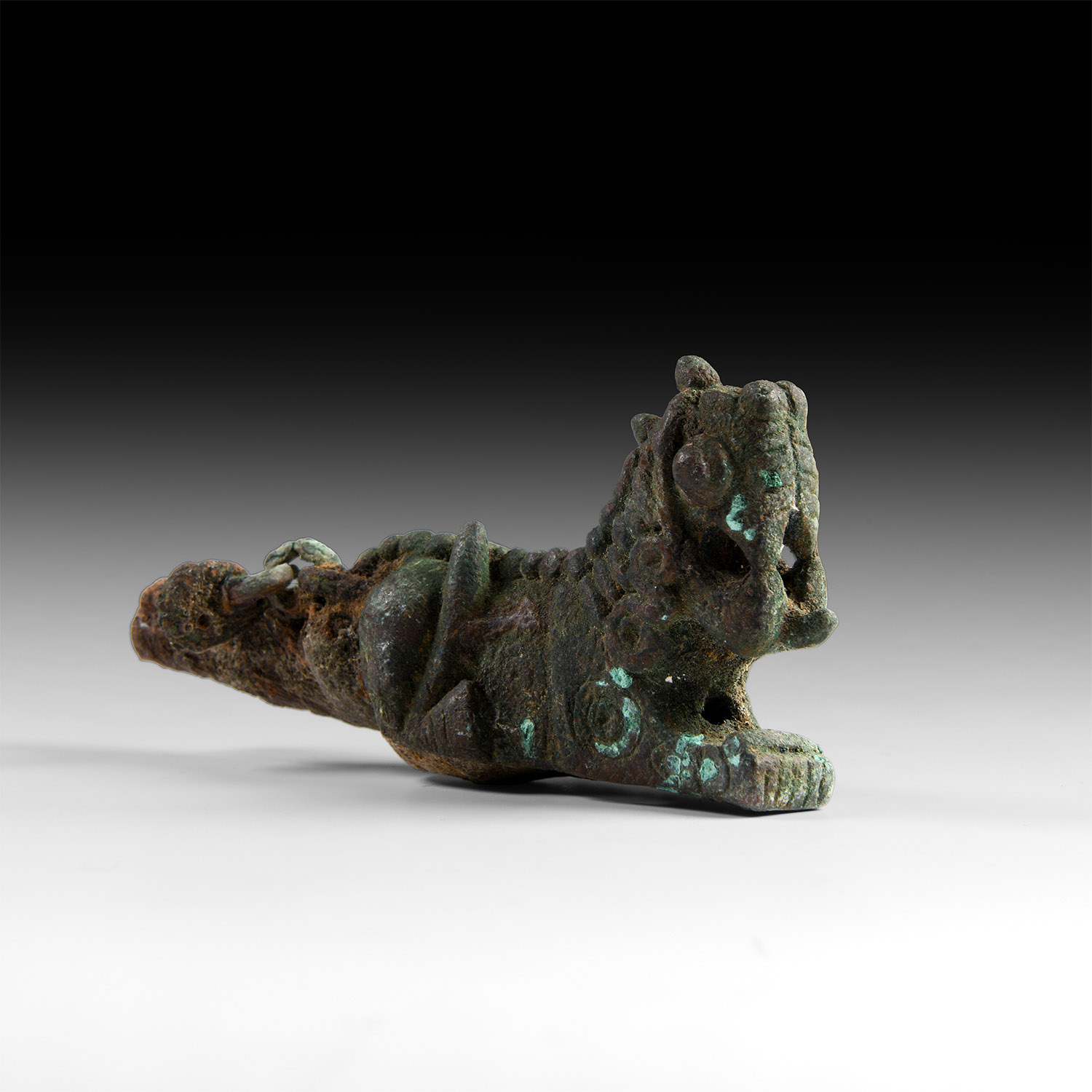
South East Asian Dragon Terminal
11TH-12TH CENTURY A.D.
4 in. (186 grams, 10 cm wide).
A copper-alloy terminal formed as a couchant dragon modelled with forepaws outstretched, stylised head with bulging eyes and four huge fangs, tail curved to one side of the body, chain with dangle to rear and tapering cylindrical bar. [No Reserve]
ProvenanceEssex gallery, early 2000s.
CONDITIONTimeLine Auctions follows a vetting process to ensure the authenticity and legality of all items, reinforcing our commitment to integrity and responsible trading. Each antiquity, antique, and coin lot undergoes thorough examination by a vetting committee of at least ten external specialists, professional trade association members, scientists, and archaeologists: Our Vetting Process
AUCTIONS:
TimeLine is a leading auction house specialising in antiquities, ancient art, collectables, natural history, coins, medals, and books. Our auctions offer museums, collectors, historians, and enthusiasts the opportunity to acquire unique and historically significant pieces.
-
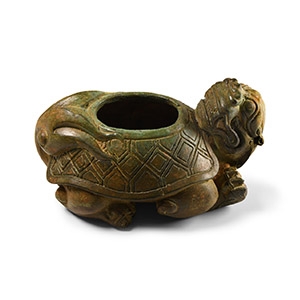
Chinese Han Style Bronze Dragon Turtle
20th century A.D.Estimate: £400 - 600 (+bp*)
Opening Bid: £200
A copper-alloy vessel in the form of a regardant mythical beast, the dragon turtle (or Lóngguī), featuring a turtle's body and dragonesque head and paws, with a flame-like tail; oval vessel opening to apex. 505 grams, 11.3cm wide
Acquired 1970s-1990s. Ex West Country collection. -
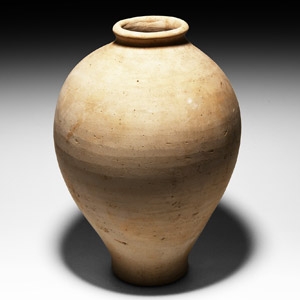
Chinese Tang Whiteware Jar
Tang Dynasty, 618-907 A.D.Sold for (Inc. bp): £176
A piriform whiteware jar with short neck, chamfered rim and slightly out-turned foot. 2.56 kg, 32 cm high
Acquired 1970-1990s. Ex Hong Kong collection. From a private West Country collection. -
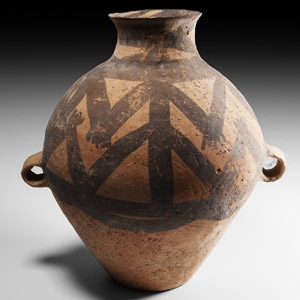
Chinese Neolithic Painted Frog Jar
3rd-2nd millennium B.C.Estimate: £250 - 350 (+bp*)
Opening Bid: £125
A piriform ceramic jar with short neck, everted rim and two integral lug handles, the upper body painted with a figurative 'frog' motif. 3 kg, 30 cm high
Acquired 1970s-1990s. Ex West Country collection.
