
Loading, please wait...
LOT 1593
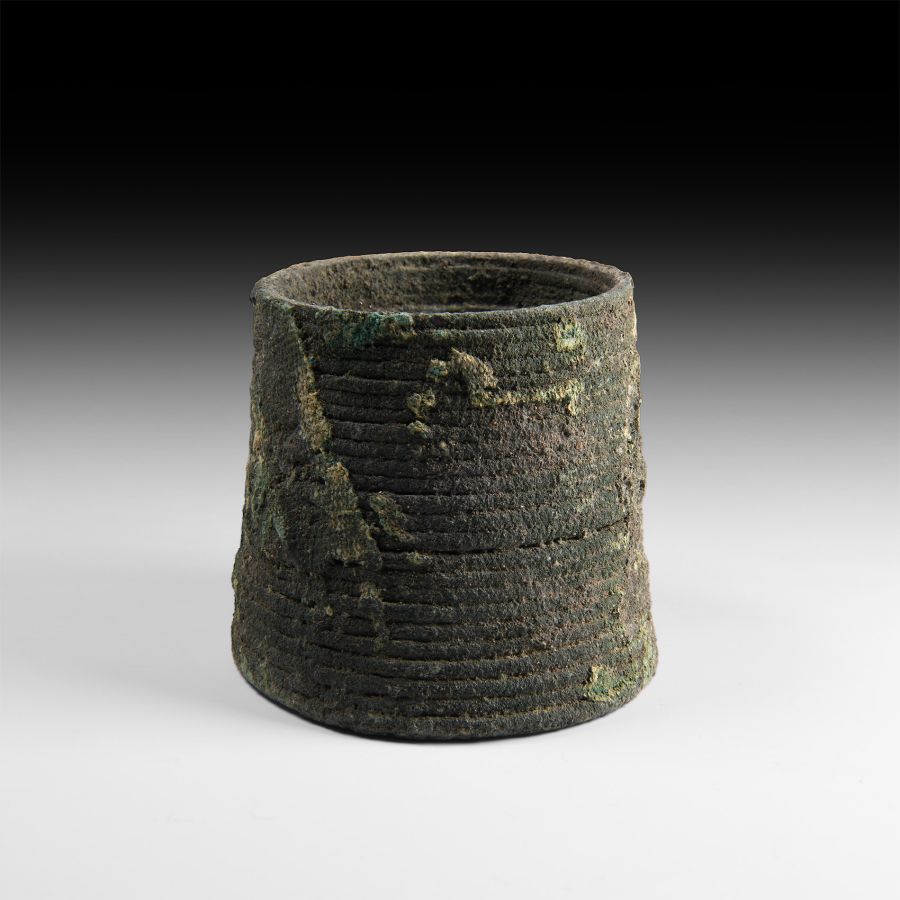
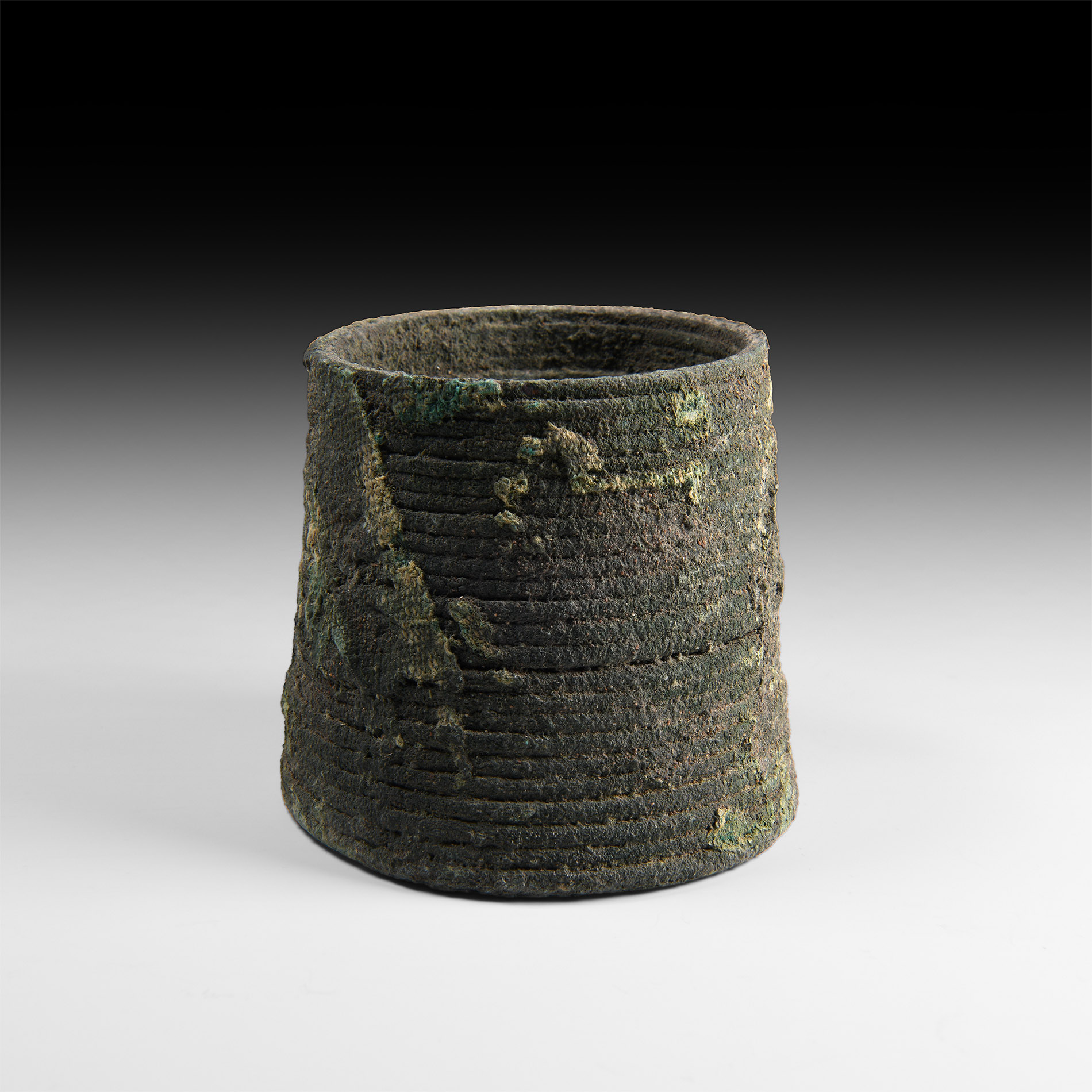
South East Asian Coiled Bracelet
12TH-14TH CENTURY A.D.
2 1/2 in. (186 grams, 63 mm).
A round-section bracelet formed from a series of coils wound off-centre; remains of strips of fabric to the external face; for a very slender wearer. [No Reserve]
ProvenanceEssex gallery, early 2000s.
CONDITIONTimeLine Auctions follows a vetting process to ensure the authenticity and legality of all items, reinforcing our commitment to integrity and responsible trading. Each antiquity, antique, and coin lot undergoes thorough examination by a vetting committee of at least ten external specialists, professional trade association members, scientists, and archaeologists: Our Vetting Process
AUCTIONS:
TimeLine is a leading auction house specialising in antiquities, ancient art, collectables, natural history, coins, medals, and books. Our auctions offer museums, collectors, historians, and enthusiasts the opportunity to acquire unique and historically significant pieces.
-
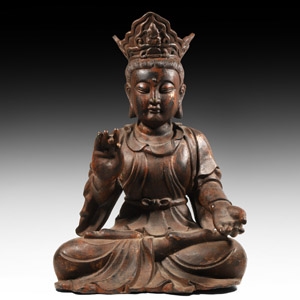
Chinese Bronze Seated Buddha
19th-20th century A.D.Estimate: £2,500 - 3,500 (+bp*)
Opening Bid: £1,250
A hollow-formed bronze statue of seated Buddha crowned and wearing a flounced robe in the lotus posture, hands held in the mudra for reassurance. 16.8 kg, 60 cm high
French collection, 1960s-early 2000s. From an important Paris gallery, France. with Ogotai (?) Auctions, Paris, France, 15 August 2016. This lot has been checked against the Interpol Database of stolen works of art and is accompanied by search certificate number no.11716-199360. -
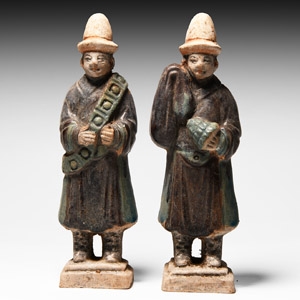
Chinese Ming Retainer Group
Late Ming Dynasty-early Qing Dynasty, 16th-17th century A.D.Estimate: £300 - 400 (+bp*)
Opening Bid: £150
A pair of glazed ceramic figurines comprising: retainer standing on a socle base wearing long high-collar knee-length robe and conical cap, hands on the stomach holding an applied bandolier; similar with right hand raised inside an overlong sleeve and left hand holding a cap(?). 599 grams total, 18 cm high each
Acquired 1970s. West Country, UK, collection. -
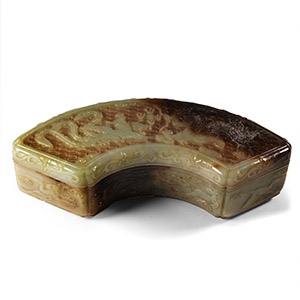
Chinese Carved Jade Box
Circa 19th century A.D.Sold for (Inc. bp): £91
A jade box with curved profile, the base carved to the exterior with a stylised landscape composed of bounding deer, trees, mountains, swirling clouds and birds; lid with raised opposed fenghuangs pierced against a pierced field, flowering vines to the rim. 394 grams, 19.5 cm wide
Acquired London, UK, in the 1990s. Property of a London gentleman.
