
Loading, please wait...
LOT 0186
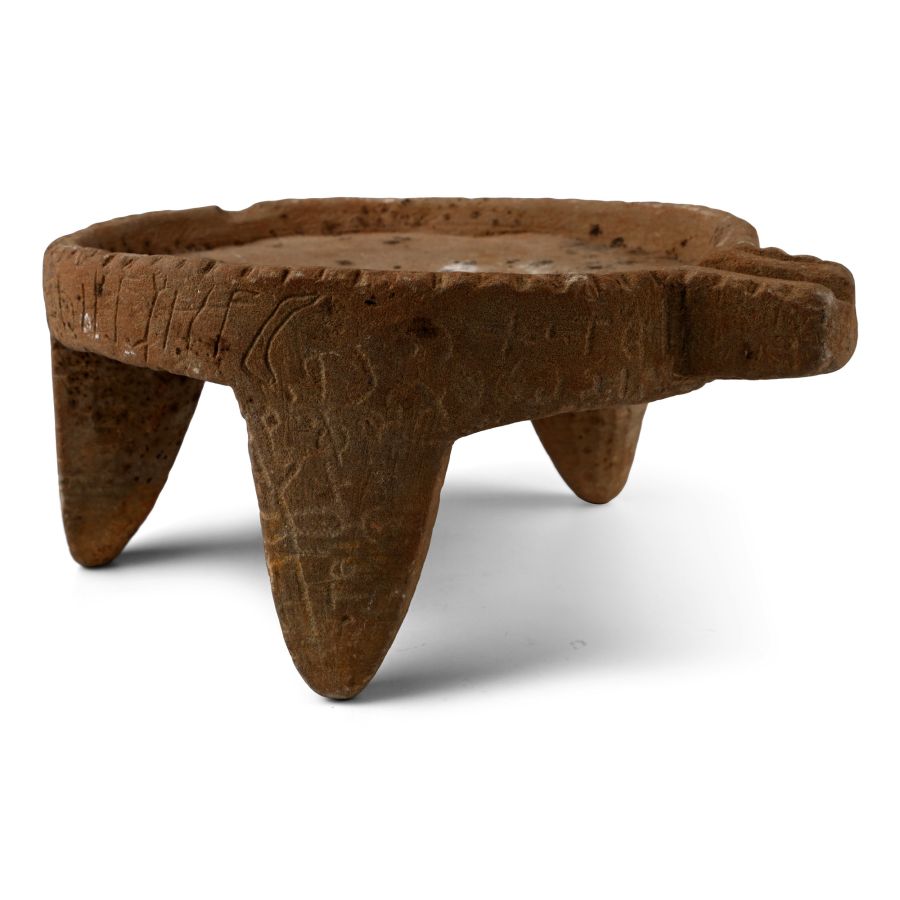
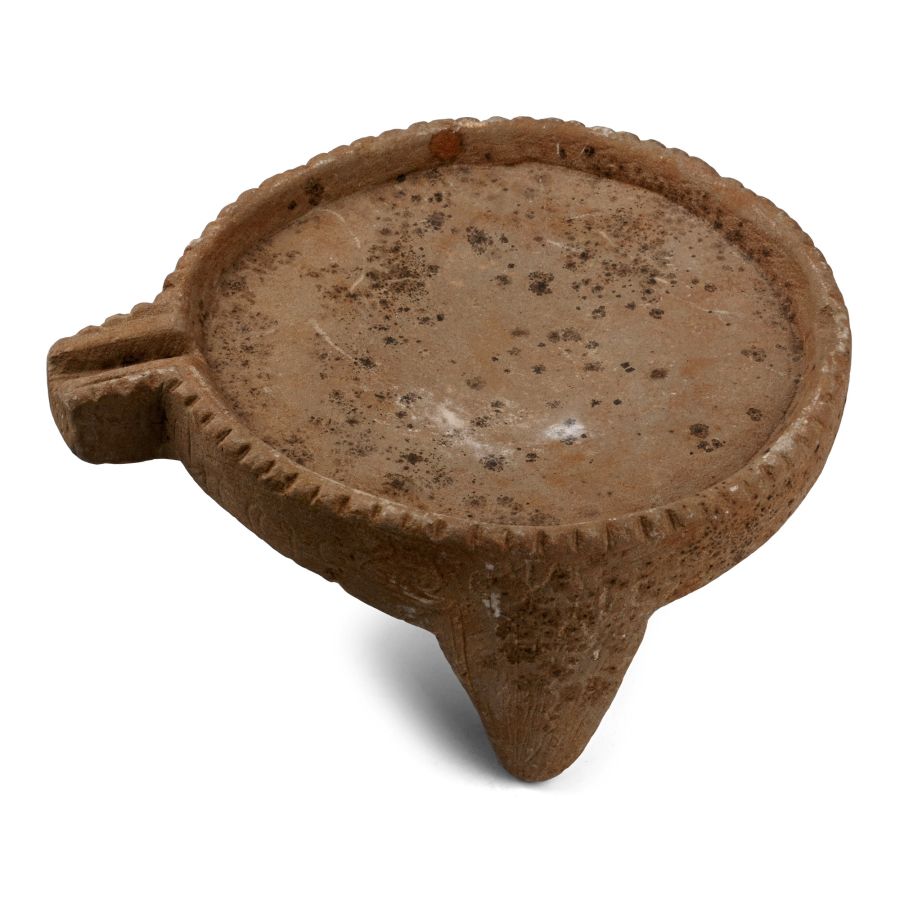
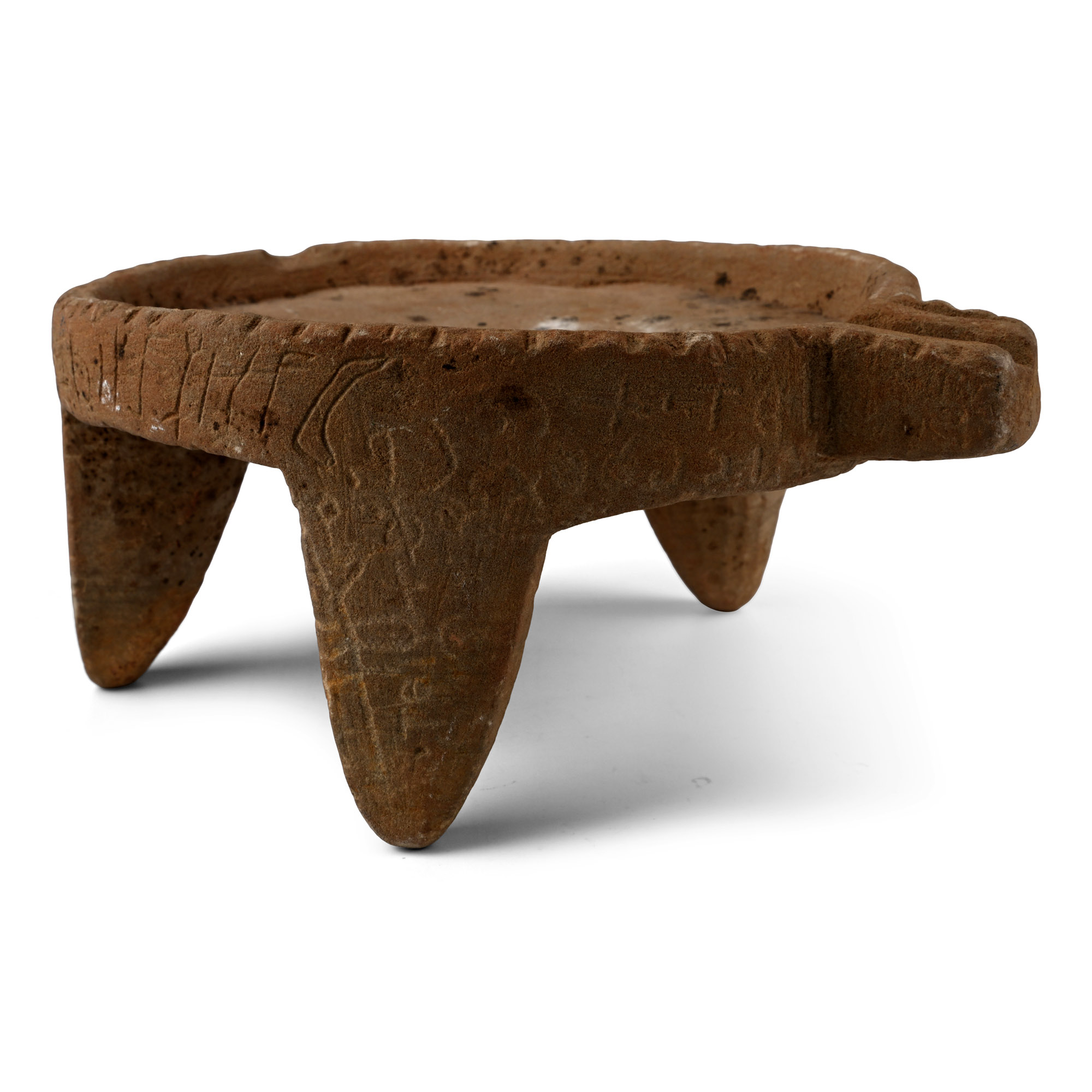
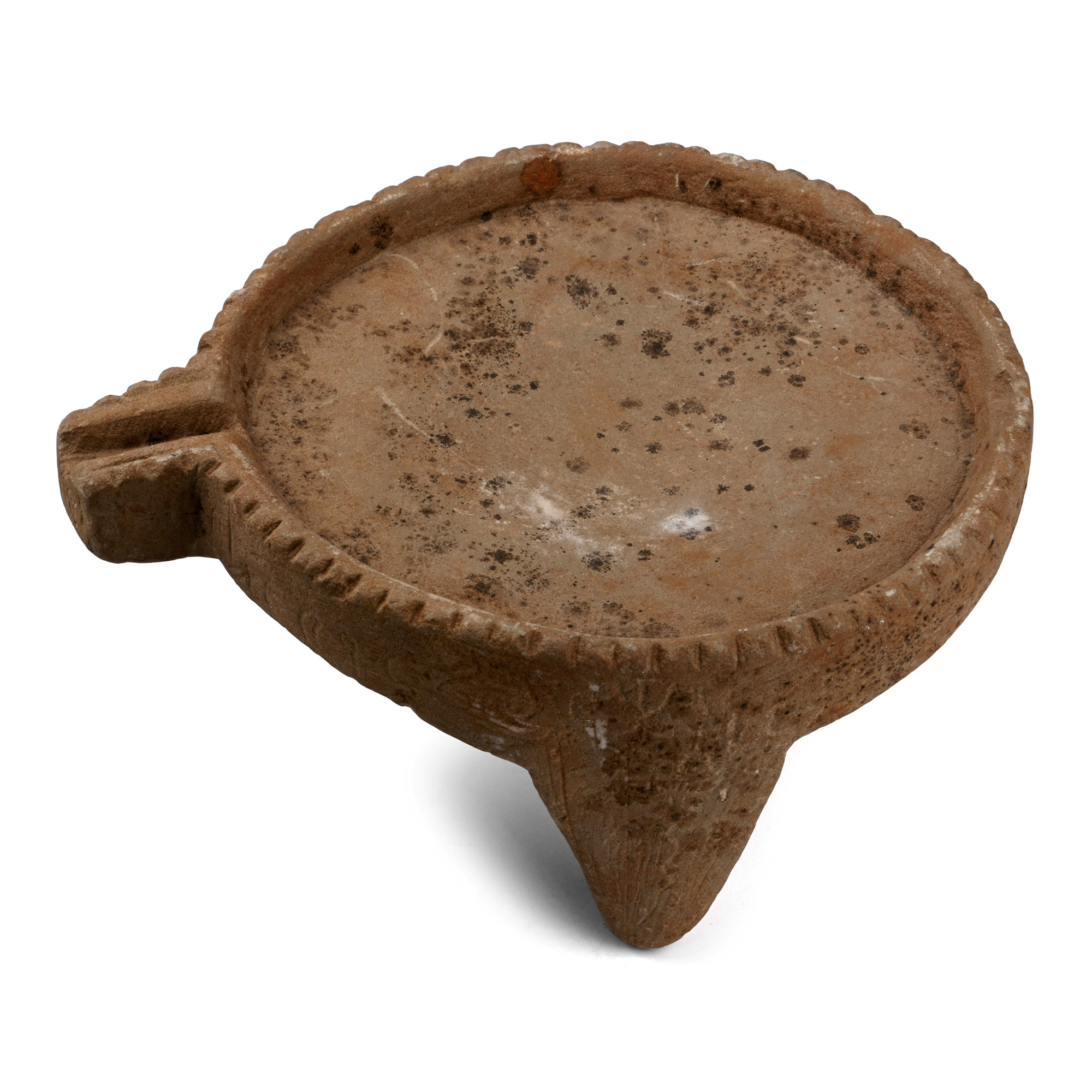
South Arabian Offering Table with Inscription
6TH CENTURY B.C.
8 1/4 in. (1.47 kg, 21 cm).
With three D-section stub legs and channel with pouring lip; incised Phoenician or proto-Hebrew inscription, in reverse, to the notched rim.
ProvenancePrivate collection, Canada, acquired by descent from the collection of the present owner’s father, formed 1965-1990.
Acquired from the above by the current owner, 2020.
This lot has been checked against the Interpol Database of stolen works of art and is accompanied by a search certificate number no.12842-240719.
This lot has been cleared against the Art Loss Register database, and is accompanied by an illustrated lot declaration signed by the Head of the Antiquities Department, Dr Raffaele D'Amato.
Cf. Cleveland R.L., An Ancient South Arabian Necropolis, objects from the second campaign (1951) in the Timna Cemetery, Baltimore, 1951, pl.90, for similar examples (esp.TC 2020).
CONDITIONTimeLine Auctions follows a vetting process to ensure the authenticity and legality of all items, reinforcing our commitment to integrity and responsible trading. Each antiquity, antique, and coin lot undergoes thorough examination by a vetting committee of at least ten external specialists, professional trade association members, scientists, and archaeologists: Our Vetting Process
AUCTIONS:
TimeLine is a leading auction house specialising in antiquities, ancient art, collectables, natural history, coins, medals, and books. Our auctions offer museums, collectors, historians, and enthusiasts the opportunity to acquire unique and historically significant pieces.
LOT 0186
South Arabian Offering Table with Inscription
Estimate £2,000 - 3,000€2,320 - 3,480 (for guidance only)$2,700 - 4,050 (for guidance only)
-
Luristan Bronze Pin Head with Ibex
2nd-1st millennium B.C.Sold for (Inc. bp): £33
Round-section pin with stylised ibex-head finial having long, curving horns and pellet eyes. 15.3 grams, 70 mm
Acquired on the UK art market. Property of an East Anglia private collector. This lot has been cleared against the Art Loss Register database, and is accompanied by an illustrated lot declaration signed by the Head of the Antiquities Department, Dr Raffaele D'Amato. -
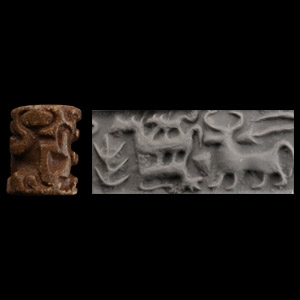
Mesopotamian Stone Cylinder Seal
2nd-1st millennium B.C.Sold for (Inc. bp): £325
With frieze of oxen and other animals in profile, with 'arrow' above; supplied with a museum-quality impression. 36.3 grams, 32 mm
From the collection of the late S, London, UK, 1970-2000. Examined by Professor Wilfrid George Lambert FBA (1926-2011), historian, archaeologist, and specialist in Assyriology and Near Eastern archaeology, in the 1990s. This lot has been cleared against the Art Loss Register database, and is accompanied by an illustrated lot declaration signed by the Head of the Antiquities Department, Dr Raffaele D'Amato. -
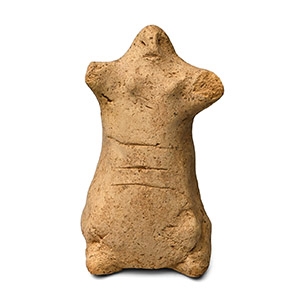
Chalcolithic Terracotta Fertility Idol
3rd millennium B.C.Sold for (Inc. bp): £143
Modelled as a highly stylised seated female figure with stub legs and outstretched stub arms, triangular head with simple facial features, conical breasts, buttocks and spine delineated with simple lines to rear. 169 grams, 92 mm high
From the collection of a deceased London gentleman, 1979-1999; thence by descent. From the private collection of John Meredith, acquired since the 1990s; thence by descent. This lot has been cleared against the Art Loss Register database, and is accompanied by an illustrated lot declaration signed by the Head of the Antiquities Department, Dr Raffaele D'Amato.
