
Loading, please wait...
LOT 0274
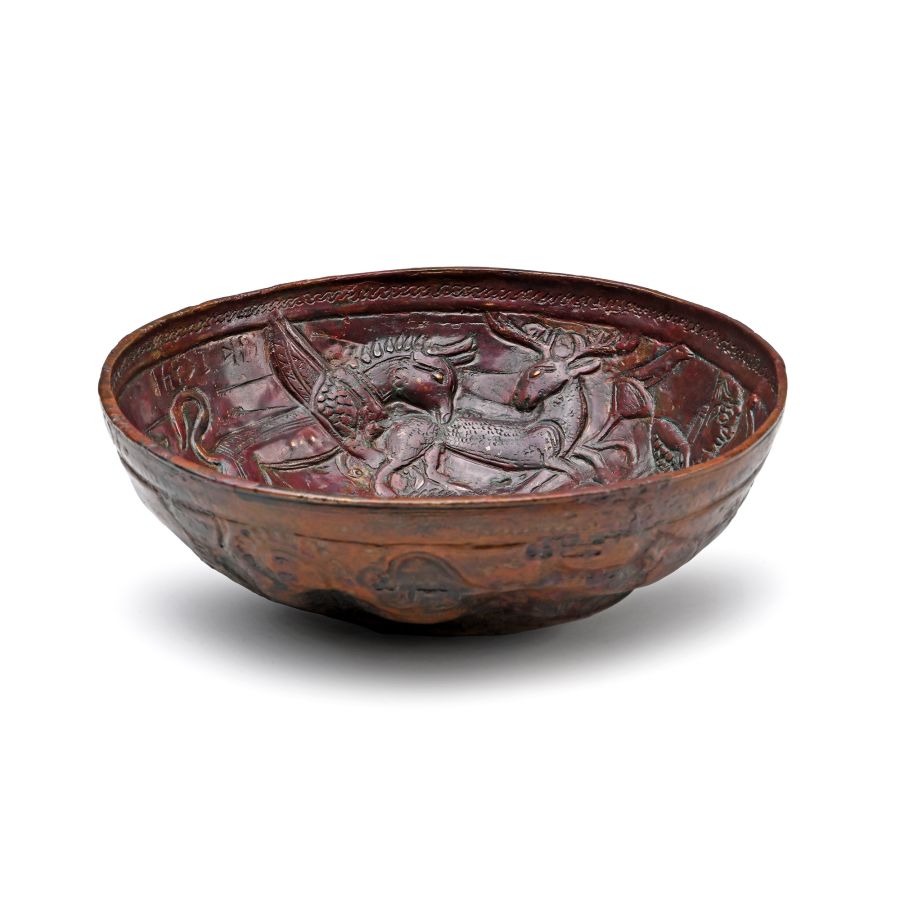
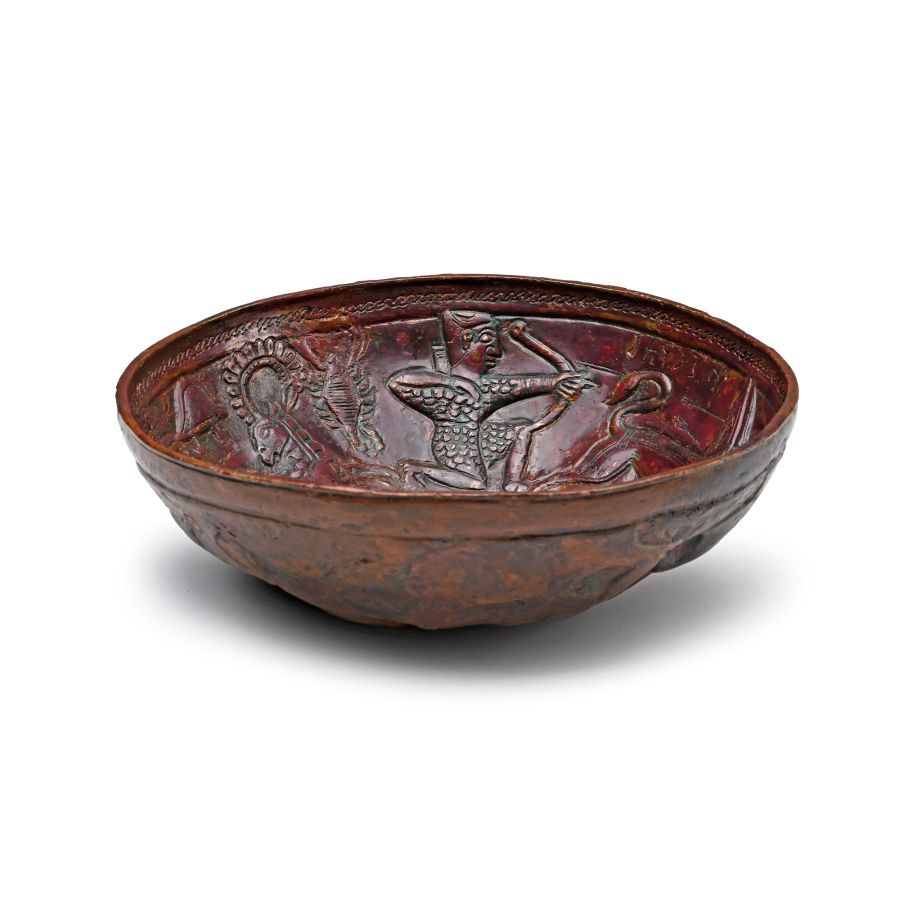
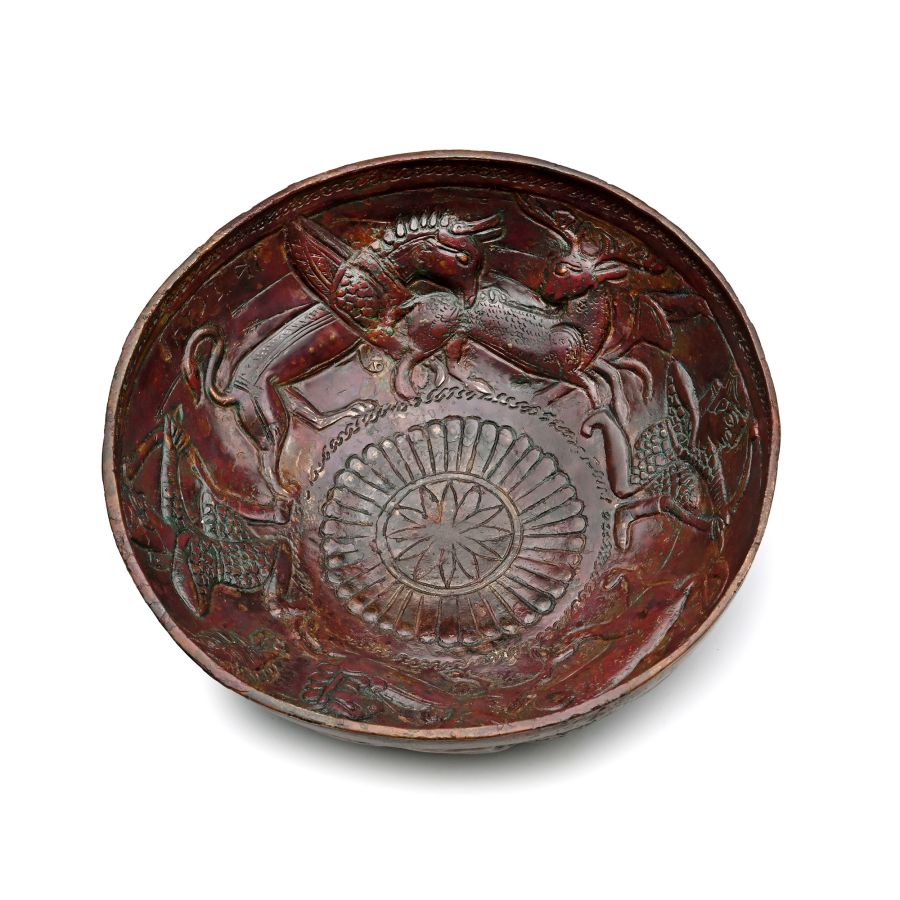
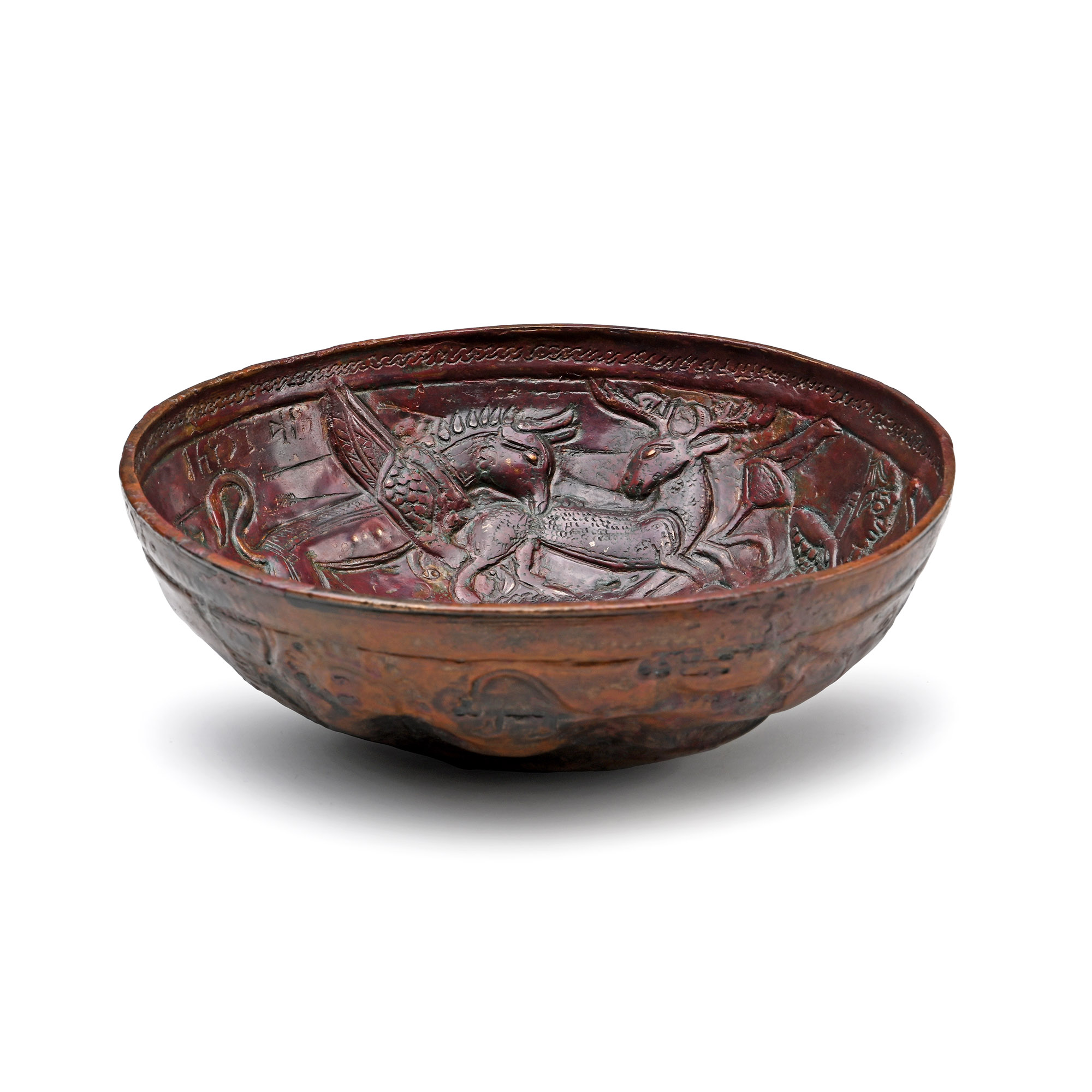
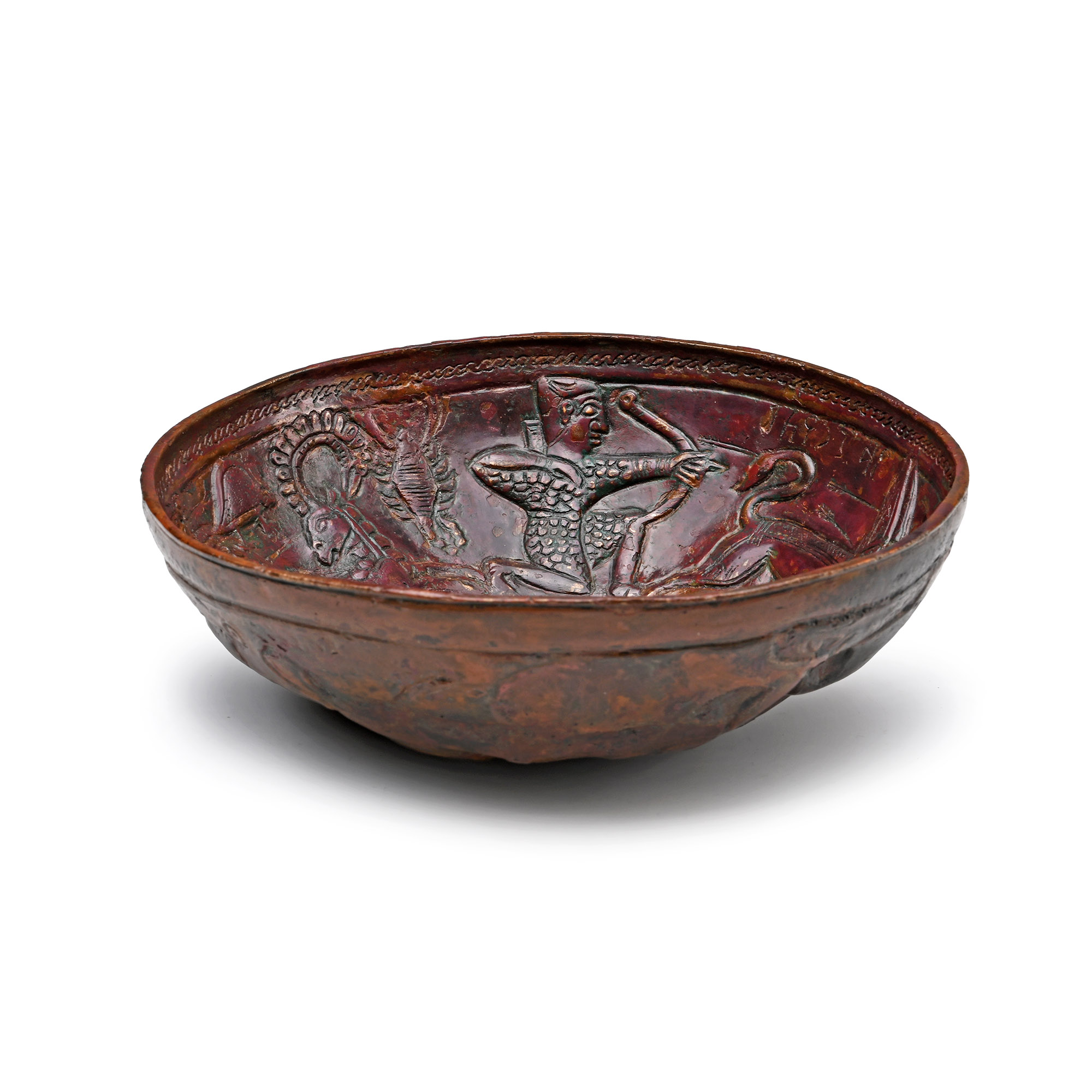
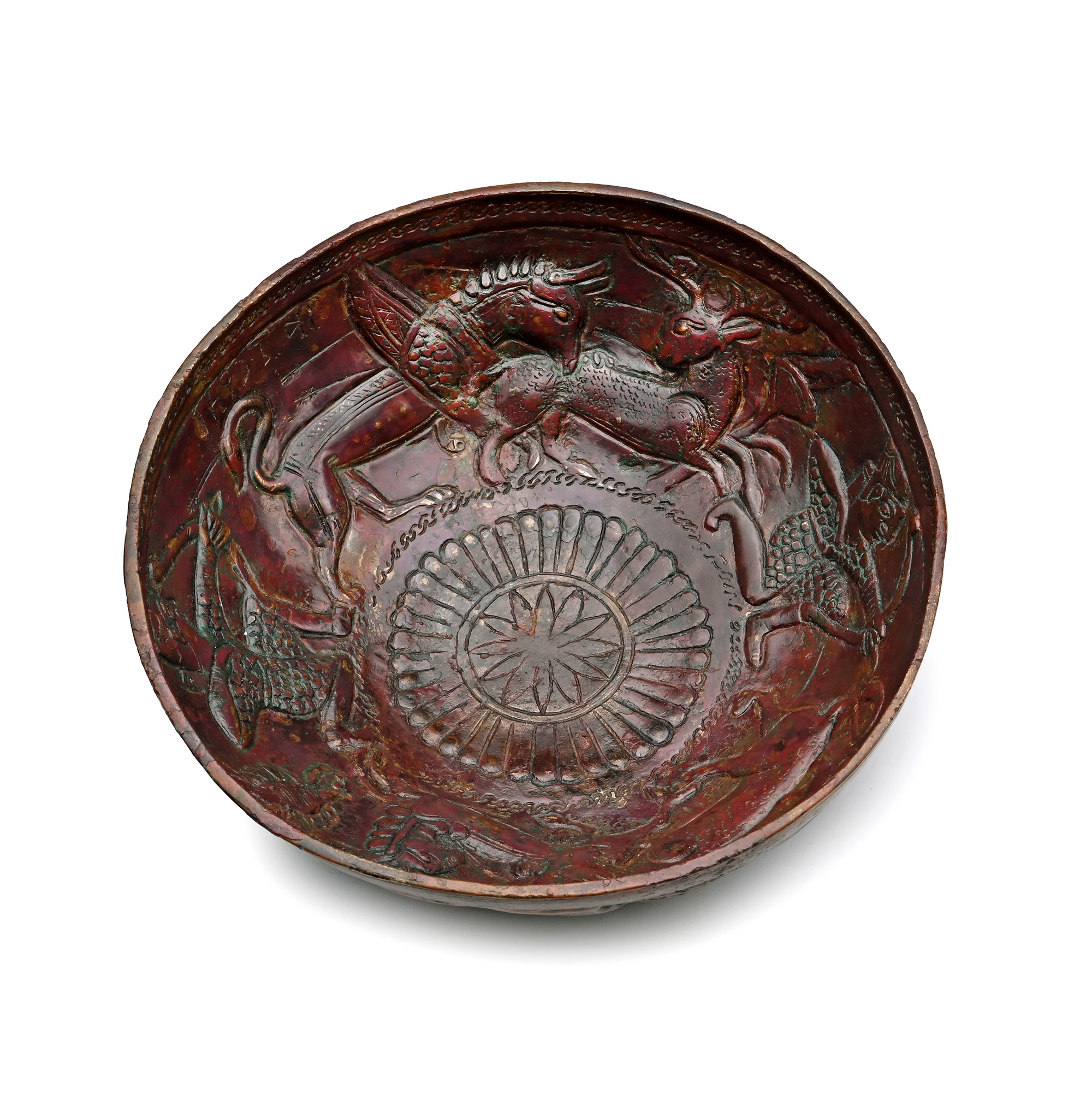
South Arabian Bronze Bowl Featuring a Hunting Scene and Inscription
SOUTHWESTERN ARABIA, KINGDOM OF MA’IN, CIRCA 3RD CENTURY B.C.-2ND CENTURY A.D.
6 1/8 in. (277 grams, 15.5 cm).
Broad and squat with impressed guilloche below the inner rim, repoussé frieze with fleeing ibex attacked by a gryphon and kneeling archer to the rear; central rosette; seven incised characters to inner face and four to outer face.
ProvenanceSaleh family collection, Germany, formed prior to 1972.
Private collection, UK.
This lot has been checked against the Interpol Database of stolen works of art and is accompanied by search certificate no.12809-241324.
Cf. Overlaet, B. & Yule, P., A late pre-Islamic bowl with Levantine-inspired decoration from ed-Dur (UAE) in Arabian Archaeology and Epigraphy, vol.29, no.2, 2018, especially figs.2-3,7.
FootnotesThe presence of decorated bronze bowls during the later Pre-Islamic period, mainly in the territories of the modern Emirates, is well documented. Many decorated bowls and bowl fragments were discovered at Mleiha; one or more possible fragments were found at ed-Dur, and a single bowl comes from a Pre-Islamic period C tomb in Dibba. They are also similar to the so-called Phoenician - or, more correctly, Levantine - bowls produced in the 9th-early 7th century B.C. They combine local Levantine elements with imagery borrowed from Mesopotamia and Egypt, and local Arabian themes, such as camel and horse riding, often composed in radial zones.
CONDITIONTimeLine Auctions follows a vetting process to ensure the authenticity and legality of all items, reinforcing our commitment to integrity and responsible trading. Each antiquity, antique, and coin lot undergoes thorough examination by a vetting committee of at least ten external specialists, professional trade association members, scientists, and archaeologists: Our Vetting Process
AUCTIONS:
TimeLine is a leading auction house specialising in antiquities, ancient art, collectables, natural history, coins, medals, and books. Our auctions offer museums, collectors, historians, and enthusiasts the opportunity to acquire unique and historically significant pieces.
LOT 0274
South Arabian Bronze Bowl Featuring a Hunting Scene and Inscription
Estimate £5,500 - 7,500€6,380 - 8,700 (for guidance only)$7,430 - 10,130 (for guidance only)
Opening Bid
£2,750 (EUR 3,190; USD 3,713) +BP*
-
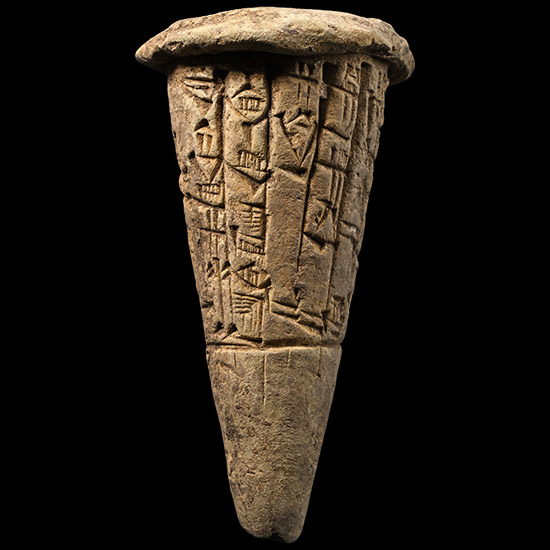
Sumerian Terracotta Foundation Cone From Lagash
Circa 2100 B.C.Estimate: £800 - 1,000 (+bp*)
Bids: 4 | Current Bid: £750
Conical in profile with domed top, vertical impressed lines and cuneiform inscription; tip absent. 220 grams, 12 cm
with Archaeologia, Switzerland, before 1983. Ex private North American collection. London private collection, 2016.
Votive cones are one type of royal foundation deposit, objects that were buried in the walls and beneath the floors of important buildings during construction to sanctify the site and to create a historical memory of the ruler and his achievements. -
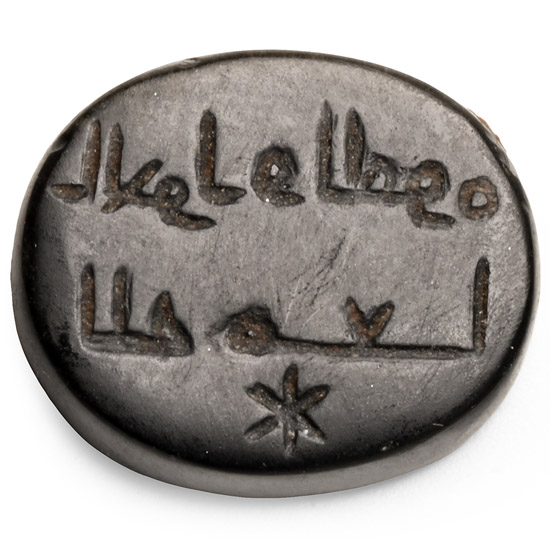
Seljuk Black Calligraphic Gemstone
Circa 12th-13th century A.D.Estimate: £80 - 100 (+bp*)
Opening Bid: £5
Ellipsoid in plan with two lines of Kufic script text and a star. 0.6 grams, 11 mm
From the private collection of a European gentleman (1942-2024), formed since the 1970s. -
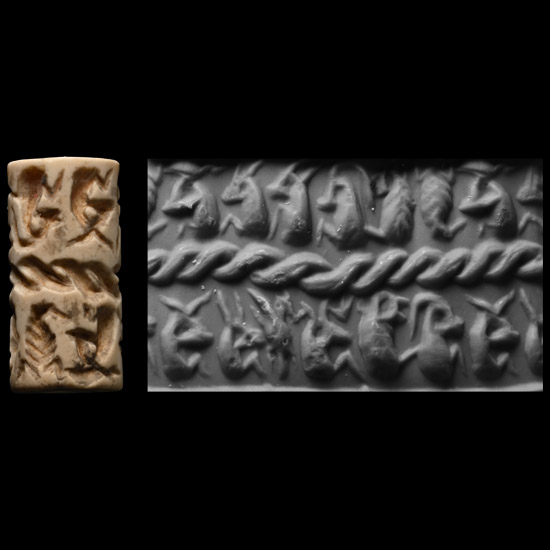
Old Syrian White Marble Cylinder Seal with Animals
Circa 2700-2400 B.C.Estimate: £1,000 - 1,400 (+bp*)
Opening Bid: £500
With two rows of zoomorphic figures and restrung red round beads at each end; supplied with a typed and signed scholarly note by W.G. Lambert, late Professor of Assyriology, University of Birmingham, 1970- 1993, which states, 'Cylinder Seal of White Marble, 20 x 10 mm. The surface is divided into two registers by a guilloche across the middle. In the upper register there are five animal protomes: at the rear a lion, then four different horned animals, each shown with one front paw. A complete scorpion serves as a terminal. In the lower register are also five animal protomes, but facing the opposite direction to those above. At the rear is a stag, then a lion, and in front of it three distinguished horned animals. A lizard serves as a terminal in this case. This is an Old Syrian seal, c. 2700-2400 B.C., and in fine condition. The engraving is deeply done and gives a sharp, clear impression. Other seals of this type are known, but are rare.' 4.73 grams total, seal: 20.1 mm
Acquired on the French auction market. Accompanied by a copy of an old scholarly note, typed and signed by W.G. Lambert, late Professor of Assyriology, University of Birmingham, 1992.
