
Loading, please wait...
LOT 0191
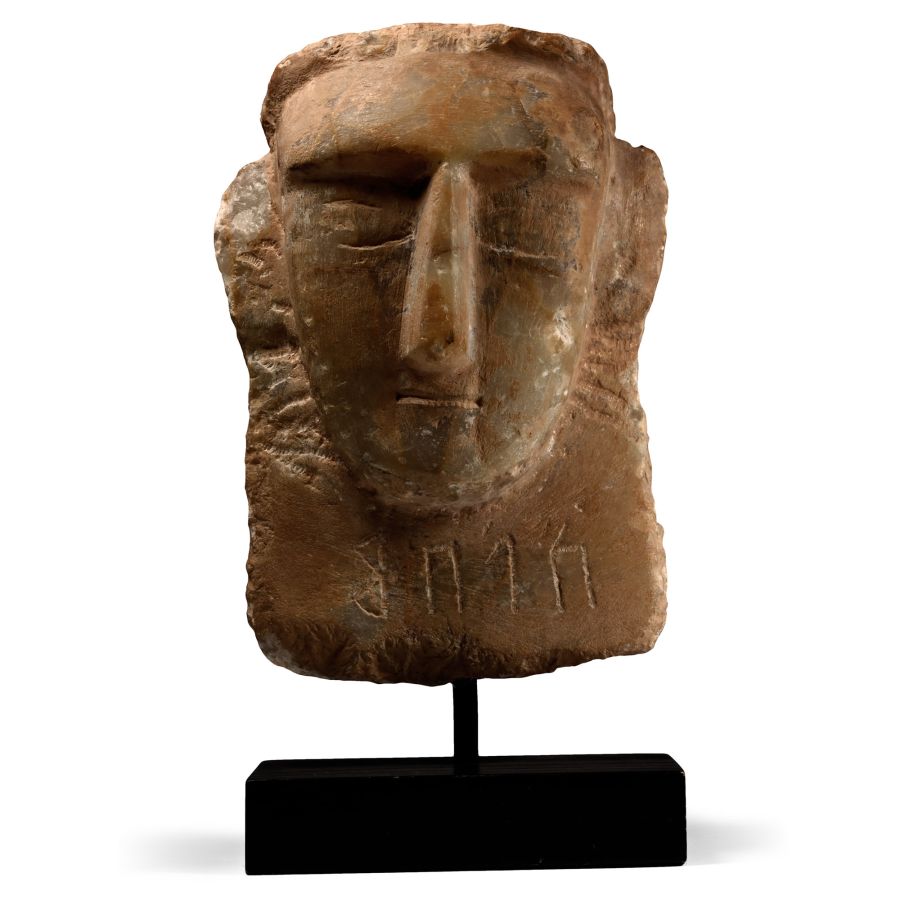
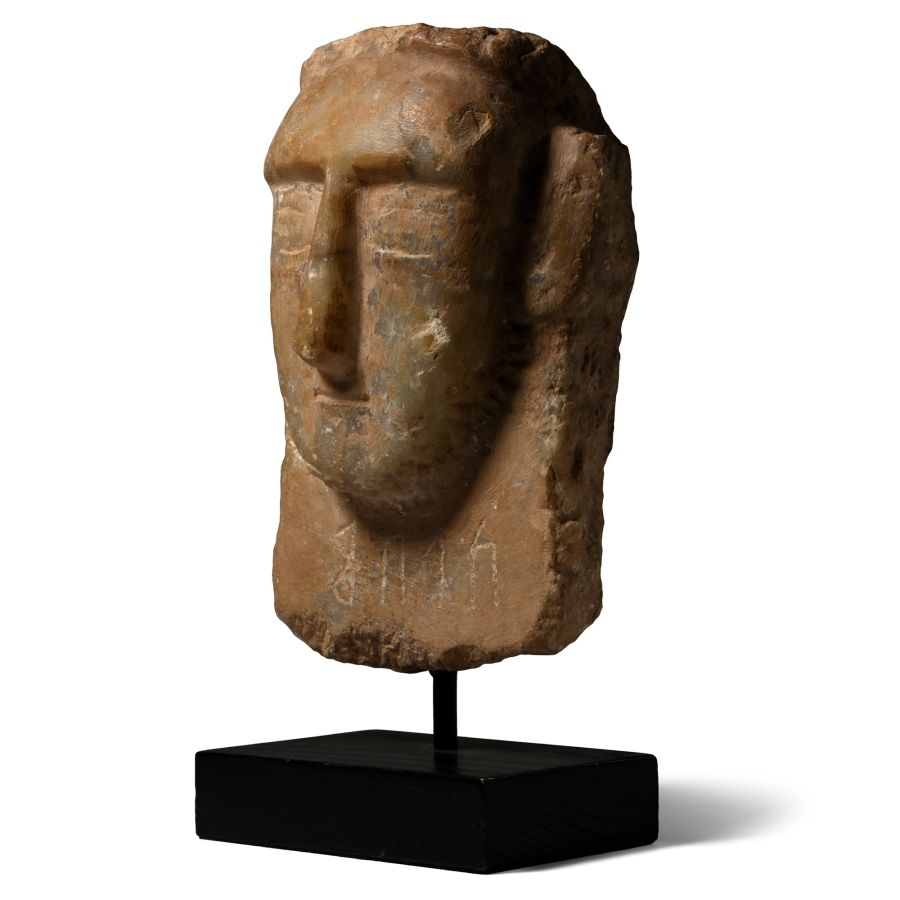
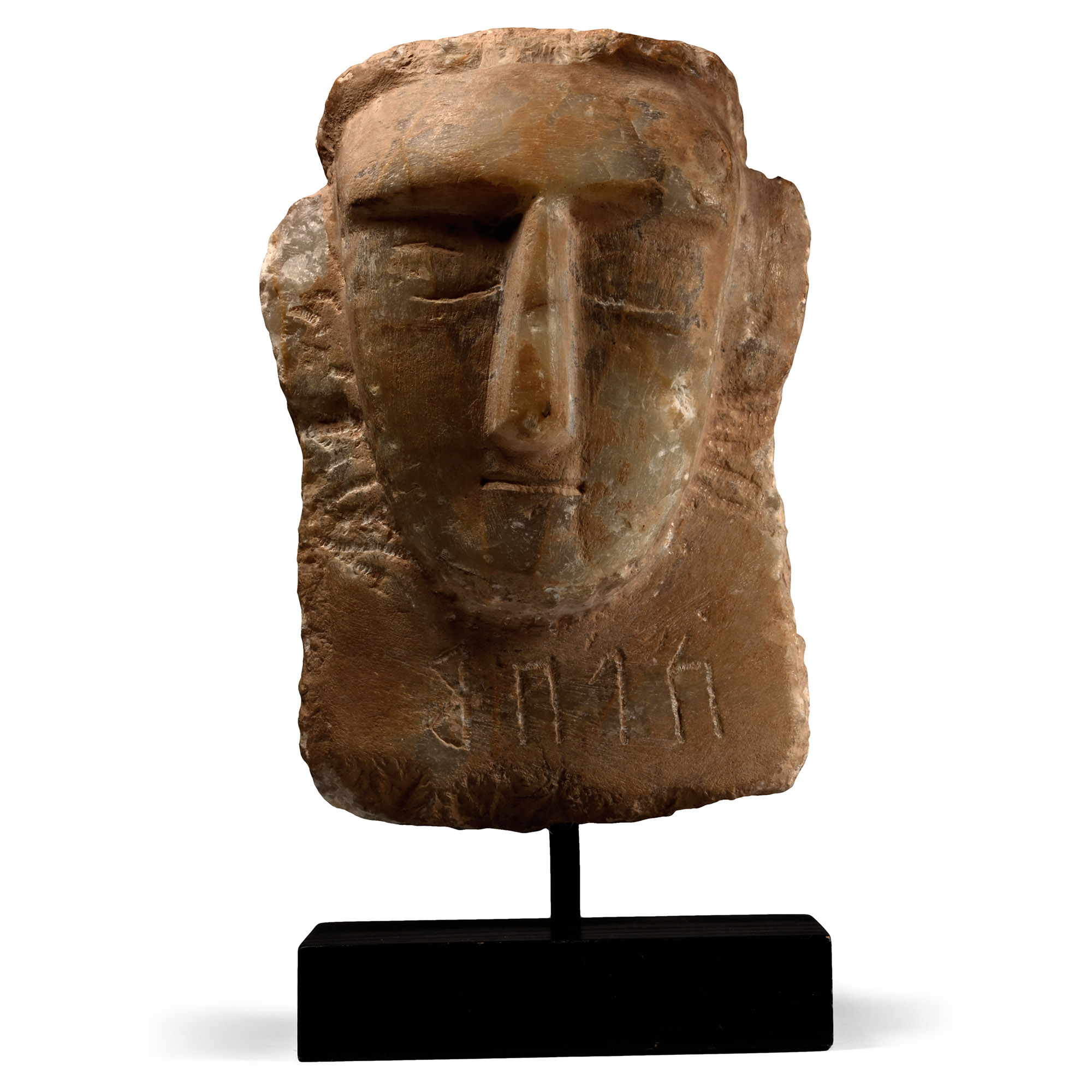
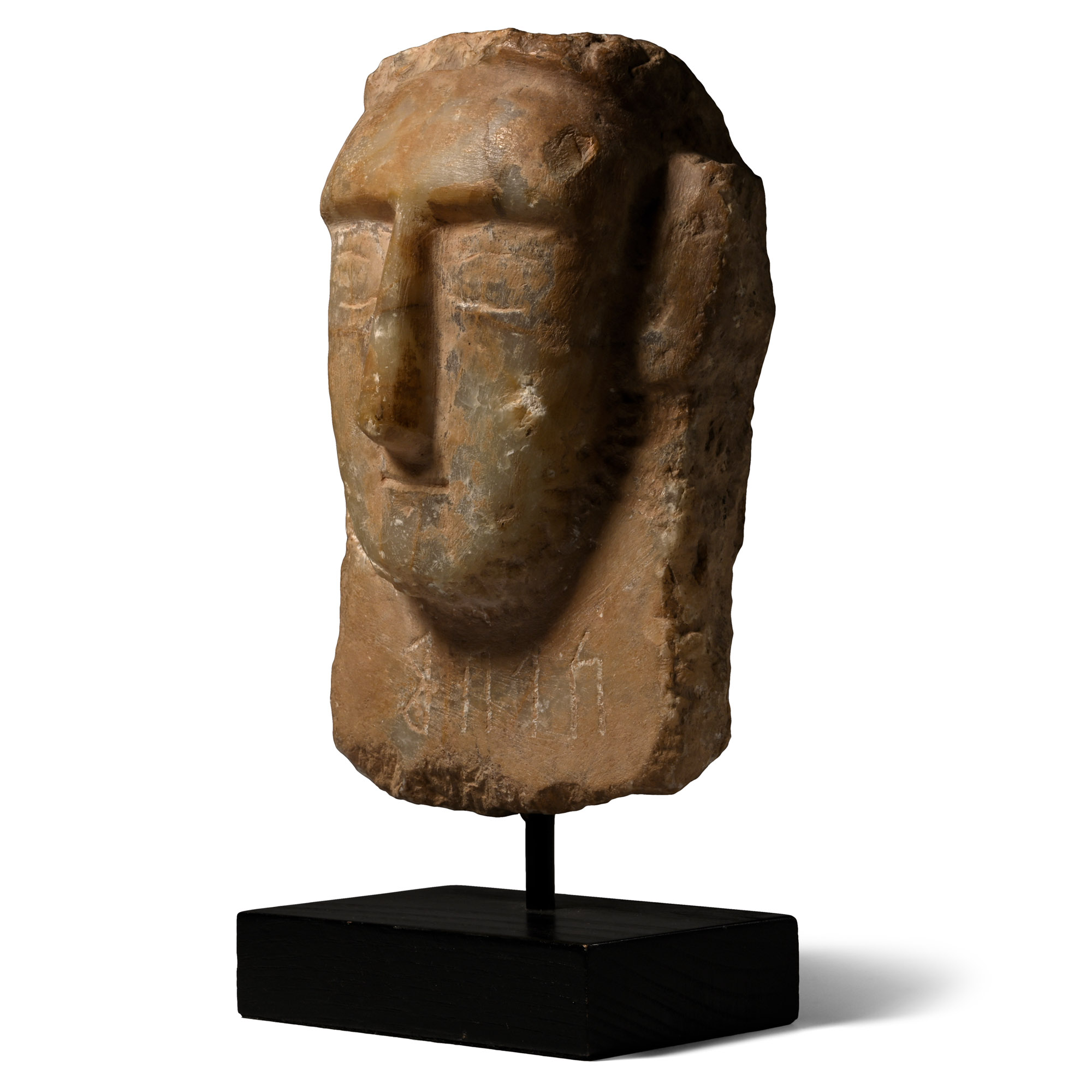
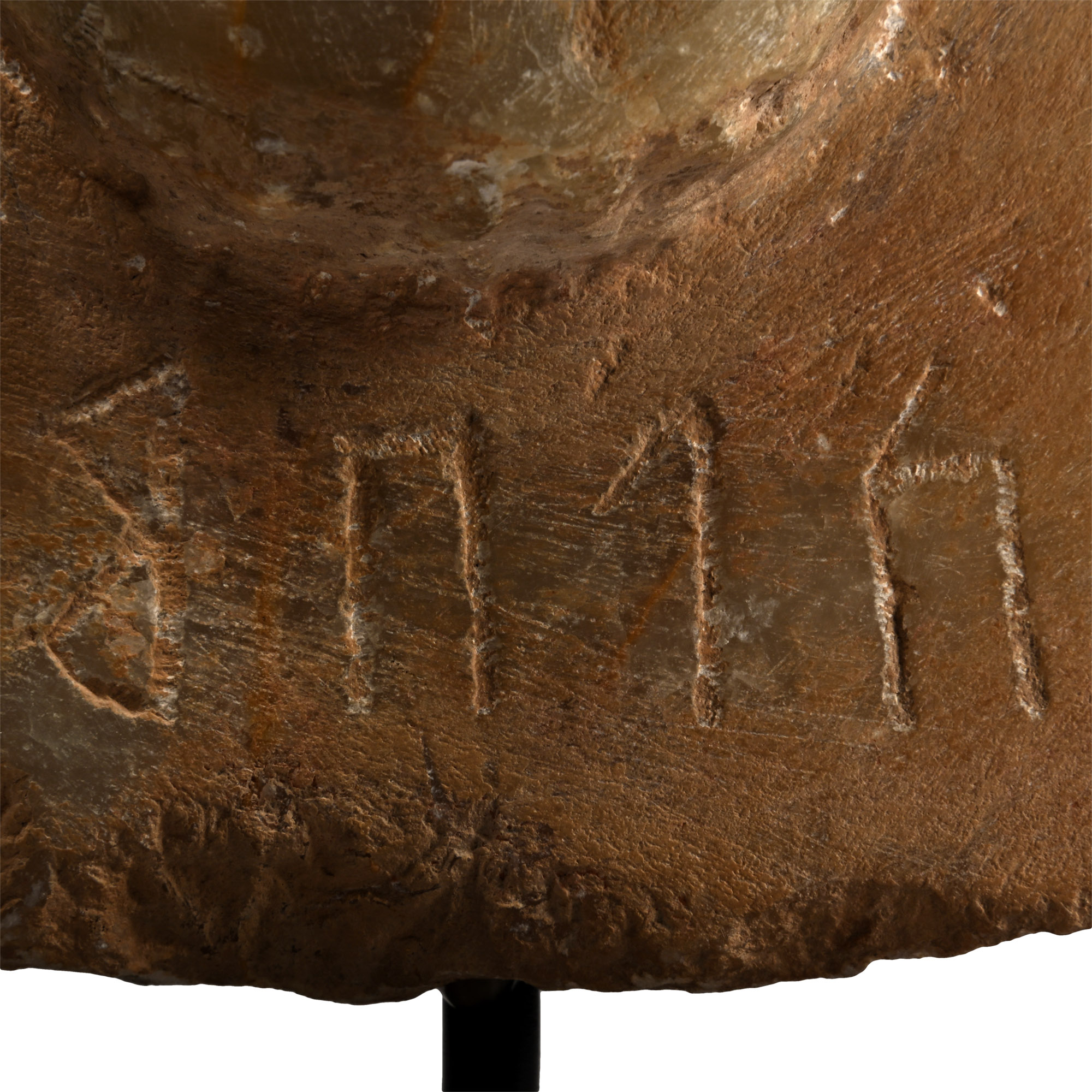
South Arabian Alabaster Sculpture of a Man with Inscription
3RD-1ST CENTURY B.C.
10 5/8 in. (3.62 kg total, 27.1 cm including stand).
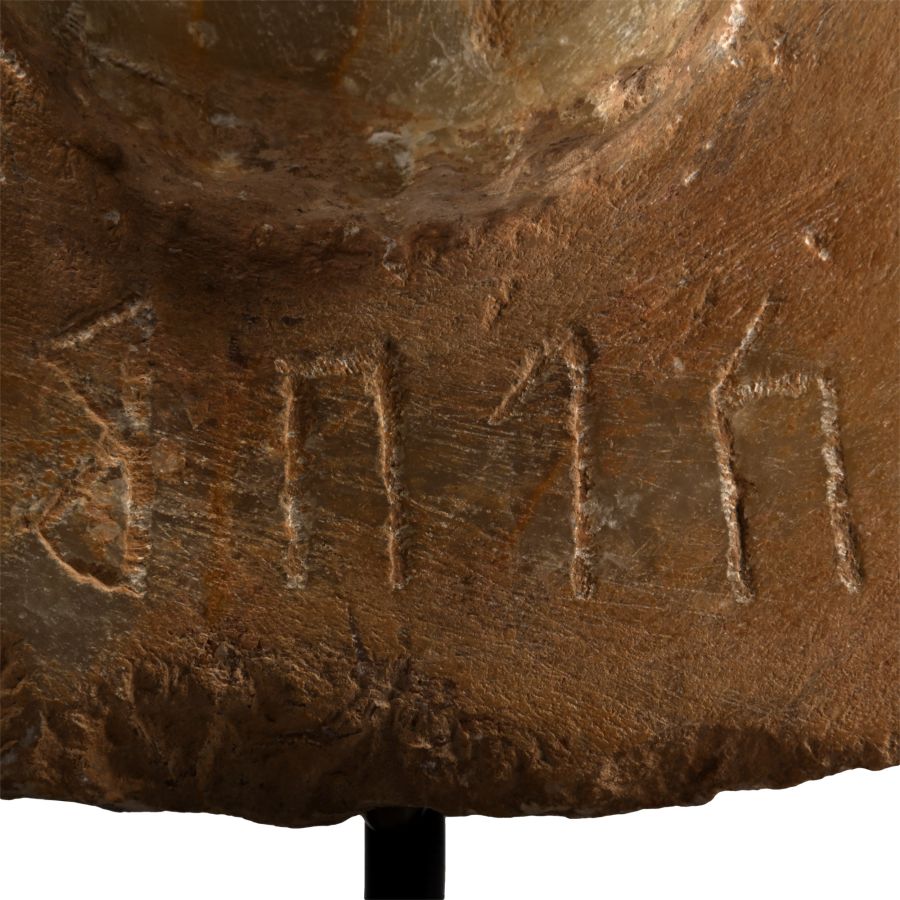
On a rectangular background, shallow sockets and grooved eyebrows, elongated nose and face, mouth faintly indicated by a straight incised line, large, protruding ears; traces of beard under the chin, vertical lines representing hair; name engraved in Arabian letters beneath the chin; mounted on a custom-made display stand.
ProvenanceUK collection, 1990s.
Acquired on the UK art market, before 2000.
Private collection, Mr M.V., a London-based businessman.
This lot has been cleared against the Art Loss Register database, and is accompanied by an illustrated lot declaration signed by the Head of the Antiquities Department, Dr Raffaele D'Amato.
Cf. for the style of the head Cleveland R.L., An Ancient South Arabian Necropolis, objects from the second campaign (1951) in the Timna Cemetery, Baltimore, 1951, pls. 20,23. for similar examples; Simpson, S., Queen of Sheba. Treasures from Ancient Yemen, London, 2002, p.119, no.128.
FootnotesWithin South Arabia, there was a well-developed ancient tradition of carving funerary sculptures from a calcite-alabaster stone. The eyes and eyebrows of the heads were usually inlaid or (like probably here) highlighted with red or black pigment. The figure is inscribed on the base with the name of the dedicant, or with the personal name of the dead person.
CONDITIONTimeLine Auctions follows a vetting process to ensure the authenticity and legality of all items, reinforcing our commitment to integrity and responsible trading. Each antiquity, antique, and coin lot undergoes thorough examination by a vetting committee of at least ten external specialists, professional trade association members, scientists, and archaeologists: Our Vetting Process
AUCTIONS:
TimeLine is a leading auction house specialising in antiquities, ancient art, collectables, natural history, coins, medals, and books. Our auctions offer museums, collectors, historians, and enthusiasts the opportunity to acquire unique and historically significant pieces.
LOT 0191
South Arabian Alabaster Sculpture of a Man with Inscription
Sold for (Inc. bp): £910
-
.jpg)
Early Dynastic Lapis Lazuli Master of Animals Type Cylinder Seal
2600-2340 B.C.Sold for (Inc. bp): £780
With incuse design including an advancing human figure and two rampant stags; old collector's tag. 4.19 grams, 18 mm
Ex 'S' collection, London, UK. Examined by Professor Wilfrid George Lambert FBA (1926-2011), historian, archaeologist, and specialist in Assyriology and Near Eastern archaeology, in the late 1980s and early 1990s. This lot has been cleared against the Art Loss Register database, and is accompanied by an illustrated lot declaration signed by the Head of the Antiquities Department, Dr Raffaele D'Amato. -
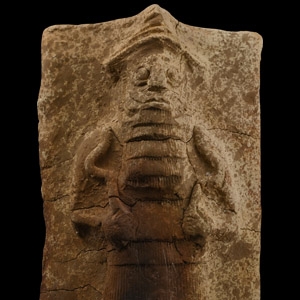
Mesopotamian Terracotta Plaque with Nergal
2nd millennium B.C.Sold for (Inc. bp): £494
Rectangular plaque with low-relief standing front-facing figure of a bearded male wearing long dress and horned crown, holding a sceptre in each hand, possibly depicting Nergal (god of the Underworld); oven baked for conservation. 155 grams, 13.4 cm
From an important collection pre 1988. From a private UK collection. This lot has been cleared against the Art Loss Register database, and is accompanied by an illustrated lot declaration signed by the Head of the Antiquities Department, Dr Raffaele D'Amato. -
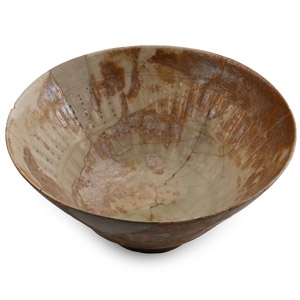
Ayyubid Glazed Bowl
12th-13th century A.D.Sold for (Inc. bp): £78
Conical profile with wide foot, white glaze and ribbed decoration to the inner face; some restoration. 249 grams, 17.8 cm wide
From the private family collection of Ersula Barter-Hemmerich, the longest serving member of staff working at the United Nations, her private collection formed in the 1950s and 1960s; thence by descent to her grandson. This lot has been cleared against the Art Loss Register database, and is accompanied by an illustrated lot declaration signed by the Head of the Antiquities Department, Dr Raffaele D'Amato.
