
Loading, please wait...
LOT 0192
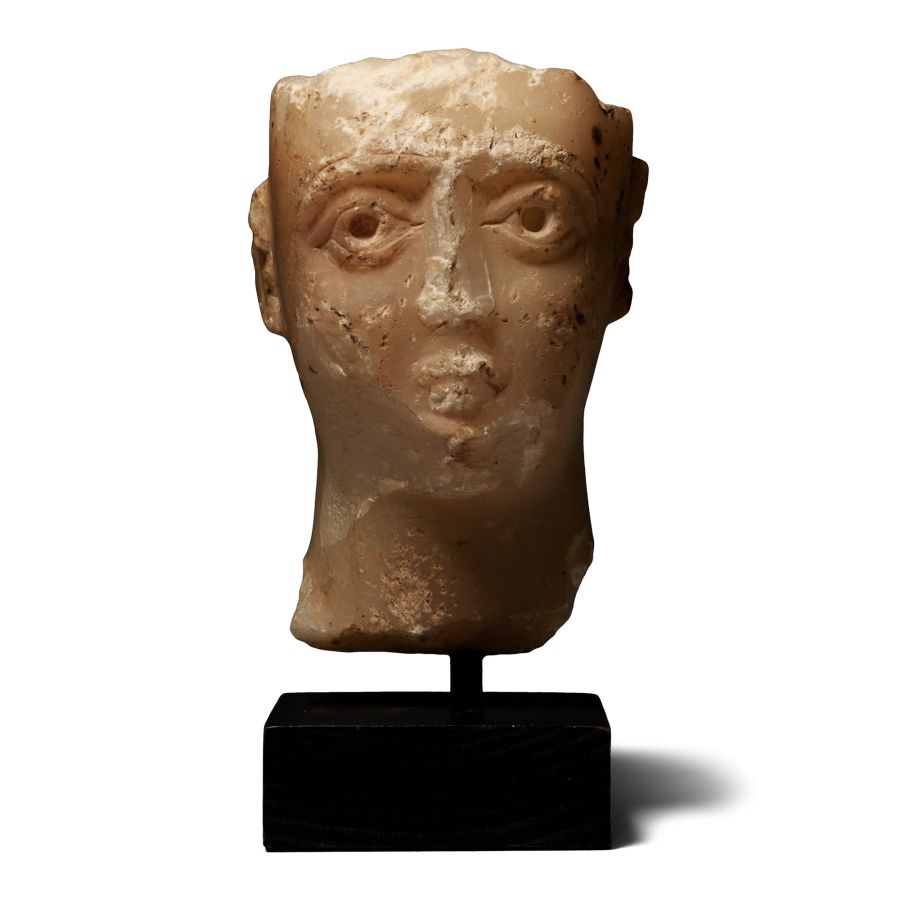
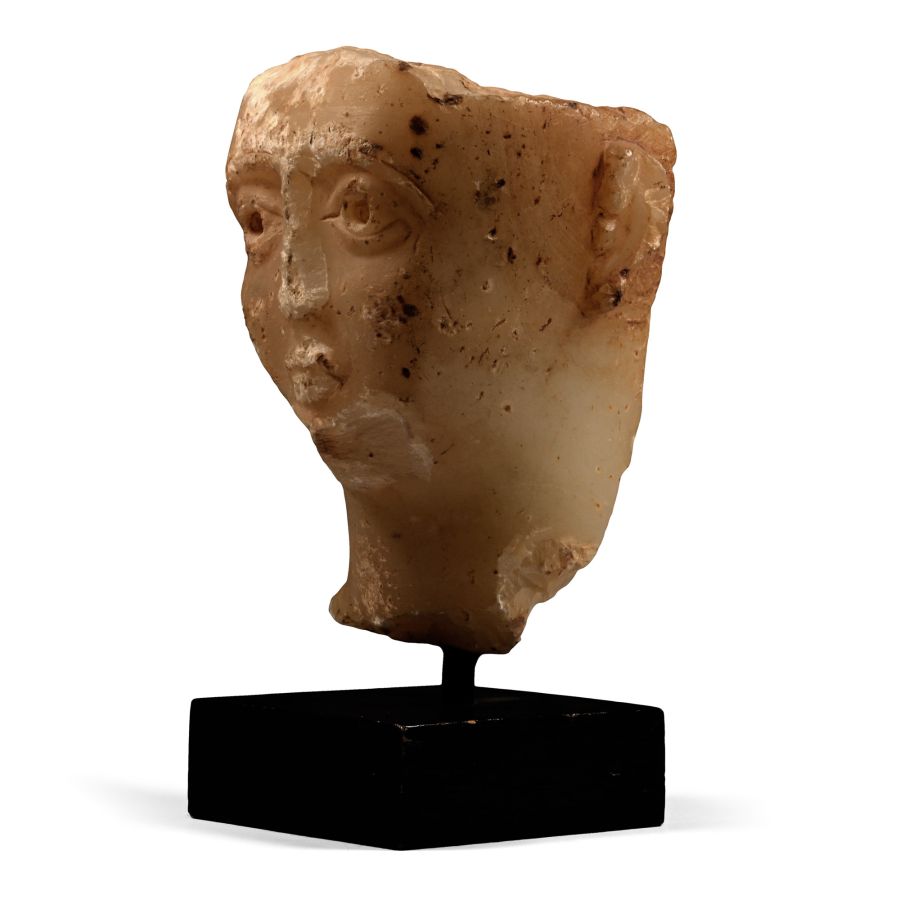
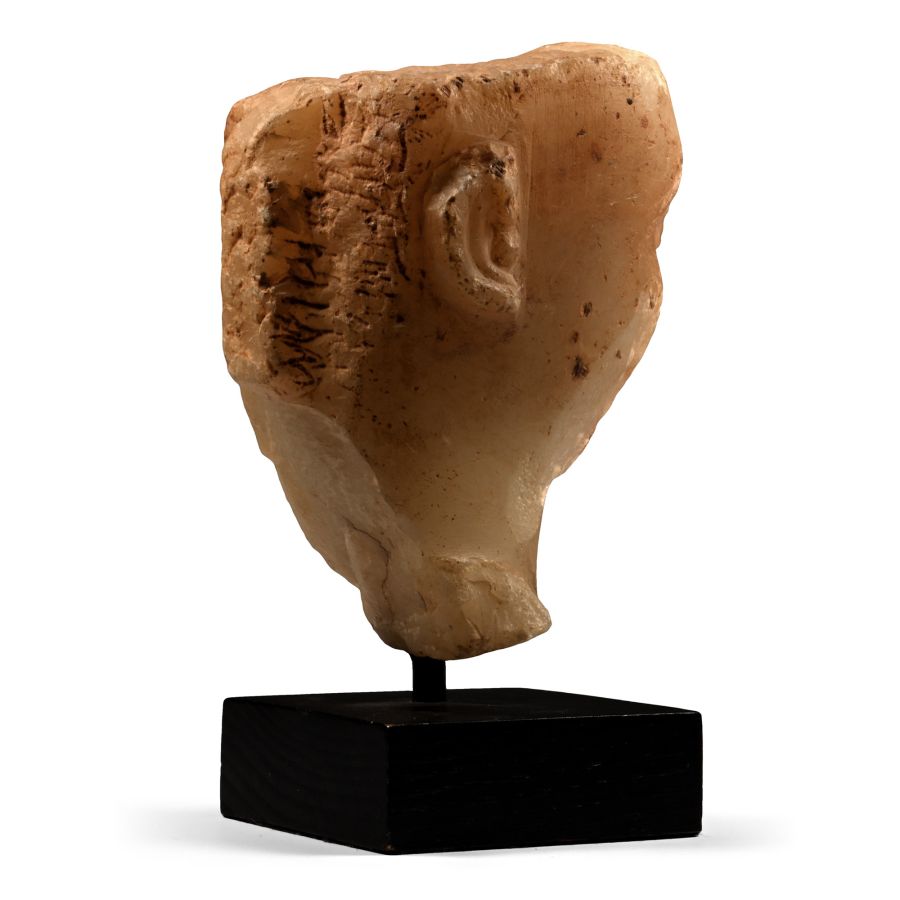
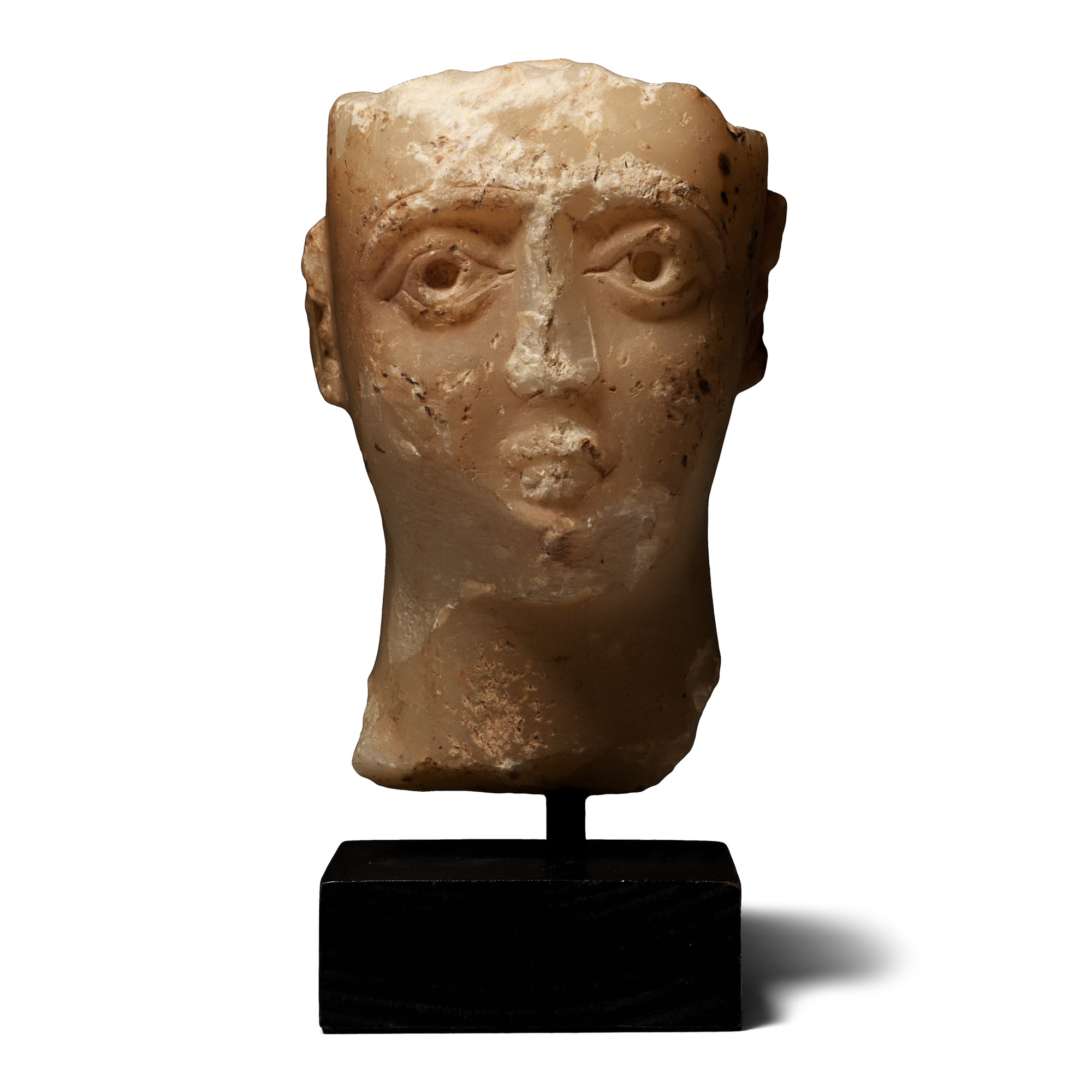
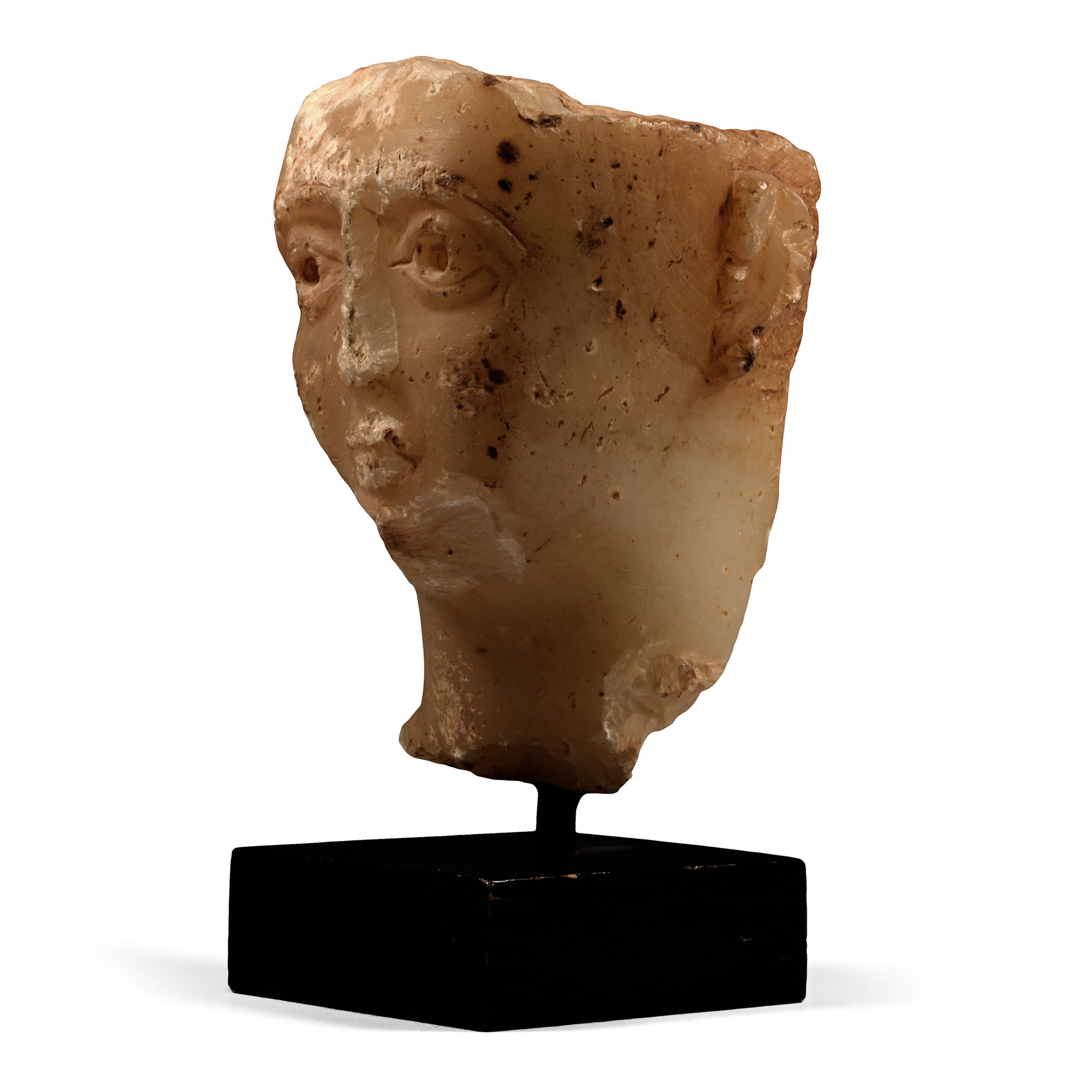
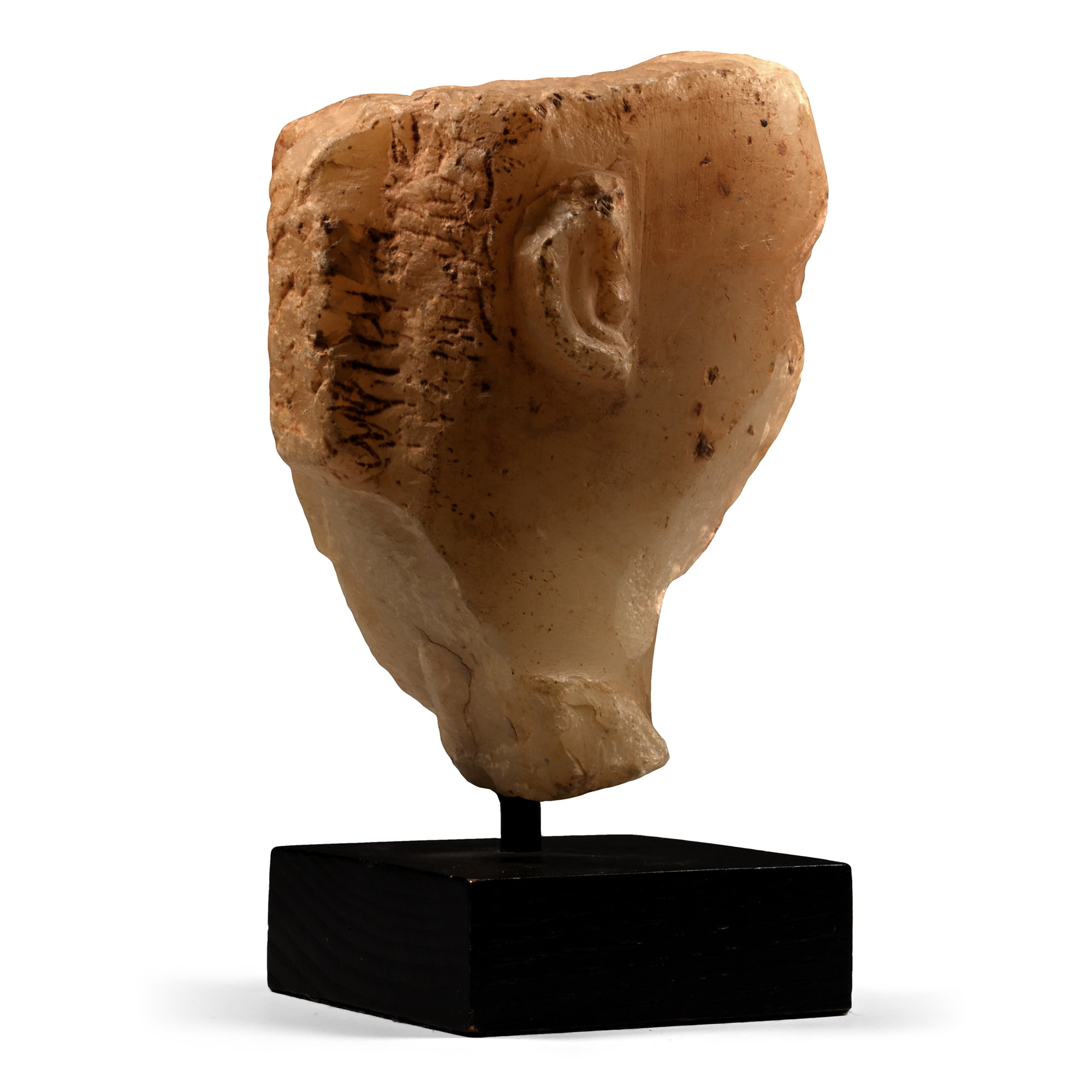
South Arabian Alabaster Head of a Man
3RD-1ST CENTURY B.C.
7 3/8 in. (2.12 kg total, 18.7 cm including stand).
Small mouth raised sharply in the middle, large nose with angular depressions for the nostrils, deep eye sockets to accept inlay, upper and lower eyelids with rounded ridges, eyebrows tapering towards the outer end; chiselled ears, top of the head cut off flat at the hair line, back of the head left roughly tooled with central vertical insertion pin; mounted on a custom-made display stand.
ProvenanceUK collection, 1990s.
Acquired on the UK art market, before 2000.
Private collection, Mr M.V., a London-based businessman.
This lot has been cleared against the Art Loss Register database, and is accompanied by an illustrated lot declaration signed by the Head of the Antiquities Department, Dr Raffaele D'Amato.
Cf. Cleveland, R.L., An Ancient South Arabian Necropolis, objects from the second campaign (1951) in the Timna Cemetery, Baltimore, 1951, pl.15, for similar head.
FootnotesUsually the heads of this typology are exhibited frontally and in symmetrical manner. Many of the heads have rather angular features. Nearly all the objects in this category were ornamented with inlay- the eyes and the eyebrows, in many cases. The sockets designed to receive the inlaid eyes are usually shaped in a rather naturalistic way.
CONDITIONTimeLine Auctions follows a vetting process to ensure the authenticity and legality of all items, reinforcing our commitment to integrity and responsible trading. Each antiquity, antique, and coin lot undergoes thorough examination by a vetting committee of at least ten external specialists, professional trade association members, scientists, and archaeologists: Our Vetting Process
AUCTIONS:
TimeLine is a leading auction house specialising in antiquities, ancient art, collectables, natural history, coins, medals, and books. Our auctions offer museums, collectors, historians, and enthusiasts the opportunity to acquire unique and historically significant pieces.
-
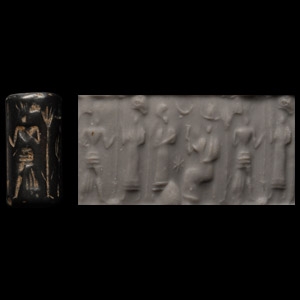
Western Asiatic Haematite Cylinder Seal with Worship Scene
2nd millennium B.C.Estimate: £300 - 400 (+bp*)
Opening Bid: £160
With frieze of standing figures addressing a seated figure in a long robe holding up a cup; supplied with a museum-quality impression. 3.56 grams, 17 mm
Ex S Collection, London, UK, 1970-1990s. This lot has been cleared against the Art Loss Register database, and is accompanied by an illustrated lot declaration signed by the Head of the Antiquities Department, Dr Raffaele D'Amato. -
.jpg)
Western Asiatic Stamp Seal with Winged God
Circa 800 B.C.Estimate: £200 - 300 (+bp*)
Opening Bid: £100
Conical body with ribbed collar and loop, raised plaque to the underside with incuse image of winged figure; supplied with a museum-quality impression. 6.8 grams, 16 mm
From the collection of a gentleman, acquired on the London art market in the 1990s. This lot has been cleared against the Art Loss Register database, and is accompanied by an illustrated lot declaration signed by the Head of the Antiquities Department, Dr Raffaele D'Amato. -
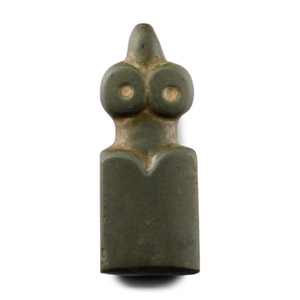
Sumerian Green Stone Amulet
4th millennium B.C.Estimate: £3,500 - 4,500 (‡+bp*)
Opening Bid: £1,750
Carved in the round as a rectangular block with slit to upper edge, vertical spike with two annulet 'eyes'; pierced for suspension. 13.2 grams, 41 mm
with M. Petropoulos, Zurich, early 1990s. with Rhéa gallery. Private collection, acquired in 1999. This lot has been checked against the Interpol Database of stolen works of art and is accompanied by a search certificate number no.12897-241753. This lot has been cleared against the Art Loss Register database, and is accompanied by an illustrated lot declaration signed by the Head of the Antiquities Department, Dr Raffaele D'Amato.
