
Loading, please wait...
_900x900.jpg "South Arabian Alabaster Head of a Man")
_200x200.jpg "South Arabian Alabaster Head of a Man")
_900x900.jpg "South Arabian Alabaster Head of a Man")
_200x200.jpg "South Arabian Alabaster Head of a Man")


.jpg "South Arabian Alabaster Head of a Man")
.jpg "South Arabian Alabaster Head of a Man")
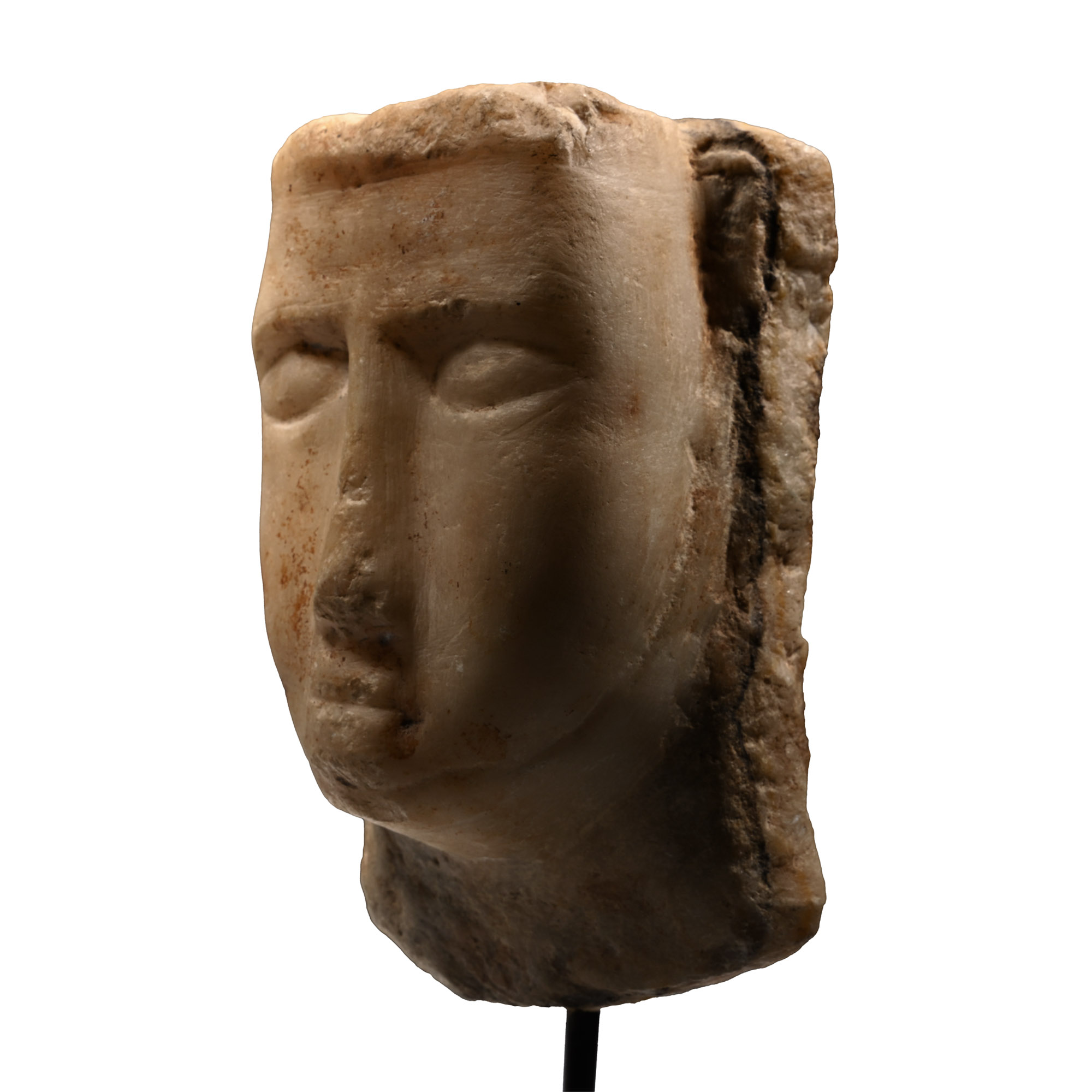
LOT 0251
South Arabian Alabaster Head of a Man
3RD-1ST CENTURY B.C.
8 7/8 in. (2.42 kg total, 22.5 cm including stand).
Tongue-shaped carved bust reserved on an unworked block; bas-relief facial detailing with long vertical D-section nose, slit mouth and two shallow lentoid eyes; mounted on a custom-made stand.
Provenancewith Arte Primitivo, New York.
American private collection, New York, before 2000.
This lot has been cleared against the Art Loss Register database, and is accompanied by an illustrated lot declaration signed by the Head of the Antiquities Department, Dr Raffaele D'Amato.
See Simpson, S.T., Queen of Sheba: Treasures From Ancient Yemen, The British Museum Press, London, 2002, items 126, 270, and 282, for similar portraits.
CONDITIONTimeLine Auctions follows a vetting process to ensure the authenticity and legality of all items, reinforcing our commitment to integrity and responsible trading. Each antiquity, antique, and coin lot undergoes thorough examination by a vetting committee of at least ten external specialists, professional trade association members, scientists, and archaeologists: Our Vetting Process
AUCTIONS:
TimeLine is a leading auction house specialising in antiquities, ancient art, collectables, natural history, coins, medals, and books. Our auctions offer museums, collectors, historians, and enthusiasts the opportunity to acquire unique and historically significant pieces.
-
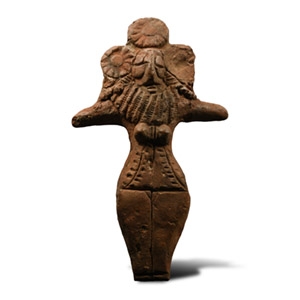
Neo-Hittite Terracotta Fertility Idol
12th-8th century B.C.Sold for (Inc. bp): £468
Standing female with radiating discs flanking the face, elaborate tiered collar. 166 grams, 14.6 cm
Ex London, UK, gallery, 1971-early 2000s. London, UK, collection. This lot has been cleared against the Art Loss Register database, and is accompanied by an illustrated lot declaration signed by the Head of the Antiquities Department, Dr Raffaele D'Amato. -
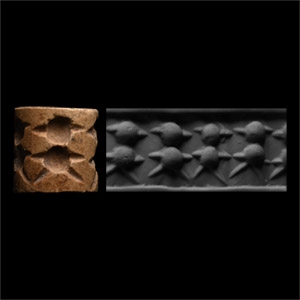
Jemdet Nasr Type Cylinder Seal with Sea Creatures
3rd millennium B.C.Sold for (Inc. bp): £247
Frieze of drilled figures with bilobed bodies and radiating limbs. 5.86 grams, 15 mm
From the 'S' collection, acquired 1970-1990s. The collection was seen and studied by W.G. Lambert, late Professor of Assyriology at the University of Birmingham, 1970-1993. This lot has been cleared against the Art Loss Register database, and is accompanied by an illustrated lot declaration signed by the Head of the Antiquities Department, Dr Raffaele D'Amato. -
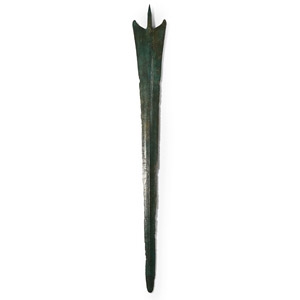
Western Asiatic Bronze Blade
2nd-1st millennium B.C.Sold for (Inc. bp): £312
With a short tang and long blade with swept shoulders, raised midrib. 454 grams, 52.2 cm
Acquired 1980-2015. Ex Abelita family collection. This lot has been cleared against the Art Loss Register database, and is accompanied by an illustrated lot declaration signed by the Head of the Antiquities Department, Dr Raffaele D'Amato.
In the last ninety years, many such tanged blades have been considered coming from production centres of North-West Iran, like Amlash and Marlik, where similar specimens were found. Without context an accurate dating is impossible, but the shape recalls the rapiers of Bronze Age or Early Iron Age.
