
Loading, please wait...
LOT 1441
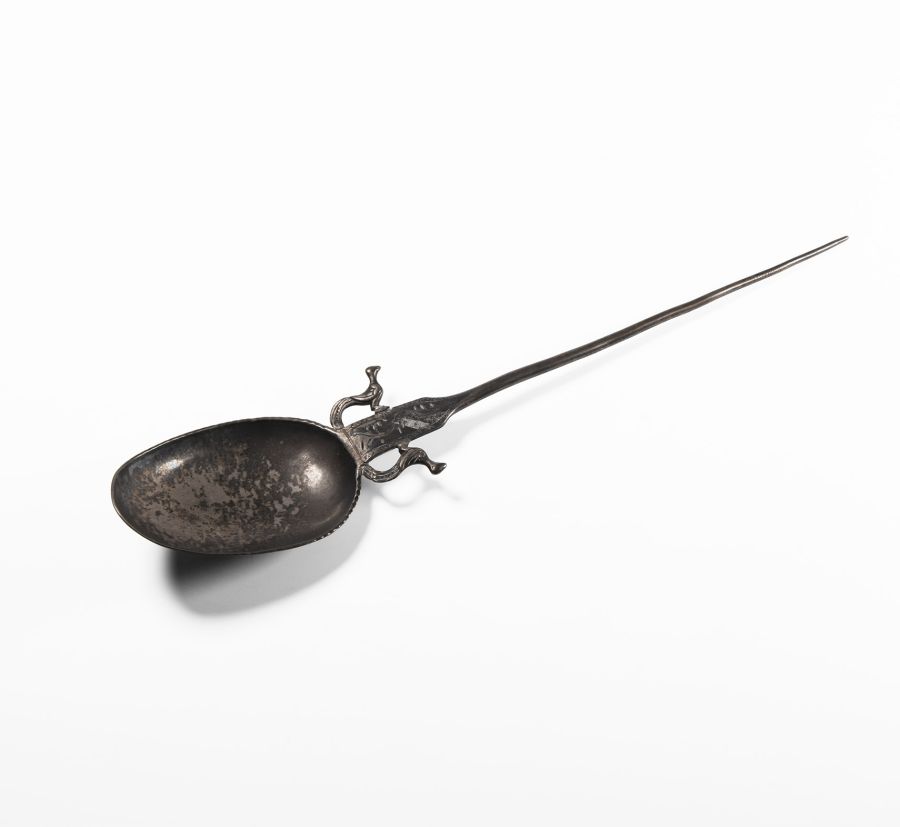
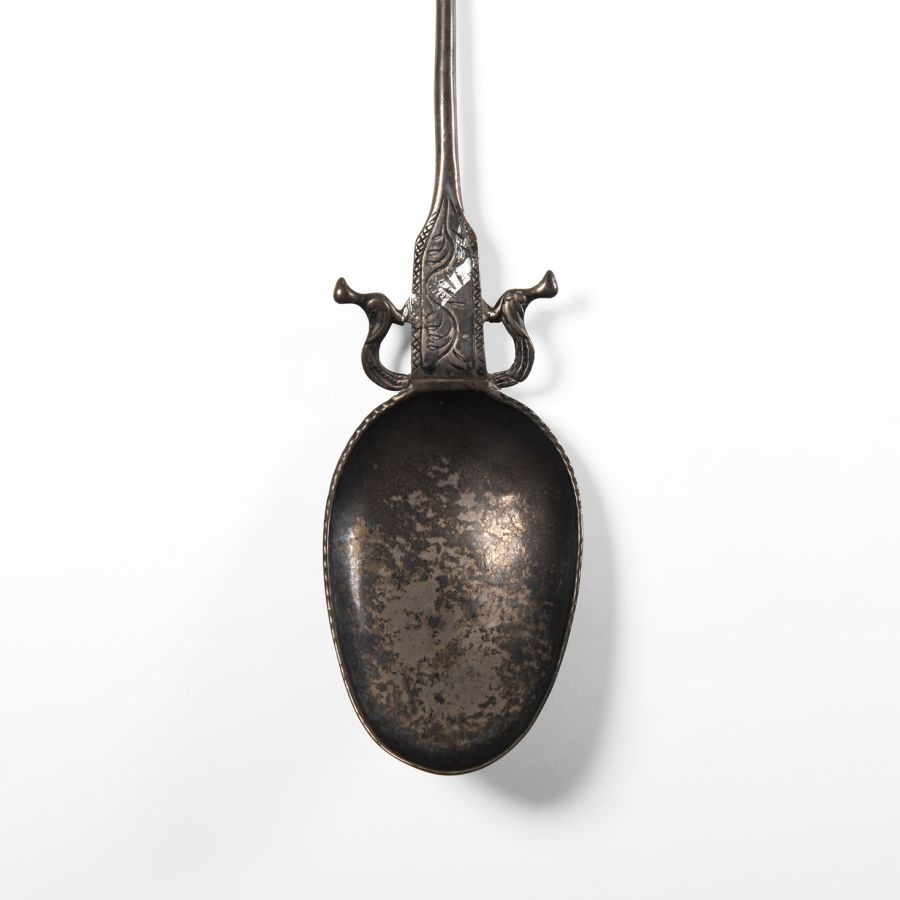
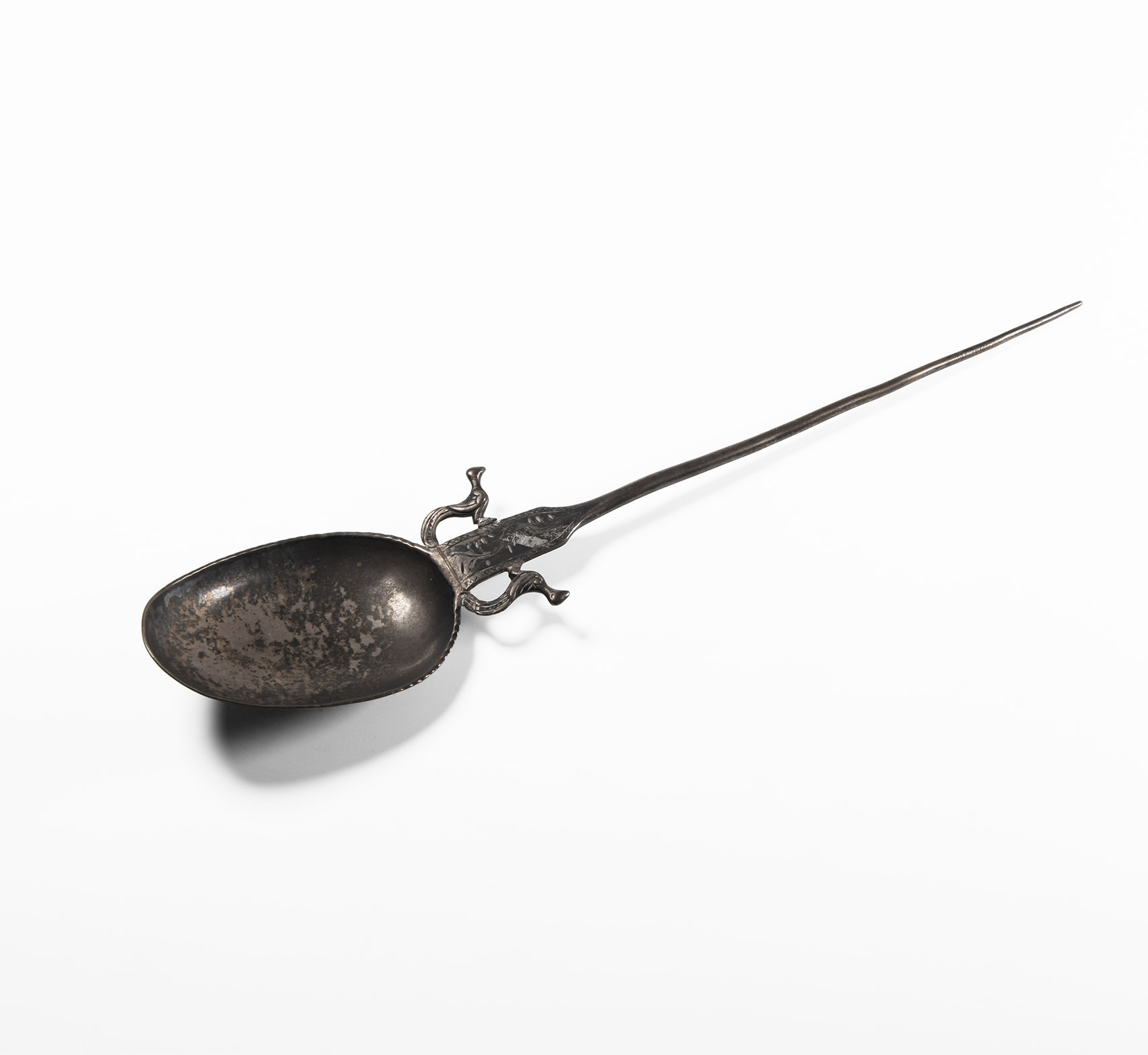
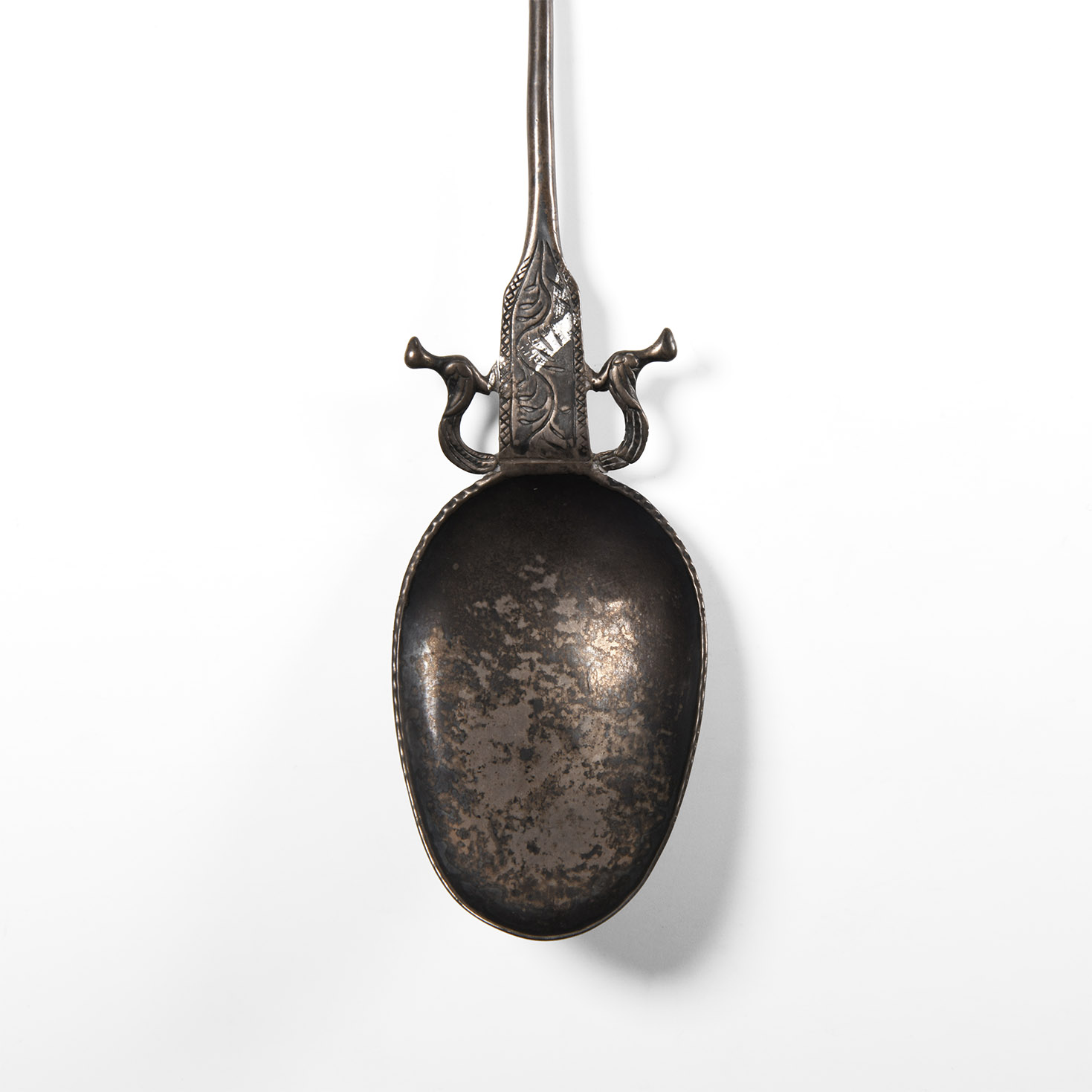
South American Silver Spoon Pin with Birds
18TH-20TH CENTURY A.D.
10 5/8 in. (67 grams, 27 cm long).
A large silver spoon composed of an ovoid bowl, rectangular neck with tapering upper sides and tapering round-section stem, the neck decorated with geometric and foliate motifs, flanked by a peacock on both sides with wing and tail feather detailing; repaired. [No Reserve]
ProvenanceAcquired in 1988.
UK private collection.
Cf. The British Museum, museum numbers Am1995,13.3, m1968,03.1, Am1965,01.124.a, Am1943,07.76, for similar.
CONDITIONTimeLine Auctions follows a vetting process to ensure the authenticity and legality of all items, reinforcing our commitment to integrity and responsible trading. Each antiquity, antique, and coin lot undergoes thorough examination by a vetting committee of at least ten external specialists, professional trade association members, scientists, and archaeologists: Our Vetting Process
AUCTIONS:
TimeLine is a leading auction house specialising in antiquities, ancient art, collectables, natural history, coins, medals, and books. Our auctions offer museums, collectors, historians, and enthusiasts the opportunity to acquire unique and historically significant pieces.
-
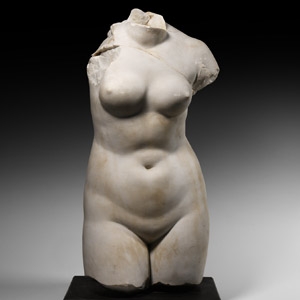
Marble Torso of Aphrodite of Knidos
19th-20th century A.D.Sold for (Inc. bp): £6,240
A marble torso from a once larger statue of the goddess Venus, modelled naturalistically, inspired by Praxiteles's nude Aphrodite from the Greek city-state of Knidos. 51.1 kg total, 64 cm high including stand
French collection, 1960s-early 2000s. From an important Paris gallery, France.
The original statue of nude Aphrodite (Venus) was created for the Temple of Aphrodite at Knidos as a devotion monument. It represented the nude Goddess as she proceeded for the ceremonial bath that regenerated her pureness, discreetly concealing herself with her hand and holding a cloth with her other hand. The monument is famous for its beauty, and it is intended to be seen from every aspect. -
.jpg)
Post Medieval Silver Apostle Paul Statuette
18th century A.D.Sold for (Inc. bp): £130
A silver figure modelled in the round as the Apostle Paul, standing on a polygonal base, wearing a voluminous floor-length robe, clasping the Bible to the right side of his breast, holding a sword in his left hand, semi-naturalistic detailing to his face, beard and hair. 58.2 grams, 66 mm high
Fine condition.
Austrian private collection since circa 1995. Ex central London gallery. -
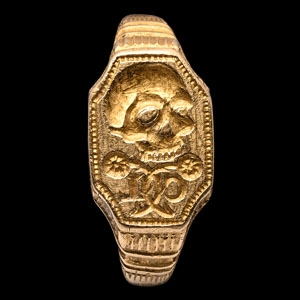
Stuart Period Gold Renaissance Memento Mori Signet Ring with C.L. and Skull
17th century A.D.Sold for (Inc. bp): £19,500
A substantial gold signet ring composed of a lentoid-section hoop, expanding capital style shaped shoulders and irregular octagonal bezel engraved with a skull, two flowers below separating the reversed initials in capitals: 'CL', framed by a beaded border. 15.65 grams, 27.14 mm overall, 22.68 mm internal diameter (approximate size British X, USA 11 1/2, Europe 26.29, Japan 25)
Acquired in the 1980s. Property of a London gentleman. This lot has been checked against the Interpol Database of stolen works of art and is accompanied by search certificate no.11664-197587.
Signet rings were jewellery items serving practical functions, and were pressed into hot wax to seal letters and packets. Personal seals or secreta acted as a legal safeguard, since they were used to witness wills, loans, commercial, personal and other documents. Such rings were often engraved with a coat of arms, initials, merchant's mark or some other personal symbol. Painted portraits of this period portray the wearer with the signet ring on the thumb or forefinger, allowing for practical use. Skulls on rings were potent symbols of mortality. 'Memento mori' or 'remember that you must die' imagery served as a reminder to the Christian of the need to keep their soul in good order for the final judgment.
