
Loading, please wait...
LOT 2405
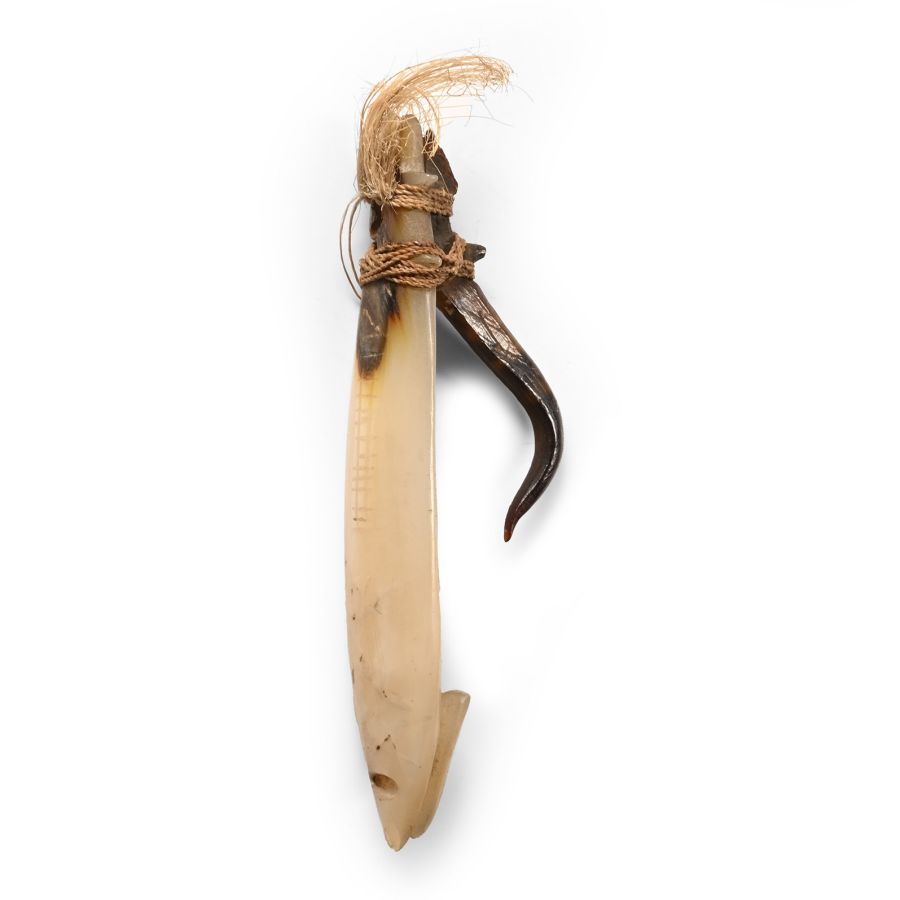
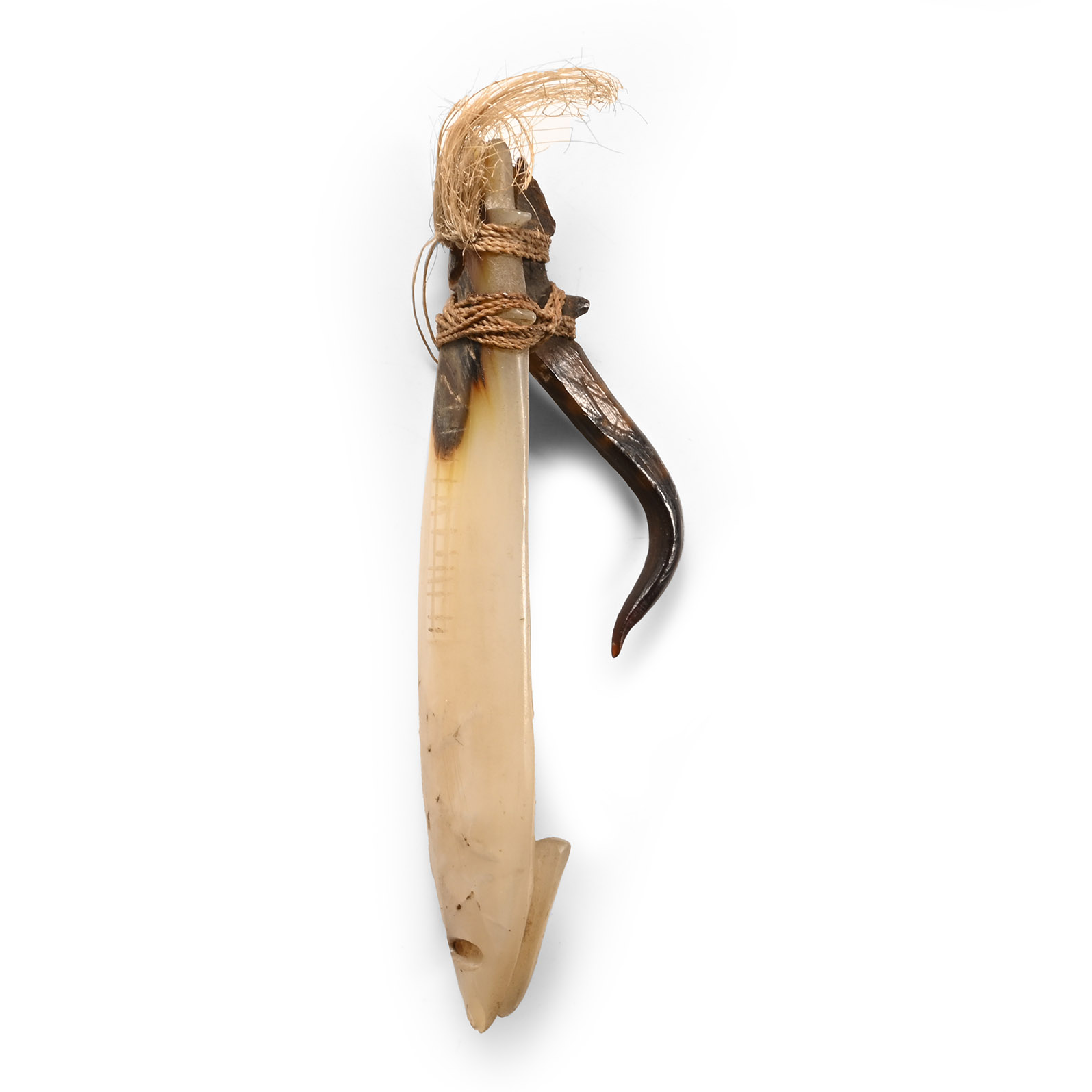
Solomon Islands Trawling Lure
CIRCA 19TH CENTURY A.D.
3 1/4 in. (12.9 grams, 81 mm).
An Oceanic fish lure comprising a polished shell body and a carved hook attached to the reverse with twine. [No Reserve]
ProvenanceFrom the private collection of Kenneth Machin (1936-2020), Buckinghamshire, UK; his collection of antiquities and natural history was formed since 1948; thence by descent.
LiteratureSee Waite, D. & Conru, K., Solomon Islands Art: The Conru Collection, 5 Continents, 2008. Blau, D., & Maas, K., Fish Hooks of the Pacific Islands, Hirmer, 2012; Brunt, P. & Thomas, N., Oceania, Royal Academy of Arts, 2018; Grulke, W., Adorned by Nature: Adornment, Exchange & Myth in the South Seas, At One Communications, 2022.
FootnotesSuch lures were not used with bait but were dragged behind a fast-moving canoe to attract the prey with the abalone shell glinting in the sun to emulate the scales of a fish in order to attract larger fish.
CONDITIONTimeLine Auctions follows a vetting process to ensure the authenticity and legality of all items, reinforcing our commitment to integrity and responsible trading. Each antiquity, antique, and coin lot undergoes thorough examination by a vetting committee of at least ten external specialists, professional trade association members, scientists, and archaeologists: Our Vetting Process
AUCTIONS:
TimeLine is a leading auction house specialising in antiquities, ancient art, collectables, natural history, coins, medals, and books. Our auctions offer museums, collectors, historians, and enthusiasts the opportunity to acquire unique and historically significant pieces.
-
Solomon Islands Trawling Lure
Circa 19th century A.D.Sold for (Inc. bp): £780
An Oceanic fish lure comprising a polished shell body and a carved hook attached to the reverse with twine. 12.9 grams, 81 mm
From the private collection of Kenneth Machin (1936-2020), Buckinghamshire, UK; his collection of antiquities and natural history was formed since 1948; thence by descent.
Such lures were not used with bait but were dragged behind a fast-moving canoe to attract the prey with the abalone shell glinting in the sun to emulate the scales of a fish in order to attract larger fish. -
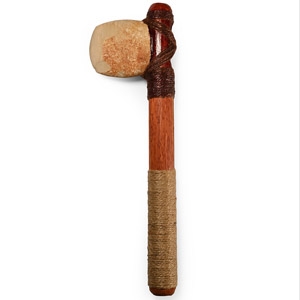
Aboriginal Chert Axe
Australia, 20th century A.D.Sold for (Inc. bp): £72
Comprising a split wooden haft with cord bindings, fitted polished stone blade with cord bindings secured with a resinous adhesive. 257 grams, 28 cm
From New South Wales, Australia. From the private collection of Kenneth Machin (1936-2020), Buckinghamshire, UK; with collection no.27; his collection of antiquities and natural history was formed since 1948; thence by descent. -
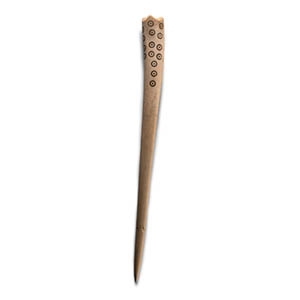
African Mangbetu Bone Hair Ornament
Congo, early 20th century A.D.Sold for (Inc. bp): £46
Formed from a slender long bone with crenellated head and smoothed shank, incised ring-and-dot ornament; repaired. 17 grams, 19 cm
From a family collection mostly formed in the 1940s-1950s, thence by descent.
