
Loading, please wait...
LOT 1451
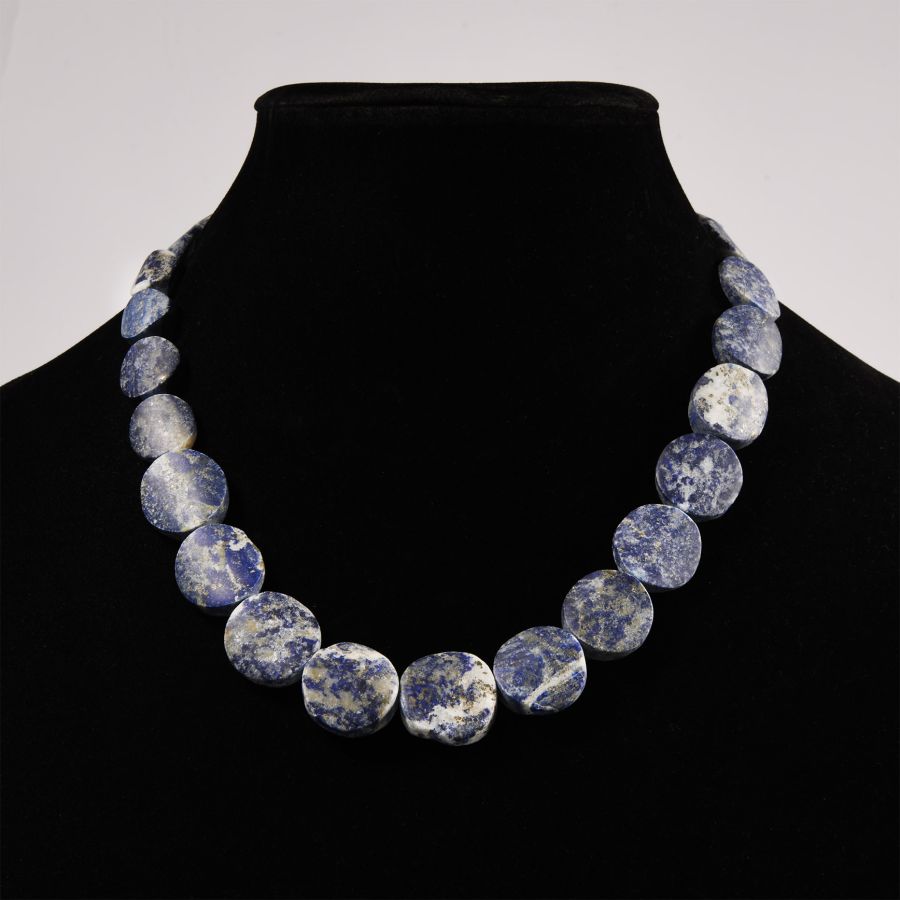
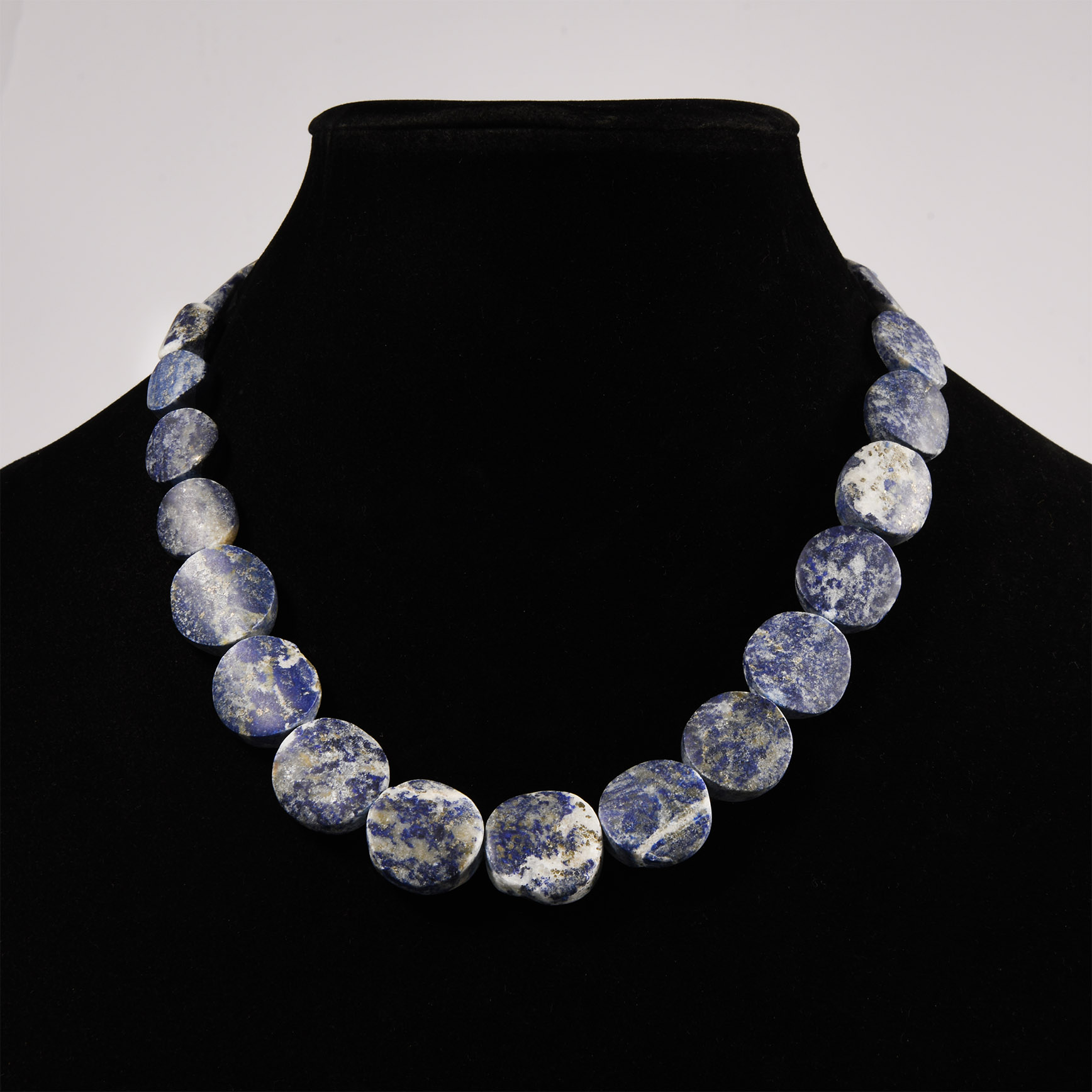
Sodalite Bead Necklace
20TH CENTURY A.D.
17 in. (85 grams total, 43 cm long).
Composed of graduated coin-shaped beads, with hook-and-eye clasp. [No Reserve]
ProvenanceUK gallery, early 2000s.
CONDITIONTimeLine Auctions follows a vetting process to ensure the authenticity and legality of all items, reinforcing our commitment to integrity and responsible trading. Each antiquity, antique, and coin lot undergoes thorough examination by a vetting committee of at least ten external specialists, professional trade association members, scientists, and archaeologists: Our Vetting Process
AUCTIONS:
TimeLine is a leading auction house specialising in antiquities, ancient art, collectables, natural history, coins, medals, and books. Our auctions offer museums, collectors, historians, and enthusiasts the opportunity to acquire unique and historically significant pieces.
-
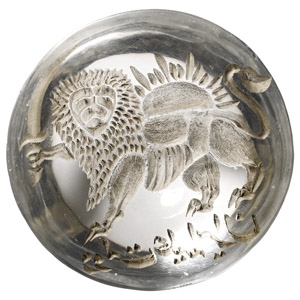
Stamp Seal with Sun and Lion
Late 19th- early 20th century A.D.Sold for (Inc. bp): £143
Plano-convex glass stamp with intaglio advancing lion brandishing a sabre, sun rising above its back, Perso-Arabic script beneath. 41.8 grams, 36 mm
London, UK gallery, 1971-early 2000s.
The Šir o Xoršid 'Sun and Lion' is the symbol of Persia. -
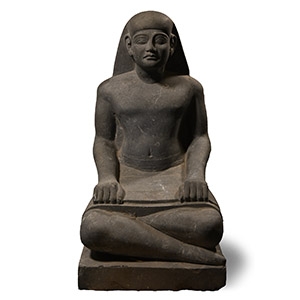
Large Egyptian Style Stone Figure
20th century A.D.Sold for (Inc. bp): £416
A substantial decorative figurine of a seated male wearing a nemes headcloth and shendyt knee-length kilt; the figure sitting cross-legged with hand resting on a rectangular panel, possibly a papyrus sheet; low rectangular base; after the antique. 62.5 kg, 63 cm
From a French collection, Paris. Ex Parisian gallery, France; latterly with a London, UK, gallery. -
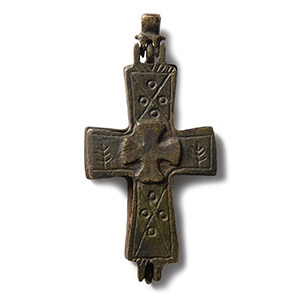
Byzantine Style Bronze Reliquary Cross Pendant
20th century A.D.Sold for (Inc. bp): £59
Hinged suspension loop, two recessed halves hollow to the reverse, low-relief figure in orans pose to the obverse, geometric ornament to the reverse. 126 grams, 10.5 cm
Acquired 1980-1990s. From the private collection of H.N., Milton Keynes, Bedfordshire, UK.
Usually the reliquary crosses or enkolpia, were composed of two separate halves, inside of which a relic of a saint was contained; this could have been a piece of cloth or a bone. The practice, in the Orthodox Church, is still in place today, sometimes by using reproductions of ancient styles, like our specimen, probably realised at the beginning of the last century.
