
Loading, please wait...
LOT 0384
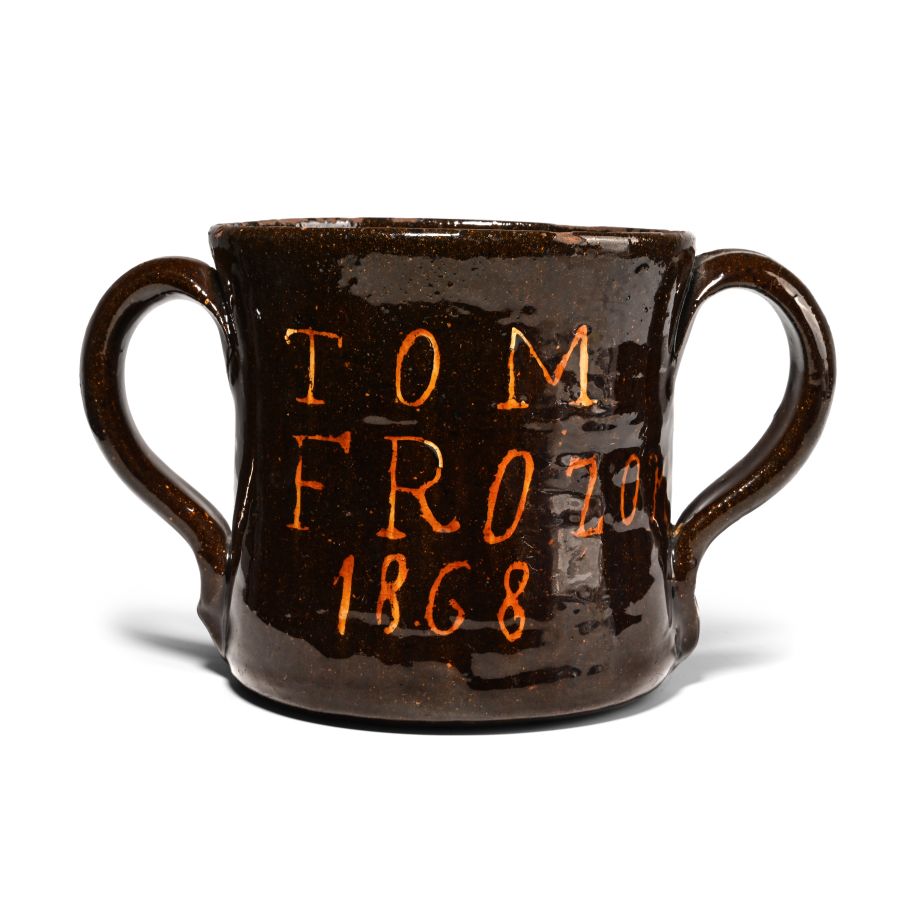
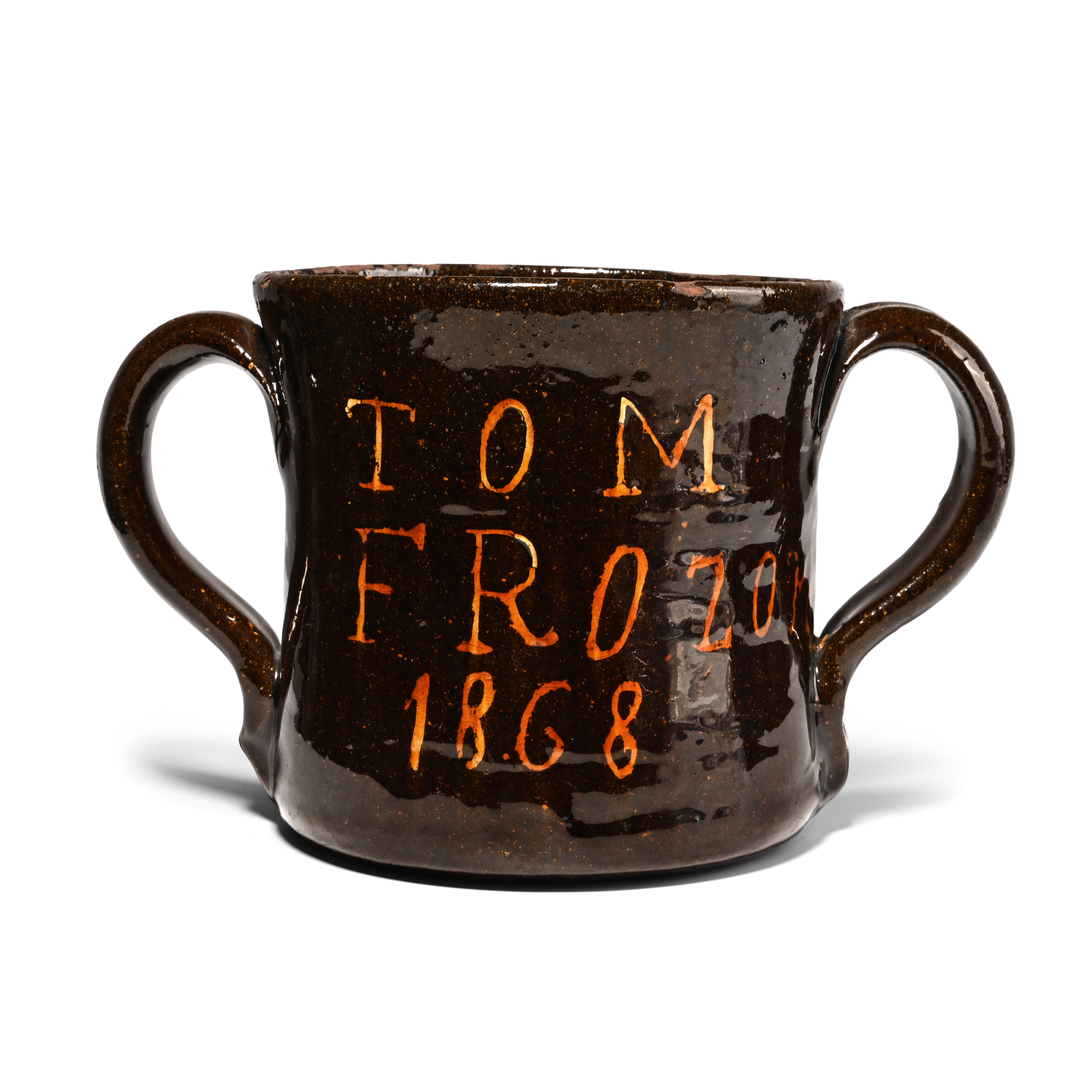
Slipware Frog 'Loving Cup' Named Tom Frozon
HALIFAX, ENGLAND, 1868 A.D.
8 1/2 in. (938 grams, 21.5 cm wide).
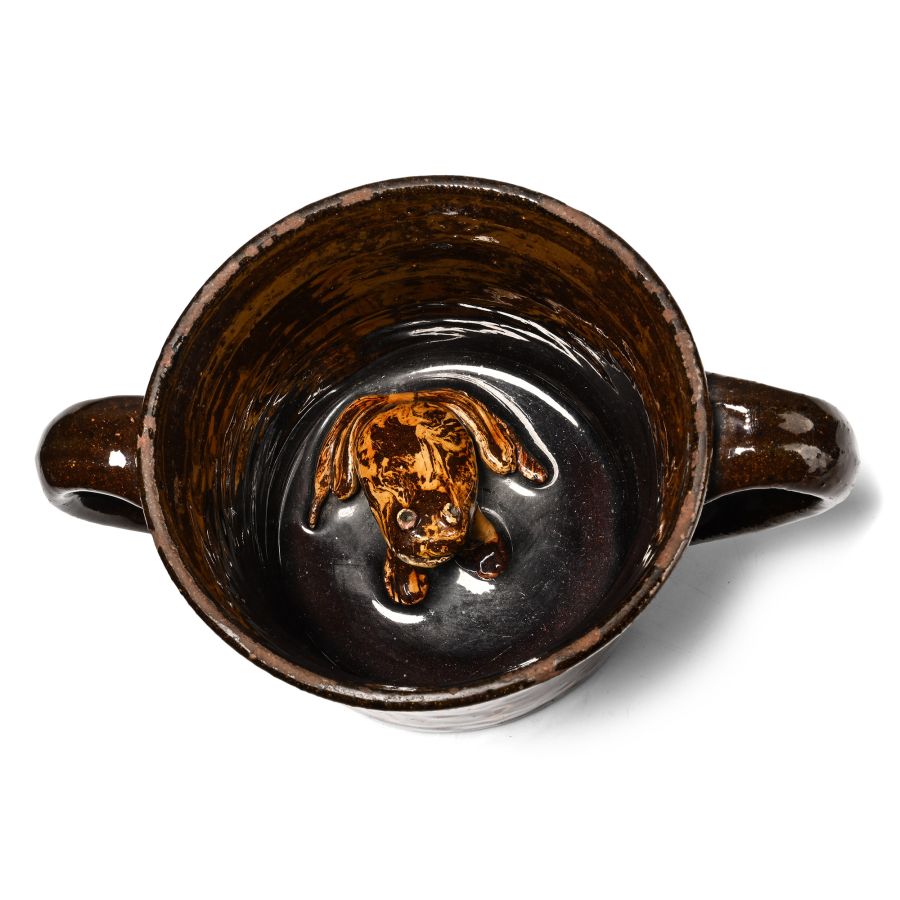
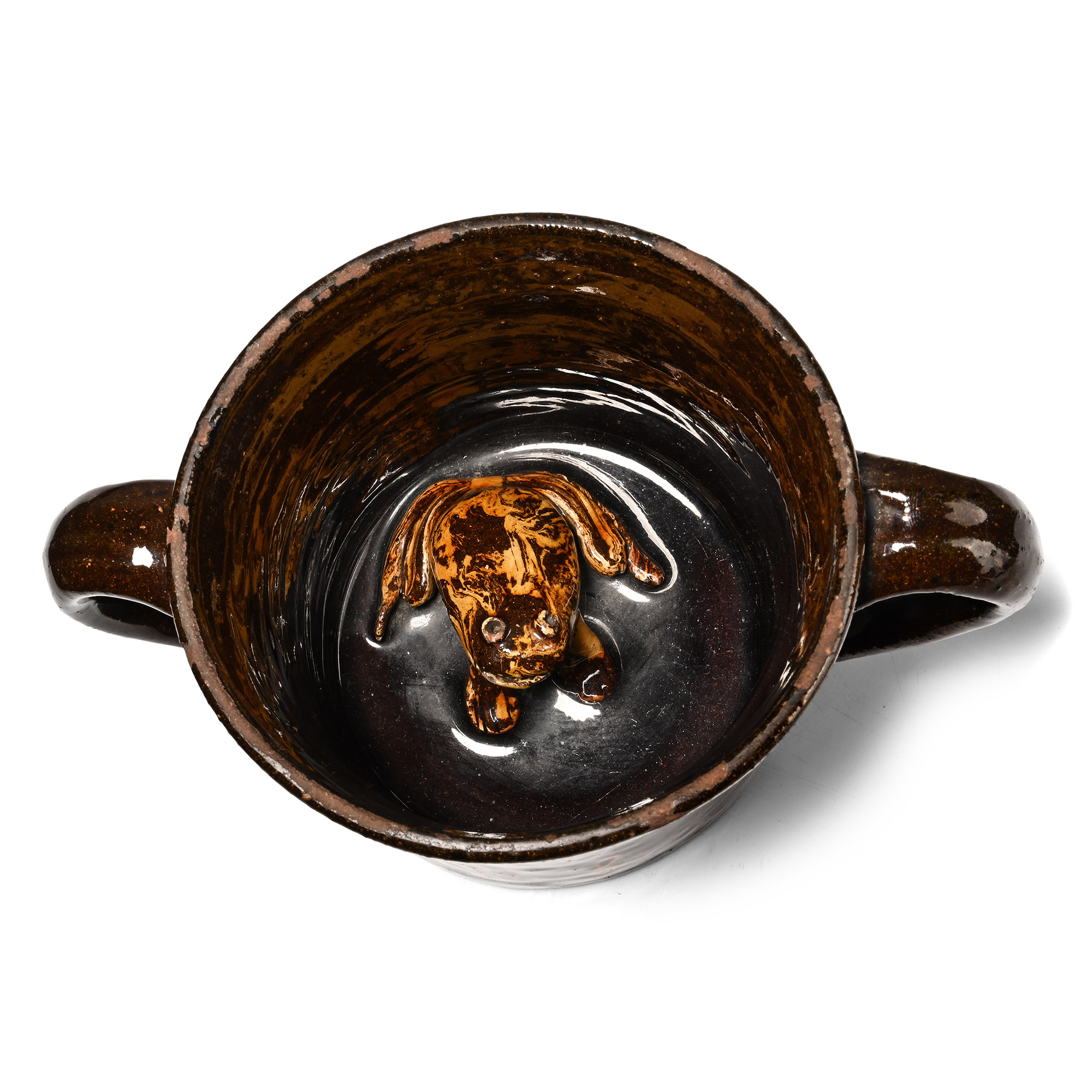
The two-handled pottery cup named and dated in slip 'Tom Frozon 1868' on the side; a frog located inside the base to surprise the unwary drinker; an exceptional example made at Howcans Pottery, Halifax, Yorkshire. [No Reserve]
ProvenanceFrom the Martin Harrison collection, North Wales.
Ex John Howard, English pottery specialist.
Property of a Kent, UK, lady collector.
Accompanied by a copy of the John Howard catalogue listing.
Exhibited at the Harwich Museum, Harwich, Essex, UK, 8th June 2026-14th September 2026; accompanied by a copy of a photograph of the artefacts on display.
LiteratureSee Brears, P., The Collectors Book of English Country Pottery, for similar.
CONDITIONTimeLine Auctions follows a vetting process to ensure the authenticity and legality of all items, reinforcing our commitment to integrity and responsible trading. Each antiquity, antique, and coin lot undergoes thorough examination by a vetting committee of at least ten external specialists, professional trade association members, scientists, and archaeologists: Our Vetting Process
AUCTIONS:
TimeLine is a leading auction house specialising in antiquities, ancient art, collectables, natural history, coins, medals, and books. Our auctions offer museums, collectors, historians, and enthusiasts the opportunity to acquire unique and historically significant pieces.
-
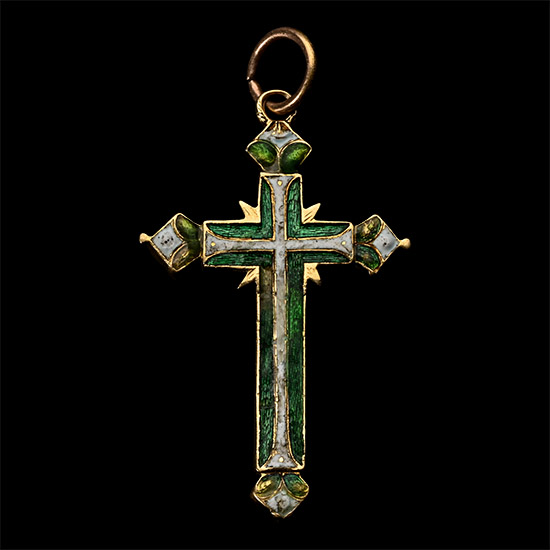
Enamelled Gold Cross Pendant with Instruments of Passion
Germany, 17th century A.D.Estimate: £2,000 - 3,000 (+bp*)
Current Winning Bid: £1,300
A finely executed devotional pendant in the form of a Latin cross, worked in high-carat gold and elaborately decorated on both sides; the obverse set with twelve table-cut almandine garnets, each enclosed within raised rub-over collets and inset with finely painted polychrome enamel scene depicting symbols of the Arma Christi, the Instruments of the Passion, including the scourge, hammer and pincers, the column of flagellation, rooster, dice, crown of thorns, and other emblematic motifs; the upper terminal with black enamel and bearing a gilt inscription 'INRI', an abbreviation of 'Iesus Nazarenus Rex Iudaeorum' for 'Jesus of Nazareth, King of the Jews'; the reverse with guilloché enamel in translucent green and opaque white, forming a cross with stylised foliate terminals; the pendant retaining its original integral suspension loop; some restoration on the enamel. 4.06 grams, 43 mm
Acquired on the European art market. This lot has been checked against the Interpol Database of stolen works of art and is accompanied by search certificate number no.13403-257997.
This pendant typifies early 17th-century German devotional jewellery, in which vivid enamelwork and miniature Passion iconography converge in portable, contemplative forms of piety. -
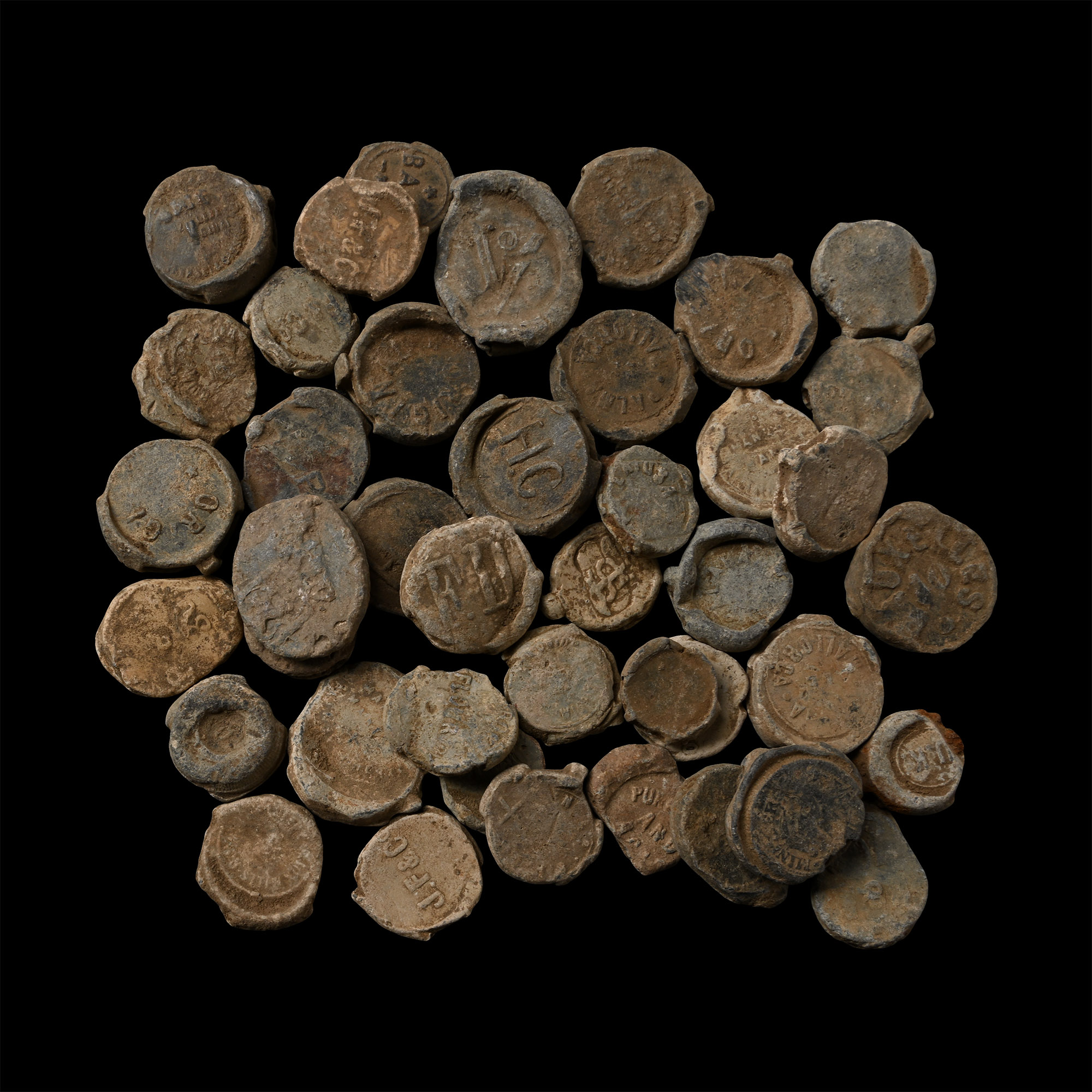
Post Medieval Lead Bag Seal Collection
Circa 19th-20th century A.D.Sold for (Inc. bp): £13
Comprising forty-three discoid seals with various emblems and inscriptions. 370 grams total, 16-26 mm
Found Suffolk, UK. -
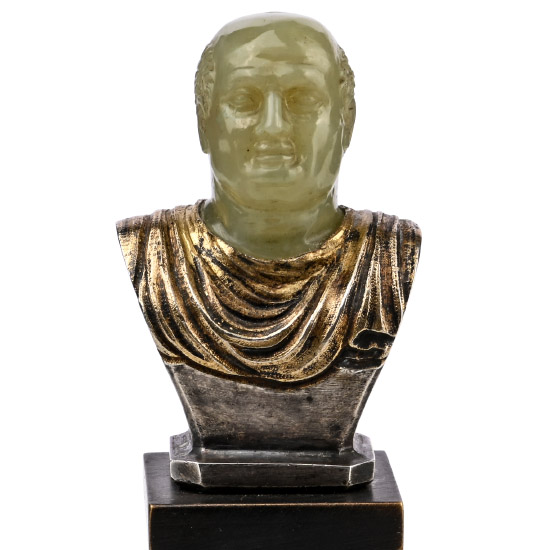
Chalcedony and Silver-Gilt Bust of the Emperor Vespasian
Italy, 17th-18th century A.D.Estimate: £1,500 - 2,000 (+bp*)
Opening Bid: £750
The head, carved from pale green chalcedony, polished to a smooth lustre and with a drilled aperture at the crown, the hair in tight curls around the nape and crown; the silver-gilt torso dressed in a draped toga carefully chased with deep folds and traces of gilding across the high points; mounted on a later patinated bronze column stand in the neoclassical manner. 208 grams total, 10.9 cm high including stand
Acquired on the European art market.
This small-scale portrait evokes the Roman tradition of imperial portraiture and the early modern fascination with the ancient world. From the seventeenth century onwards, artists and collectors revived classical subjects through hardstone and gilt-metal compositions, often intended for display in Kunstkammer or Grand Tour contexts. The combination of a reused ancient or earlier element with a later mount was a practice typical of the Renaissance and Baroque periods, reflecting the period’s reverence for antiquity and its imaginative recontextualisation of ancient forms.
