
Loading, please wait...
LOT 0384
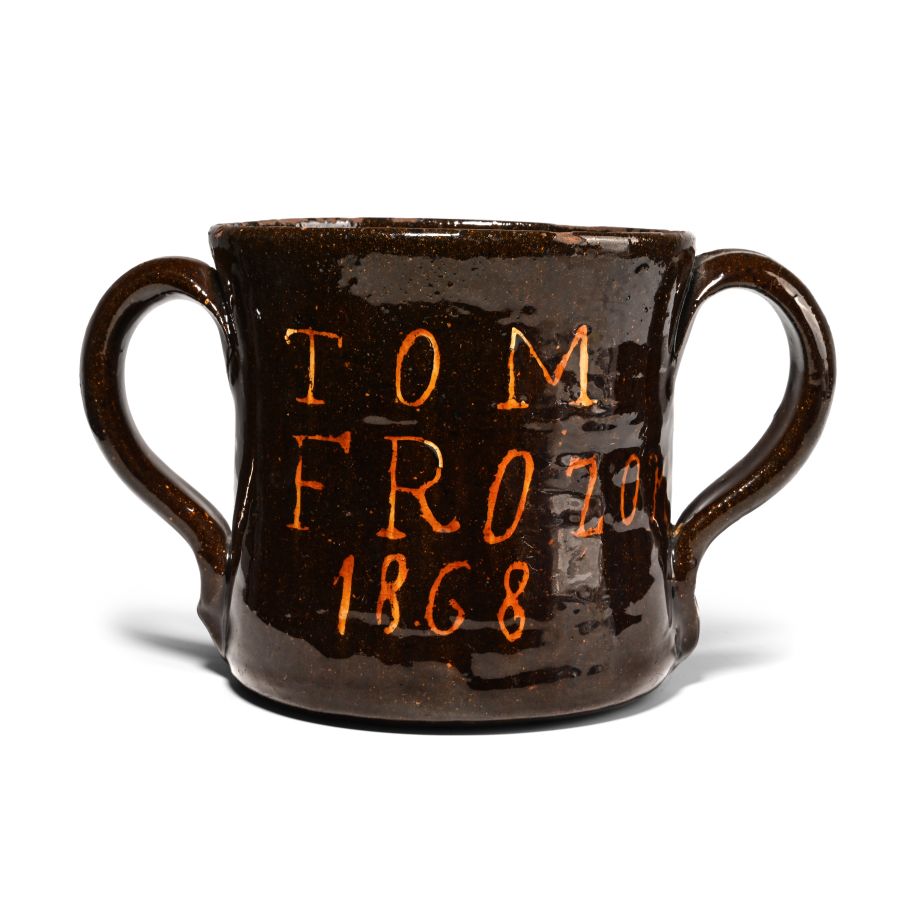
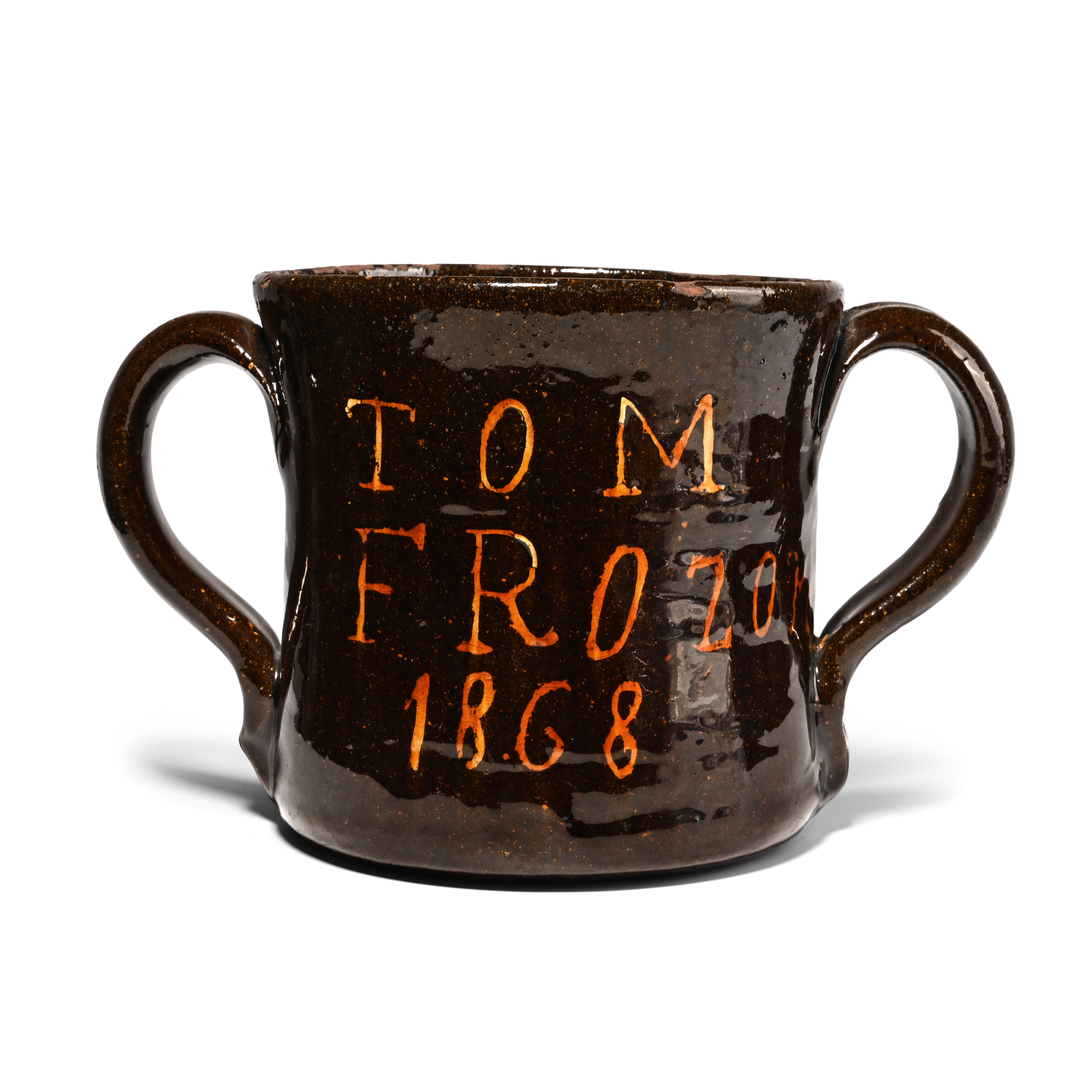
Slipware Frog 'Loving Cup' Named Tom Frozon and Dated
HALIFAX, ENGLAND, 1868 A.D.
8 1/2 in. (938 grams, 21.5 cm wide).
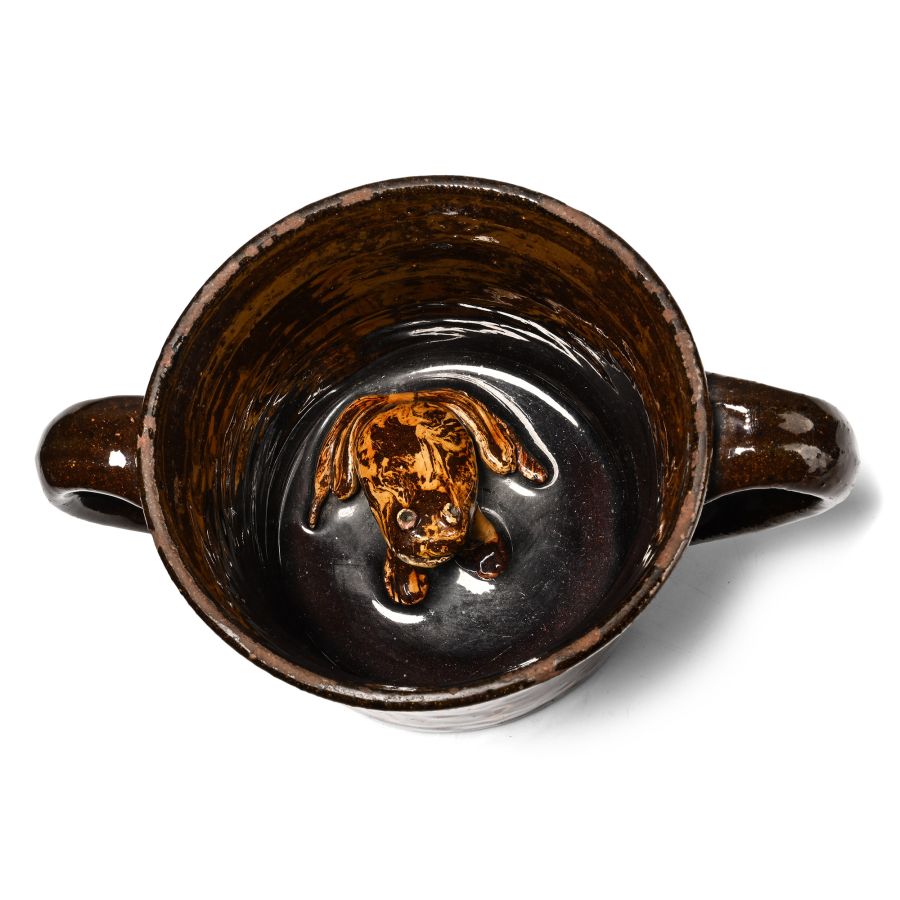
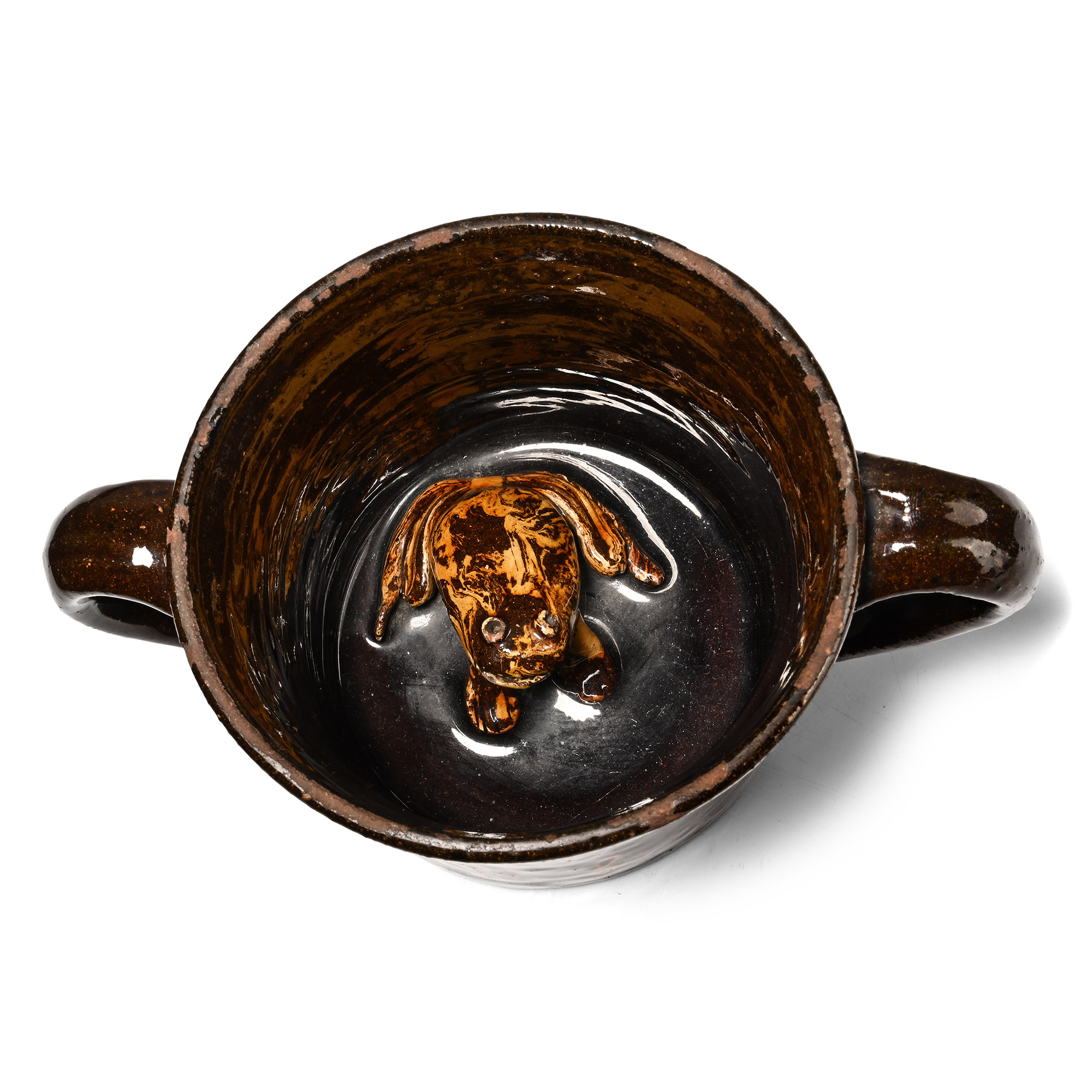
The two-handled pottery cup named and dated in slip 'Tom Frozon 1868' on the side; a frog located inside the base to surprise the unwary drinker; an exceptional example made at Howcans Pottery, Halifax, Yorkshire. [No Reserve]
ProvenanceFrom the Martin Harrison collection, North Wales.
Ex John Howard, English pottery specialist.
Property of a Kent, UK, lady collector.
Accompanied by a copy of the John Howard catalogue listing.
Exhibited at the Harwich Museum, Harwich, Essex, UK, 8th June 2026-14th September 2026; accompanied by a copy of a photograph of the artefacts on display.
LiteratureSee Brears, P., The Collectors Book of English Country Pottery, for similar.
CONDITIONTimeLine Auctions follows a vetting process to ensure the authenticity and legality of all items, reinforcing our commitment to integrity and responsible trading. Each antiquity, antique, and coin lot undergoes thorough examination by a vetting committee of at least ten external specialists, professional trade association members, scientists, and archaeologists: Our Vetting Process
AUCTIONS:
TimeLine is a leading auction house specialising in antiquities, ancient art, collectables, natural history, coins, medals, and books. Our auctions offer museums, collectors, historians, and enthusiasts the opportunity to acquire unique and historically significant pieces.
LOT 0384
Slipware Frog 'Loving Cup' Named Tom Frozon and Dated
Estimate £400 - 600€460 - 700 (for guidance only)$540 - 810 (for guidance only)
Opening Bid
£5 (EUR 6; USD 7) +BP*
-
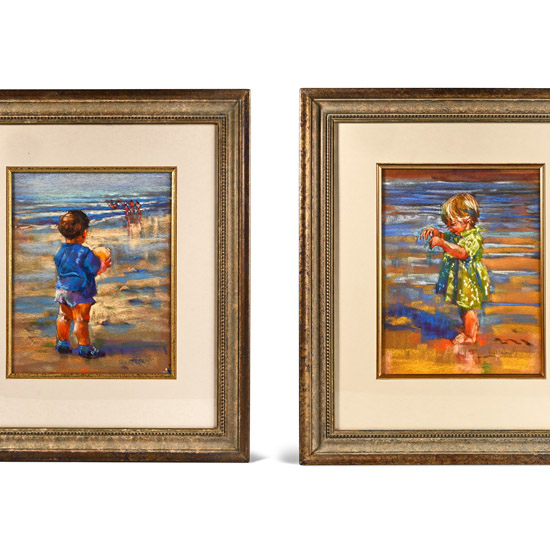
Pair of Pastel Paintings of Children on a Beach by Sue McDough
Circa 1999 A.D.Estimate: £400 - 600 (+bp*)
Opening Bid: £5
Comprising: a pastel of a young girl dressed in a green dress, playing with sand, her bare feet sinking in the sand, and shallow waves lapping in the background; the other pastel showing a young boy dressed in blue and holding a ball in his hands, gazing into the distance where a group of people are playing in the water; both set in glazed frames and signed to the bottom right-hand corner. 4.65 kg total, 46 x 54 - 47 x 54.5 cm
Property of an Essex, UK, lady. Accompanied by two original receipts from Frinton Gallery. -
.jpg)
Renaissance Agate Gemstone with Eros Riding a Hippocampus in Gold Ring
16th-17th century A.D.Estimate: £2,000 - 3,000 (+bp*)
Opening Bid: £1,000
Oval banded agate intaglio engraved with Eros riding a hippocamp through the waves and wielding a whip in his hand; set in a later gold ring with openwork shoulders. 4.57 grams, 25.29 mm overall, 17.36 mm internal diameter (approximate size British N 1/2, USA 6 3/4, Europe 14.35, Japan 13)
Acquired on the European art market. This lot has been checked against the Interpol Database of stolen works of art and is accompanied by search certificate number no.13348-257957.
The term hippocampus originates in the Renaissance, from Julius Caesar Arantius. He originated the term from the Greek word for seahorse (hippos [‘horse’] and kampos [‘sea monster’]). Arantius published his description of the hippocampus in 1587, in the first chapter of his work titled De Humano Foetu Liber. -
.jpg)
Silver Pendant in the form of Saint Anthony of Padua and Christ Child
Spain, 17th century A.D.Estimate: £600 - 800 (+bp*)
Opening Bid: £300
Modelled in the round, Saint Anthony standing on a square base and holding the infant Jesus, who is holding a lily in his left hand; the saint dressed in long robes tied at the waist with a rope, loop at the rear and a separately made base. 64 grams, 58 mm
Acquired on the European art market.
