
Loading, please wait...
LOT 2143
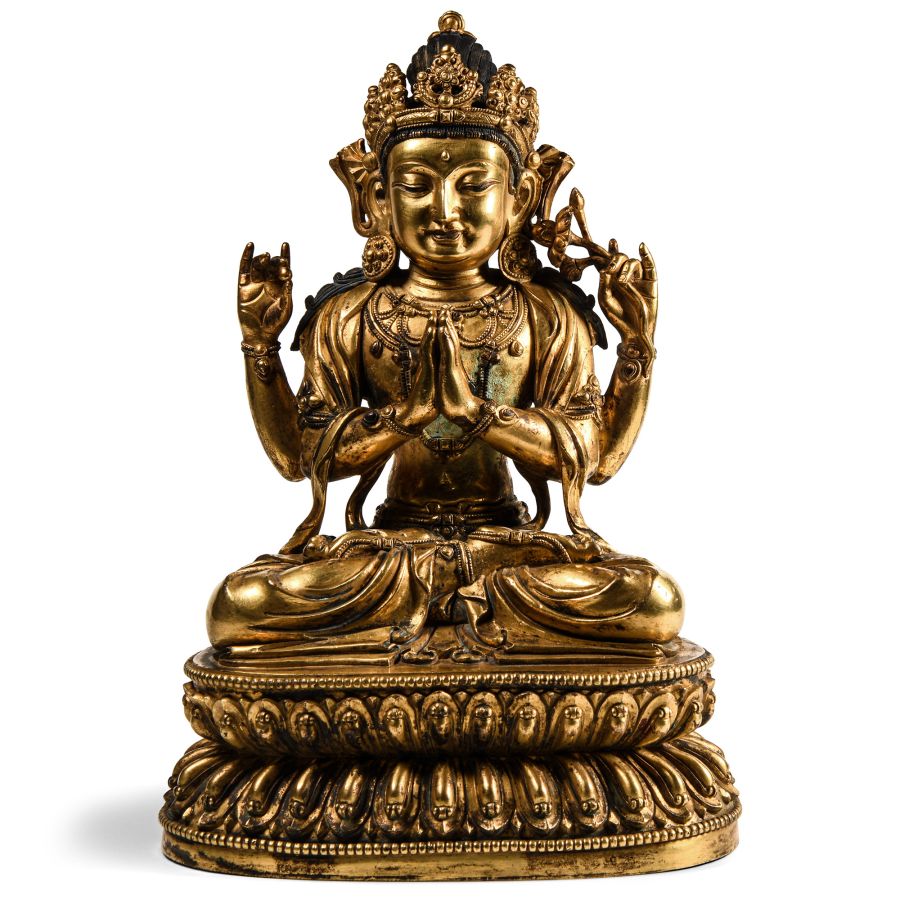
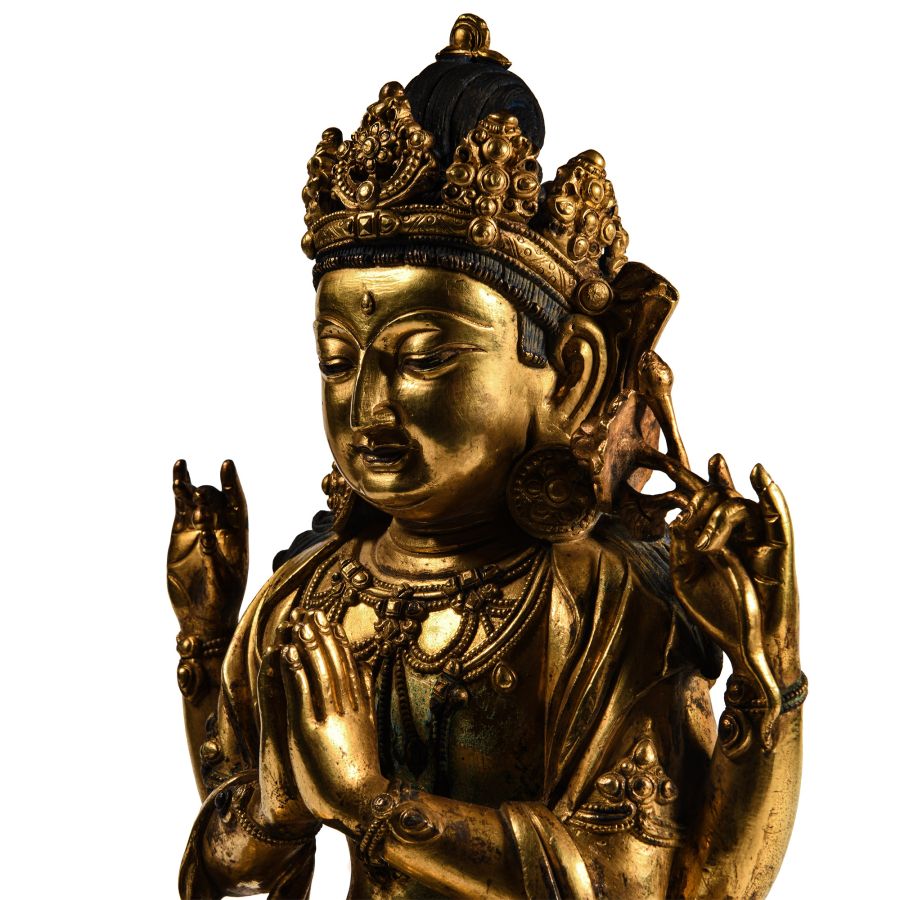
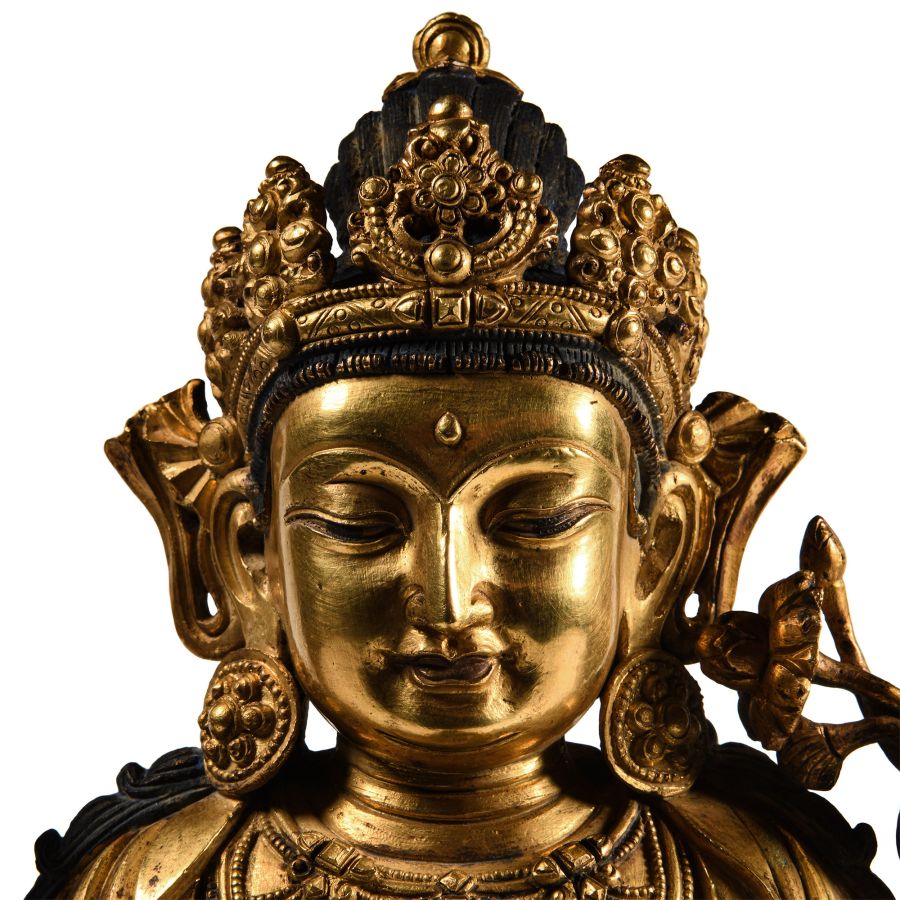
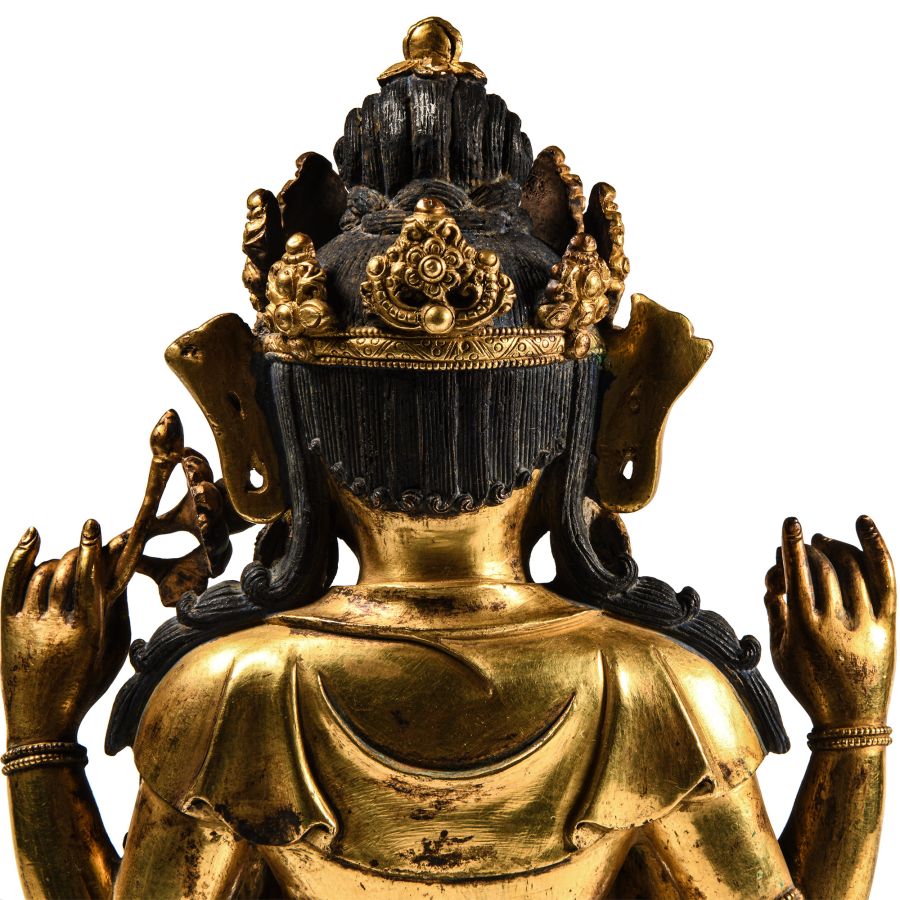
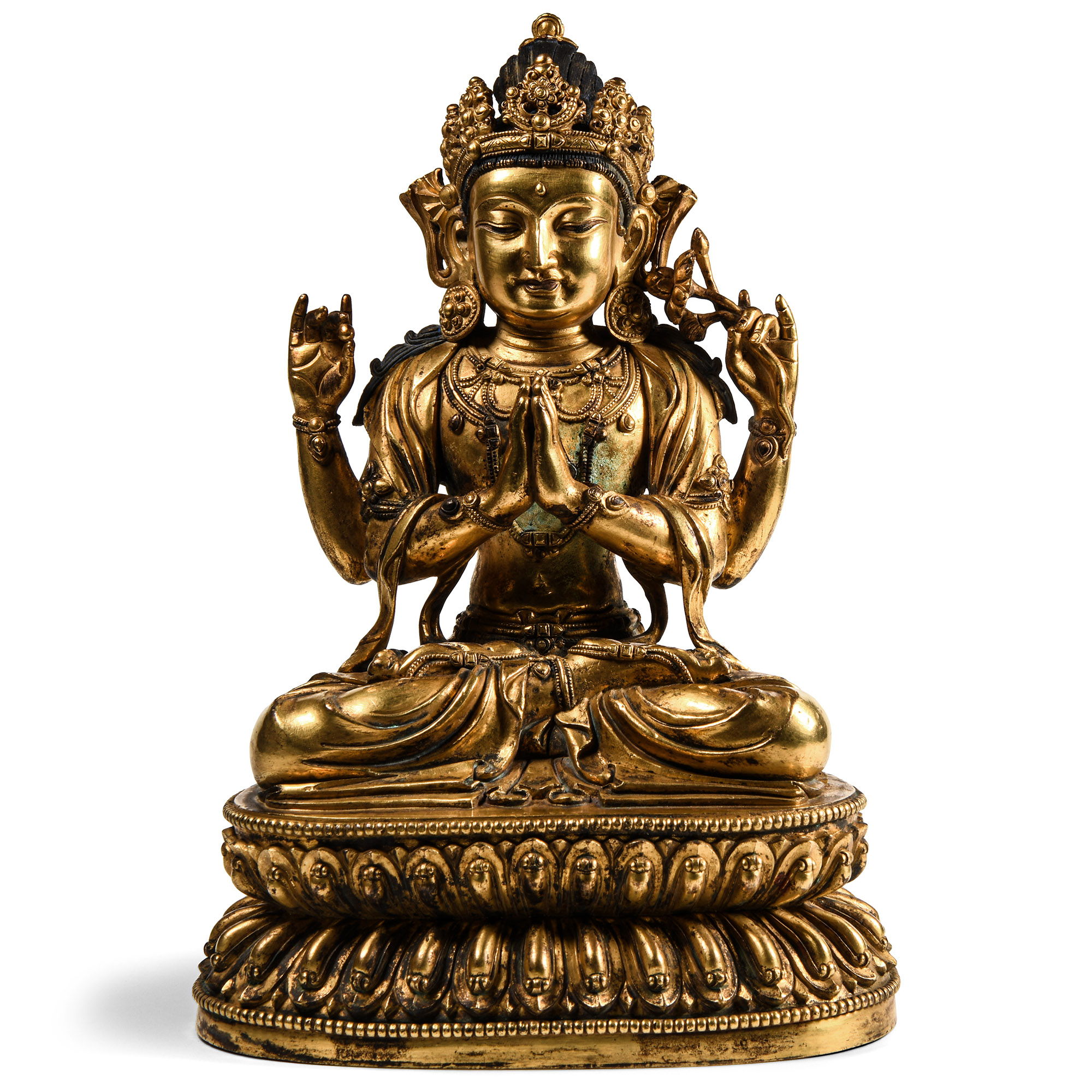
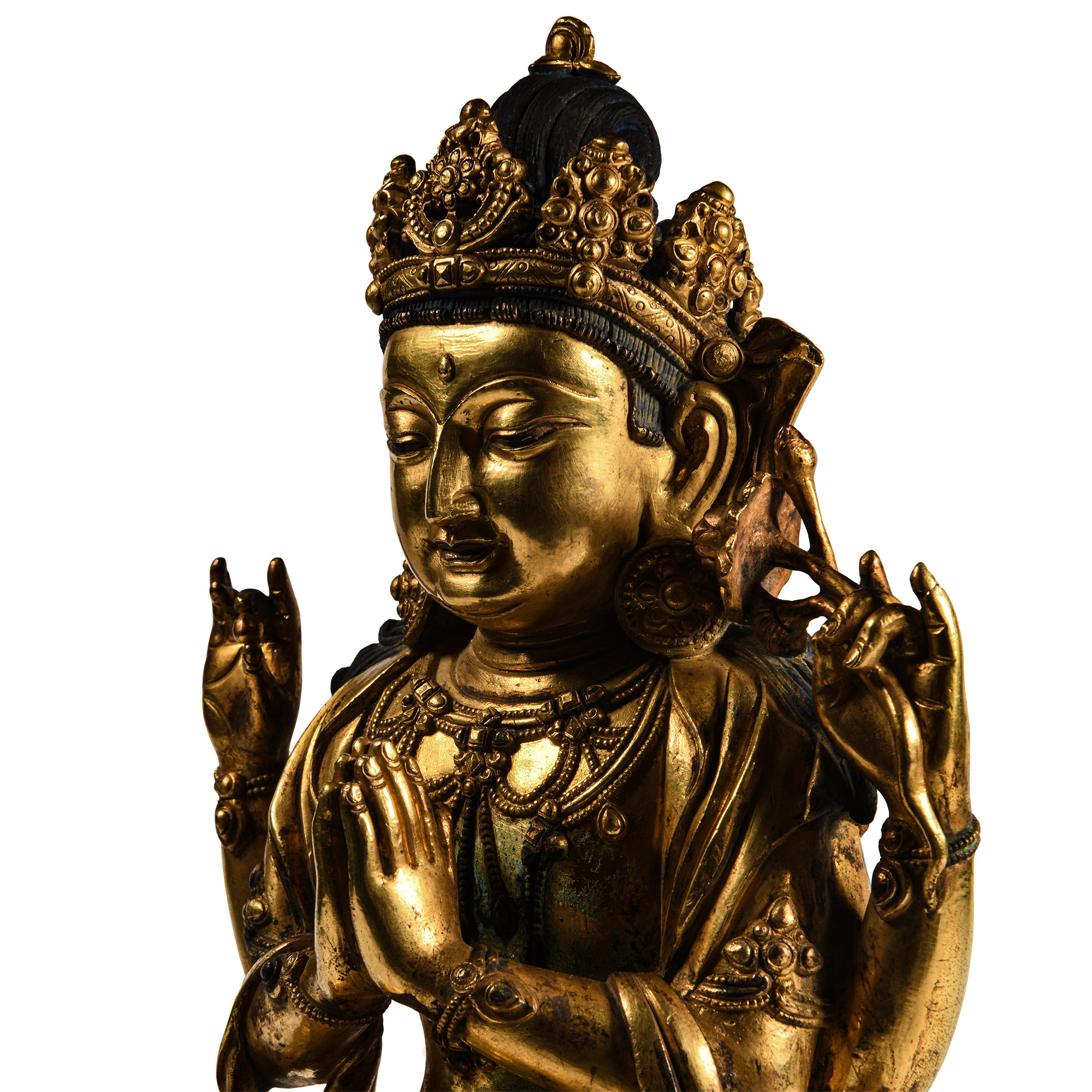
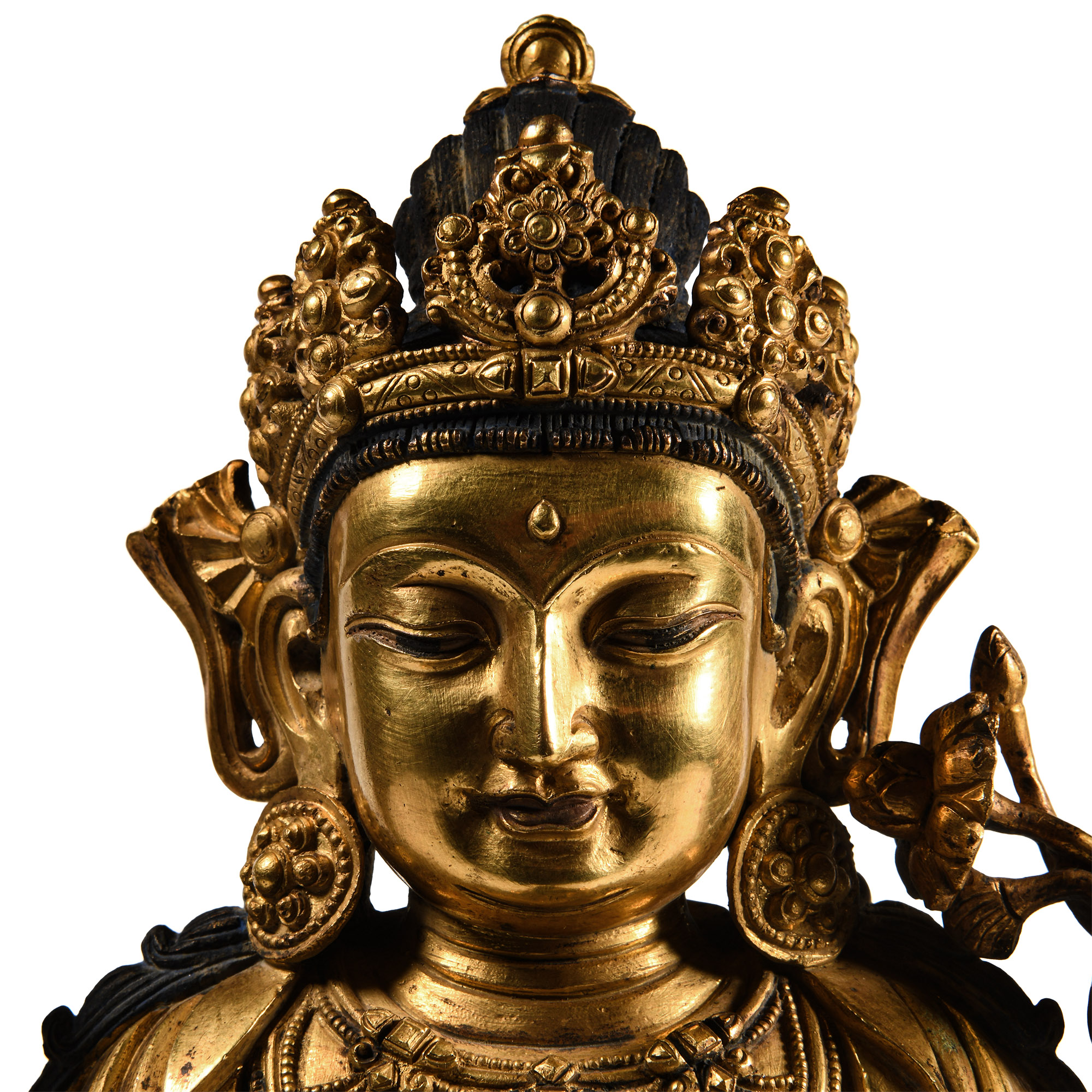
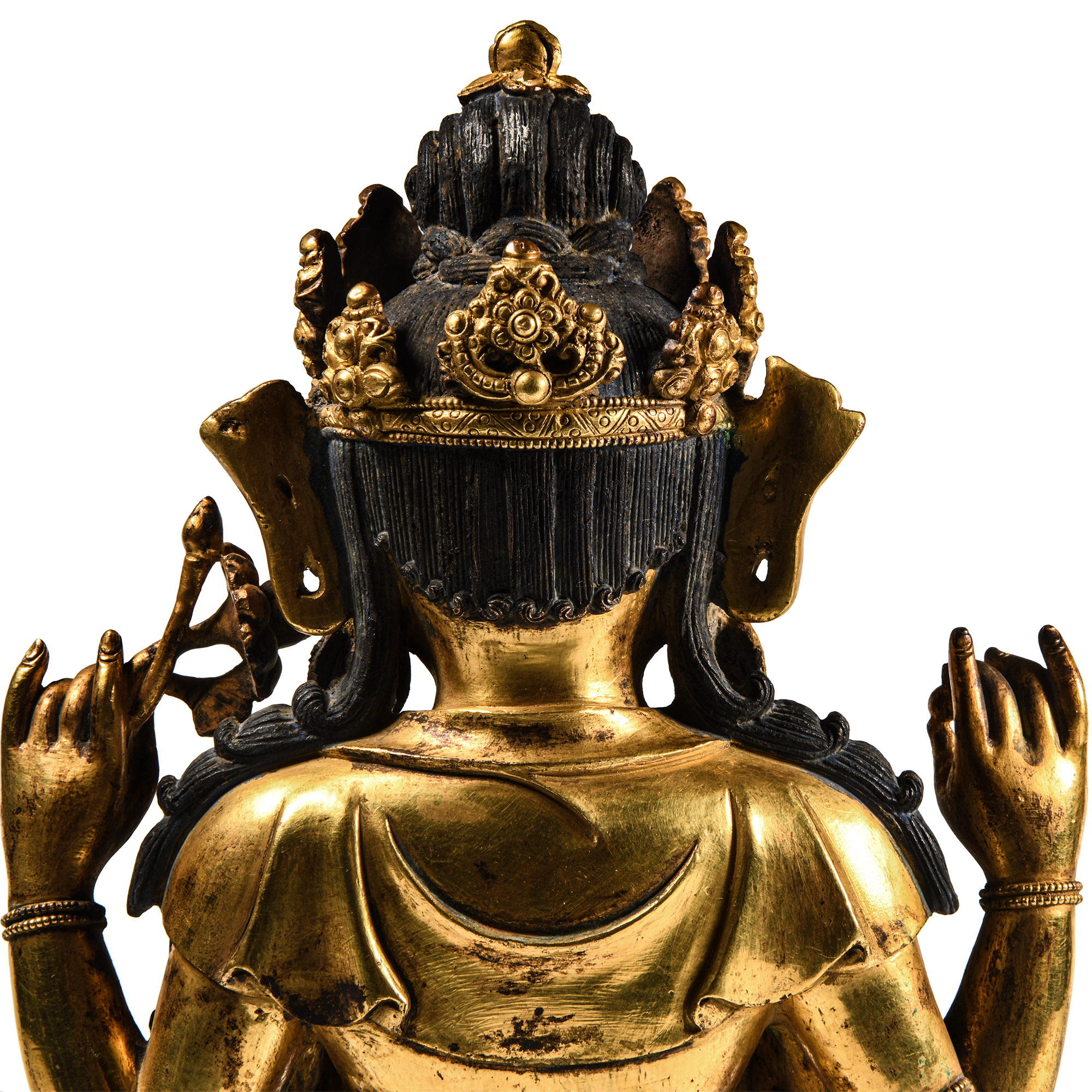
Sino-Tibetan Gilt Bronze Seated Figure of Four-Armed Guanyin
CIRCA 19TH-20TH CENTURY A.D.
10 in. (3.5 kg, 25.2 cm high).
Modelled in the round seated cross-legged on a double lotus flower base, two hands pressed together before the chest, two hands holding attributes at shoulder height, wearing a crown and jewels.
ProvenanceEx Madison Square Gallery, New York, USA.
Property of a Canadian family.
This lot has been checked against the Interpol Database of stolen works of art and is accompanied by search certificate number no.11889-204957.
TimeLine Auctions follows a vetting process to ensure the authenticity and legality of all items, reinforcing our commitment to integrity and responsible trading. Each antiquity, antique, and coin lot undergoes thorough examination by a vetting committee of at least ten external specialists, professional trade association members, scientists, and archaeologists: Our Vetting Process
AUCTIONS:
TimeLine is a leading auction house specialising in antiquities, ancient art, collectables, natural history, coins, medals, and books. Our auctions offer museums, collectors, historians, and enthusiasts the opportunity to acquire unique and historically significant pieces.
LOT 2143
Sino-Tibetan Gilt Bronze Seated Figure of Four-Armed Guanyin
Estimate £2,000 - 3,000€2,320 - 3,480 (for guidance only)$2,700 - 4,050 (for guidance only)
-
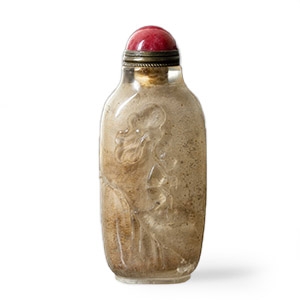
Chinese Crystal Carved Snuff Bottle
19th century A.D.Sold for (Inc. bp): £46
Displaying a figural scene in relief, deep pick cabochon to lid. 74 grams, 87 mm high
Property of a lady, from her grandfather's collection, 1960s-1970s; thence by decent. -
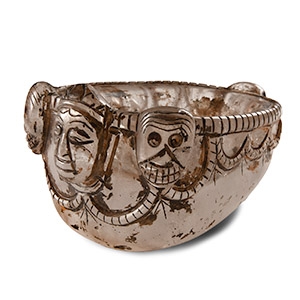
Large Tibetan Rock Crystal Kapala Vessel with Citipati Faces
Late 19th century A.D. or earlierSold for (Inc. bp): £416
A 'skull cup' displaying a crowned head flanked by two monster skulls carved in relief to the front face, a single grinning skull to the rear, notched borders around the vessel rim, swags below; chip to reverse. 1.6 kg, 17 cm
Acquired from an old German collection. Property of RWM Collection. -
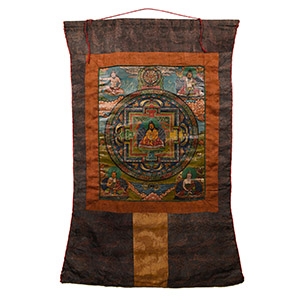
Tibetan Painted Thangka
19th century A.D.Sold for (Inc. bp): £72
Depicting a vibrantly painted mandala on later backing fabric featuring a peacock bird; bar sewn into the fabric along the top edge. 239 grams, 90.5 cm high
Ex late Walter Steinberg collection. Property of a lady, by inheritance.
