
Loading, please wait...
LOT 0662
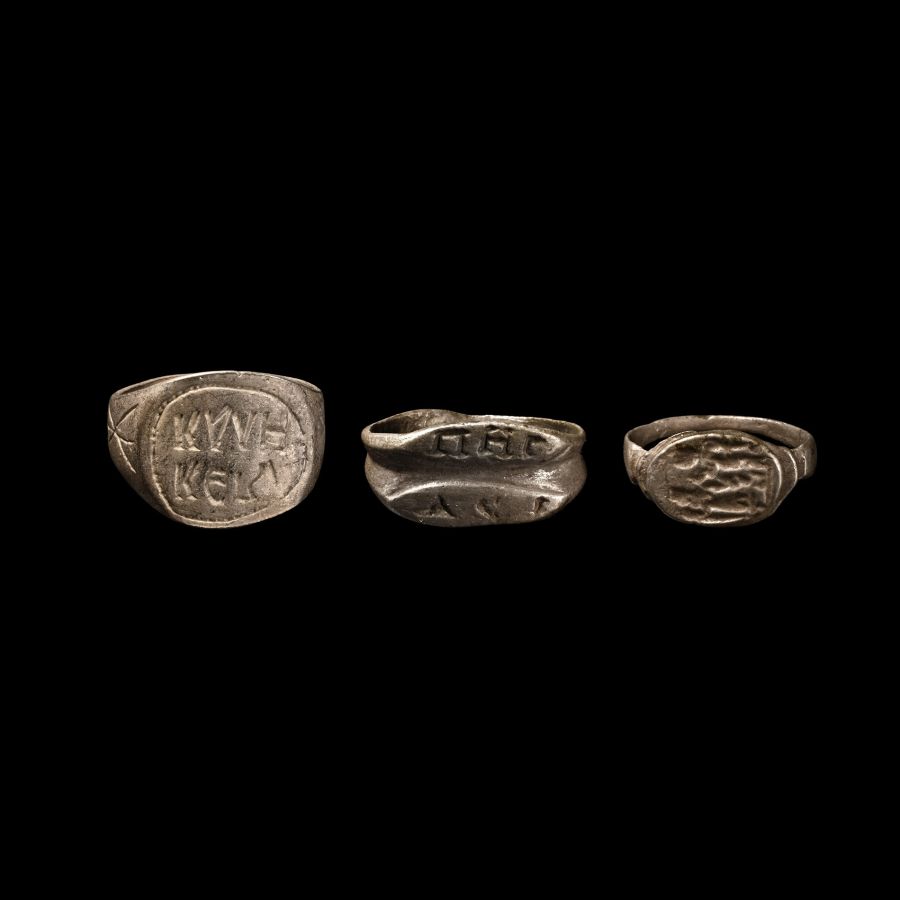
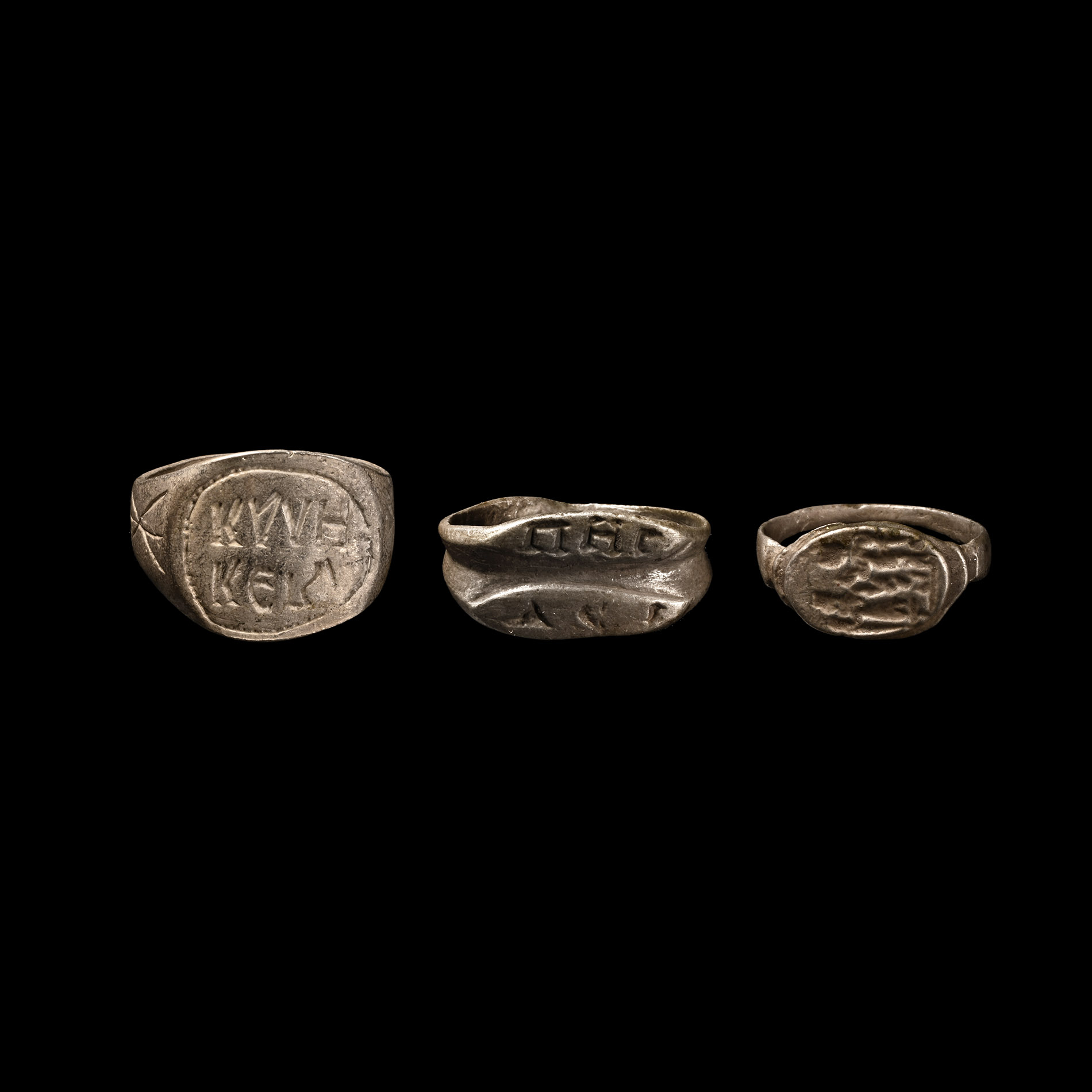
Silver Ring Group
ROMAN, 1ST-4TH CENTURY A.D. AND LATER
5/8 - 3/4 in. (8.68 grams total, 17-19 mm).
One with expanded shoulders and bezel inscribed with text in a roundel; an oval bezel engraved with a figural scene; a 'twin' bezel composed of two elliptical plaques, each bearing inscribed letters. [3, No Reserve]
ProvenanceAcquired on the UK art market.
Property of a Ruislip, UK, gentleman, by inheritance.
TimeLine Auctions follows a vetting process to ensure the authenticity and legality of all items, reinforcing our commitment to integrity and responsible trading. Each antiquity, antique, and coin lot undergoes thorough examination by a vetting committee of at least ten external specialists, professional trade association members, scientists, and archaeologists: Our Vetting Process
AUCTIONS:
TimeLine is a leading auction house specialising in antiquities, ancient art, collectables, natural history, coins, medals, and books. Our auctions offer museums, collectors, historians, and enthusiasts the opportunity to acquire unique and historically significant pieces.
-
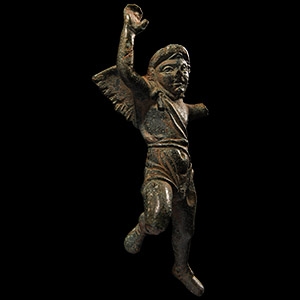
Large Gallo-Roman Bronze Statuette of Cupid
1st-3rd century A.D.Estimate: £5,000 - 7,000 (‡+bp*)
Opening Bid: £2,500
Modelled in the round leaping and winged, his right hand reaching above his head seemingly gesturing to retrieve arrows from a quiver once carried on his back, dressed in an exomis tunic leaving him naked below the torso, wearing a helmet or cap and ankle boots. 403 grams, 16 cm high
Acquired in Europe before 1994. Private collection, Europe. Accompanied by an academic report by Dr Raffaele D’Amato. This lot has been checked against the Interpol Database of stolen works of art and is accompanied by search certificate no.11808-206795.
Often the statues of Puttos or amorini (small loves) depicting personifications of Eros were covered with gold leaf. This was a frequent practice and the figures, when represented with wings, were known as chrysopteroi, meaning 'with golden wings'. -
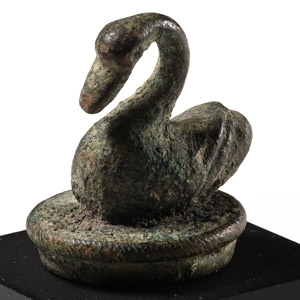
Roman Bronze Balsamarium Lid with Swan
1st-4th century A.D.Estimate: £200 - 300 (+bp*)
Opening Bid: £111
Modelled in the round with curved neck, sitting on the lid of a balsamarium or other high-status vessel. 18.8 grams, 25 mm
‘The Ancient Menagerie Collection’ formerly the property of a Cambridgeshire lady, collected since the 1990s and acquired from auctions and dealers throughout Europe and the USA, now ex London collection. -
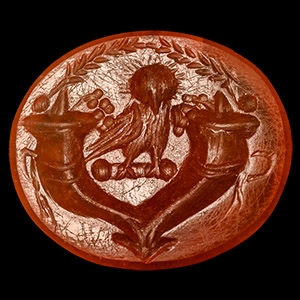
Roman Carnelian Gemstone with Owl Between Cornucopiae
1st century A.D.Sold for (Inc. bp): £975
The oval intaglio engraved with the bird facing, flanked by two opposing cornucopiae. 0.65 grams, 13 mm
Acquired in the late 1980s-early 1990s. Important North West London collection.
According to Greek mythology, the cornucopia was the horn lost by the Achelous river in the fight with Hercules for Deianeira and filled by the Naiads with flowers and fruit as a symbol of abundance, thus alluding to the fertility of the valley where the Achelous flowed. The owl, symbol of Athena, flanked by cornucopiae, evoked the abundance asked from the goddess by the wearer of the gemstone.
