
Loading, please wait...
LOT 0363
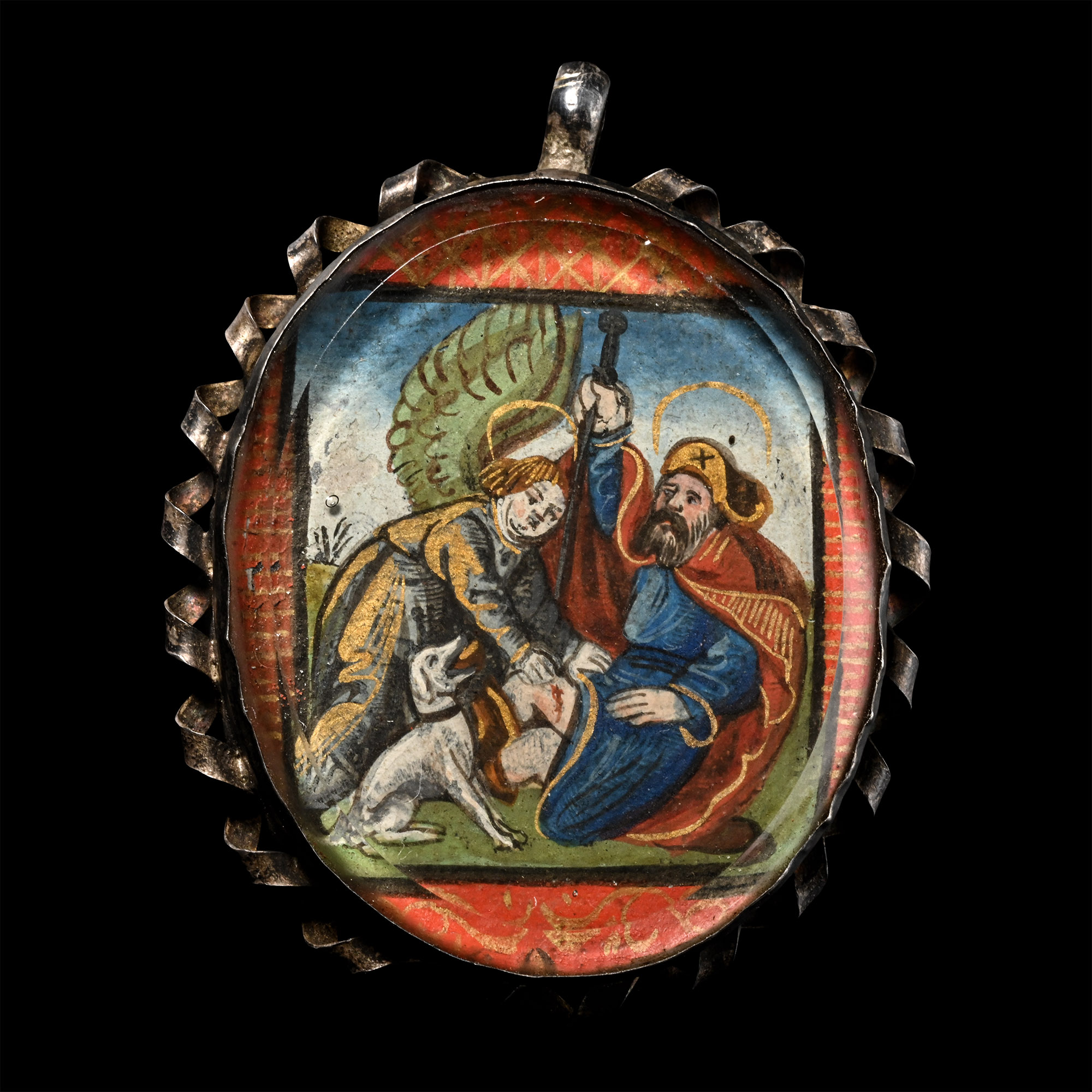
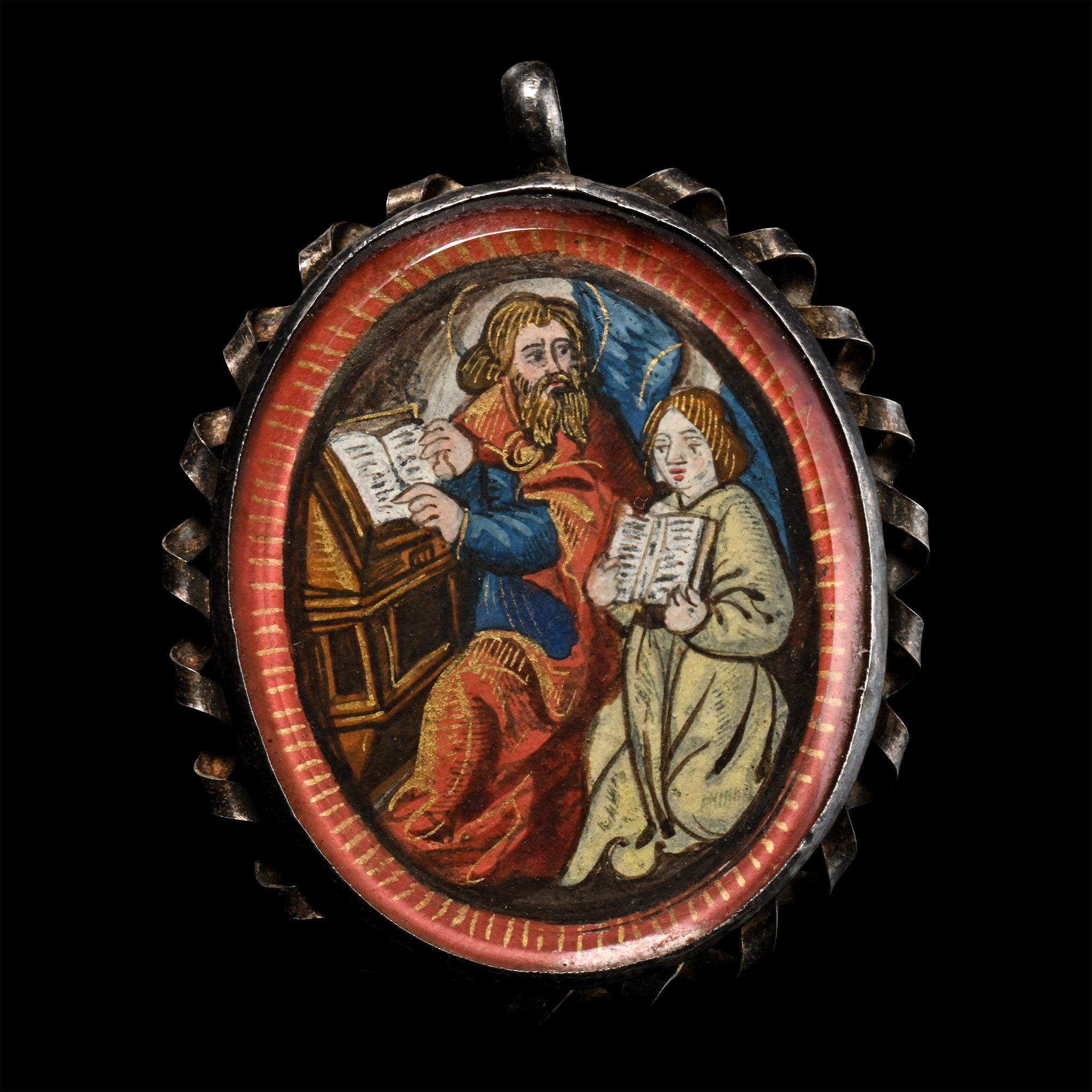
Silver Illuminated Miniature Pendant
FRANCE, 16TH CENTURY A.D.
2 1/4 in. (36.2 grams, 58 mm).
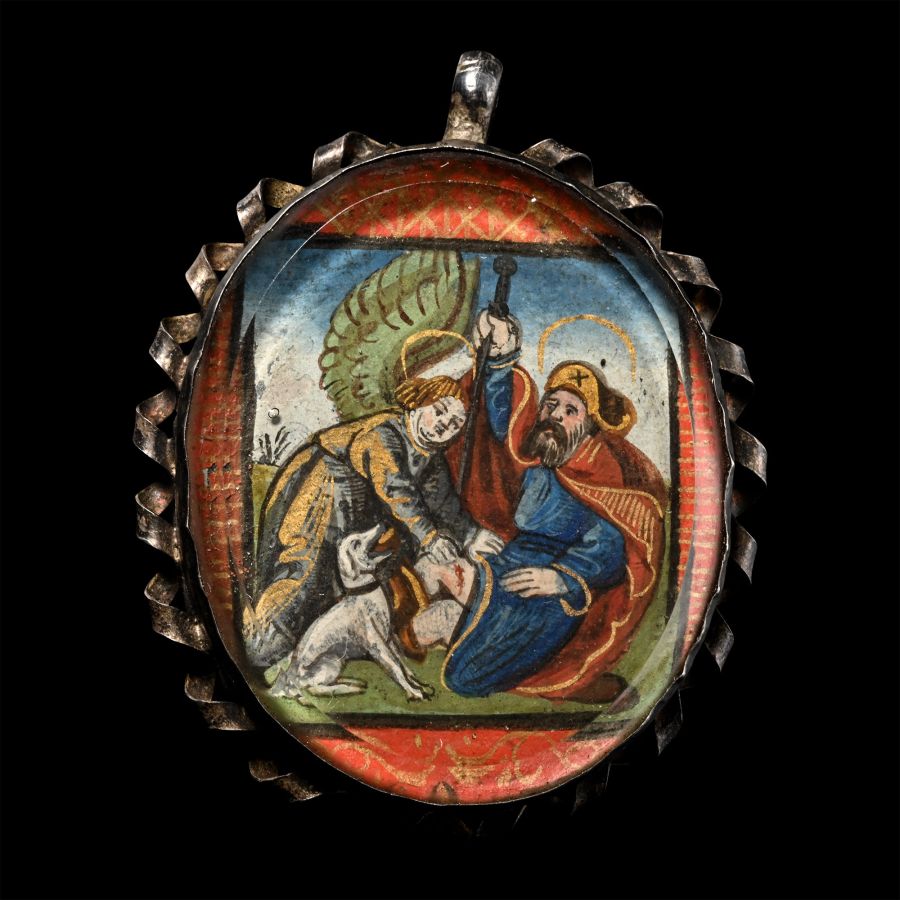
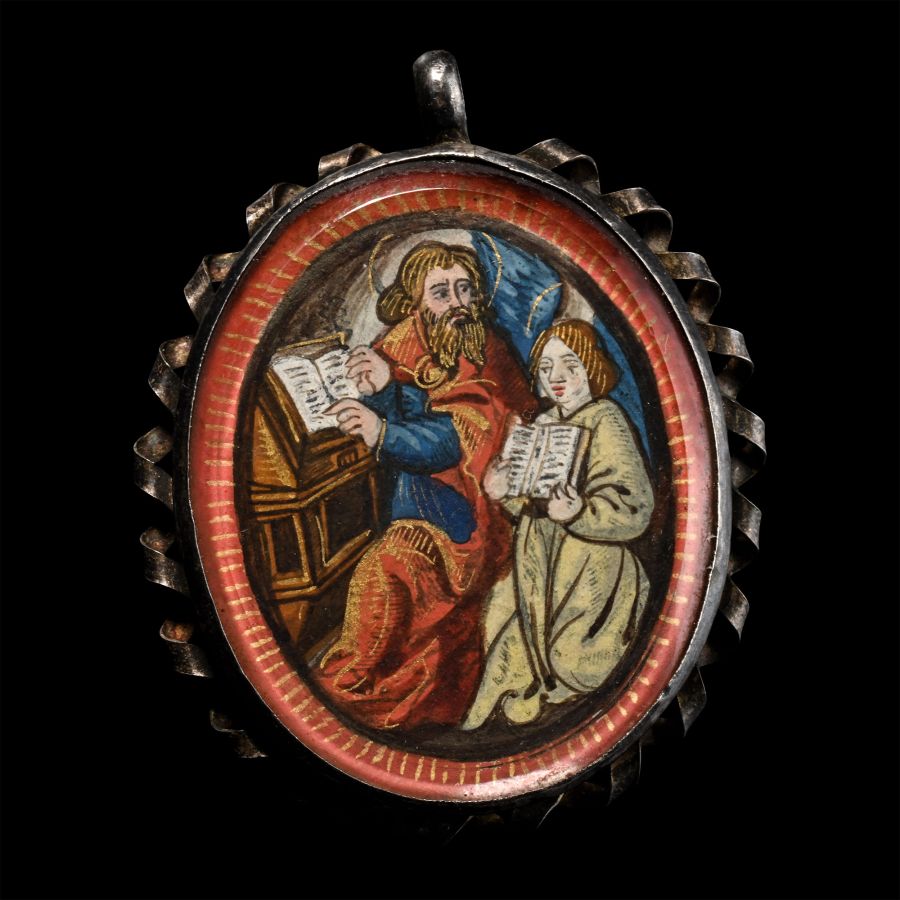
The glazed silver pendant containing illuminated miniatures on each side, one side depicting Saint Roch and the other Saint Matthew; Saint Roch shown seated on the ground while an angel is attending his bubonic plague sore on his thigh, and a white dog at his feet; Saint Matthew on the other side depicted writing the Gospel with a young attendant holding a book beside him; the frame with a fixed bale to the top and the sides adorned with a twisted silver wire decoration.
ProvenanceAcquired on the European art market.
FootnotesSaint Roch (c. 1348–1379) is a Catholic saint, revered as the patron of plague victims, dogs, and the sick. Born in Montpellier, France, he devoted his life to caring for those suffering from the plague. According to legend, he contracted the disease himself but was miraculously healed with the help of a dog that brought him food and licked his wounds. He is often depicted with a pilgrim’s staff, a dog by his side, and a wound on his leg. His feast day is celebrated on August 16. Saint Matthew was one of the twelve apostles of Jesus and the traditional author of the Gospel of Matthew. Before following Jesus, he was a tax collector, known as Levi. He is considered the patron saint of accountants, bankers, and tax collectors. His gospel emphasises Jesus as the Messiah and the fulfilment of Old Testament prophecies. According to tradition, he preached in various regions, including Ethiopia and Persia, before being martyred. His feast day is celebrated on September 21.
CONDITIONTimeLine Auctions follows a vetting process to ensure the authenticity and legality of all items, reinforcing our commitment to integrity and responsible trading. Each antiquity, antique, and coin lot undergoes thorough examination by a vetting committee of at least ten external specialists, professional trade association members, scientists, and archaeologists: Our Vetting Process
AUCTIONS:
TimeLine is a leading auction house specialising in antiquities, ancient art, collectables, natural history, coins, medals, and books. Our auctions offer museums, collectors, historians, and enthusiasts the opportunity to acquire unique and historically significant pieces.
-
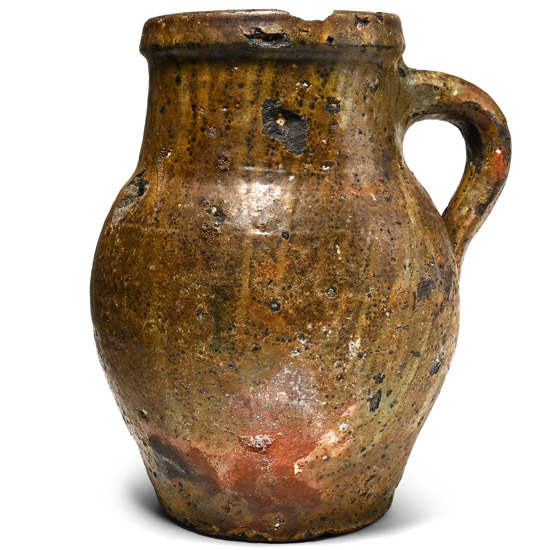
Tudor Period Green Glazed Pitcher
Late 16th century A.D.Sold for (Inc. bp): £52
Comprising a bulbous body and thickened rim, single handle to the rear; collector's label 'Simon Bendall Collection C157' on the base. 1.09 kg, 17.5 cm
From the private collection of Simon Bendall, collection reference number C157. Property of a Kent, UK, lady collector. -
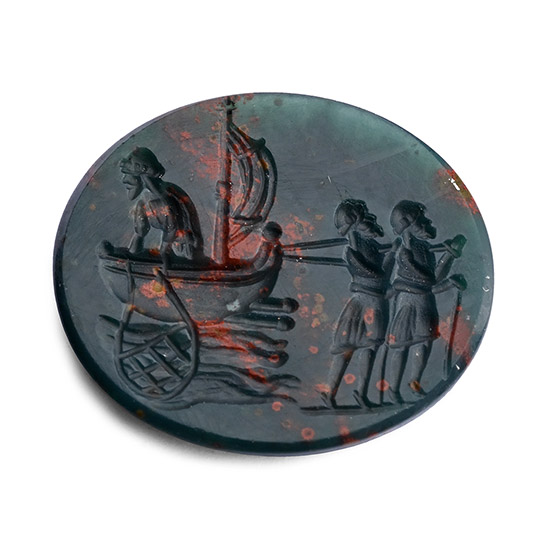
Georgian Period Bloodstone Gemstone with Christ Fishing
17th-18th century A.D.Estimate: £600 - 800 (+bp*)
Opening Bid: £300
Oval heliotrope intaglio showing a boat on water with an open sail, Christ casting a net in the water, and the boat drawn by the disciples; supplied with a museum-quality impression. 0.55 grams, 14 mm
Acquired on the European art market. -
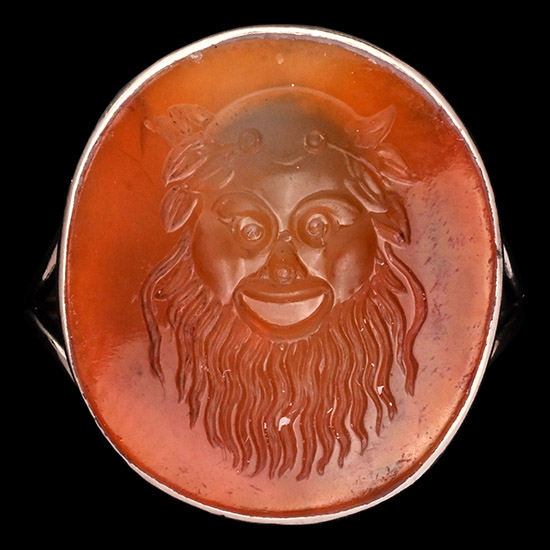
Georgian Gold Ring with Carnelian Gemstone with Head of Papposilenus
Italy, 18th century A.D.Estimate: £2,000 - 3,000 (+bp*)
Opening Bid: £1,000
Narrow hoop forked at the shoulders and supporting an oval open-backed setting with a slightly convex orange carnelian intaglio depicting the head of Papposilenus facing, wearing a wreath on his bald head, long beard and open mouth; supplied with a museum-quality impression. 3.31 grams, 21.59 mm overall, 18.67 mm internal diameter (approximate size British P, USA 7 1/2, Europe 16.23, Japan 15)
There is a stable internal fissure within the intaglio.
Acquired on the European art market. This lot has been checked against the Interpol Database of stolen works of art and is accompanied by search certificate number no.13317-257960.
The image, derived from Graeco-Roman mythology, represents Papposilenus, a semi-bestial figure with a round face dominated by a thick, unkempt beard and a completely bald head. The subject depicted is the eldest Silenus (the meaning of his name) and the wisest of Dionysus’s retinue; indeed, the infant Dionysus was entrusted to his care.
