
Loading, please wait...
LOT 0396
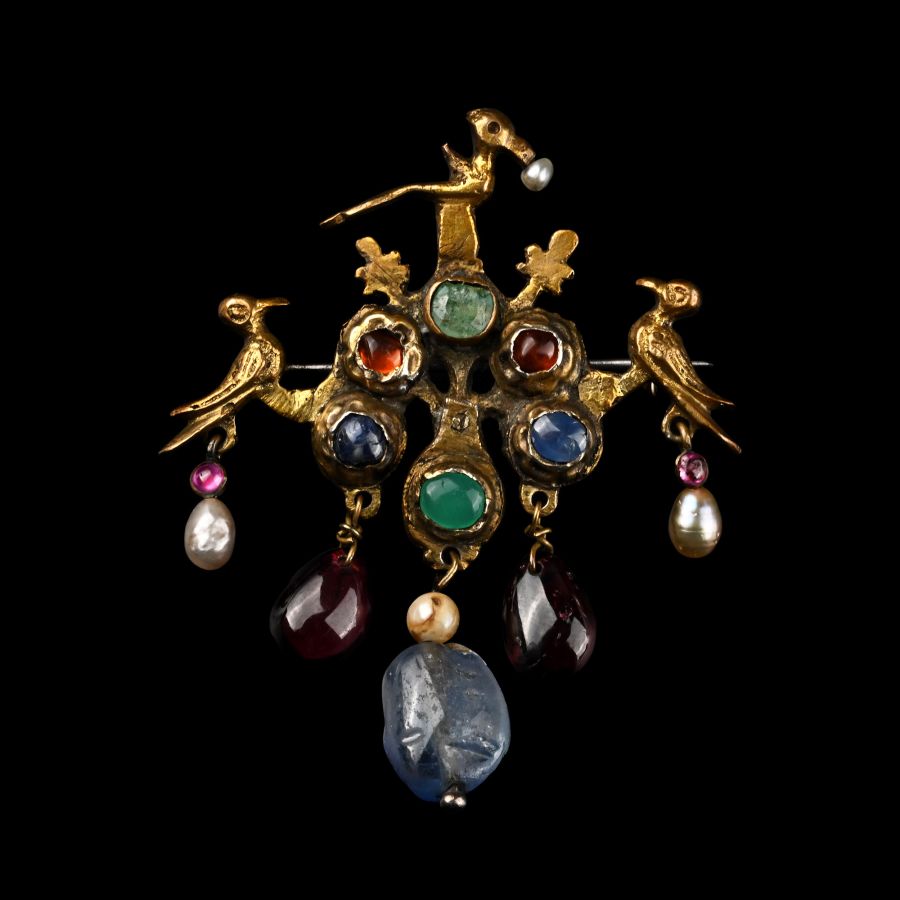
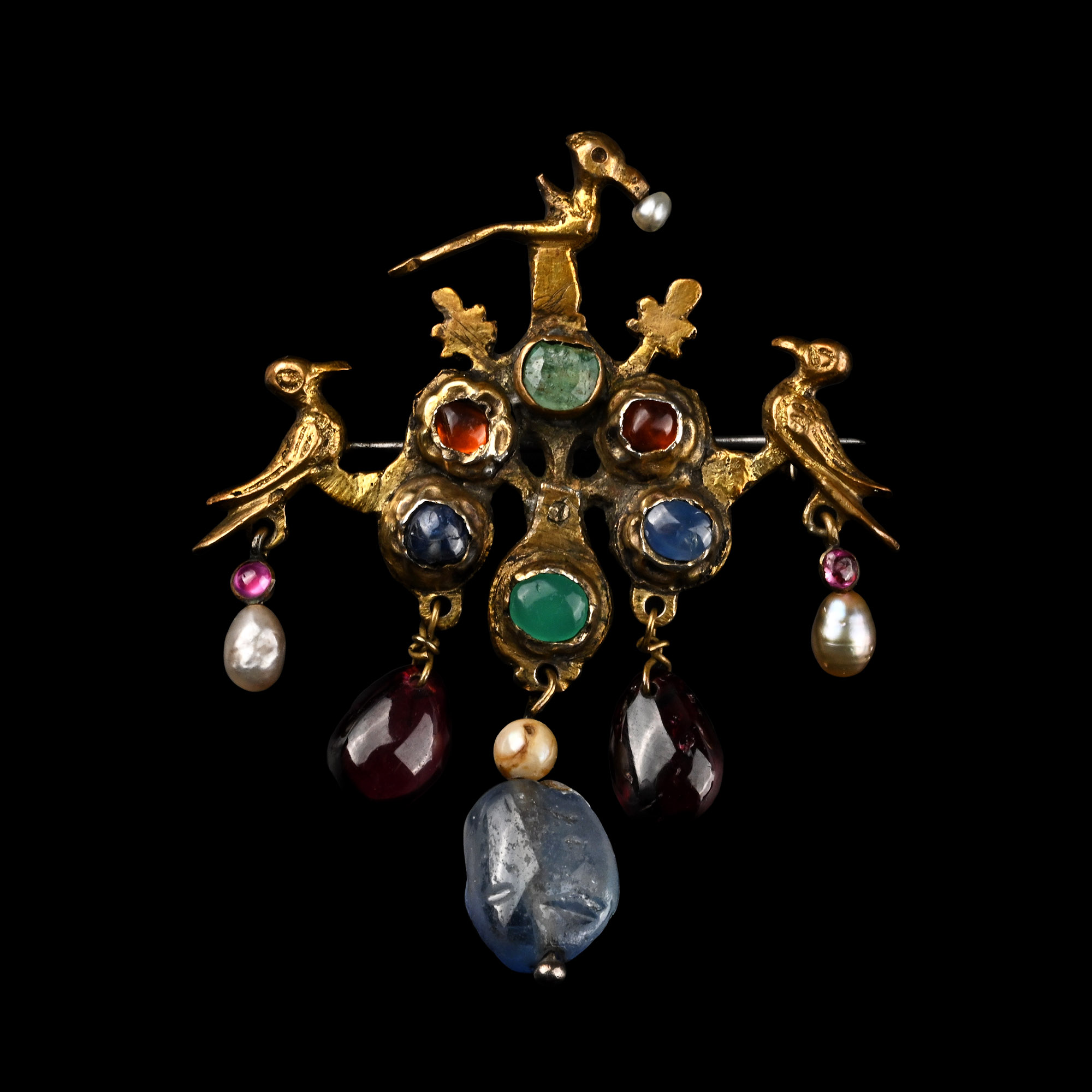
Silver-Gilt Brooch with Inset Gemstones
18TH-19TH CENTURY A.D.
2 1/2 in. (19.36 grams, 64 mm).
Comprising a circle of cells each with an inset gemstone, radiating birds and interstitial leaves, the upper bird with a pearl in its beak; drop pearls to each end, piriform cabochon drops below; hinged pin to reverse.
ProvenanceAcquired in the late 1980s-early 1990s.
Private collection, London.
This lot has been checked against the Interpol Database of stolen works of art and is accompanied by search certificate number no.12803-241424.
This lot has been cleared against the Art Loss Register database, and is accompanied by an illustrated lot declaration signed by the Head of the Antiquities Department, Dr Raffaele D'Amato.
Cf. for the ancient prototypes of similar compositions, enriched with diamonds, Ogden, J., Diamonds, An Early History of the King of Gems, New Haven-London, 2018, pp.74, 156,157.
CONDITIONTimeLine Auctions follows a vetting process to ensure the authenticity and legality of all items, reinforcing our commitment to integrity and responsible trading. Each antiquity, antique, and coin lot undergoes thorough examination by a vetting committee of at least ten external specialists, professional trade association members, scientists, and archaeologists: Our Vetting Process
AUCTIONS:
TimeLine is a leading auction house specialising in antiquities, ancient art, collectables, natural history, coins, medals, and books. Our auctions offer museums, collectors, historians, and enthusiasts the opportunity to acquire unique and historically significant pieces.
LOT 0396
Silver-Gilt Brooch with Inset Gemstones
Estimate £3,000 - 4,000€3,480 - 4,640 (for guidance only)$4,050 - 5,400 (for guidance only)
-
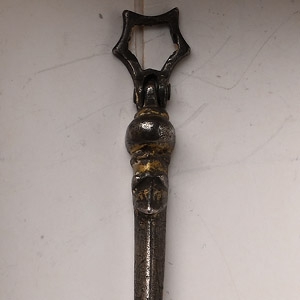
Tudor Period Silver-Gilt Hook Fastener
16th century A.D.Sold for (Inc. bp): £26
D-shaped in section with hook finial, bulb and hinge with openwork hexagonal hoop. 5.16 grams, 67 mm
From Northern Europe. Acquired from Coincraft, London, UK. From the private collection of Kenneth Machin (1936-2020), Buckinghamshire, UK; his collection of antiquities and natural history was formed since 1948; thence by descent. Accompanied by a Coincraft certificate of authenticity. This lot is accompanied by an illustrated lot declaration signed by the Head of the Antiquities Department, Dr Raffaele D'Amato. -
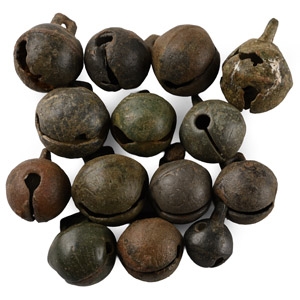
Post Medieval Bronze Crotal Bell Group
17th-18th century A.D.Sold for (Inc. bp): £26
All with suspension loop, slot to underside and vents above; some with incised decoration. 375 grams total, 27-40 mm
Found East Anglia, UK. This lot is accompanied by an illustrated lot declaration signed by the Head of the Antiquities Department, Dr Raffaele D'Amato. -
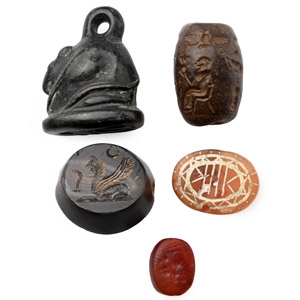
Group of Seals and Scaraboids
20th century A.D.Estimate: £100 - 140 (+bp*)
Opening Bid: £50
Including fusiform, plano-convex and other types; after the antique. 46 grams total, 14-31 mm
From the late S M collection, London, UK, 1969-1999. This lot is accompanied by an illustrated lot declaration signed by the Head of the Antiquities Department, Dr Raffaele D'Amato.
