
Loading, please wait...
LOT 2389
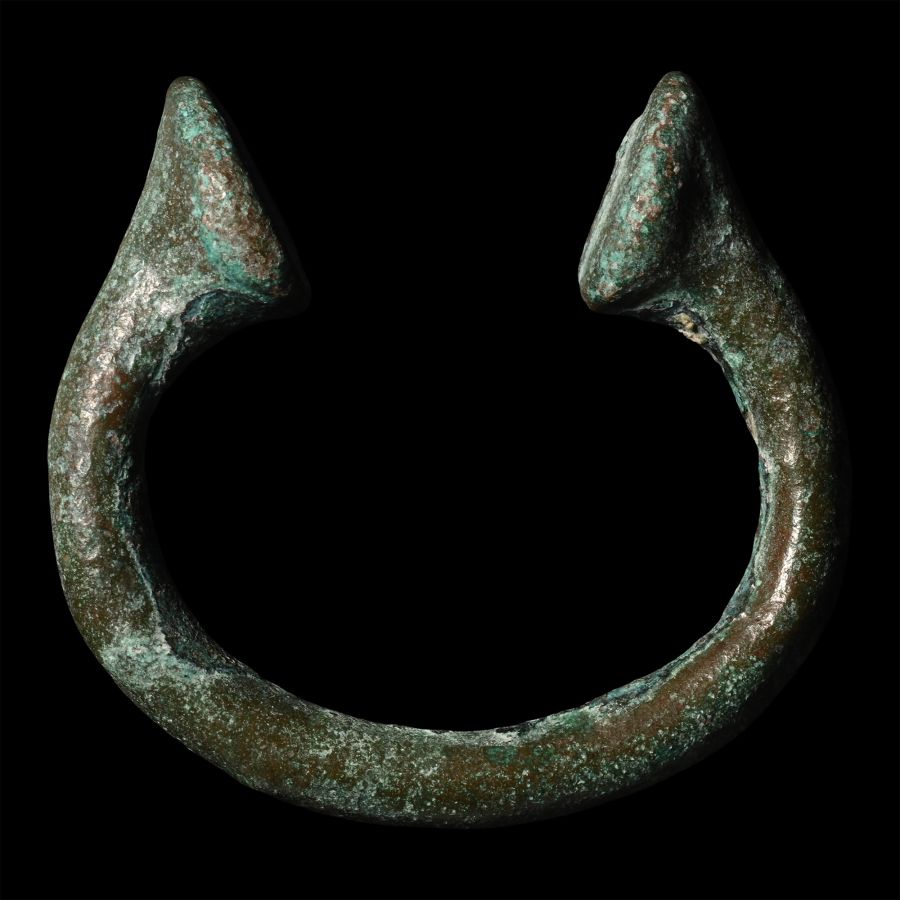
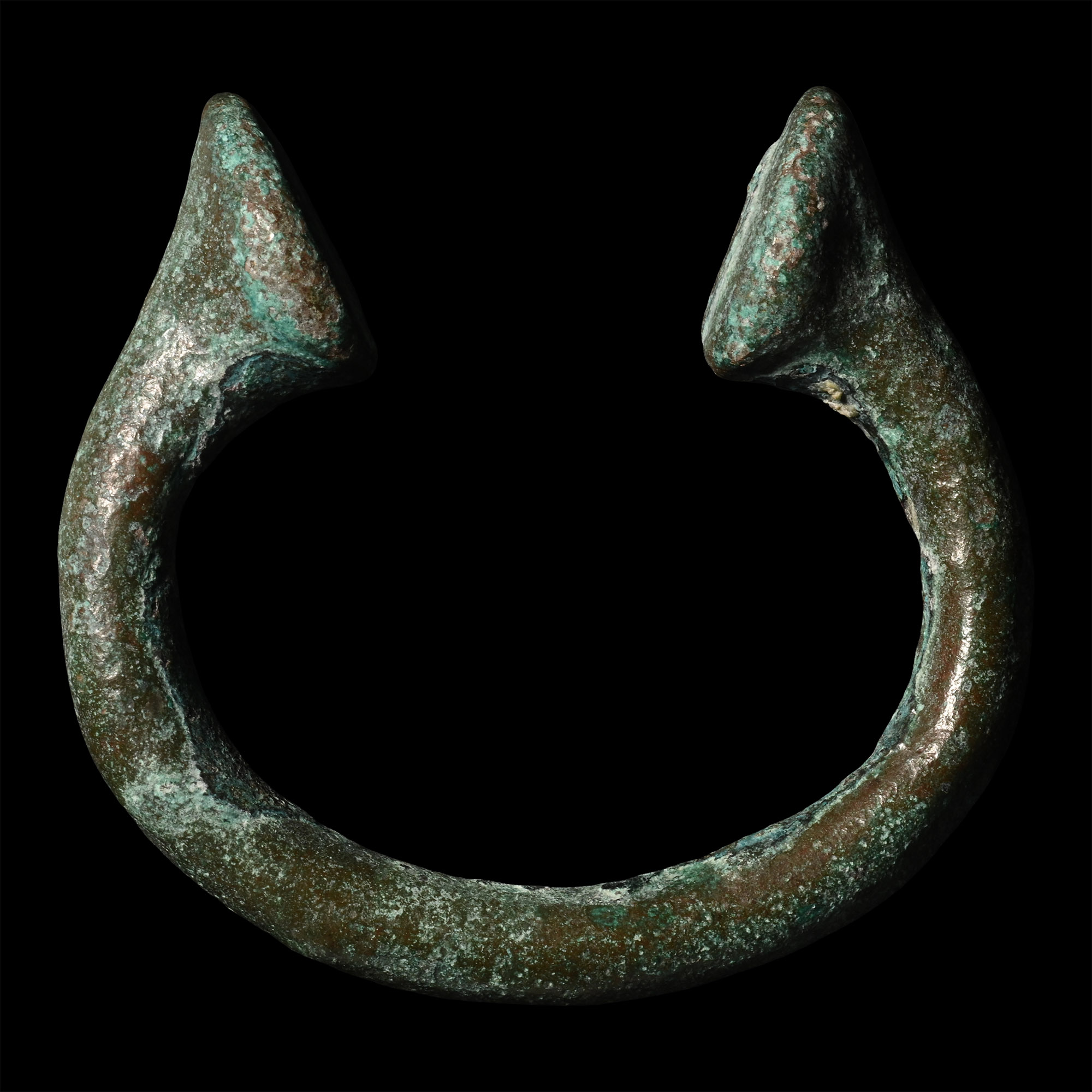
Shipwreck African Slave Trade Manilla Currency Bracelet from the Schooner Duoro
SUNK 1843 A.D.
2 3/8 in. (71 grams, 59 mm).
Penannular bracelet with trumpet-shaped flaring terminals. [No Reserve]
ProvenanceFrom the shipwrecked English Schooner 'Duoro', sunk off the Isles of Scilly in 1843.
Acquired on the UK art market.
Property of a London, UK, antiquarian.
Accompanied by the original box and certificate from The Isles of Scilly Underwater Centre.
The ship wrecked in 1843 on a voyage from Liverpool to Oporto. Manillas were used as currency in the transatlantic trade in enslaved African people, where enslaved people were traded for between 10 and 60 manillas. Manillas are also known as okpogho, ejemma, igbiki and kpugi. They were sometimes worn in African communities as body decoration, such as along the coast between modern-day Liberia and Côte d’Ivoire. Europeans later produced manillas to trade for enslaved African people, and they became a form of currency. This currency was used in parts of West Africa until it was demonetised in 1948.
CONDITIONTimeLine Auctions follows a vetting process to ensure the authenticity and legality of all items, reinforcing our commitment to integrity and responsible trading. Each antiquity, antique, and coin lot undergoes thorough examination by a vetting committee of at least ten external specialists, professional trade association members, scientists, and archaeologists: Our Vetting Process
AUCTIONS:
TimeLine is a leading auction house specialising in antiquities, ancient art, collectables, natural history, coins, medals, and books. Our auctions offer museums, collectors, historians, and enthusiasts the opportunity to acquire unique and historically significant pieces.
LOT 2389
Shipwreck African Slave Trade Manilla Currency Bracelet from the Schooner Duoro
Estimate £30 - 40€35 - 46 (for guidance only)$41 - 54 (for guidance only)
Opening Bid
£5 (EUR 6; USD 7) +BP*
-
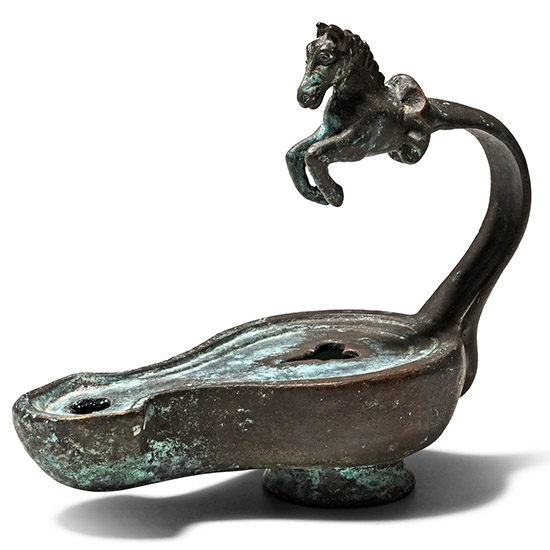
Roman Bronze Oil Lamp of the Grand Tour
19th century A.D.Estimate: £80 - 100 (+bp*)
Opening Bid: £5
The bowl piriform in plan with volute nozzle and domed foot; heart-shaped void to the discus; arched handle developing to a rosette with foreparts of a leaping horse emerging. 280 grams, 11.9 cm
Ex important German collection, 1970s onwards. -
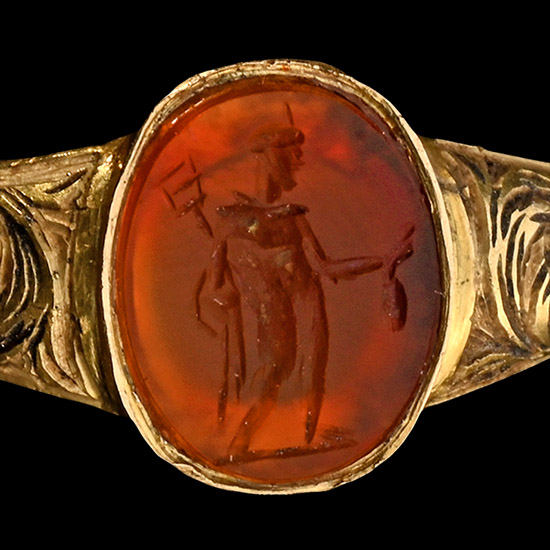
Stuart Period Gold Ring with Roman Carnelian Gemstone of Mercury
Circa 17th century A.D., intaglio 1st-2nd century A.D.Estimate: £1,800 - 2,400 (+bp*)
Opening Bid: £900
With intricately engraved shoulders, with floral design, filled with the remains of black enamel; the bezel with a discoid intaglio standing figure of Mercury in profile, with marsupium in one extended hand and caduceus supported in the crook of the other arm with chlamys draped from the shoulder. 2.87 grams, 24.61 mm overall, 18.76 x 21.81 mm internal diameter (approximate size British T, USA 9 1/2, Europe 21.26, Japan 20)
Ex Peter Szuhay, Mayfair, London, UK. Private collection, 1980s. Acquired on the UK art market. Private collection, London, UK. This lot has been checked against the Interpol Database of stolen works of art and is accompanied by search certificate no.13487-262460.
On such gems, the god is usually depicted standing, with his head in profile and accompanied by his attributes: he holds a purse, a marsupium, in one hand, while the caduceus is tucked under his arm, wrapped in his cloak. Mercury was the patron of commerce and merchants, but also of thieves; the purse represented profit. -
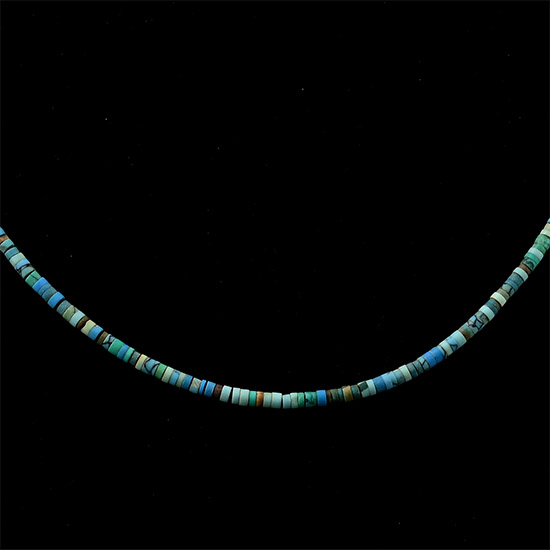
Egyptian Style Stone Bead Necklace String
20th century A.D.Estimate: £50 - 70 (+bp*)
Opening Bid: £5
Composed of small annular turquoise, green, blue and other beads. 4.53 grams, 36 cm
Ex London, UK, collection, 1990s.
