
Loading, please wait...
LOT 1457
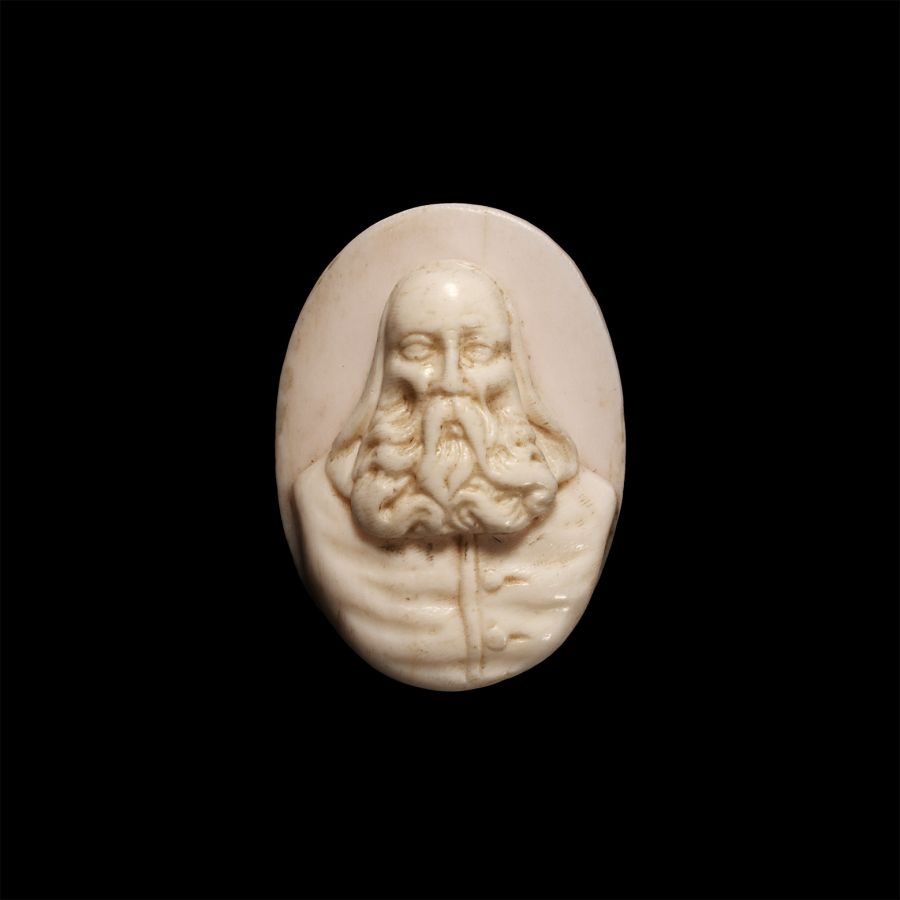
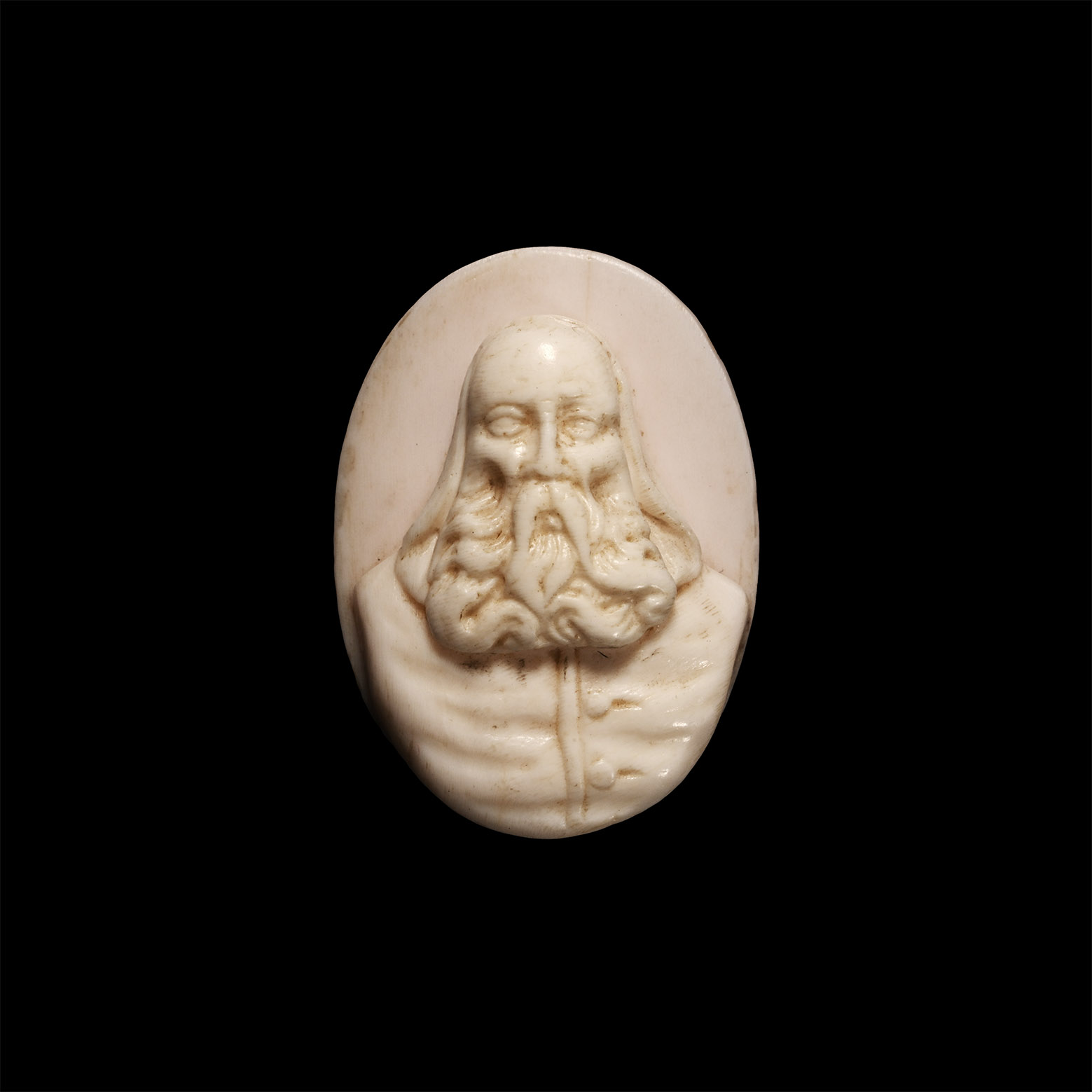
Shell Cameo of a Wealthy Merchant
18TH-19TH CENTURY A.D.
7/8 in. (3.04 grams, 23 mm).
A carved shell facing bust of a bearded male with long hair, probably a German merchant.
ProvenanceAcquired from Artermide Aste, auction 39E, lot 426.
From the collection of G.M.R.H., London, UK.
TimeLine Auctions follows a vetting process to ensure the authenticity and legality of all items, reinforcing our commitment to integrity and responsible trading. Each antiquity, antique, and coin lot undergoes thorough examination by a vetting committee of at least ten external specialists, professional trade association members, scientists, and archaeologists: Our Vetting Process
AUCTIONS:
TimeLine is a leading auction house specialising in antiquities, ancient art, collectables, natural history, coins, medals, and books. Our auctions offer museums, collectors, historians, and enthusiasts the opportunity to acquire unique and historically significant pieces.
LOT 1457
Shell Cameo of a Wealthy Merchant
Estimate £120 - 170€140 - 200 (for guidance only)$160 - 230 (for guidance only)
-
Tudor 'Thames' Pipe Clay Bishop Chess Piece
Circa 16th century A.D.Sold for (Inc. bp): £39
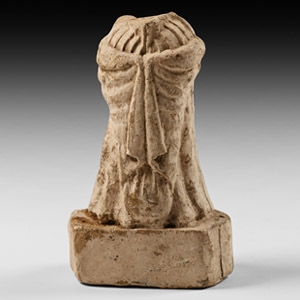
An acephalic clay chess piece representing a Bishop, with detailing to his robes and their voluminous sleeves. 18.1 grams, 45 mm high
Found on the Thames foreshore, London, UK. Acquired on the UK antiques market between 1974-1985. Albert Ward collection, Essex, UK. -
.jpg)
Post Medieval Silver Apostle Peter Statuette
18th century A.D. or earlierSold for (Inc. bp): £104
A silver figure modelled in the round as Apostle Peter standing on a polygonal base, wearing a floor-length robe and clasping the key to the gate of Heaven to his breast, semi-naturalistic facial detailing, beard and hair. 50.13 grams, 65 mm
Fine condition.
Austrian private collection since circa 1995. Ex central London gallery. -
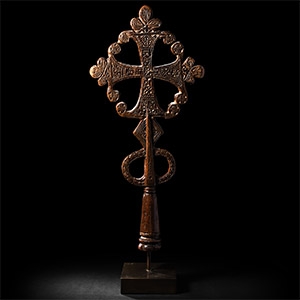
Ethiopian Processional Cross
17th-18th century A.D.Sold for (Inc. bp): £715
A bifacial wooden Qäqwami Mäsqäl processional cross, three-lobed extremities on three sides, decorated with geometric motifs representing crosses of different types, supported by a lanceolate shaft with two round openwork openings; socketted shaft with vertical grooves and fitted with a double horizontal groove; inscriptions on two of the lobed sides of the cross; accompanied by a custom-made display stand. 600 grams, 42 cm high (49cm high including stand)
Acquired on the London art market, 2003. UK private collection.
The large wooden crosses are often used by ddbtdras, who are unordained members of the Orthodox Ethiopian clergy, for their liturgical dance. In the countryside, one or two of these crosses are kept on the church window-sills close to the area where the dance is performed, instead of being kept in the church storehouse. Sometimes they are mounted upon a shaft and worn in procession. The characteristic feature of a processional cross is a socketted shaft which serves for mounting them on a strong pole known as masor or handle. Although technically the shaft serves to support the cross, according to the interpretation of Ethiopian church scholars, its real function is to protect the cross from being touched.
