
Loading, please wait...
LOT 0301
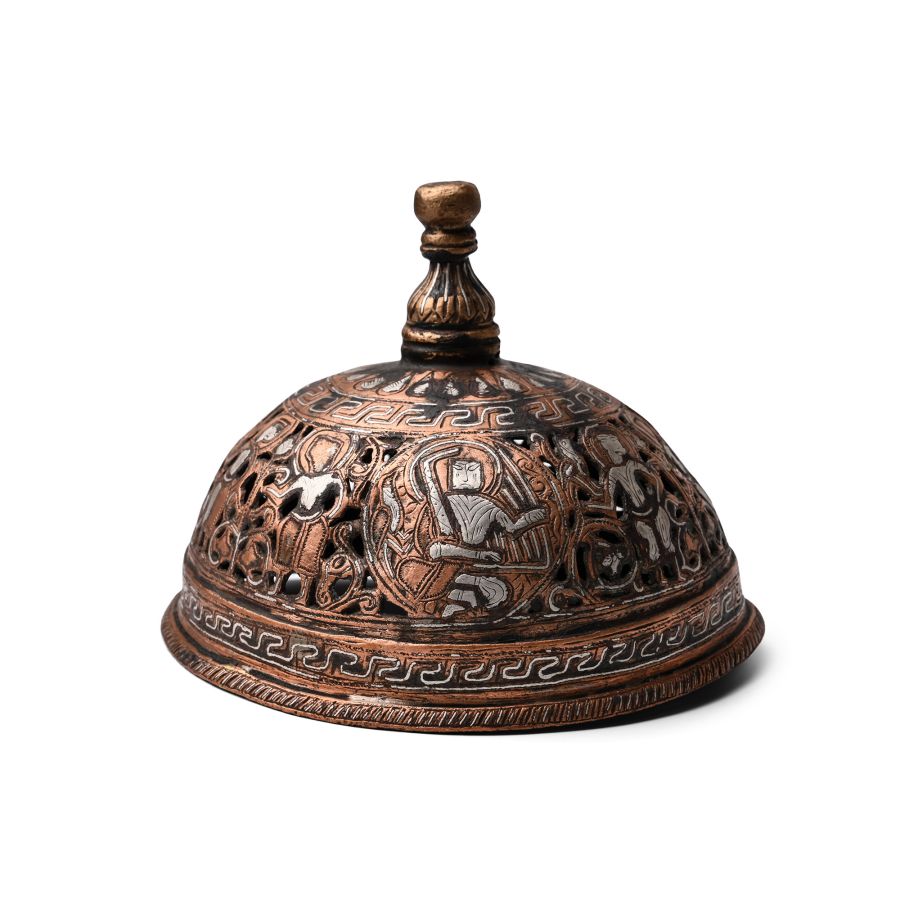
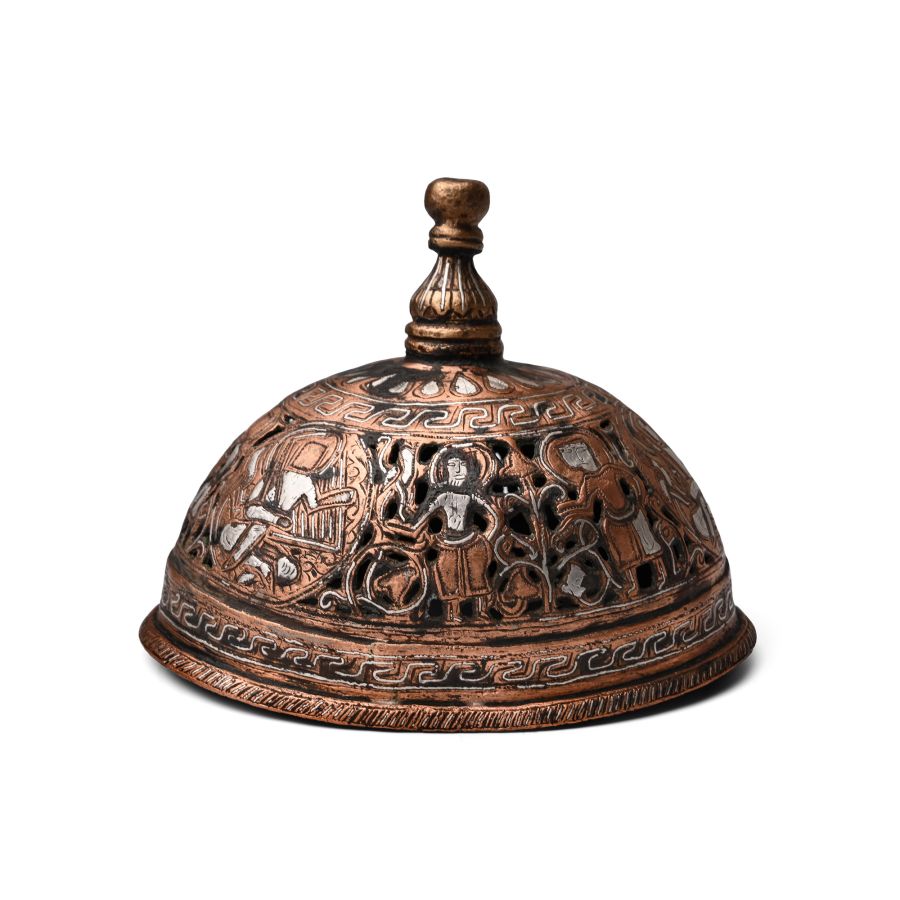
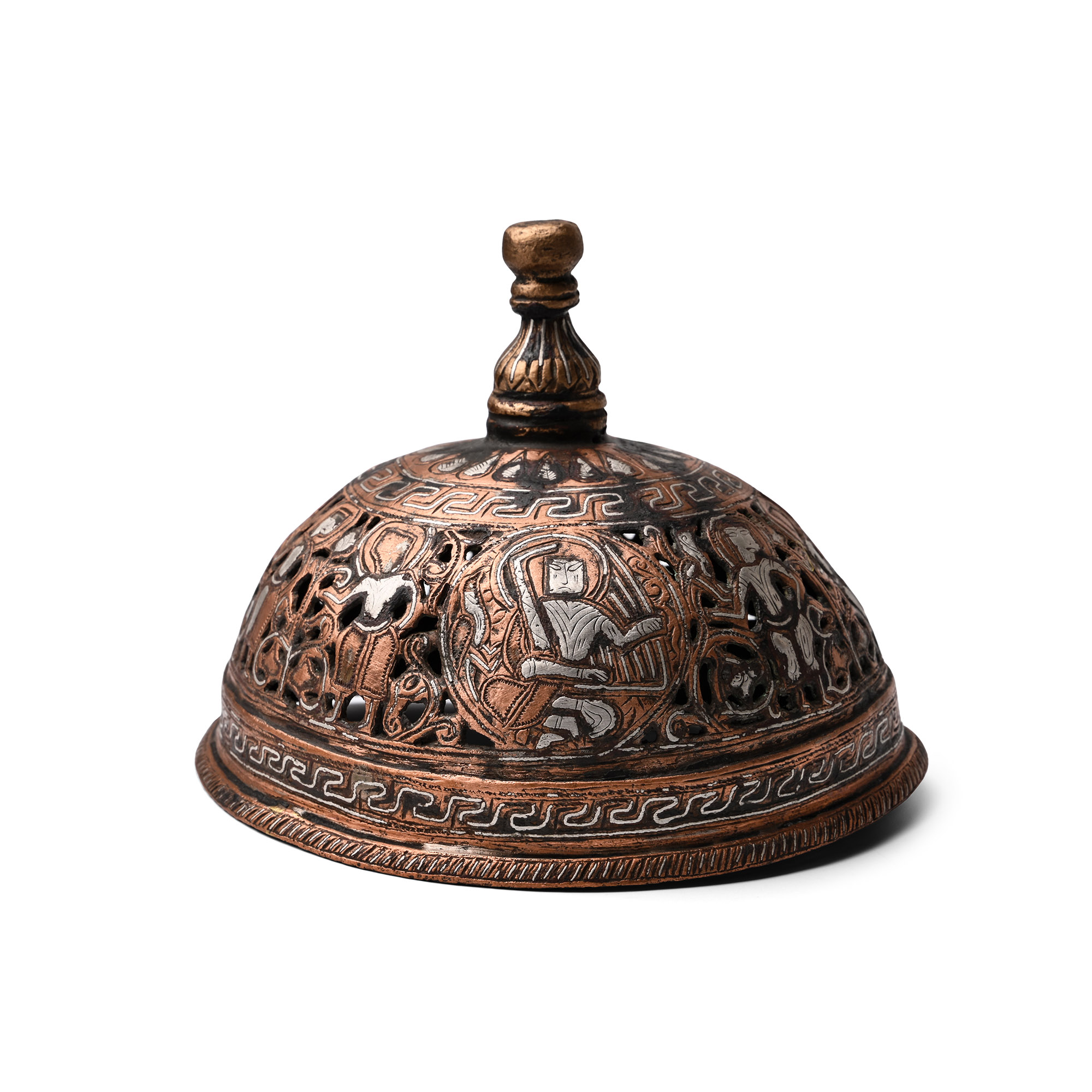
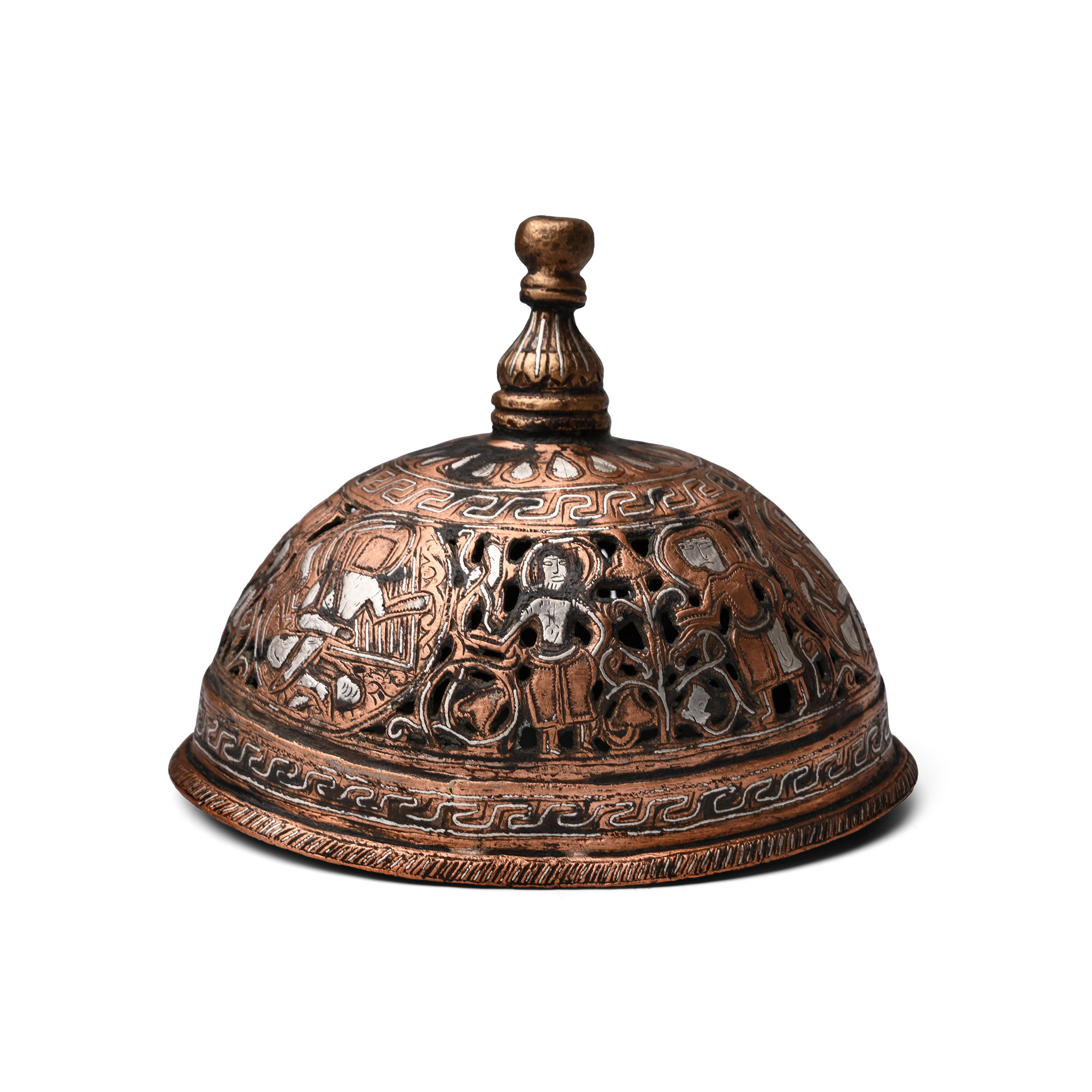
Seljuk Bronze Incense Burner with Silver Inlays
12TH CENTURY A.D. OR LATER
5 1/2 in. (345 grams, 14 cm).
Domed openwork cover with inlays, the knop surrounded by a band of inlaid leaves, a band of Greek key motifs below and above the basal rim enclosing a series of figures in dynamic poses, three of the figures enclosed within a medallion and depicting a seated male with crossed legs and a bird on his right side.
Provenancewith a London, UK gallery 1971-early 2000s.
CONDITIONTimeLine Auctions follows a vetting process to ensure the authenticity and legality of all items, reinforcing our commitment to integrity and responsible trading. Each antiquity, antique, and coin lot undergoes thorough examination by a vetting committee of at least ten external specialists, professional trade association members, scientists, and archaeologists: Our Vetting Process
AUCTIONS:
TimeLine is a leading auction house specialising in antiquities, ancient art, collectables, natural history, coins, medals, and books. Our auctions offer museums, collectors, historians, and enthusiasts the opportunity to acquire unique and historically significant pieces.
-
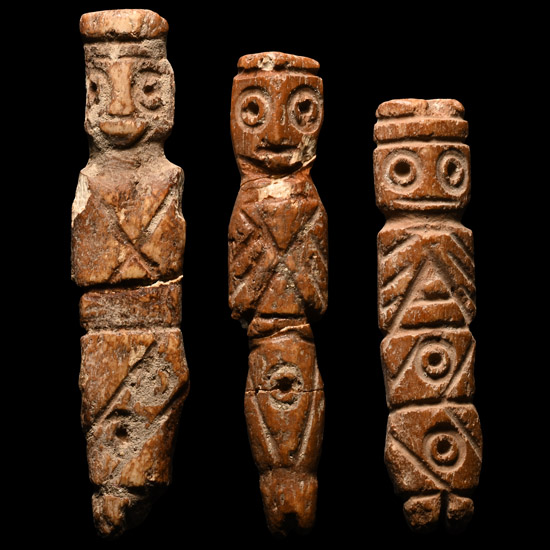
Western Asiatic Bone Idol Group
2nd century B.C.-2nd century A.D.Sold for (Inc. bp): £46
Each plano-convex in section with heavily scored detailing; one repaired. 8.82 grams total, 46.51-46.64 mm
From the private collection of a European gentleman (1942-2024), formed since the 1970s. -
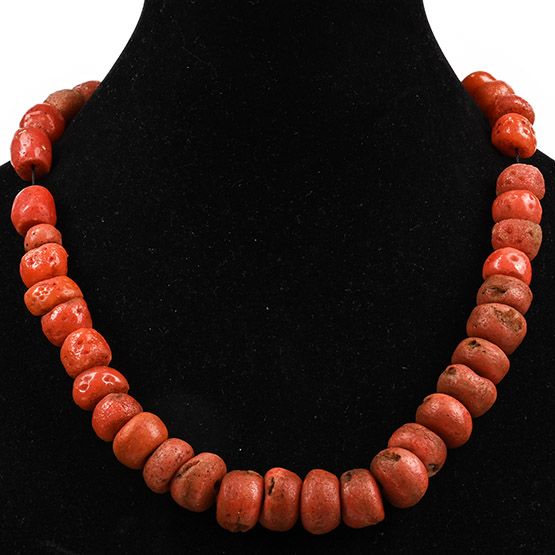
Western Asiatic Coral-Coloured Glass Bead Necklace String
1st millennium B.C. or laterSold for (Inc. bp): £46
Comprising mainly oblate beads, restrung. 144 grams, 42 cm
Ex London, UK, collection, 1990s. -
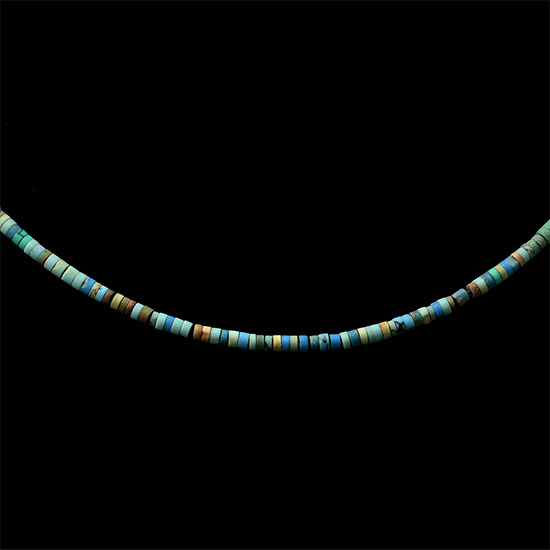
Achaemenid Blue Stone and Other Bead Necklace String
Late 1st millennium B.C. and laterSold for (Inc. bp): £59
Composed of small annular beads, restrung. 4.57 grams, 36.5 cm
Ex London, UK, collection, 1990s.
