
Loading, please wait...
LOT 0549
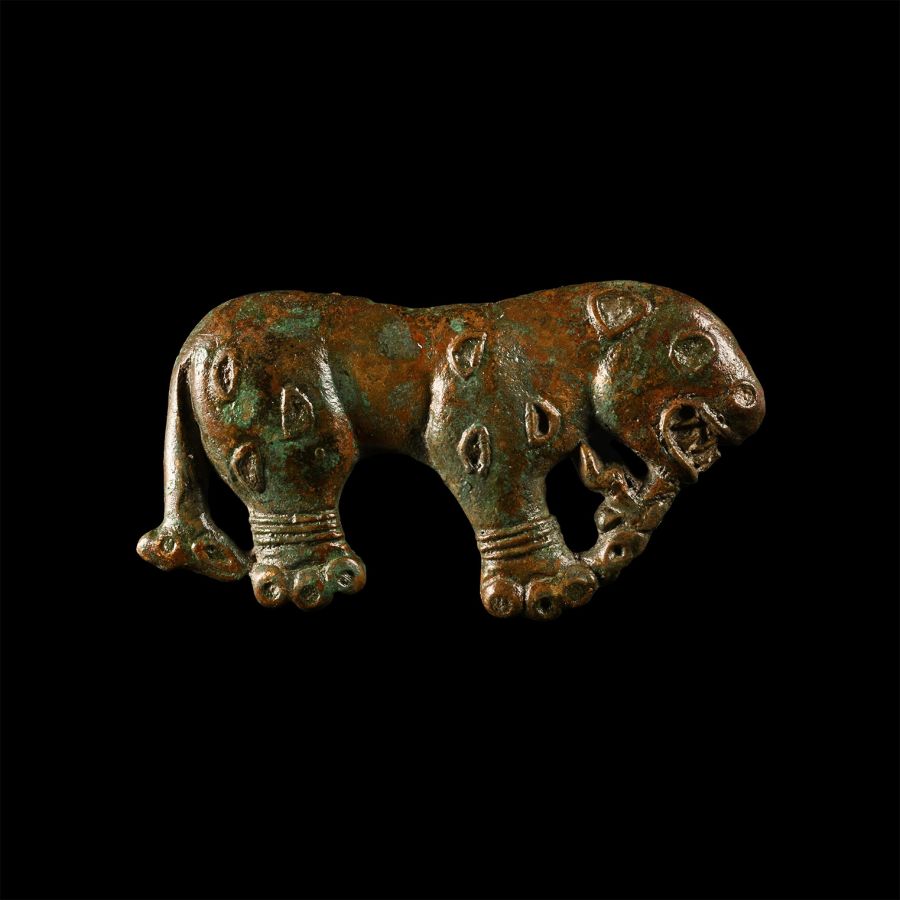
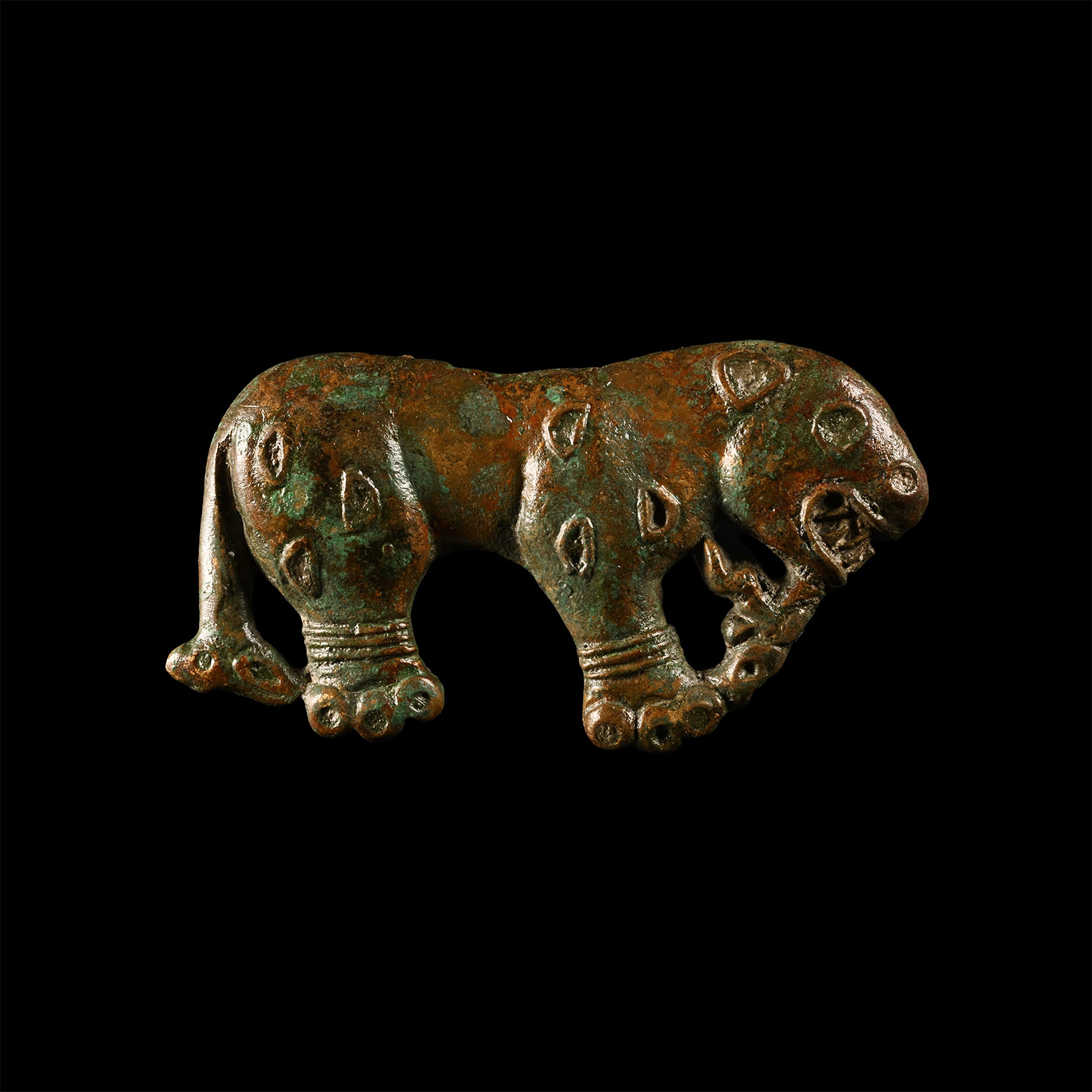
Scythian Leopard Mount
1ST MILLENNIUM B.C.
2 1/2 in. (38.3 grams, 65 mm).
A bronze mount depicting a captured leopard advancing in profile with large teeth carefully depicted; chain attached to the foreleg, fetters on both ankles; mounting lug to the reverse.
ProvenanceAcquired 1980-2015.
Ex Abelita family collection.
TimeLine Auctions follows a vetting process to ensure the authenticity and legality of all items, reinforcing our commitment to integrity and responsible trading. Each antiquity, antique, and coin lot undergoes thorough examination by a vetting committee of at least ten external specialists, professional trade association members, scientists, and archaeologists: Our Vetting Process
AUCTIONS:
TimeLine is a leading auction house specialising in antiquities, ancient art, collectables, natural history, coins, medals, and books. Our auctions offer museums, collectors, historians, and enthusiasts the opportunity to acquire unique and historically significant pieces.
-
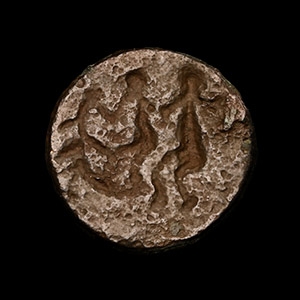
Greek Seal with Erotic Scene
2nd century B.C. or laterSold for (Inc. bp): £39
A conoid copper-alloy(?) seal bearing a geometric frieze in relief around the body; base with incuse erotic figural scene. 3.13 grams, 13 mm
Acquired 1969-1999. London collection of the late Mr S.M., thence by descent. -
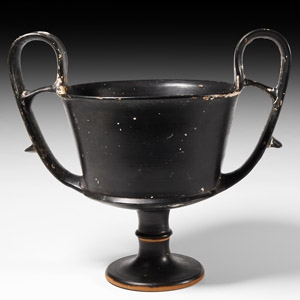
Greek Black Ware Kantharos
5th century B.C.Sold for (Inc. bp): £5,200
A black-glazed terracotta kantharos with two integral ear-shaped handles with internal bridges and ledges to the exterior, collar to stem and discoid foot; possibly Boeotian. 565 grams, 23 cm wide
Acquired 1980s-1990s. H.N. collection, Milton Keynes, UK.
A kantharos is a drinking cup with two handles. -
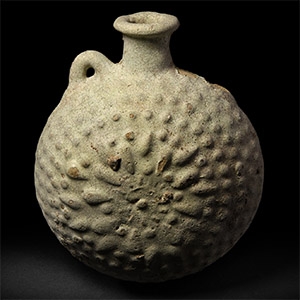
Parthian Faience Pilgrim's Flask
2nd-3rd century A.D.Estimate: £1,000 - 1,400 (‡+bp*)
Opening Bid: £500
A faience pilgrim’s flask with slender neck and loop handle, raised geometric or floral pattern to both faces; remains of glaze; second loop handle now absent. 812 grams, 19 cm high
Acquired in 1998. Ex private American collection; thence by descent. Private Swiss collection since 1998.
