
Loading, please wait...
LOT 0505
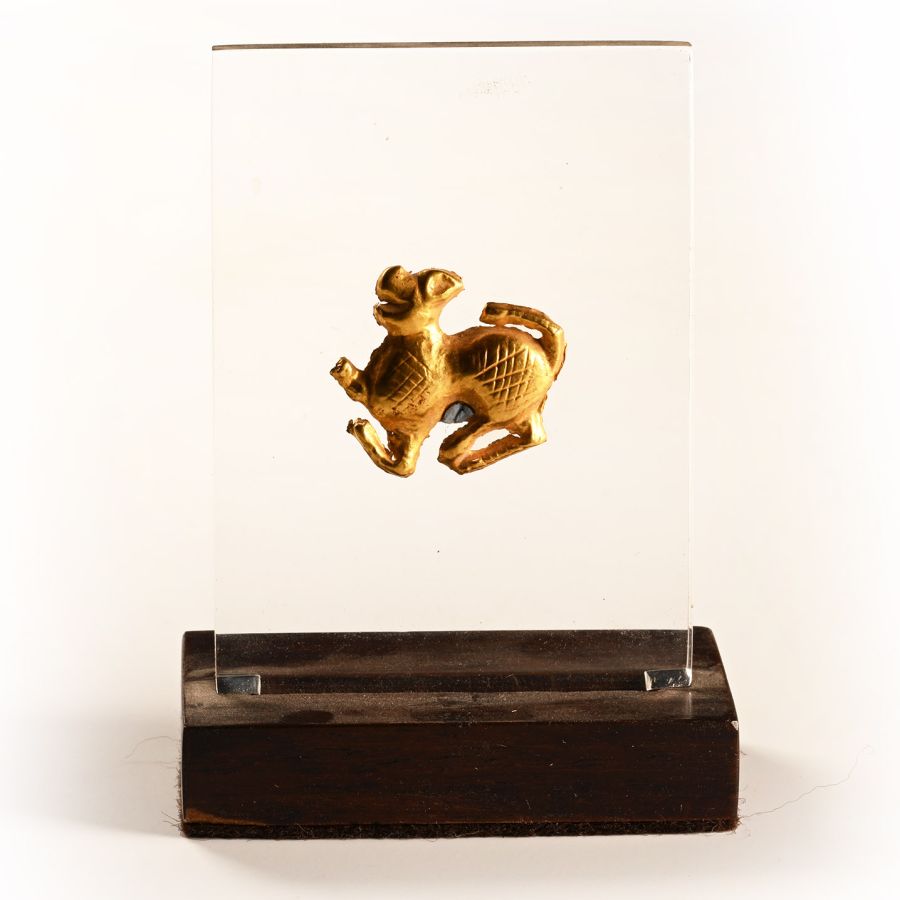
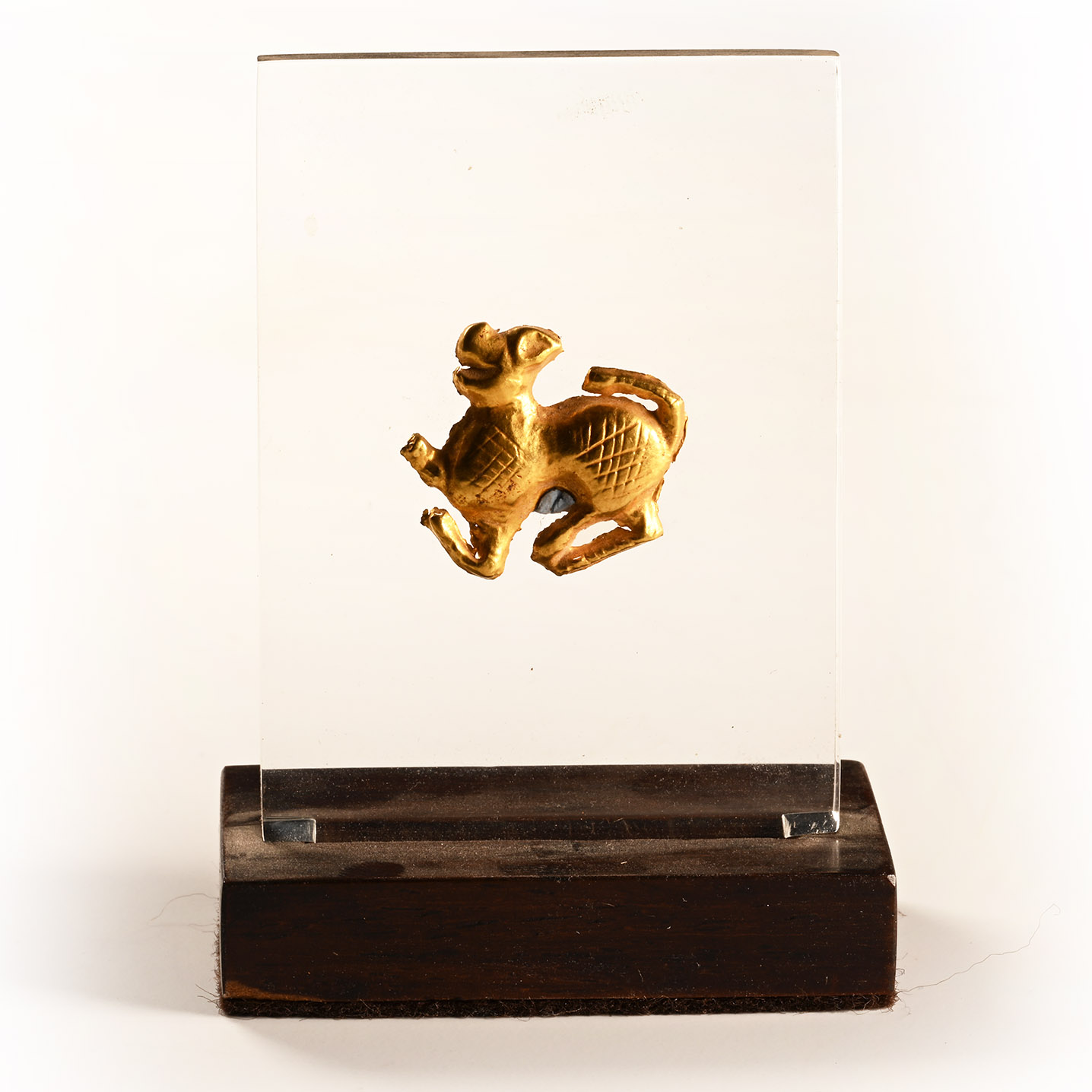
Scythian Gold Appliqué
LATE 1ST MILLENNIUM B.C.
2 3/4 in. (33.78 grams total, 71 mm including stand).
Formed using sheet-gold in the shape of an animal bounding left, incised detailing to the coat; accompanied by a display mount.
ProvenanceEx Symes Gallery, Mayfair, London, UK.
Exhibited in 'Schythian Gold', pre 1999.
TimeLine Auctions follows a vetting process to ensure the authenticity and legality of all items, reinforcing our commitment to integrity and responsible trading. Each antiquity, antique, and coin lot undergoes thorough examination by a vetting committee of at least ten external specialists, professional trade association members, scientists, and archaeologists: Our Vetting Process
AUCTIONS:
TimeLine is a leading auction house specialising in antiquities, ancient art, collectables, natural history, coins, medals, and books. Our auctions offer museums, collectors, historians, and enthusiasts the opportunity to acquire unique and historically significant pieces.
-
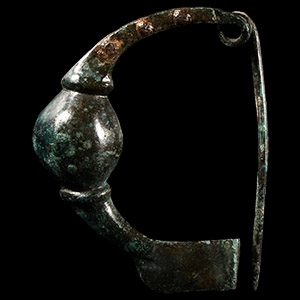
Greek Bronze Bow Brooch
8th-7th century B.C.Sold for (Inc. bp): £156
The keeled bow with a large central boss, integral pin and rectangular footplate. 55.9 grams, 72 mm
From the family collection of a Surrey gentleman since before 1960.
The distinctive form of this fibula seems to be an Italic variant of characteristic Geometric period examples from Thessaly that have been discovered in large numbers, for example in the sanctuary of Zeus Thaulios near Pharos. It belongs to the category of Greek catch plate brooches, although the rectangular footplate is substantially reduced compared to the Greek prototypes. -
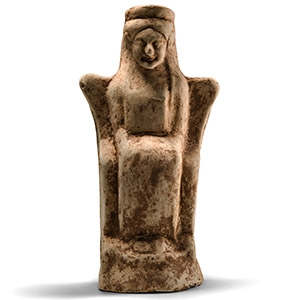
Archaic Greek Terracotta Seated Goddess
5th century B.C.Sold for (Inc. bp): £650
Represented in the typical female attire wearing a long chiton and a polos headgear; seated upon a throne with side horns, hands upon her knees; flat back. 413 grams, 18.5 cm
Acquired in Europe before 1996.
The typical 5th century B.C. terracotta female figurine was a standing or seated woman wearing a chiton and a himation. It usually represented the goddess Demeter, and it was a votive figure offered to the shrines or temples. Attica was one of the principal centres of figurine production, but Corinth continued to produce solid standing or seated females with moulded fronts and flat backs. -
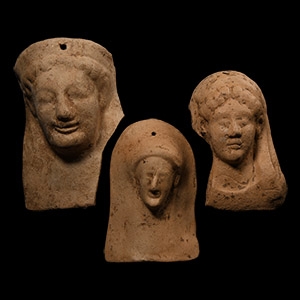
Greek Terracotta Protome Mask Collection
Circa 4th-3rd century B.C.Sold for (Inc. bp): £338
Three ceramic masks each moulded with a female face, pierced at the brow. 290 grams total, 10.3-11.9 cm
Acquired 1970s-1996. Property of a North American collector. London collection, 2016.
